seagrass and mangroves
introduction to mangroves and seagrasses
mangroves → describes both the ecosystem type and the group of woody plants
taxonomy
tru mangroves found in high salinity waters
mangrove associates
divided into red, white, and black mangroves
convergent evolution → evolved many times over
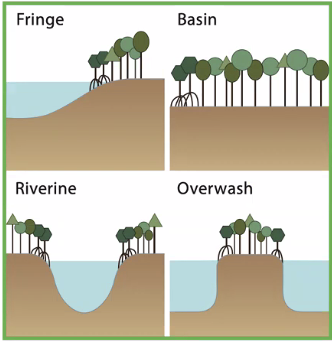
scales, types and driver of mangrove forests
fringe
basin
riverine
overwash
climate:
temerpature, precipitation storms
relative sea level changes
sea level rise
subsidence
hydrodynamics
inundation → how long they are submerged in tides
………
seagrasses
the only angiosperms that are submerged in seawater
interesting sturcuture analogous to grass on terrestrial grasses
gone from the sea, to the land, and back to the sea
what is the difference between seagrass and macro algae?
sediment type: seagrass are in soft sediment and algae are on hard substrate
seagrass help with wave breaking and sediment
reproduction:
seagrass → can have sexual reproduction; have make and female plants
macro algae → uses spores and fragmentation
macroalgae are more diverse compared to seagrasses
macroalgae takes in nutrients from above groundd structure
seagrasses does both through roots and above ground
seagrass distribution
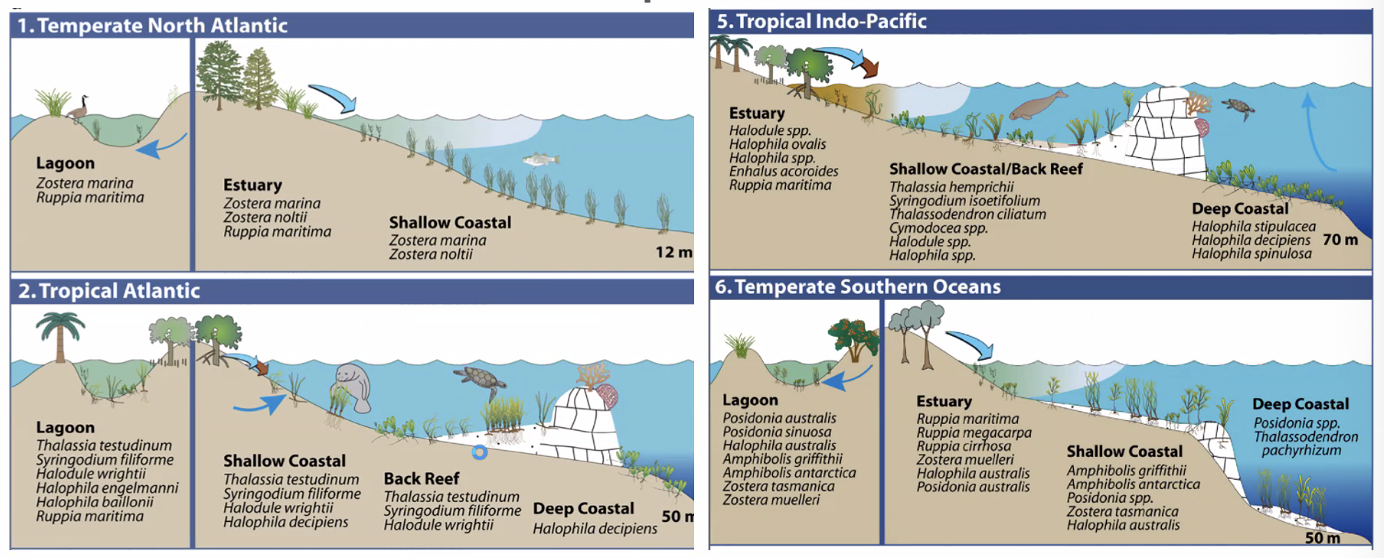
adapted to many different environmental conditions
not in antarctica
physical and biological drivers
knee roots
pneumatophores
why this mangrove root architecture?
salinity → the salinity is lesser in teh upper part of the water column
requirement for oxygen → more easily accessible above the water surface
providing additional structure during storm surges
prevents erosion/ dislodging between
adaptations to physical environemtn
zonation of species and root strateggies
seagrass root structures
lacunar systems to trasnport oxygen
seagrasses are known to be able to release oxygen in the sediments through their roots to create a small oxic zone
salt adaptations in amngroves
salt exclusion (red mangrove)
salt extrection glands
shedding of salt accumulated leaves
water conservation by waxy cuticle
salt adaptations in seagrasses
cell wall remodelling
stronger cell walls combating the hugh salninty
accumulation of organic osmolytes
active ion trasnport (na+ comes in but is packed away)
increase in antioxidants to counter damage
reproduction
mangrove
flowering plants (some wind and some pollinated)
vivipary through propagules (fully developed seedlings) (the offspring growing in the individual itslef)
the seedlings drop into the water after some time and settle, and then grow root strucutres to grow into a full plant
species, size, and shape specific in the seedlings
seagrass
strucutre growing from the meristem
sexual reproduction
affects only 10% of the shoots
includes female and male plants to avoid self fertilisation
…………………….
what are hte pros and cons of putting a price tag on mangrove and sea grass ecosystems
conservation of it, making it difficult to people to access
if they have monetary values, then it makes it difficult for people to abuse/destroy the area
protects people from erosion and storms
what if there is too much seagrass meadows