Carboxylic Acid Derivatives 3/19
Physical Properties
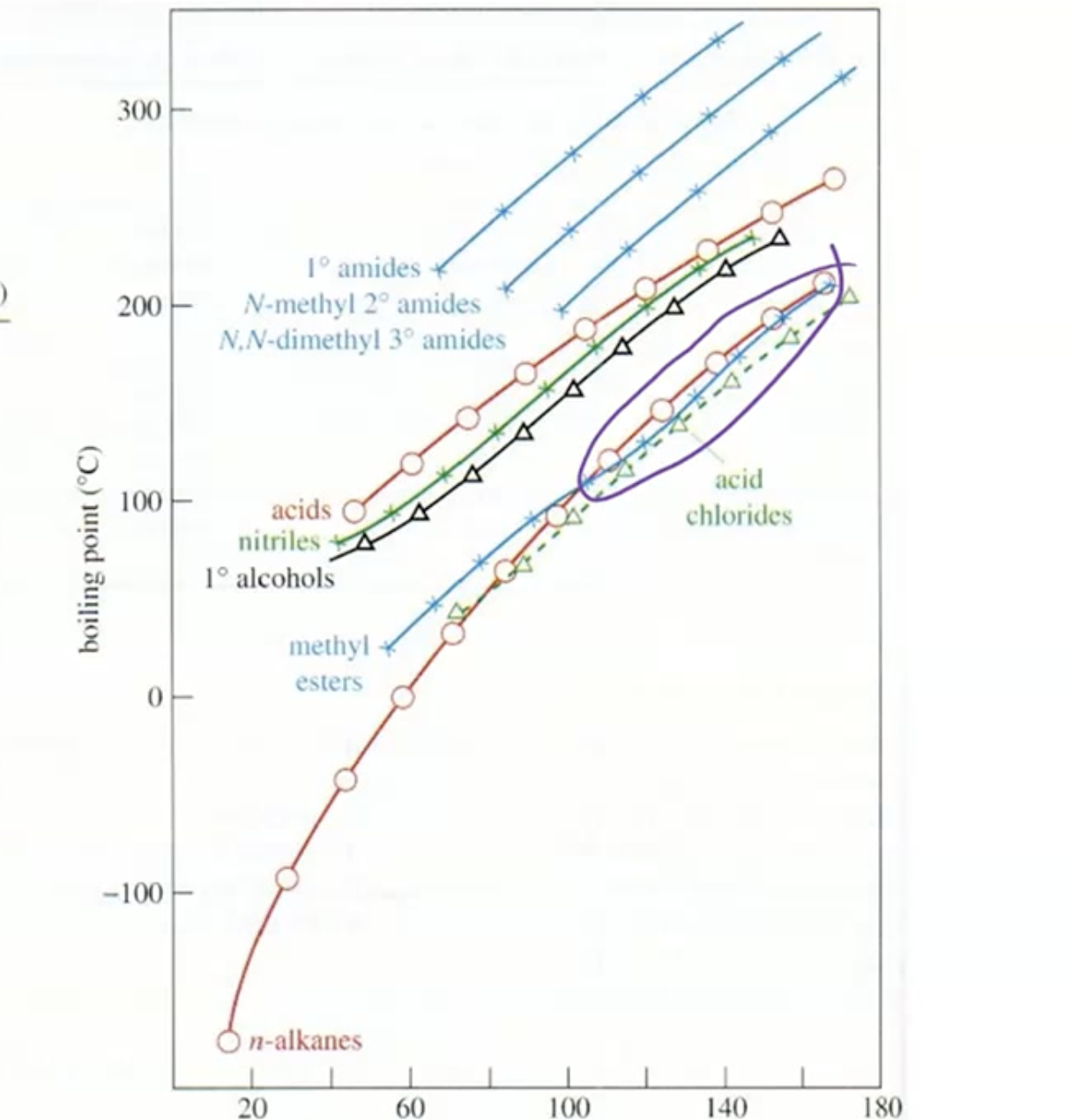
amides have highest boiling point because carboxylic acids create dimers
nitriles have similar boiling point to alcohols.
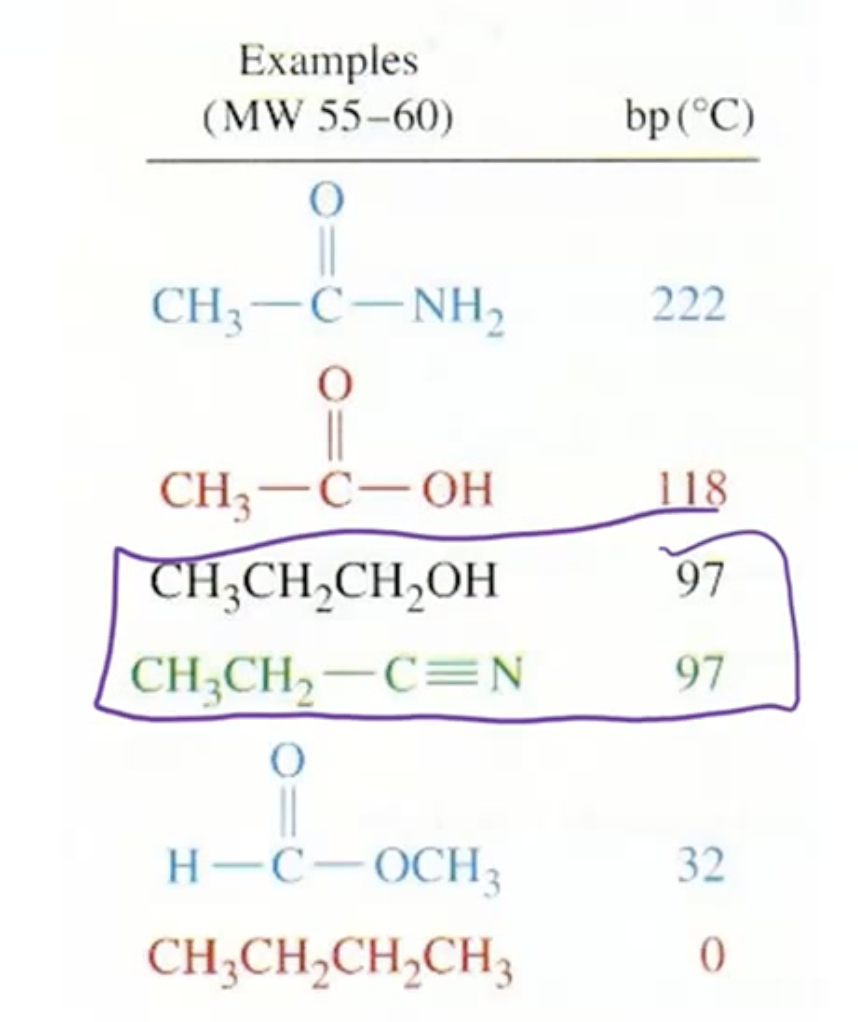
as we go up in weight, boiling points go up.
larger and larger sizes= dipole-dipole attraction in ester become less important
Nitriles
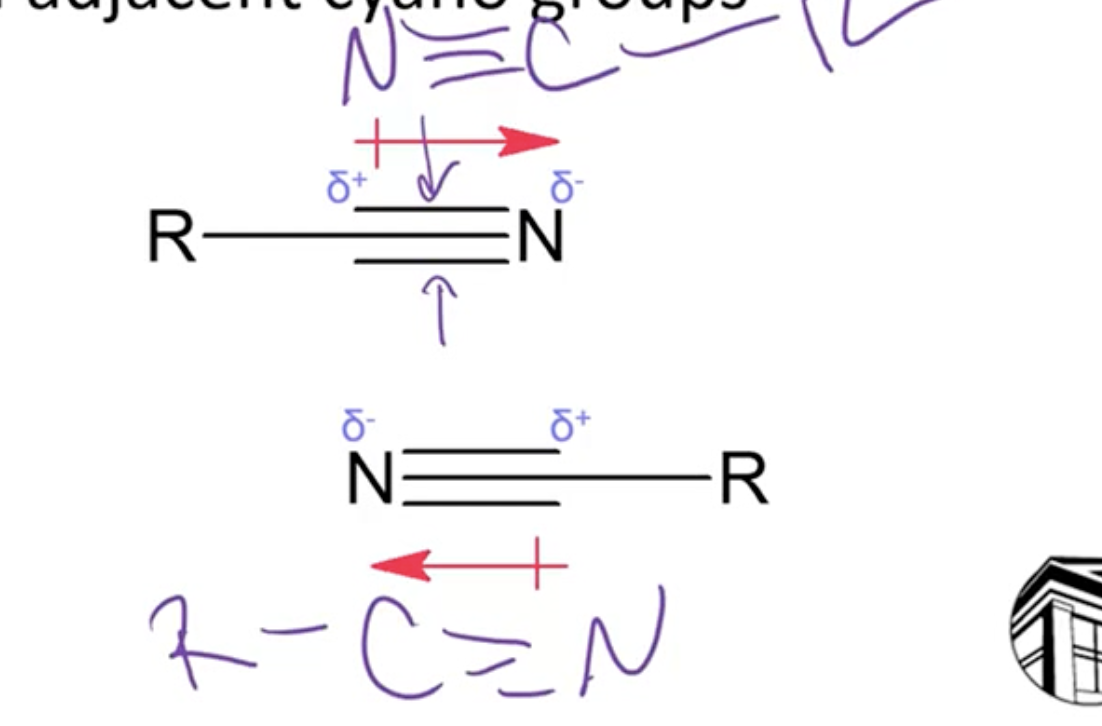
So polar because there are two pi bonds. Pi electrons aren’t held super tight so it can create a significantly larger dipole than expected, therefore, can form dimer like structures
Linear molecule so it can stack very well, increasing its boiling point
Amides
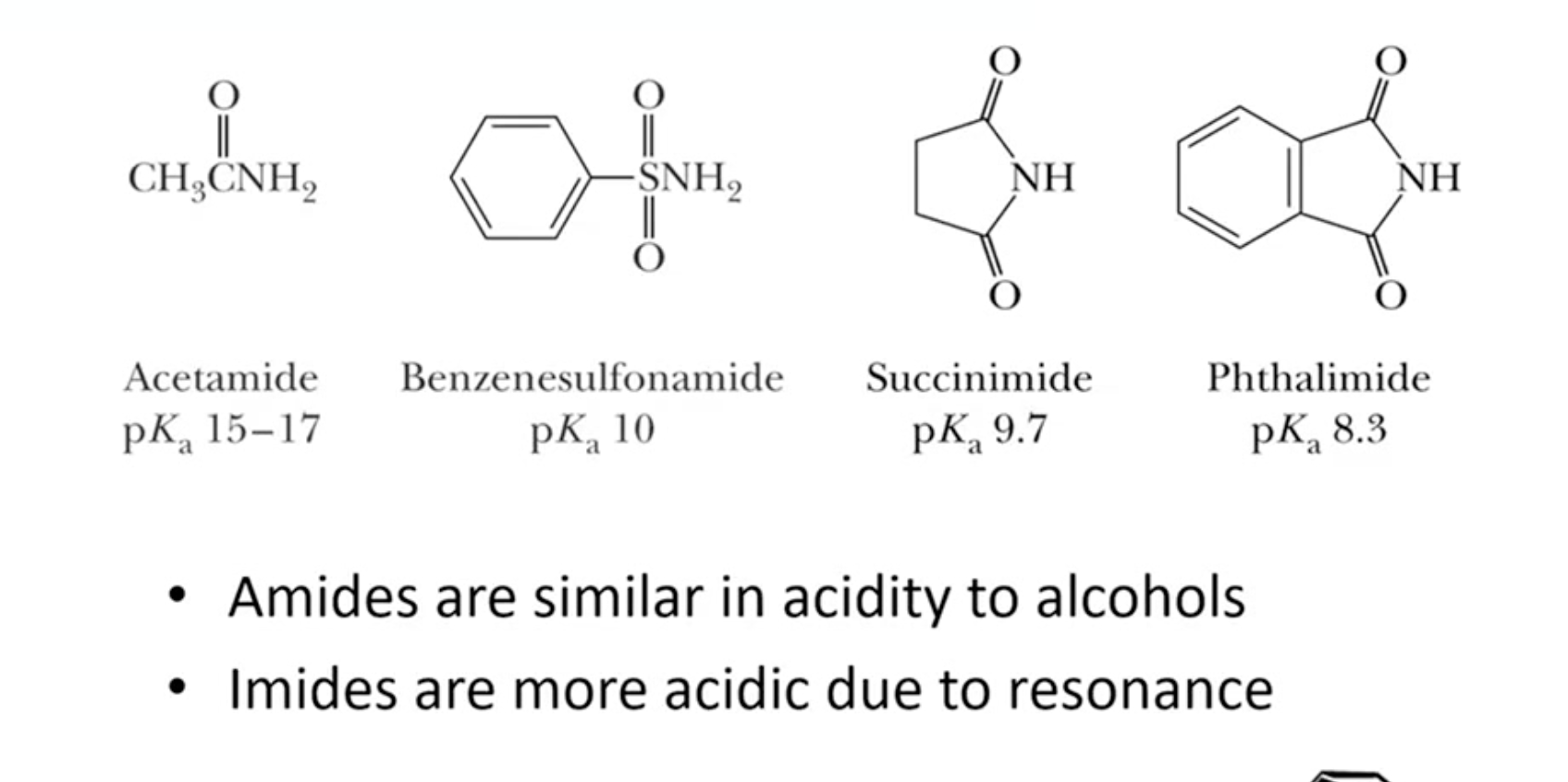
Interactions between amides are very strong. Creates long extended networks that stabilize the amide structure, enhancing their thermal stability and contributing to the high melting and boiling points observed in these compounds.
Protein is a peptide with a purpose that refers to a chain of amino acids linked by amide bonds (peptide bonds), and their three-dimensional structure is crucial for biological function.
Hydrogen bonding along backbone is what keeps the protein in its shape, allowing for the formation of alpha helices and beta sheets, which are essential elements of protein secondary structure. UV light breaks these hydrogen bonds, change shape, and become peptides
Solubility
acid derivatives are soluble in common organic solvents such as alcohols, ethers, chlorinated alkanes, and aromatic hydrocarbons
acid chlorides and anhydrides will react with nucleophilic solvents such as alcohols
small esters, amides, and nitriles are water soluble due to their high polarity and hydrogen bonding
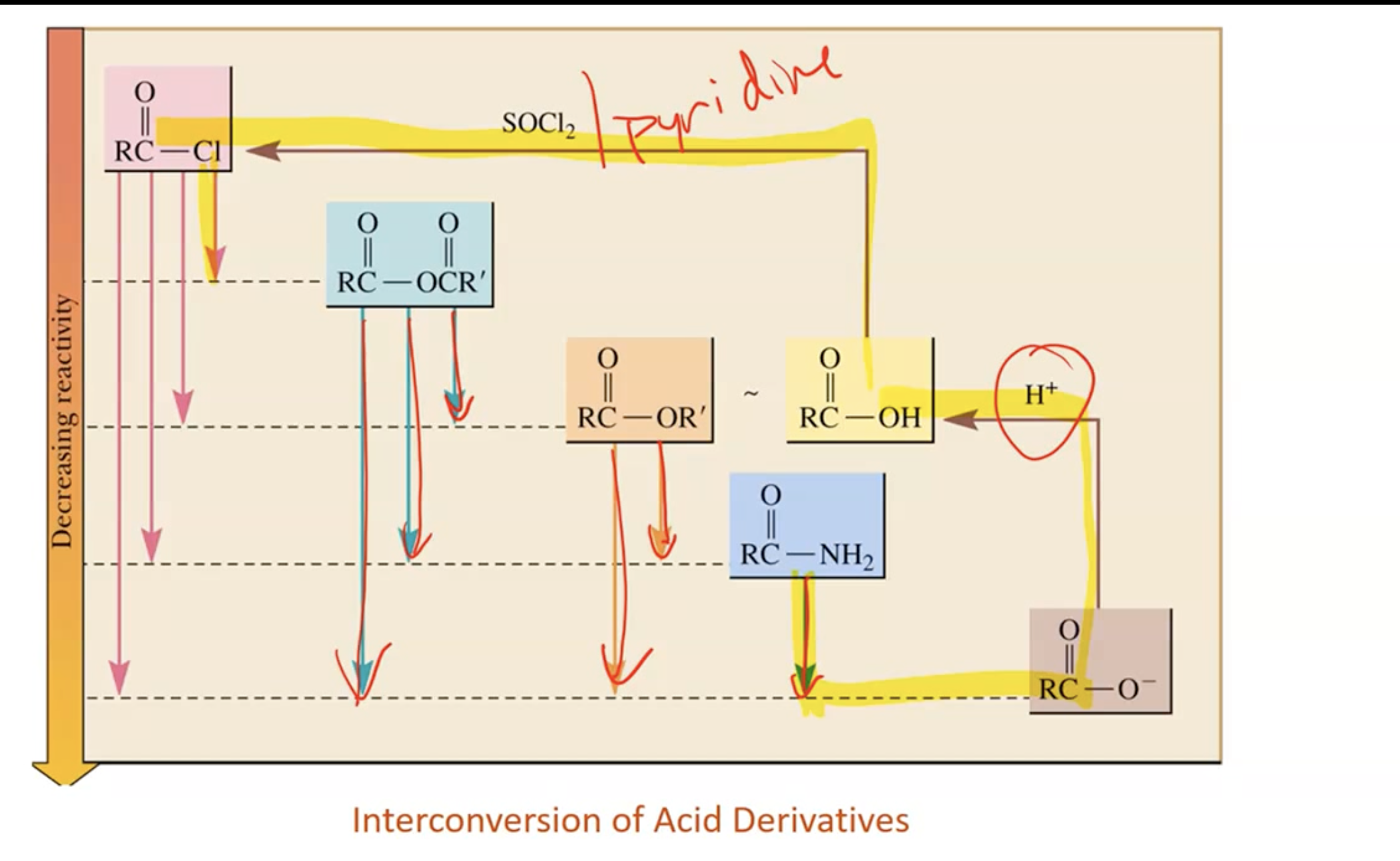
Nucleophilic Acyl Substitution
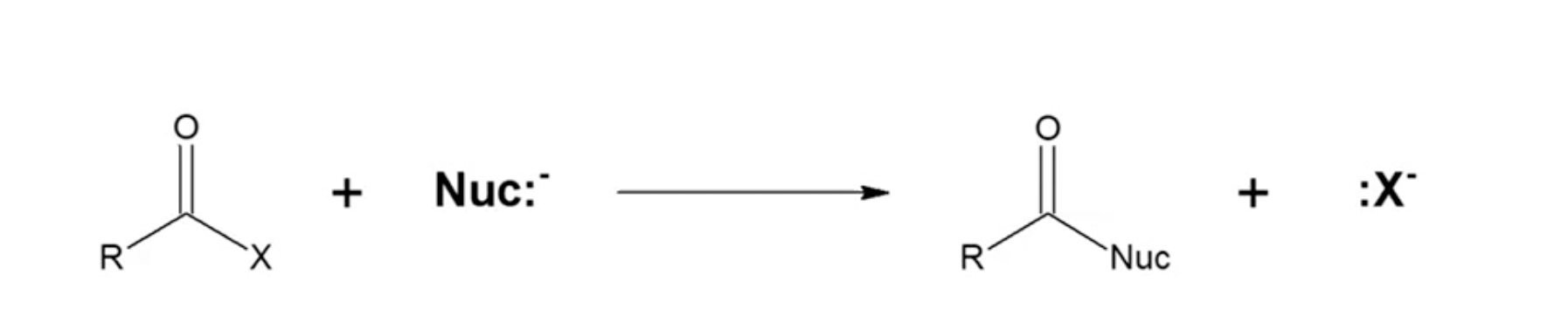
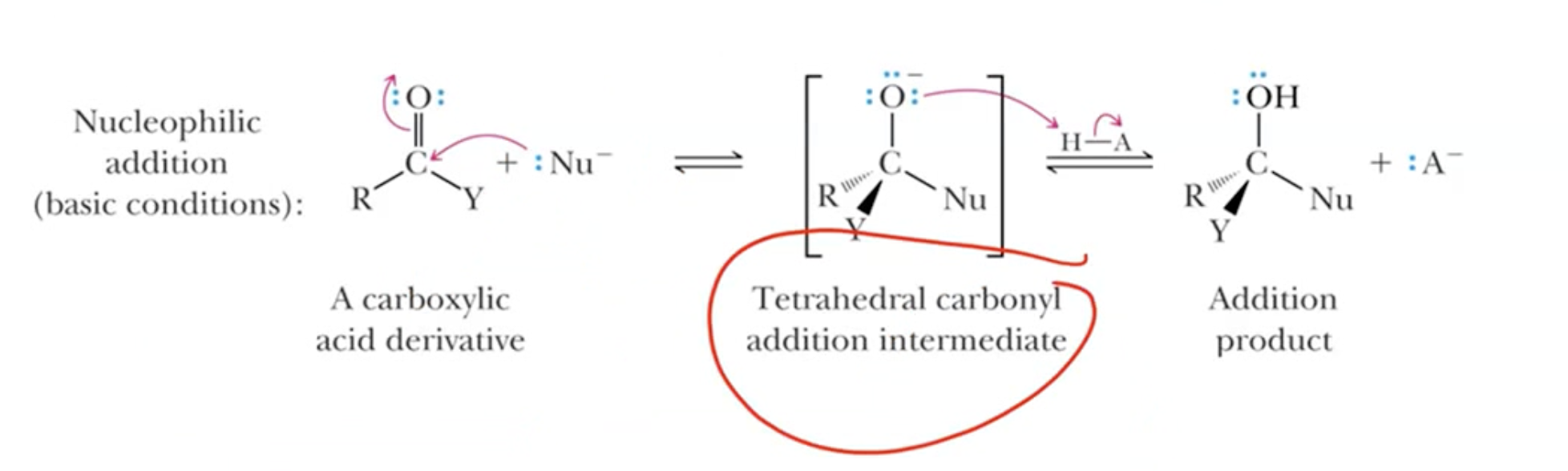
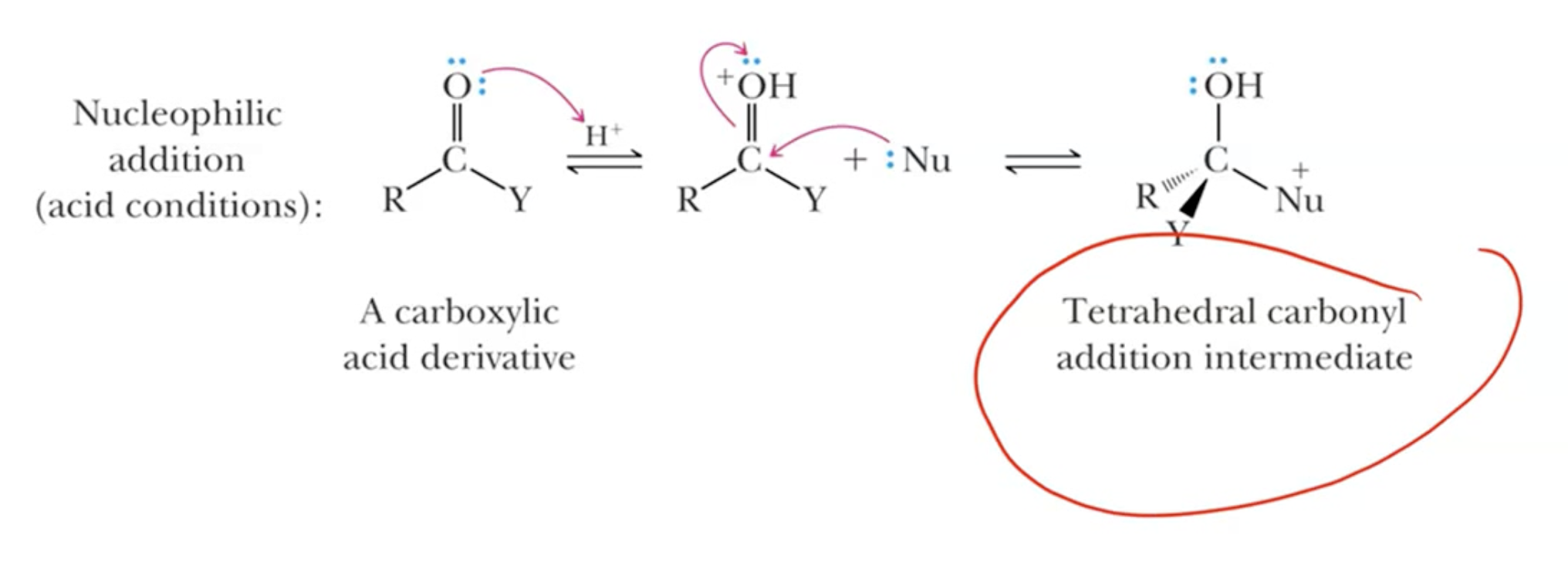
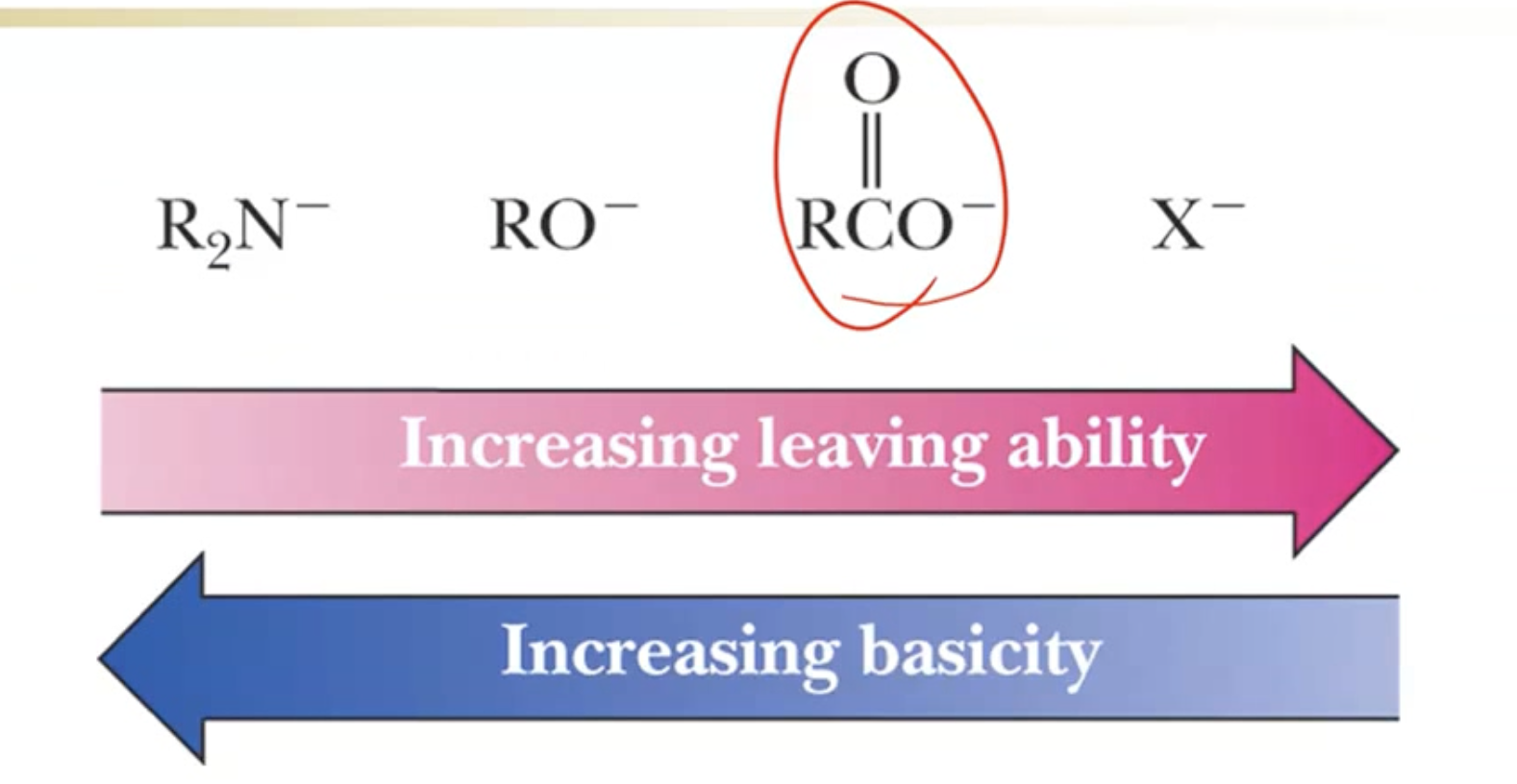
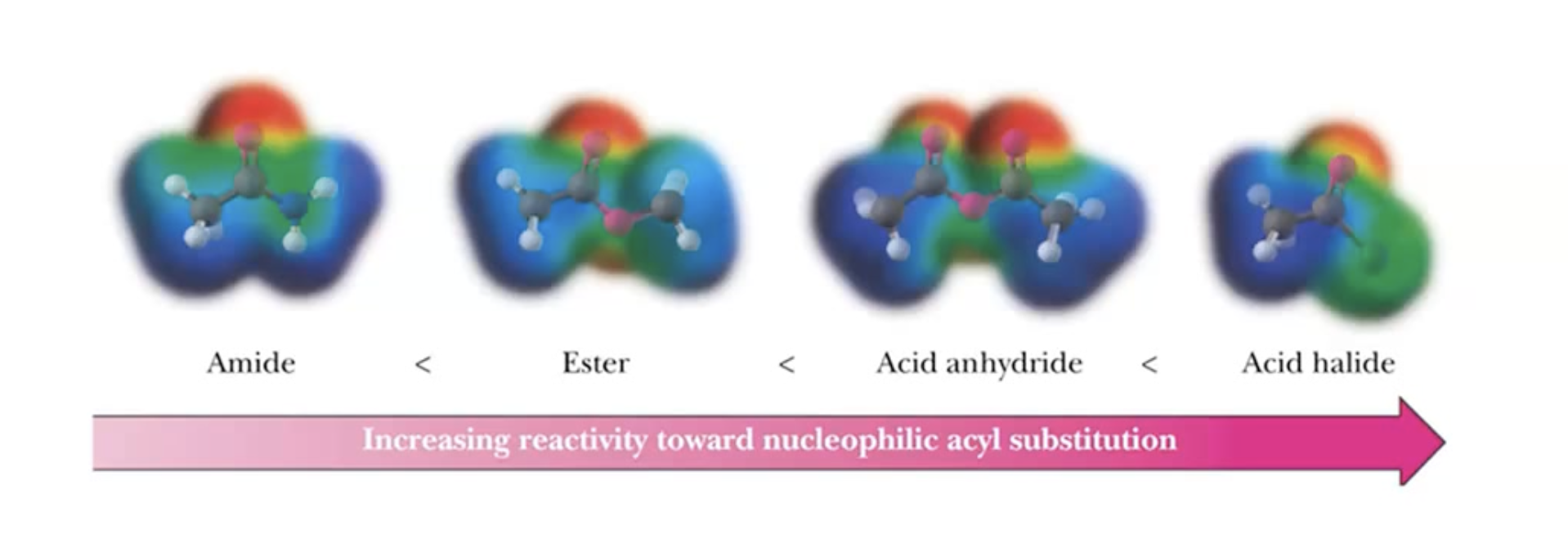
Substitution dependent on leaving group and the charge on the carbonyl carbon
more positive carbon is= faster attack
better leaving group= faster attack (conjugate base of a strong acid, I>Br>Cl>F