Lecture 6: Control of Cell Growth
Prevention of Hospital-Acquired Infections
Methods for prevention: Focus on controlling the growth of microbes
Controlling Microbial Growth
Sterilization: A treatment that destroys all microbial life
Disinfection: reduces the number of pathogens
Types of Disinfection:
Disinfectants: Applied to inanimate surfaces (e.g., tables).
Antiseptics: Applied to living tissues (e.g., iodine on skin).
Microbicidal: kill microbes.
Examples include:
Bactericidal: Kills bacteria.
Virucidal: Kills viruses.
Fungicidal: Kills fungi.
Microbiostatic: stop growth of microbes.
Methods for Controlling Microbial Growth
Physical Methods
Heat: altering membrane and denaturing proteins
works through denaturing proteins, and altering membranes
penetrates to reach microbes through the material
reaches all microbes present
only good for heat-stable materials
example: flame and boiling
Dry Heat methods:
incineration
oven
flame
Moist Heat Methods:
autoclave: uses heat and pressure combo
Typical Settings: 121°C for 15 minutes at 15 psi.
destroys endospores
preferred method for sterilization for lab, surgical and medical equipment
boiling
Boiling is effective but doesn't achieve sterilization.
pasteurization: heats liquids but doesn’t boil them
reduces number of microbes present
Filtration: A method used to filter liquids or air by removing microbes through small filter pores.
Example:
Liquid filtration device utilizing a vacuum (membrane filters)
air filters (HEPA filters)
membrane filters
Radiation (Irradiation): Damages DNA and other molecules
Examples:
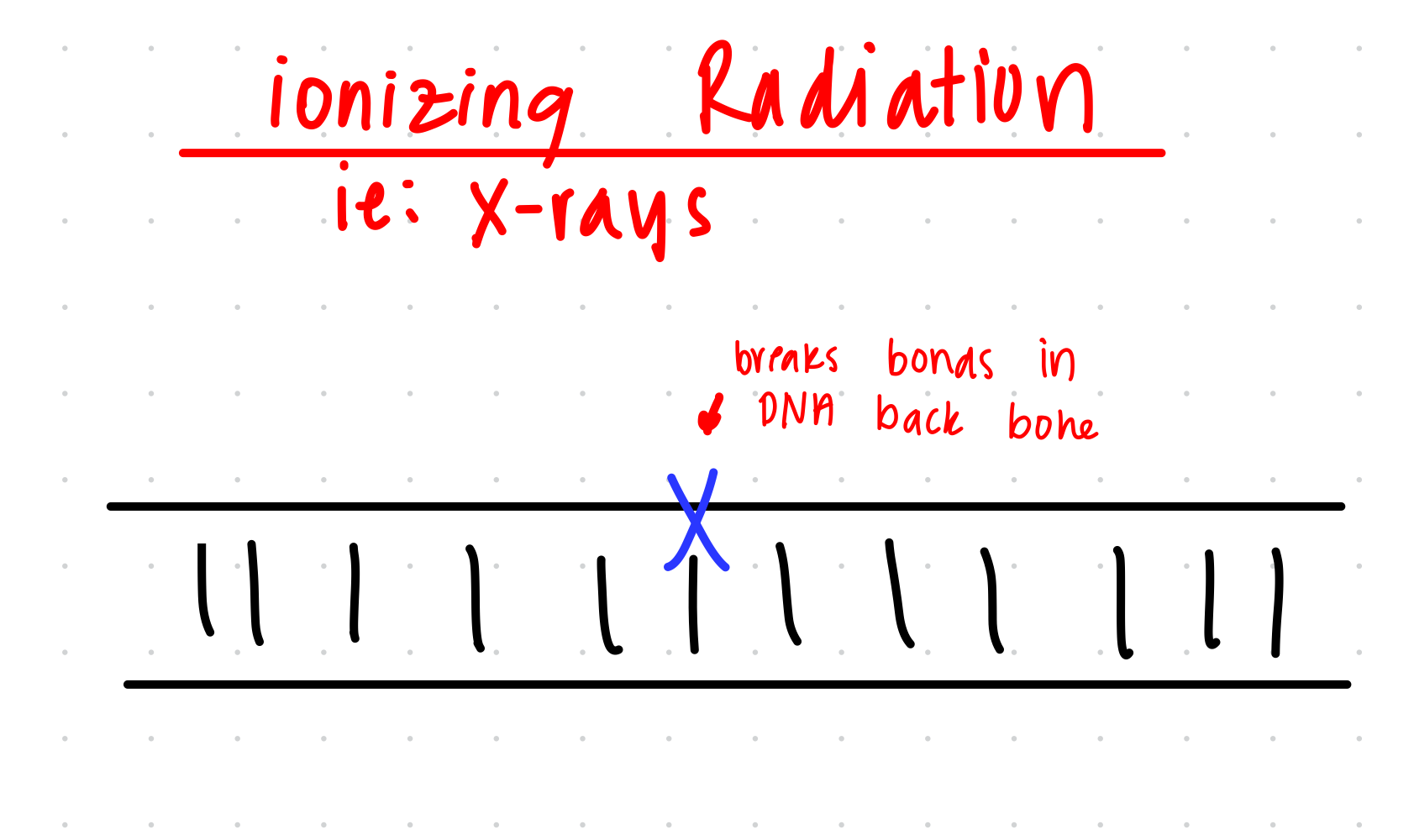
Ionizing Radiation (gamma rays and x-rays): Breaks DNA bonds
causes single or double stranded breaks in DNA backbone
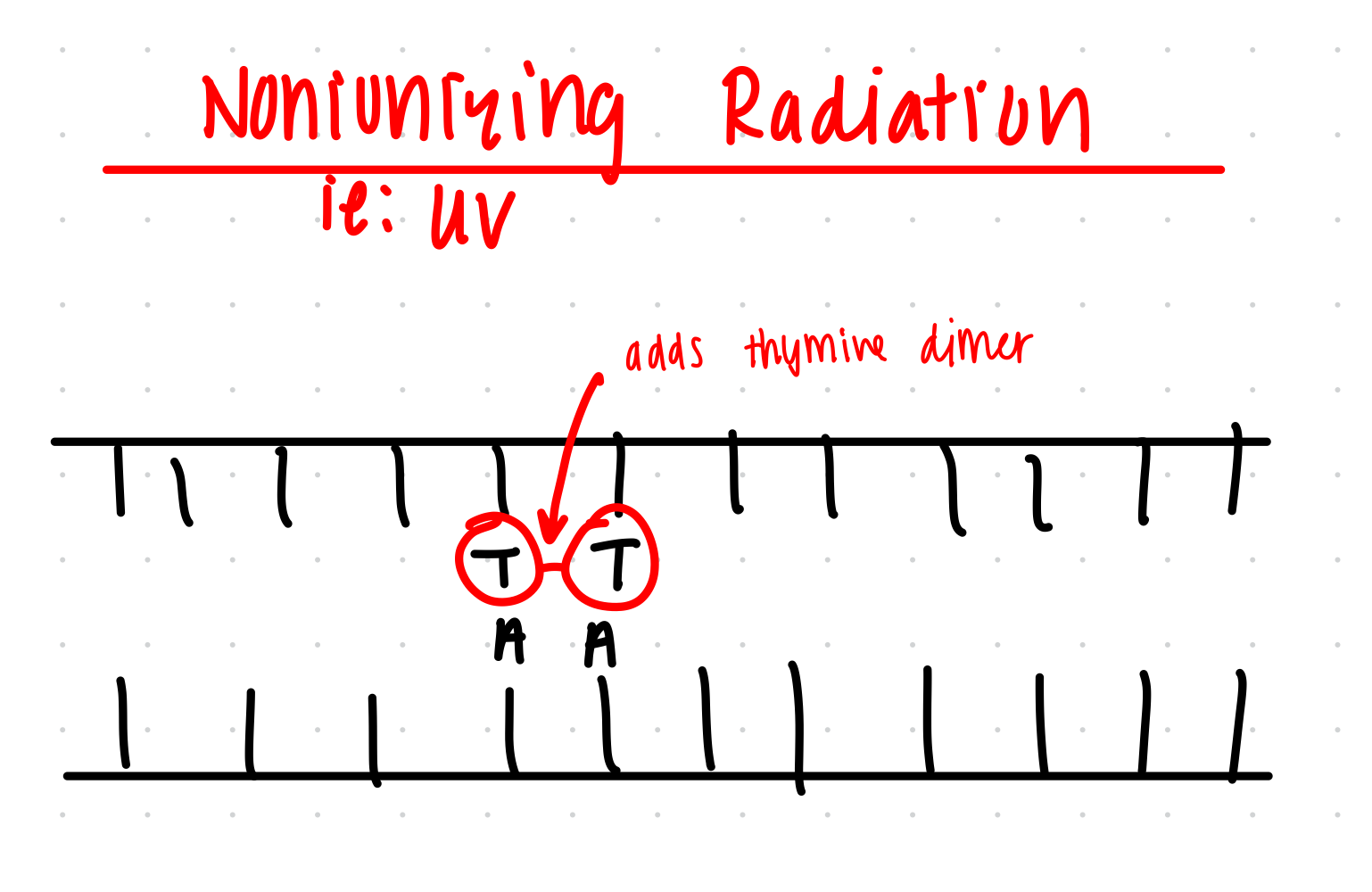
Non-ionizing Radiation (UV Light): Related to natural sunlight, can cause DNA damage.
adds thymine dimer, where thymine become covalently linked
causes frameshift or point mutation
Chemical Methods
Chemical Methods:
dissolve membranes
destroy proteins and other molecules
Types of Chemical Methods:
Surfactants: soap
interact with and emulsify lipids, dats, and oils so they ware washed away by water
have both hydrophilic and hydrophobic properties, aiding in washing away microbes.
hydrophilic end interact with water
hydrophobic end interacts with microbes
Alcohols: ethyl alcohol (in hand sanitizers), isopropyl alcohol (rubbing alcohol)
damage microbial membranes and denature proteins.
Peroxygens: hydrogen peroxide
produce free radicals that damage macromolecules
free radicals: unpaired electrons
very reactive
leads to cellular damage and killing microbes
Halogens: bleach and iodine
oxidizes macromolecules, stealing electrons from microbial molecules to kill them.
Alkylating Agents: ethylene oxide
replaces hydrogen with an alkyl group
alkyl group: carbon and hydrogen
destroying molecule, including DNA
enters crevices, small enough to even penetrate pores of plastic
works at low temperature
good for plastic