Cinematography and shot types
What are shot types
shots are defined by their size
shots defined by the number of people in them
shots defined by their function
shots defined by the angle
shots defined by their focus
shots defined by their movement
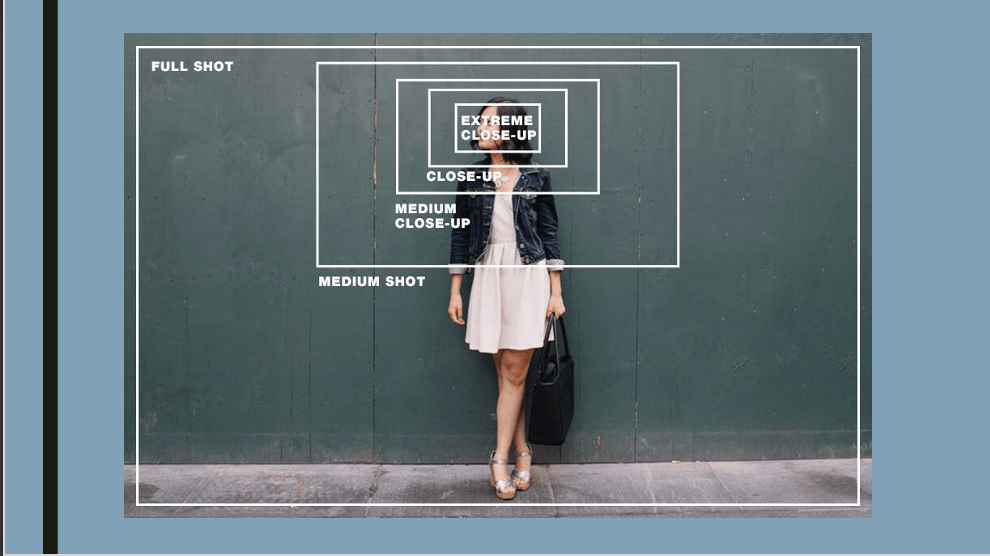
shot sizes
ELS — extreme long shot
establishes a vast scale, showing the environment as more dominant than any characters
characters are small and distant emphasising their insignificance or struggle against their surroundings
LS — long shot
FS — full shot
WS/LS — Wide/long shot
shows the entire subject from head to toe, placing them clearly within their environment
balances the visibility of the subject’s body language with a clear sense of their surroundings
good for estabilishing shots
MFS — medium full shot
frames a character or a group from approximately the knees up, showing their body language and posture
ideal for showing character interactions with their immediate environment and with other characters
provides context for action while still keeping the subject clear and identifiable, common in walk-and-talk scenes
MS — medium shot
more objective than ECU and CU
includes more of the character’s body but close enough to show facial emotions as well
good for dialogue scenes as it allows to include more characters in the shot
MCU — medium close up
CU — close up
a landmark of the cinematic art form
creates intimacy
our eyes are drawn to the character’s face and especially their eyes
builds characters and allows viewers to bond with the characters
ECU — extreme close up
subjective
should be used with care
useful for adding effect or emphasis certain details
number of people in a shot
single (clean or dirty)
two shot
three shot
four shot (group shot)
function
establishing shot
typically at the beginning of a scene that establishes the location and context for the action that follows
cutaway
a shot that cuts away from the main action to show related imagery, often to provide contect
over the shoulder
point of view
angles
EL — eye level
HA — high angle
LA — low angle
DA — dutch angle/tilt
OTS — over the shoulder
POV — point of view
BEV — bird’s eye view
WEV — worm’s eye view
OH — overhead
GL — Ground Level
HL — hip level
KL — knee level
SL — shoulder level
focus
deep focus
shallow focus
rack focus
movement
static
pan
tilt
dolly
crane/boom/jib
shot taken by a camera on a moving crane or jib
handheld
zoom
steadicam
drone
tracking/following shot
a shot in which the camera physically moves through space, often following a subject or exploring an environment