Lungs
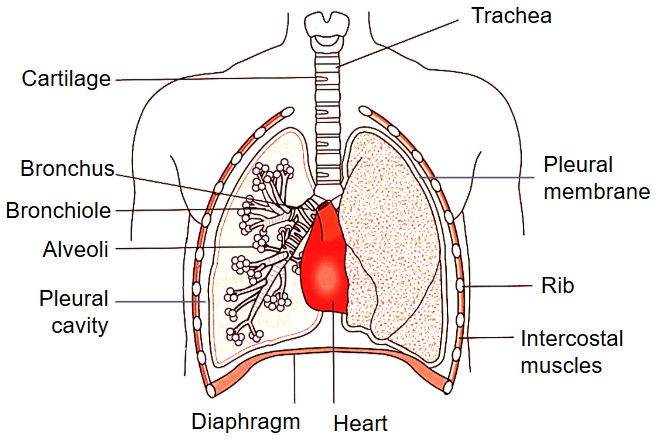
Human gaseous exchange system
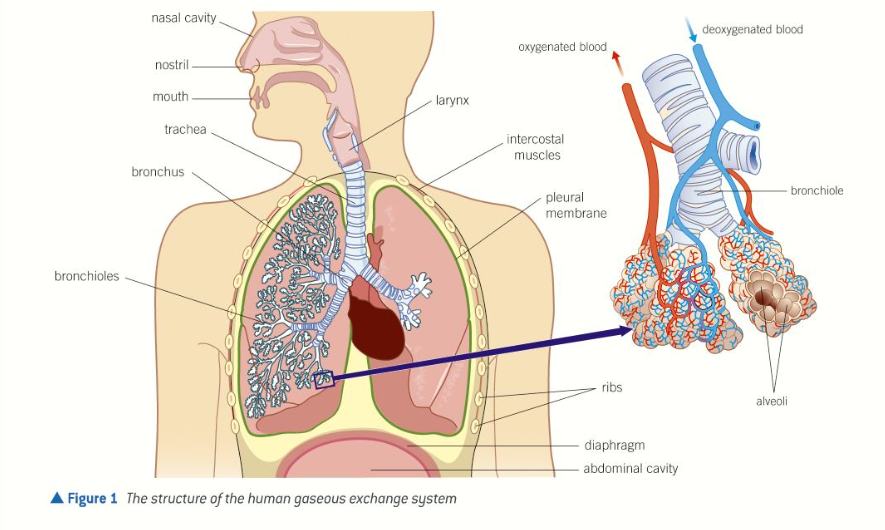
Nasal cavity
large SA with good blood supply - warms air to body temp
hairy lining which secretes mucus to trap dust and bacteria - protects delicate lung tissue from irritation and infection
moist surfaces increase humidity of incoming air so reduces evaporation from exchange surfaces
Bronchus
trachea divides to form left and right bronchi
similar structure to trachea but with smaller supporting rings of cartilage
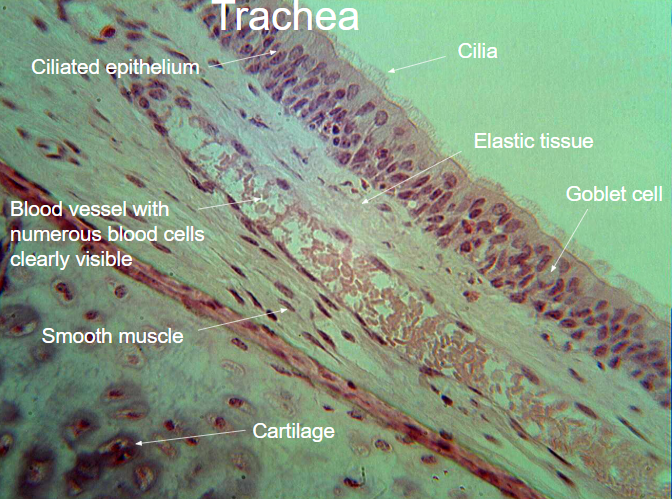
Trachea
ciliated epithelium
tissue
cilia waft to move mucus up to the throat where it is swallowed
stomach acid and enzymes kill any bacteria
goblet cells
release mucus to trap dirt and bacteria and protect the epithelium
Bronchioles
bronchi divide to form many small bronchioles
no cartilage rings
walls contain smooth muscle
smooth muscle contracts and bronchioles constrict (and vice versa) meaning amount of air that can reach the lungs is controlled
lined with a thin layer of flattened epithelium making some gaseous exchange possible
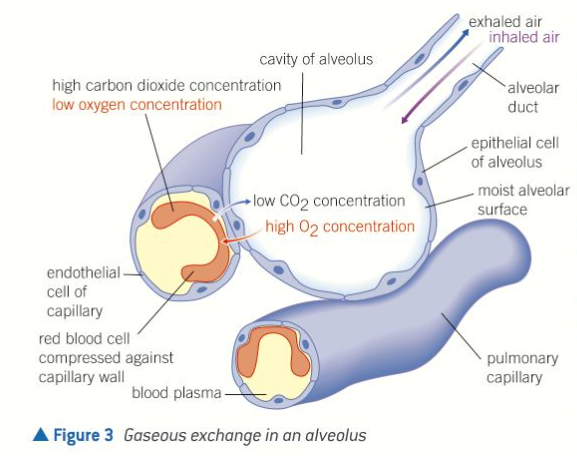
Alveoli
main exchange surface of the body
layers of thin flattened epithelium cells
collagen and elastic fibres
elastic tissues allow alveoli to stretch as air draws in. when return to resting they help squeeze air out - elastic recoil
thin layers
good blood supply
good ventilation
inner surface covered in thin layer of solution of water, salts, and lung surfactant
makes it possible for alveoli to remain inflated