Capacitance Final Study Guide:
Formulas
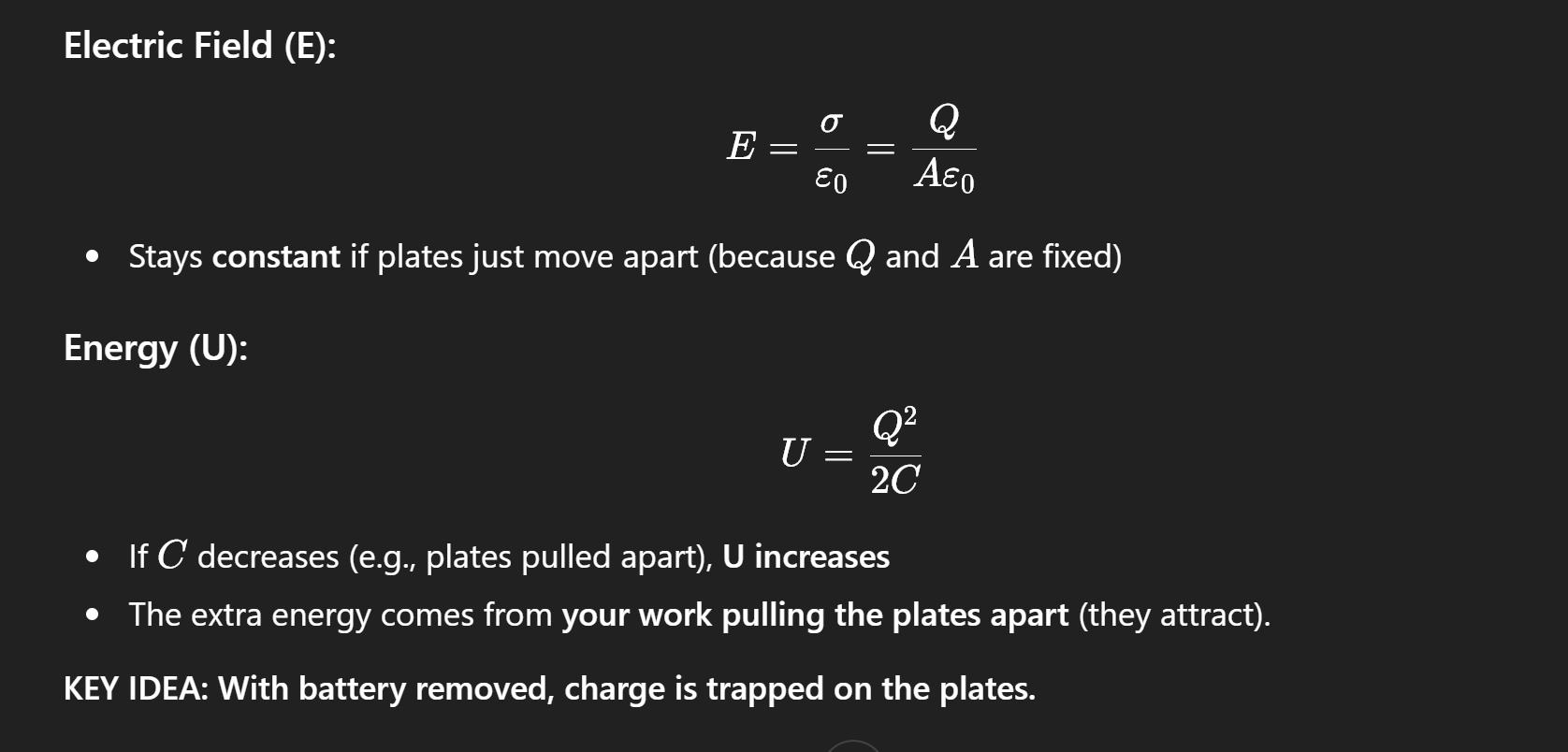
U = ½ CV² = Q²/2C
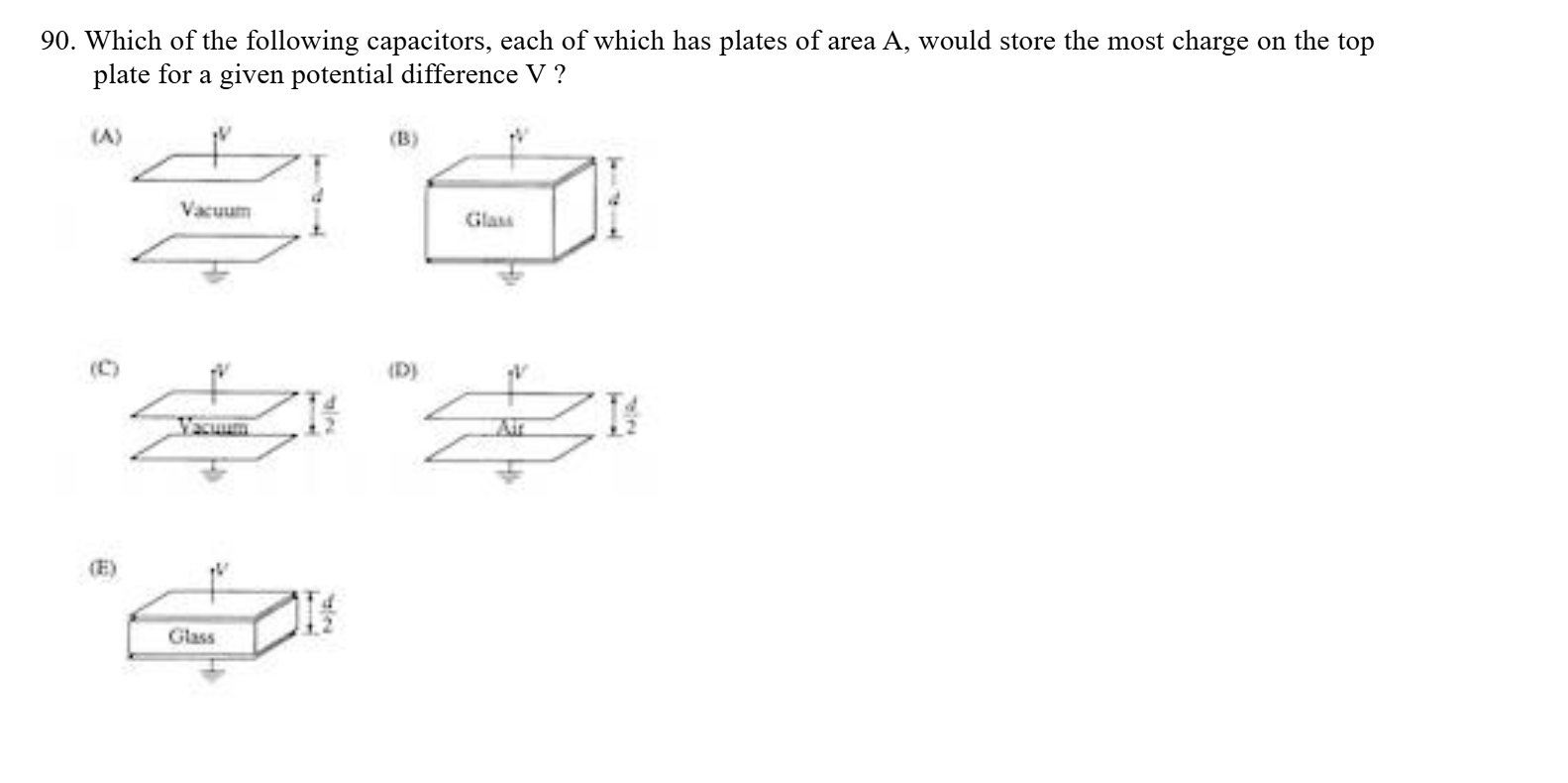
C = Kε₀A/d
charge of proton 1.6 × 10^-19
mass of proton 1.67 × 10 ^-27
mass of electron 9.1 × 10^-31
Capacitors
✔ Summary Table
Capacitor Arrangement | Charge | Voltage |
|---|---|---|
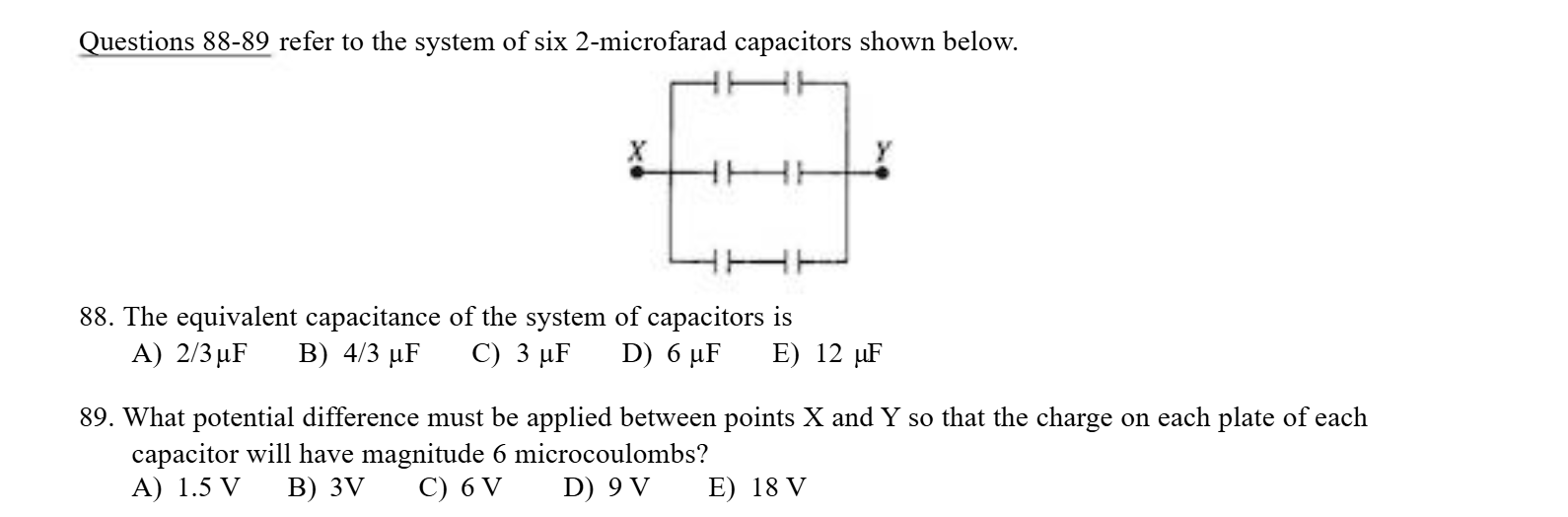
Series | Same on each capacitor | Splits (different values) |
Parallel | Splits (different values) | Same on each capacitor |
🔥 Intuition (this helps for tests)
Series = same current path → same charge.
Parallel = same connection to battery → same voltage.
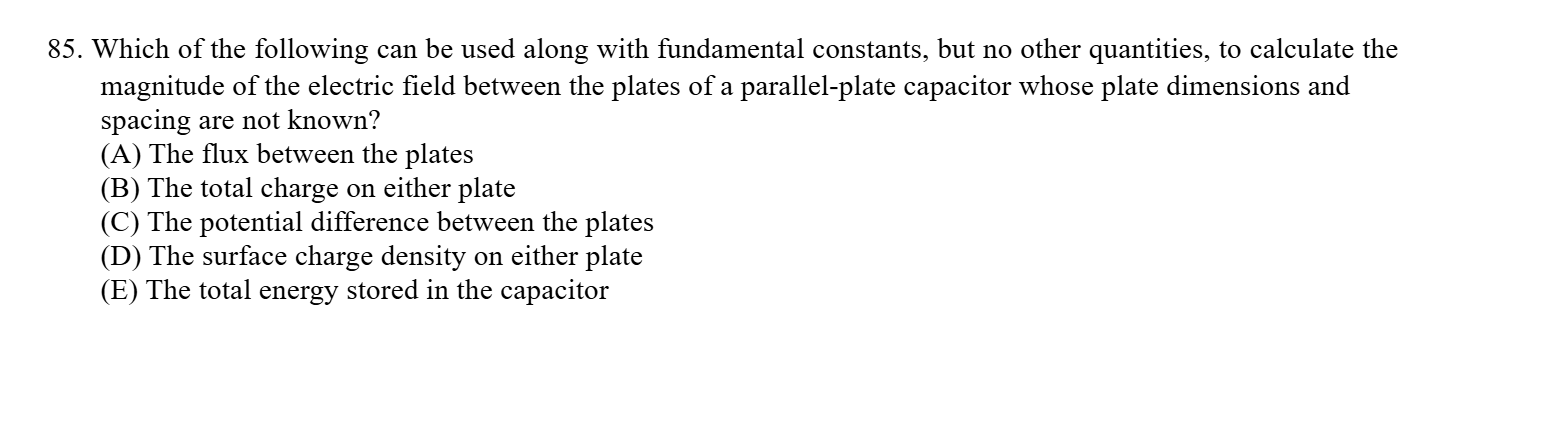
Capacitance is defined by geometry and material, NOT by charge or voltage.
Because Q and V automatically adjust themselves depending on the capacitor’s physical structure.
The ratio Q/V stays fixed for a given capacitor.
Isolated capacitor → CHARGE REMAINS CONSTANT, E field remains constant
Dielectrics
Dielectrics increase capacitance
Energy
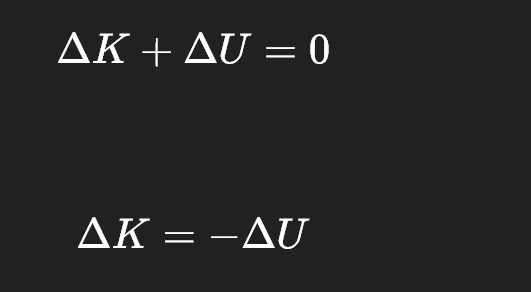
KE = qV

Batteries
Battery stays connected
VOLTAGE STAYS CONSTANT
Charge changes based on the relationship V = Q/C
Since V is fixed → E = V/d
Battery is removed → capacitor is isolated
Q is constant
V adjusts on the relationship V = Q/C
E is constant
Practice Problems