Microbial Diseases and Medical Microbiology
Airborne Pathogens
most transmitted between people over very short distances
Staphylococcus, Streptococcus, and Mycobacterium species (thick cells walls that are more resistant to drying)
aerosol droplets person-to-person through coughs or sneezes
exploit upper and lower respiratory tracts
diseases affecting upper less severe than lower
Streptococcal disease → airborne or by direct contact
Streptococcus pyogenes = streptococcal pharyngitis, scarlet and rheumatic fever, necrotizing fasciitis
scarlet fever → “strawberry tongue”
necrotizing fasciitis → SpeA,B,C,F exotoxins and bacterial surface M protein function as superantigens
Rheumatic fever → autoimmune disease; inflammation and tissue damage
Lysogenic phage-encoded streptococcal exotoxin A (SpeA), SpeB, SpeC, SpeF: responsible for streptococcal toxic shock syndrome (TSS)
TSS results when T cells secrete cytokines
Streptococcus pneumoniae = pneumonia
Streptococcal pharyngitis = strep throat
symptoms: severe sore throat, enlarged tonsils, red spots of the soft palate, tender lymph nodes, fever, malaise
causative agent: S. pyogenes, production of exotoxins
diagnosis: rapid antigen detection test, culture of S. pyogenes on blood agar
treatment: antibiotics
vaccines: no effective vaccines available
secondary complications: if left untreated, can lead to scarlet fever, rheumatic fever, acute glomerulonephritis, and toxic shock syndrome
Tuberculosis (TB)
symptoms: chronic cough, host immune response to TB → formation of macrophage aggregates, primary or secondary infection
diagnosis: tuberculin skin test, chest x-ray
cause: Mycobacterium tuberculosis, Mycobacterium bovis (less common)
Mycobacterium tuberculosis
Actinobacteria phylum
thick waxy layer of mycolic acid, can’t perform gram stain, need acid-fast staining
rough appearance on agar
treatment → Isoniazid, Rifampin, daily doses for 2 months
vaccines → BCG
Leprosy (Hansen’s Disease)
transmission → aerosols and direct contact
symptoms: lesions to the body, disfiguring lesions if left untreated, loss of bone calcium (slow shrinking of digits)
causative agent → Mycobacterium leprae, can grow inside macrophages
treatment → multiple drug therapy for 1 year, Dapsone, Rifampin, Clofazimine
Meningitis and meningococcemia
symptoms → inflammations of meninges, headaches, stiff neck, vomiting, can lead to coma and death, tissue destruction
causative agent → Neisseria meningitidis
diagnosis → bacterial culture
treatment → penicillin, Rifampin
vaccines → Meningococcal B vaccine
Cholera
causative agent → Vibrio cholerae
need >10^8 cells to cause disease
ingested cells attach to epithelial cells in small intestine and release toxins
key virulence factor = cholera toxin CT (forms pentameric CtxB + CtxA complex) → encoded in prophage
symptoms → watery diarrhea, vomiting, massive loss of fluids
transmission → fecal-oral route through contaminated water or shellfish
treatment → oral rehydration therapy
Cholera epidemics → 7 pandemics occurred, numerous smaller outbreaks
Helicobacter pylori and gastric diseases
epidemiology → high incidence of transmission within families (direct contact)
symptoms → gastritis, stomach ulcers, can lead to stomach cancer
causative agent → helicobacter pylori
diagnosis → detected by ingestion of radiolabeled urea or biopsy
treatment → combination of antimicrobials, antibiotics, and antacids
Plague
3 disease forms:
bubonic
pneumonic
septicemic
causative agent → Yersinia Pestis
virulence factors: Va nd W antigens prevent phagocytosis, murine toxin causes septic shock, liver damage, and respiratory distress in mice
Bubonic form → most common, travels to lymph nodes and cause swelling
pneumonic → inhaled directly or reach lungs via lymphatic circulation
septicemic → enters blood stream and causes septicemia; local hemorrhages produce dark splotches or cause tissue necrosis
transmission → flea bites
treatment → antibiotics
at least 3 major pandemics
1: early middle ages, 25-50 million deaths
2: 14th-19th century; black death; 75-200 million
largest non-viral epidemic
3: 19-20th century; 15 million deaths
Viral Diseases
Common Cold → infect upper respiratory tract
symptoms → rhinitis (inflammation of nasal region)
causative agent →
Rhinoviruses (~75%) - ss (+) sRNA virus
coronaviruses (~15%) - not COVID
others
diagnosis → rarely diagnoses
treatment → over the counter medication
Influenza → highly infectious
symptoms → fever, headache, malaise, can lead to secondary infections
treatment → management of symptoms, antivirals if needed
vaccines → yearly vaccinations
Antigenic drift: new vaccine prepared each year against major strain
vaccine efficacy reduced next year due to new surface antigens appearing through mutations
influenza virus has 8 genome segments
re-assortment of viral genome segments of different origins can happen
pandemics and outbreaks happen from re-assortments and emergence of new strains
Ebola → direct contact with blood or bodily fluids
symptoms → fever, weakness, headaches, diarrhea, vomiting
causative agent → ebola virus
treatment → currently no drugs, only supportive care to alleviate symptoms
vaccines → several in development
Dengue Fever → transmitted by mosquitoes
causative agent → dengue virus
symptoms:
asymptomatic
mild - high fever, headache, joint pain, rashes
severe - dengue hemorrhagic fever
diagnosis: tourniquet test
treatment → supportive care
no current vaccines
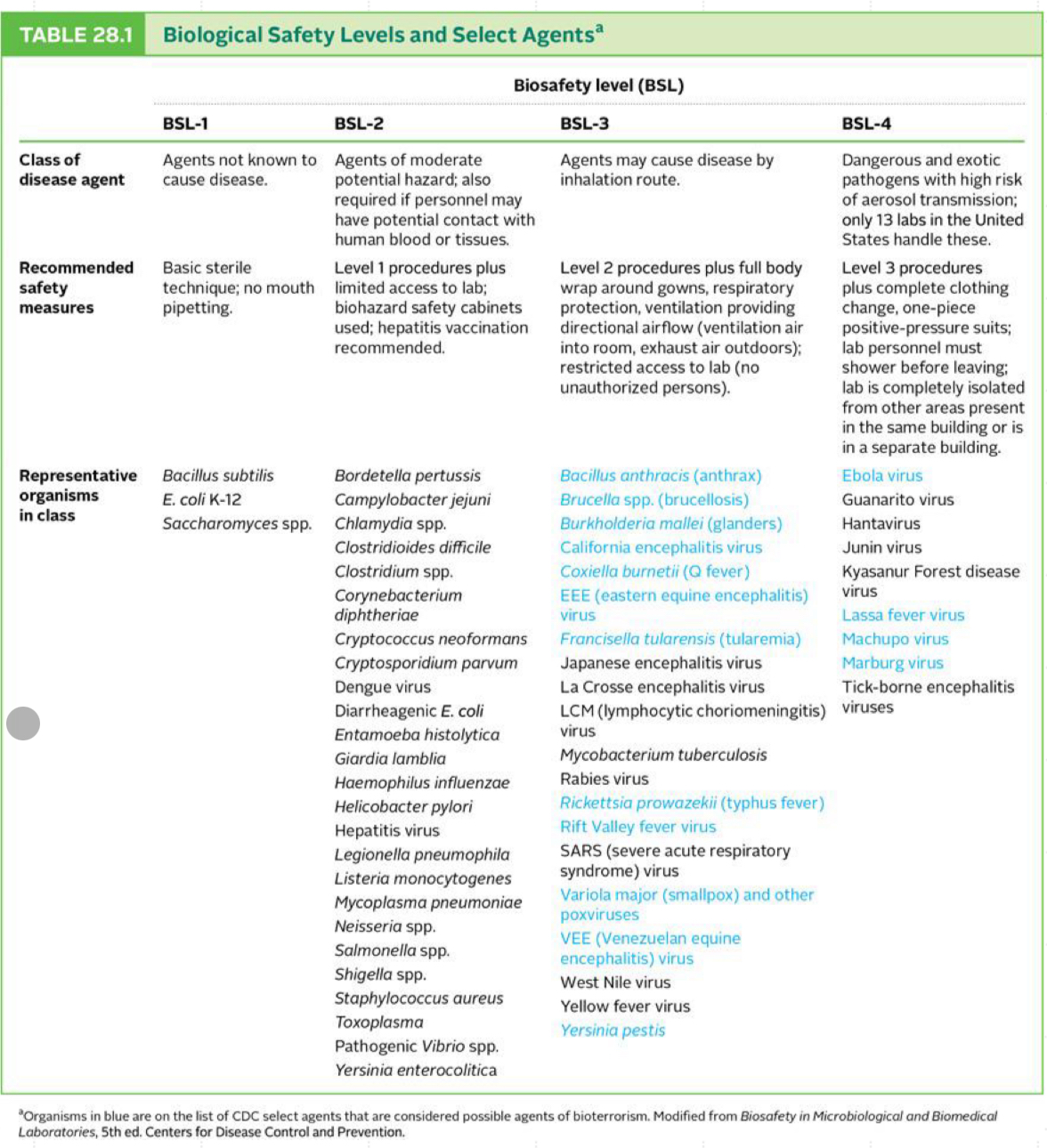
BSL-4 Labs: highly specialized labs to handle most dangerous pathogens
workers wear full-body suits with outside air supply/ventilation and air locks control all access to labs
Clinical Specimen Collection and Handling
Step 1: identify the most likely suspects
observing disease symptoms in patients
knowing which organism produces such symptoms
being aware of similar disease outbreak nearby
identifying the etiological agent (crucial)
use appropriate treatments
anticipate likely sequelae (sore through could signal mild infection)
track spread of disease
Biosafety Containment Procedures
Algorithms: step-by-step problem solving procedures developed by clinical microbiologists to expose the most likely cause of a given infectious disease
binary yes/no questions about the clinical speciment
biochemical tests
serological tests
Selective Media: inhibits the growth of certain groups of organisms; allows initial selection and growth of pathogen
Differential media: facilitates identification by confirming characteristic biochemical traits