Hygeine Instrument Overview: Curettes, Scalers, Ultrasonic Tips, and Tray Setup
Curettes
Primary purpose: remove deposits and stains from teeth; remove soft tissue lining of periodontal pockets and root surfaces; perform root planing and periodontal debridement as part of perio therapy.
Tools discussed include various types of curettes with specific indications for supragingival, subgingival, and pocket debridement.
Universal curettes
Used to scale both supra-gingival and sub-gingival surfaces.
Functions: remove deposits and stains from teeth; can aid in removing soft tissue lining of periodontal pockets and root surfaces.
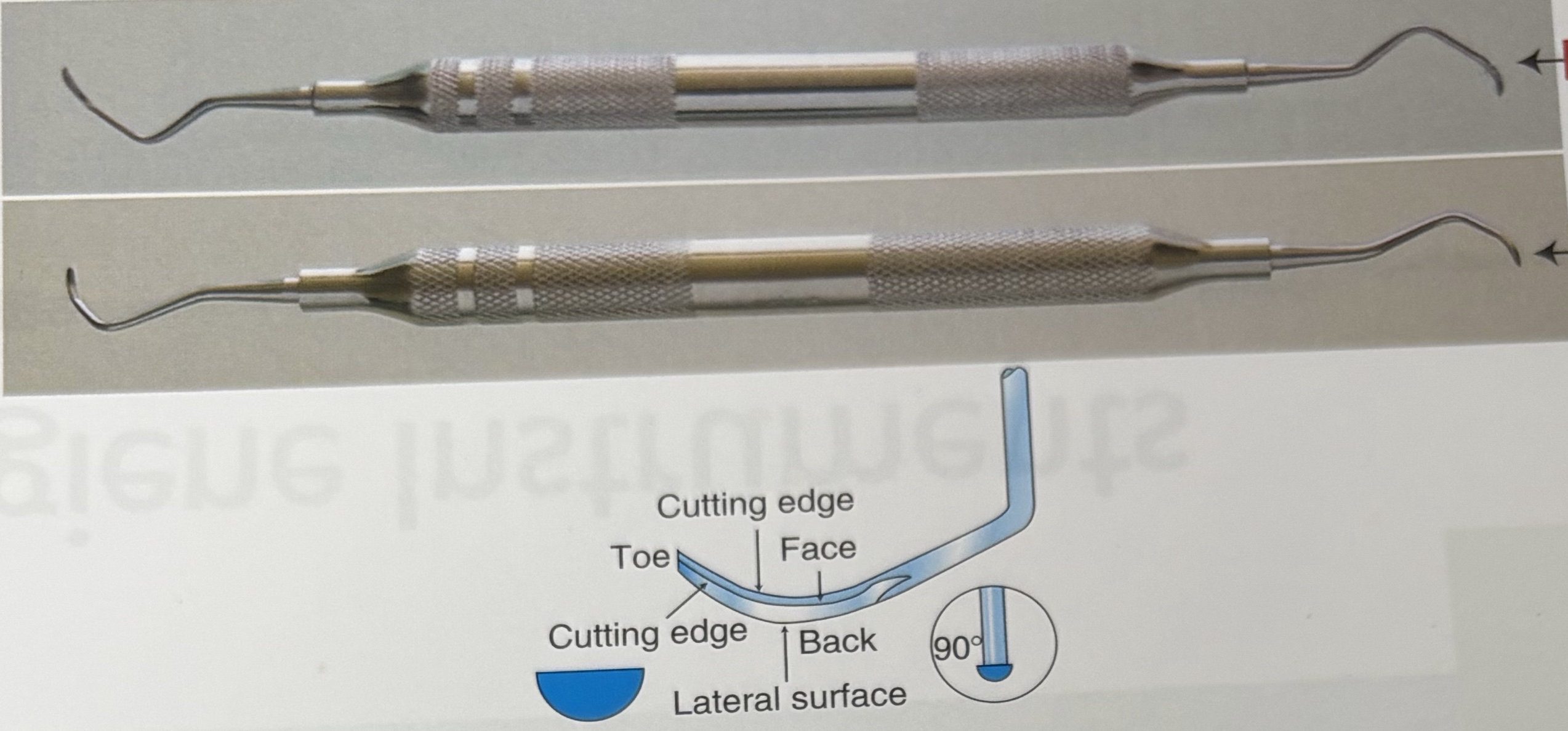
Langer universal curettes
Used on hygiene and periodontal tray setups.
Intended for similar broad-surface scaling and debridement as universal curettes.

Area-specific curettes
Anterior area-specific curettes: used on hygiene and periodontal tray setups.
Posterior area-specific curettes: used on hygiene and periodontal tray setups.
Functions: scale subgingival surfaces; assist in root planing, periodontal debridement, and soft tissue curettage.

Extended area-specific curettes
Anterior extended-area curettes: scale and remove deposits in deep pockets.
Posterior extended-area curettes: scale and remove deposits in deep pockets.
Indication: effective in pockets ext{≥ }5 ext{ mm} or deeper.
Note the transcript refers to “five millimeters or deeper” for deep-pocket treatment.
These are designed to reach deeper subgingival areas than standard area-specific curettes.
Additional emphasis: many extended-area curettes exist for improving access to deeper sites.

Micro mini five-area-specific curette
Designed for narrow pockets and furcations; scale in periodontal pockets and root surfaces of ext{≥ }5 ext{ mm}.
Used when access is limited or when pockets are deep and narrow.

Gracey (Gracie) curettes
Specific curettes with numbered designs for regional access:
Gracey 1/2
Gracey 3/4
Gracey 7/8
Gracey 11/12
Gracey 13/14
Used to access specific tooth surfaces on designated quadrants; part of root planing and debridement.
Implant scaler
Used to remove deposits and stains from the surface of dental implants.
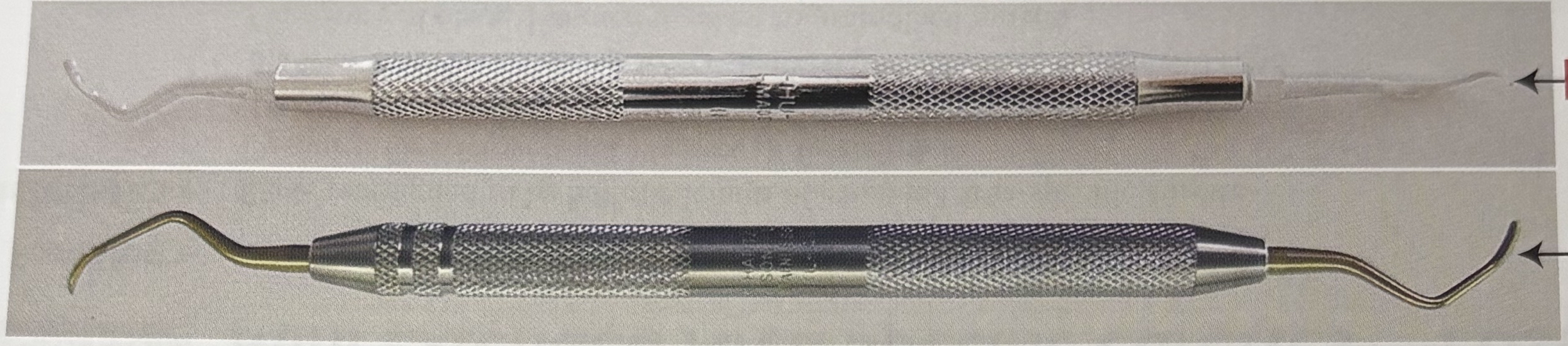
Scalers for supra-gingival deposits
Straight sickle scaler: removal of large deposits from supra-gingival (and general) surfaces.
Curved sickle scaler: removal of large deposits from supra-gingival surfaces.
Other notes on curettes
Some sections of the transcript reference numerous extended-area and anterior/posterior variants; terminology appears garbled in places (e.g., “Tourette’s,” “QRS”), but the core concepts are: extended-area curettes exist for deep pockets; anterior vs posterior variants exist; Gracey curettes provide surface-specific access.
Related instruments and terminology
Instrument naming may vary by curriculum; the gist is recognition of universal vs area-specific vs extended-area curettes, plus Gracey-specific tools and implant scalers.
Scalers
Scalers remove deposits from teeth via cutting edges; primarily used for supra-gingival calculus.
Straight sickle scaler
Used to remove large amounts of deposits from supra-gingival surfaces.

Curved sickle scaler
Used to remove large amounts of deposits from supra-gingival surfaces (curved blade variant).

Implant scalers
Used for implants to remove deposits and stains as part of implant maintenance.
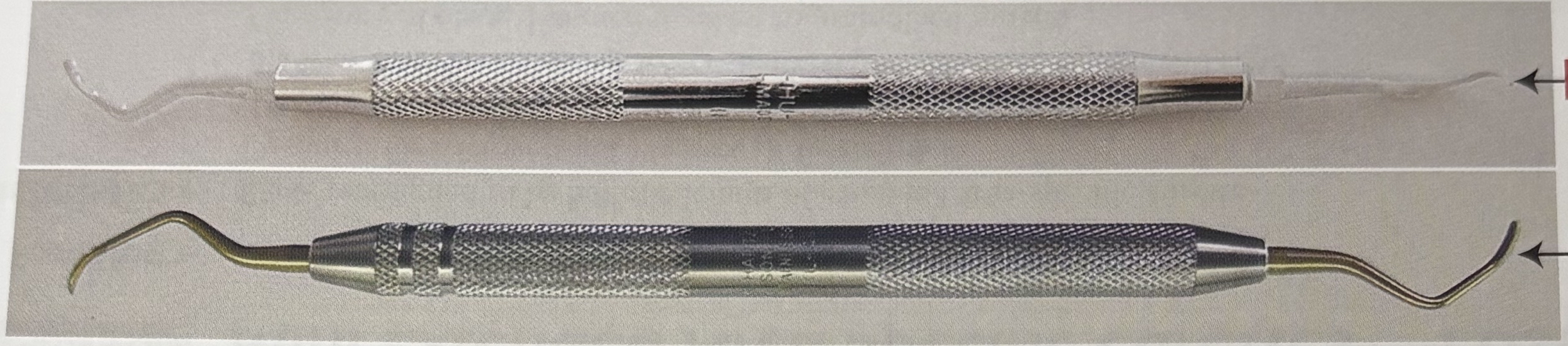
Micro mini five-area-specific scalers
Mentioned as variant intended for narrow pockets and furcations; designed for use in challenging anatomy.

Notes
The transcript repeatedly links scalers to hygiene and periodontal tray setups; the core idea is having a range of scalers for different surface access and pocket depths.
Ultrasonic scalers and tips (ultrasonic instrumentation)
Magnetostrictive power scaler
Also known as the ultrasonic scaler unit.
Function: use with water-cooled ultrasonic inserts; high-frequency vibration for calculus removal.
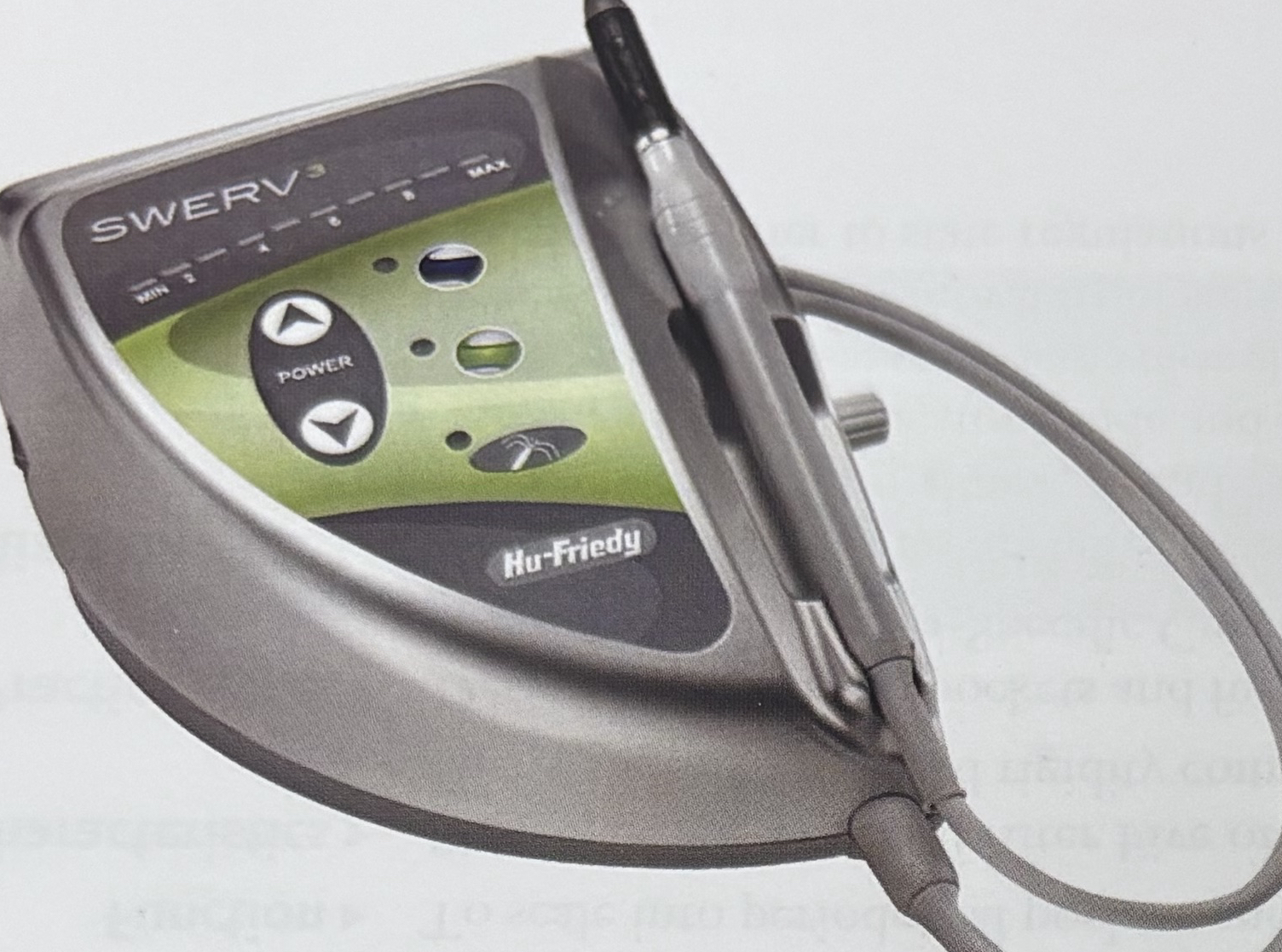
Ultrasonic scaler instrument tips (ultrasonic inserts)
Supragingival tip
Used to remove supra-gingival calculus and deposits.
Referred to as super gingival tips in the transcript.

Subgingival tip
Used to remove deposits and bacterial plaque from periodontal pockets; helps in debridement and subgingival cleaning.

Furcation tip
Used to access furcation areas to remove plaque and calculus.

Universal tip
General-purpose tip used for multiple surfaces and sites.
Other notes on tips
Tips are commonly referred to as ultrasonic inserts.
Some lines in the transcript mention tips “for calculus” or “for cation,” but the clear, standard categories are supra-gingival, sub-gingival, furcation, and universal.

Uses and scope
Ultrasonic tips assist in removing heavy calculus, plaque, and debris; support root planing and periodontal debridement when used in conjunction with hand instrumentation.
They are applicable in hygiene, periodontal, and operative tray setups.
Tray setups and instrument layout
Hygiene tray setups include various instruments in a specified left-to-right order (as described in the transcript):
Mountaineer/Explorer (likely Mountaineer Explorer) periodontal probe
Cotton forceps
Curved sickle scaler
4L / 4R universal posterior curettes
Universal blender (likely a reference to a universal curet or another instrument; transcript is unclear)
Gracey curettes: 1/2, 3/4, 7/8, 11/12, 13/14
Additional Gracey sizes referenced in the transcript: Gracey 13/14, Gracey 11/12
Air-water syringe tip
Low-volume saliva ejector
High-volume evacuation (HVE) tip
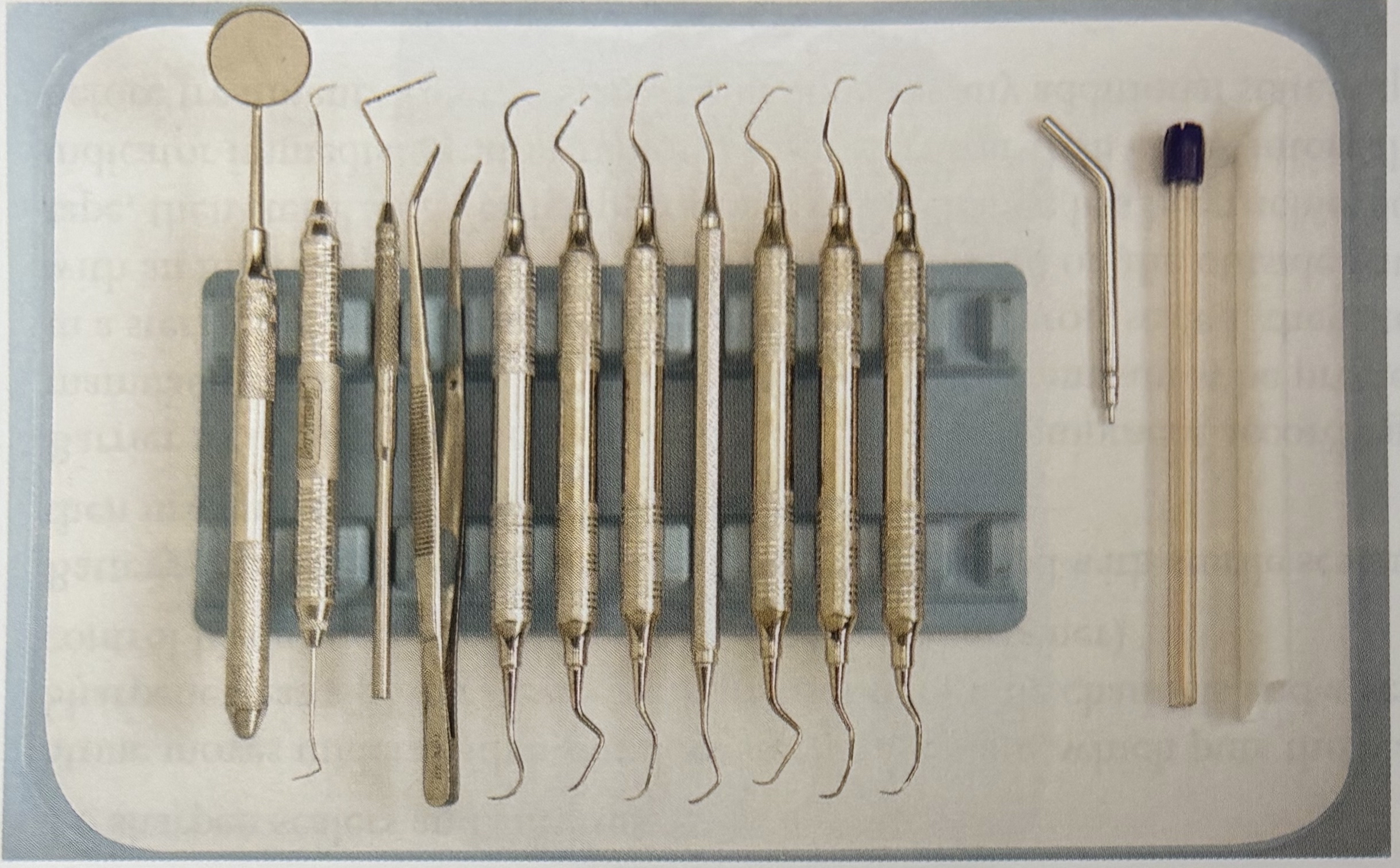
Root planning tracer (tray order, left to right)
Mountaineer Explorer periodontal probe
Cotton forceps
Gracey 1/2; Gracey 3/4; Gracey 7/8; Gracey 11/12; Gracey 13/14
Air-water syringe tip; low-volume saliva ejector; HVE tip
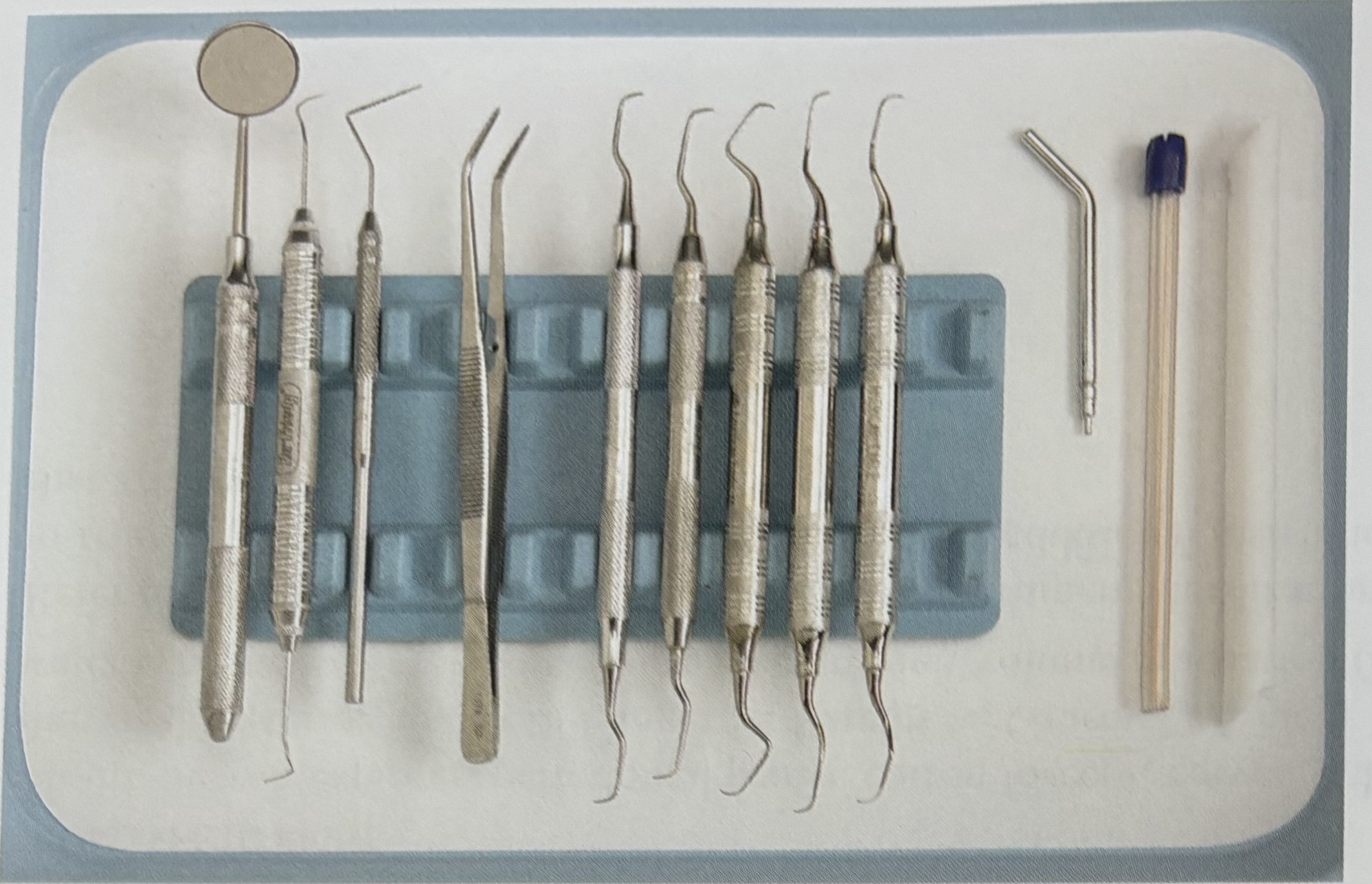
General point on tray setups
Universal curettes are used on hygiene, periodontal, and operative tray setups.
Langer universal curettes are used on hygiene and periodontal tray setups.
Area-specific curettes (anterior and posterior) are used on hygiene and periodontal tray setups.
Extended area-specific curettes (anterior and posterior) are used on hygiene and periodontal tray setups for deep pockets.
Implant scalers and straight/curved sickle scalers are part of the tray setups.
Gracey curettes (Gracey 1/2; 3/4; 7/8; 11/12; 13/14) are specific to root planning and debridement across surfaces.
Additional tray items mentioned
Sharpening stones and battery-operated sharpening devices are used to sharpen scalers and curettes.
After sharpening, instruments should be resterilized.
Sharpening and maintenance
Sharpening stones
Used to sharpen scalers and curettes.
Essential for maintaining instrument edge integrity.
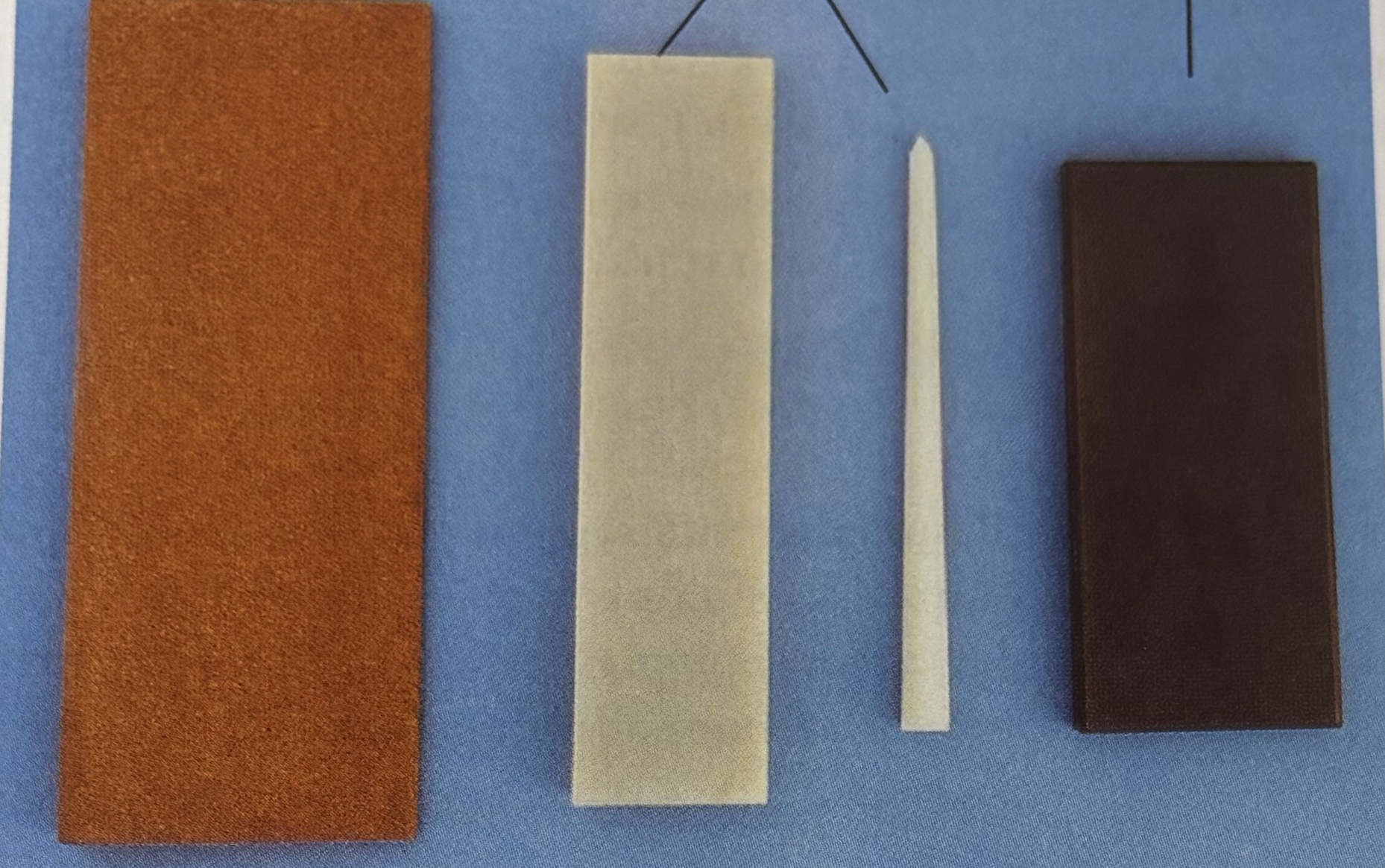
Battery-operated sharpening device
Used to sharpen scalers or curettes.
Must be used with sterile sealers; instruments should be resterilized after sharpening.
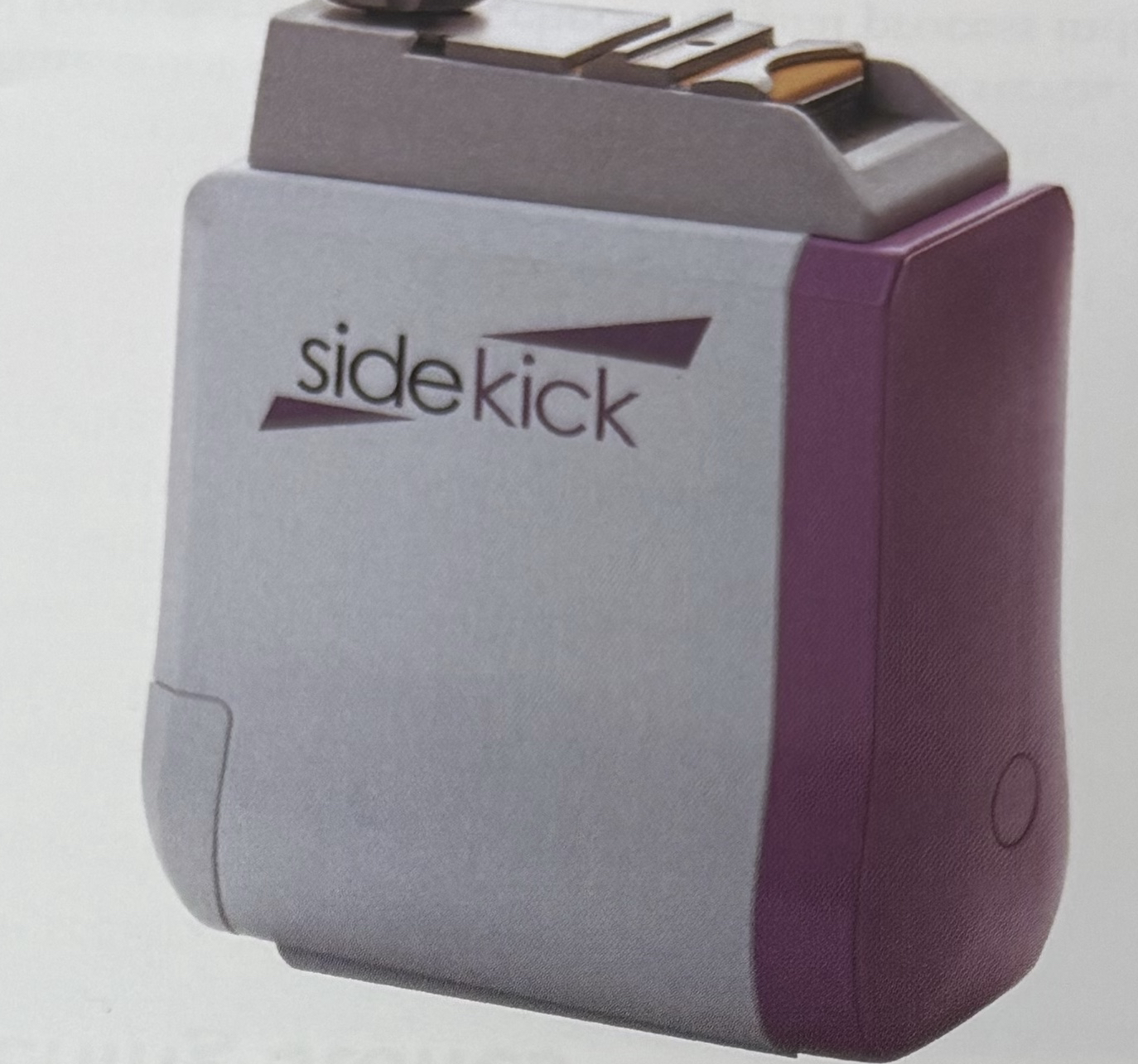
Re-sterilization after sharpening
Important step in infection control and instrument maintenance.
Practical context and implications
Instrument selection and use depend on pocket depth and anatomy
Deep pockets (≥ 5 ext{ mm}) require extended area-specific curettes.
Narrow pockets and furcations benefit from micro mini five-area-specific curettes and Gracey designs tailored to surfaces.
Role of ultrasonic instrumentation
Ultrasonic tips supplement hand instrumentation by rapidly removing calculus and biofilm, particularly in challenging sites like pockets and furcations.
Tips must be chosen according to surface (supragingival, subgingival, furcation) and compatibility with the scaler unit.
Tray setup and workflow
Proper arrangement of instruments (probe, forceps, scalers, curettes, Graceys, ultrasonic tips, and suction devices) supports efficient, sterile, and effective treatment.
Clinical and educational implications
Knowledge of instrument families (universal vs area-specific vs extended-area; Gracey variants) is essential for targeted debridement.
Understanding when to use each instrument (pocket depth, furcation involvement, implant surfaces) improves outcomes and reduces tissue trauma.
Regular sharpening and sterilization protocols are critical to maintain instrument performance and patient safety.
Quick reference (key terms)
Universal curettes
Langer universal curettes
Area-specific curettes (anterior/posterior)
Extended area-specific curettes (anterior/posterior)
Micro mini five-area-specific curette
Gracey curettes: 1/2, 3/4, 7/8, 11/12, 13/14
Implant scaler
Straight sickle scaler
Curved sickle scaler
Magnetostrictive power scaler (ultrasonic)
Ultrasonic tips: supra-gingival, sub-gingival, furcation, universal
Gracey numbers anatomy-based surfaces
Sharpening stones; battery-operated sharpening device
Tray setup components: periodontal probe, cotton forceps, Gracey instruments, suction tips (HVE, saliva ejector), air-water syringe