Week 5: Binocular Vision
Why is Binocular Vision important?
Binocular vision provides depth perception by overlapping visual fields from both eyes.
Forward-facing eyes allow better estimation of depth and distances between objects in the environment, such as trees and mountains.
Different angles of view from each eye help the brain compute depth.
this is supported by the wiring in the brain which brings information from 2 eyes to one spot in the brain.
Frontal eye placement
Species with eyes positioned at the front of the head (e.g. primates, predators) have overlapping visual fields, allowing for stereopsis (depth perception). This configuration supports precise tasks like grasping or hunting
Lateral eye placement
Species with eyes on the sides of their heads (e.g. rabbits, many fish) have a wider field of view but limited depth perception. This arrangement is advantageous for detecting predators.
Mechanism of Depth Perception
Binocular overlap allows the brain to triangulate distances based on different perspectives from each eye.
Forward-facing eyes enhance this overlap, providing better depth perception.
Evolutionary Perspectives on Eye Position
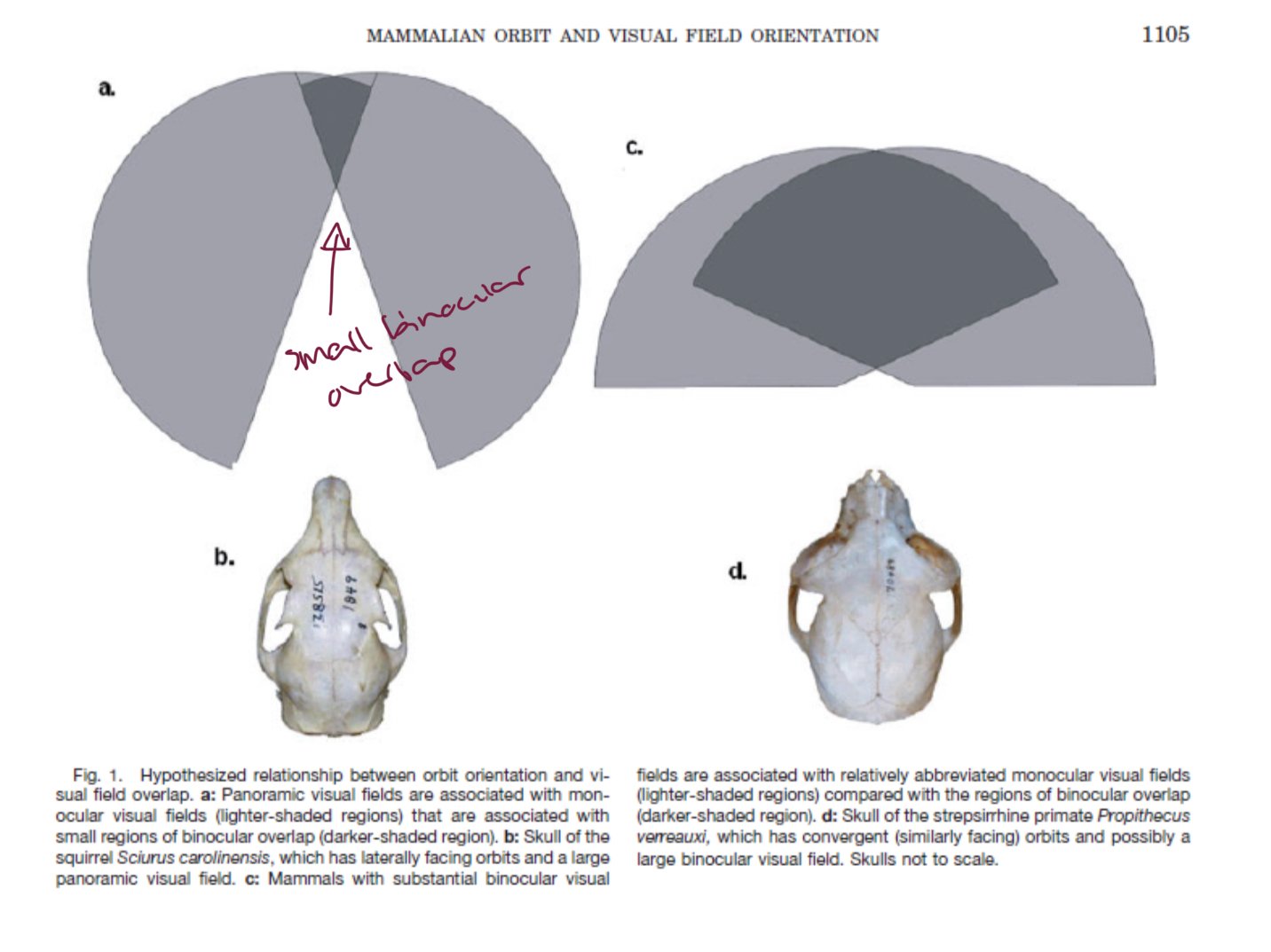
Studies have shown that the position of the eyes affects binocular overlap.
Species with eyes set further apart have less overlap, while species like primates, with forward-facing eyes, have more.
Chris Heasy's study correlates skull anatomy with binocular visual field overlap.
Visual Pathways and Brain Processing
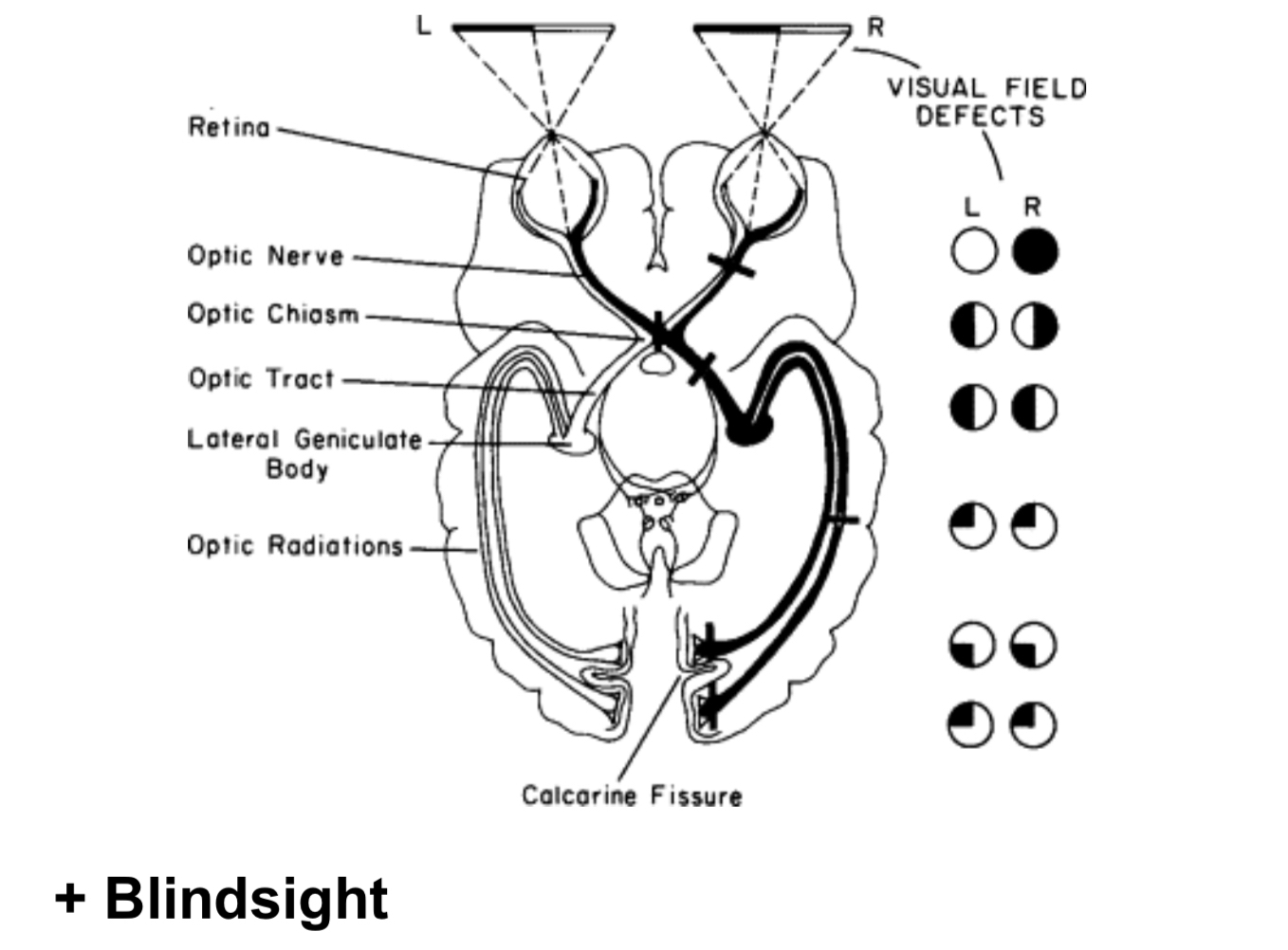
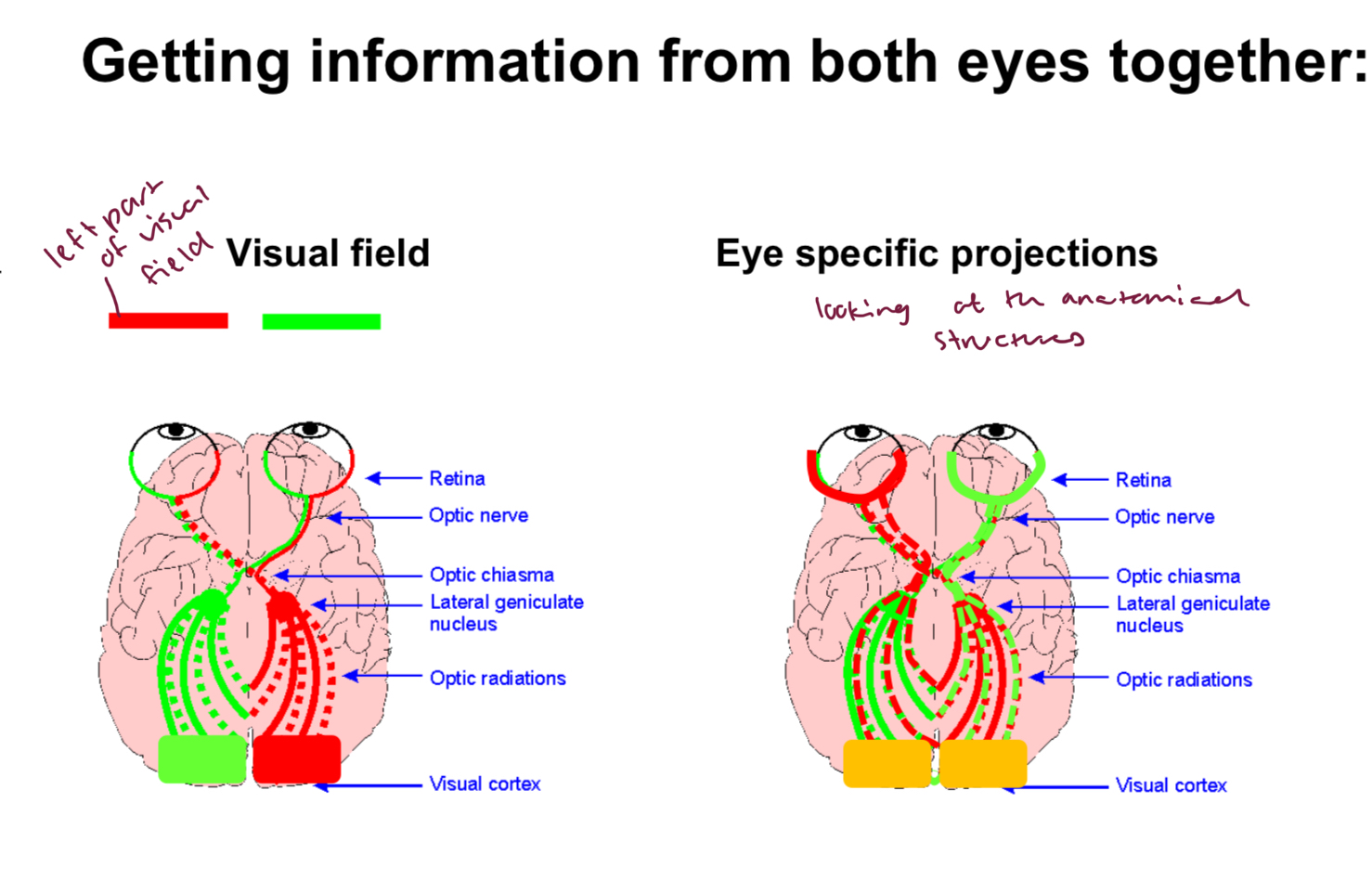
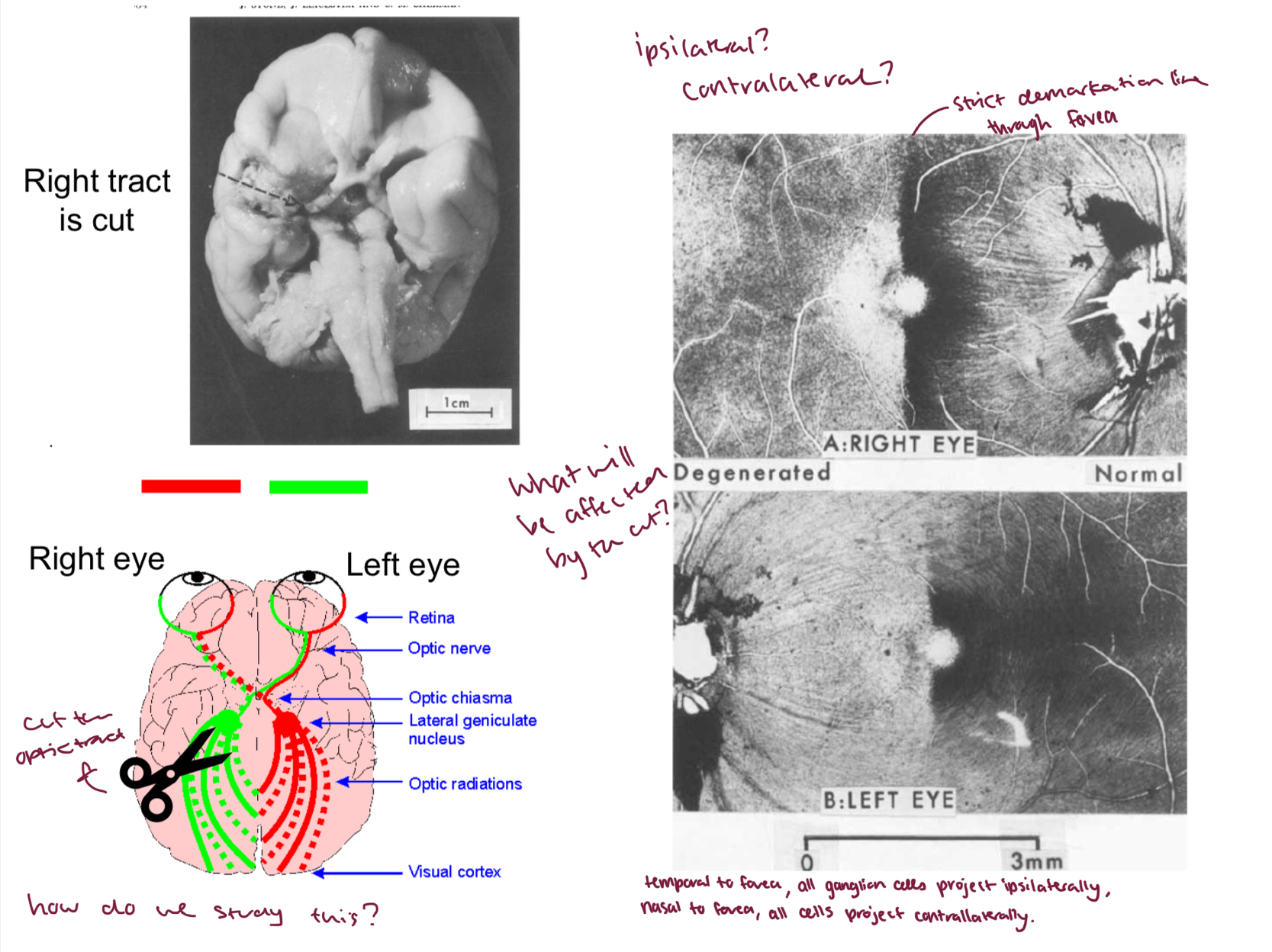
The visual field is processed such that information from the left visual field goes to the right brain hemisphere and vice versa via optic nerves.
The nasal retina fibers cross at the optic chiasm, while temporal retina fibers remain uncrossed, sending information to the same side of the brain.
Optic chiasm:
The point where nerve fibers partially cross, allowing visual information from both eyes to be processed in both hemispheres.
Primary visual cortex (V1):
The initial cortical area for processing visual information, where inputs from both eyes are integrated to form a single image.
Binocular neurons:
Neurons that respond to input from both eyes, essential for depth perception and the fusion of images.
Critical periods
There are specific developmental windows during which binocular vision must be established. Disruptions (e.g. strabismus, cataracts) during this time can lead to permanent defects.
Neuroplasticity
The visual system exhibits plasticity, allowing for some recovery or adaptation if interventions occur within the critical period.
Eye-Specific Pathways in the Brain
The brain integrates visual inputs using a combination of cross-eyed (contralateral) and same-sided (ipsilateral) projections.
Historical Experimental Methods
Early methods studied brain function by cutting the optic tract and observing degeneration in retinal ganglion cells to determine projection pathways.
The differences between ipsilateral and contralateral projections are revealed in degeneration patterns post-dissection.
Retinal Differences in Various Species
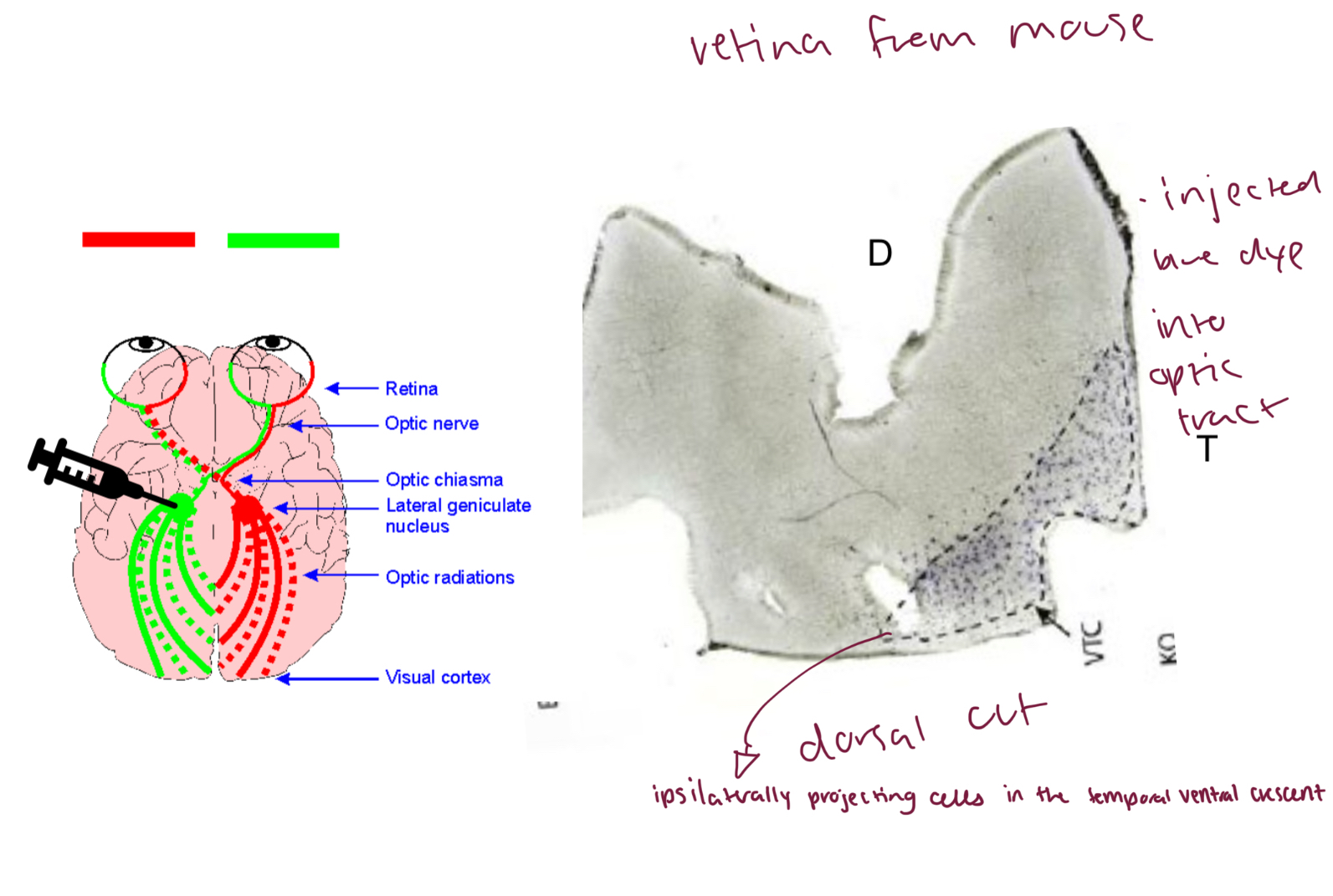
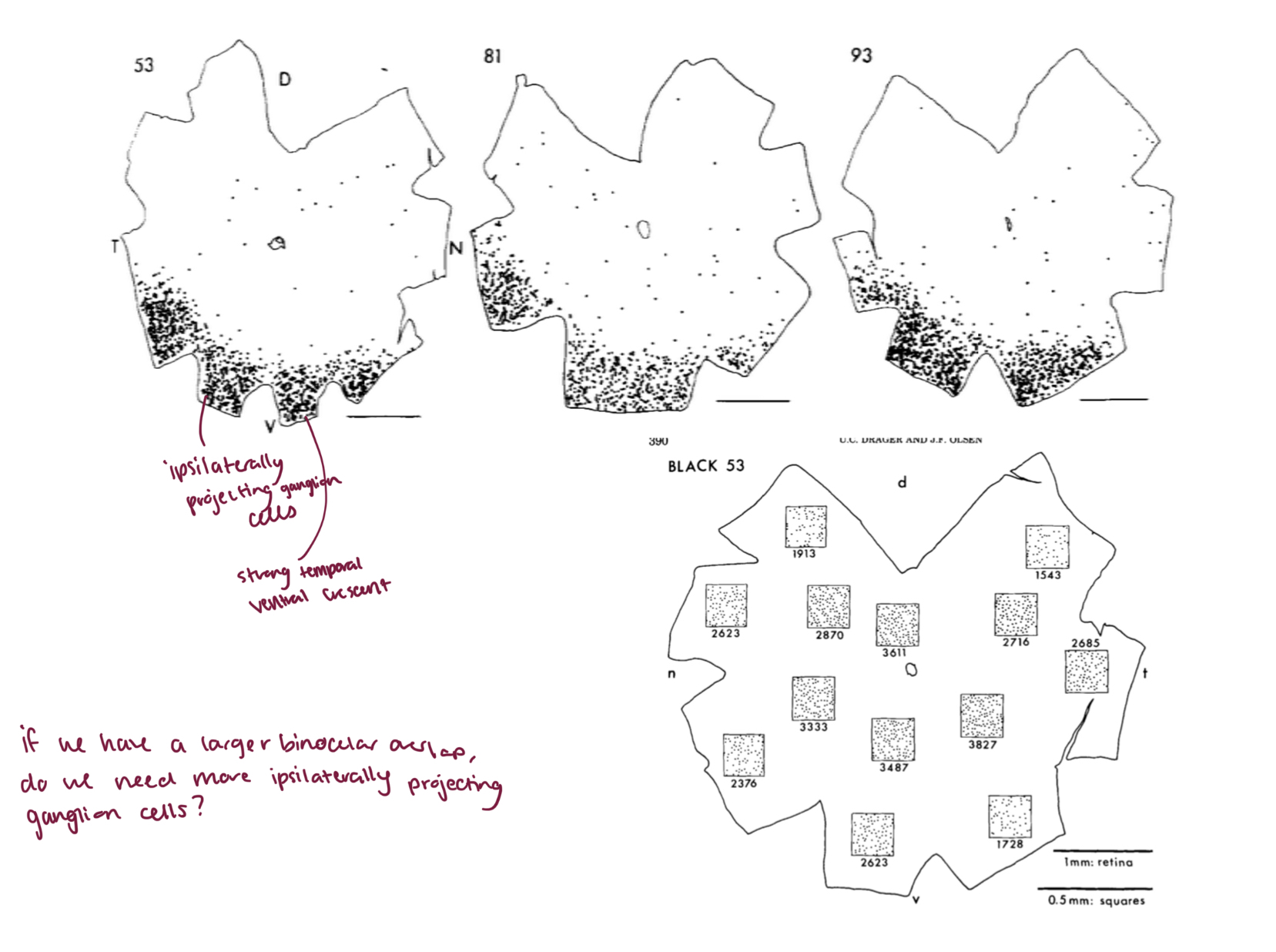
In mammals, there’s clear demarcation based on whether the retinal cells project ipsilaterally or contralaterally, split at the fovea.
In mice, spatial arrangement of ipsilateral and contralateral projections follows a specific pattern associatively tied to evolution and survival strategies in prey or predator roles.
Neurological Structures in Marsupials and Their Implications
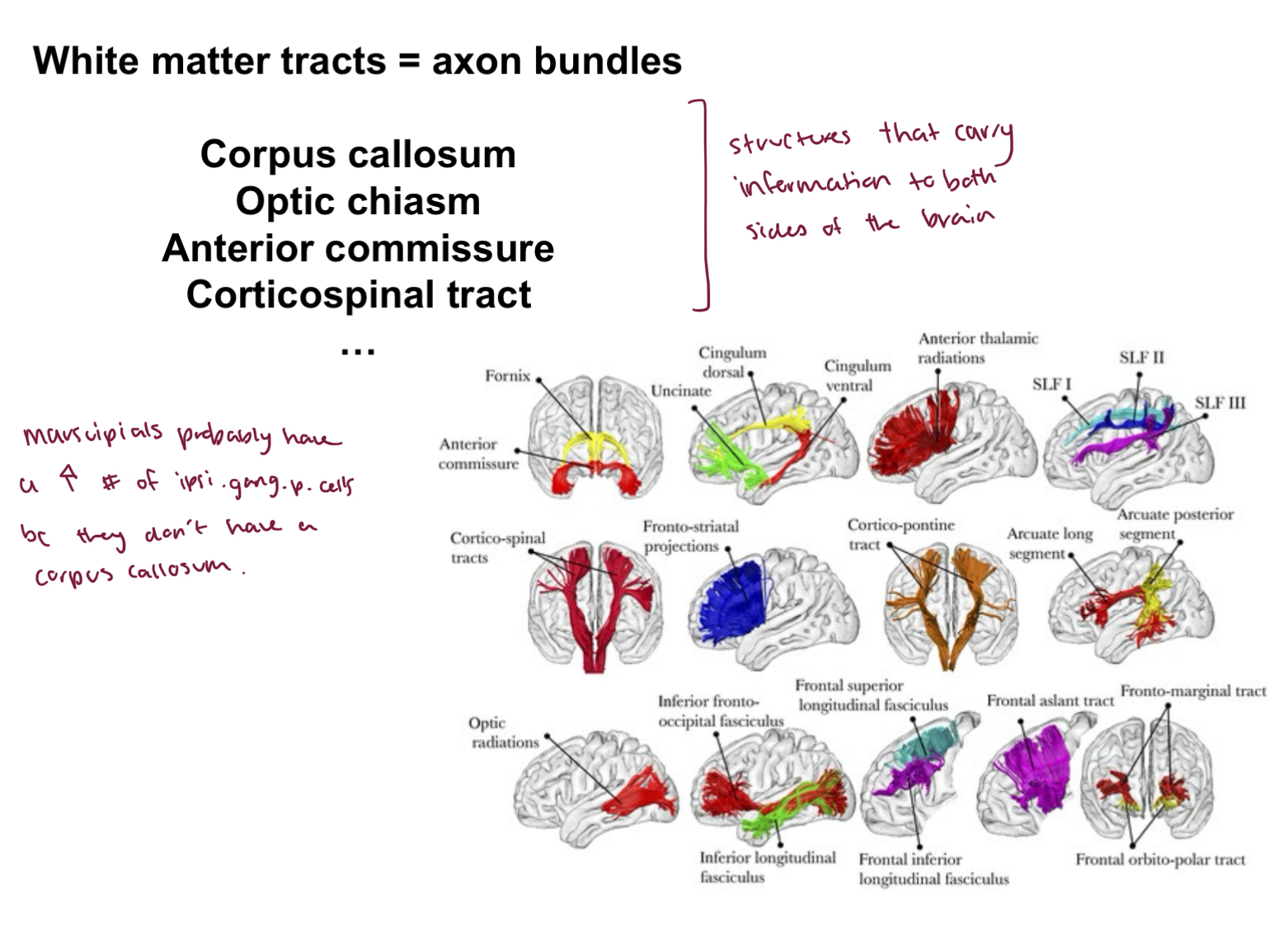
Marsupials lack a corpus callosum but possess other commissures that connect brain hemispheres, potentially compensating for the absence of a corpus callosum.
The absence of a corpus callosum leads to a higher proportion of ipsilateral cells to facilitate inter-hemispheric communication without bilateral pathways.
Fish and Visual Integration
Fish do not possess a corpus callosum and have differing variations in ipsilateral projections based on their evolutionary lineage—some species exhibit no ipsilateral projections.
Studies reveal that some fish, especially non-teleosts like sturgeons, might retain loose ipsilateral connections while others do not.
Bilateral vision preceded terrestrial life and evolved in water
In some cases, fish did have an ipsilateral projection
How do fish with no ipsilateral projection integrate information from both eyes?
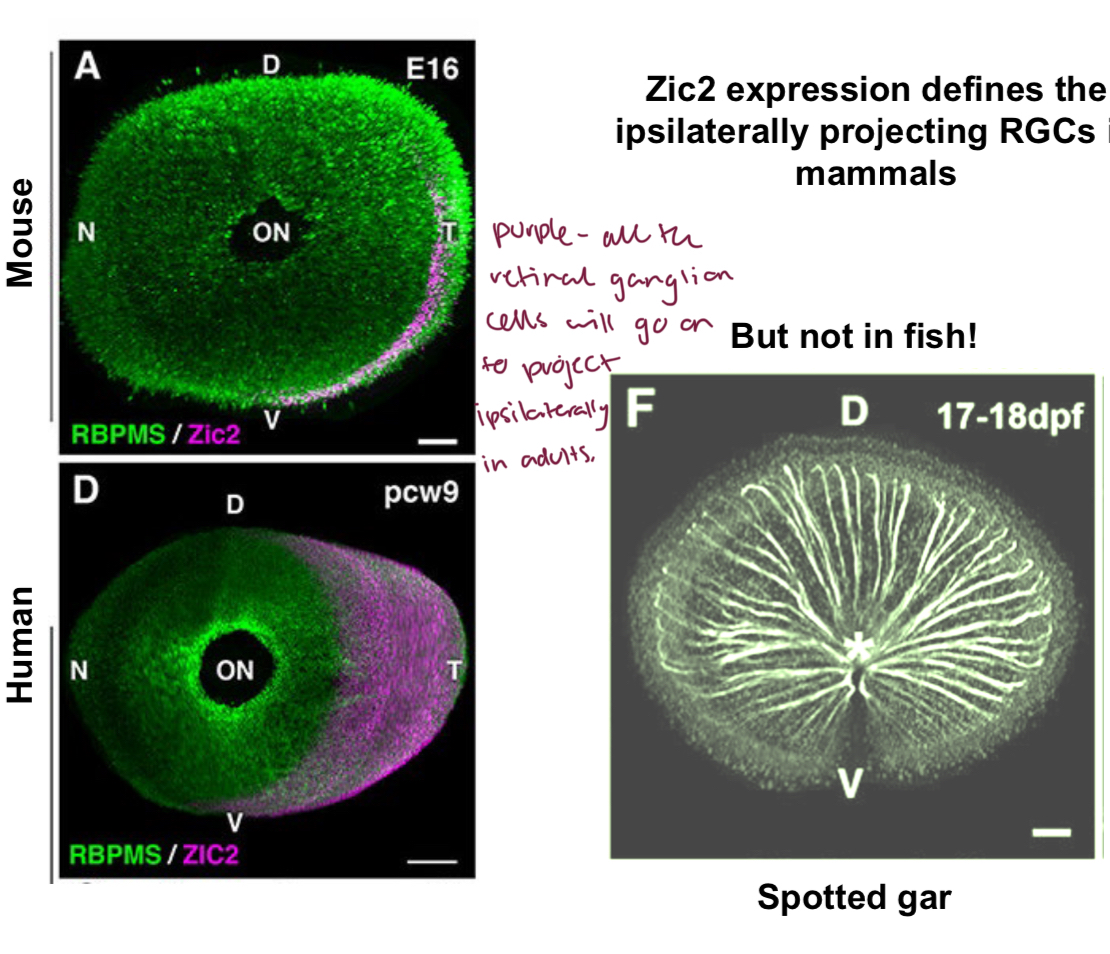
Zic2 expression
Zic2 expression defined the ipsilateral projecting RGCs in mammals
Zic2 over-expression creates a population of ipsilaterally projecting RGCs in fish
Visual laterisation in chicks
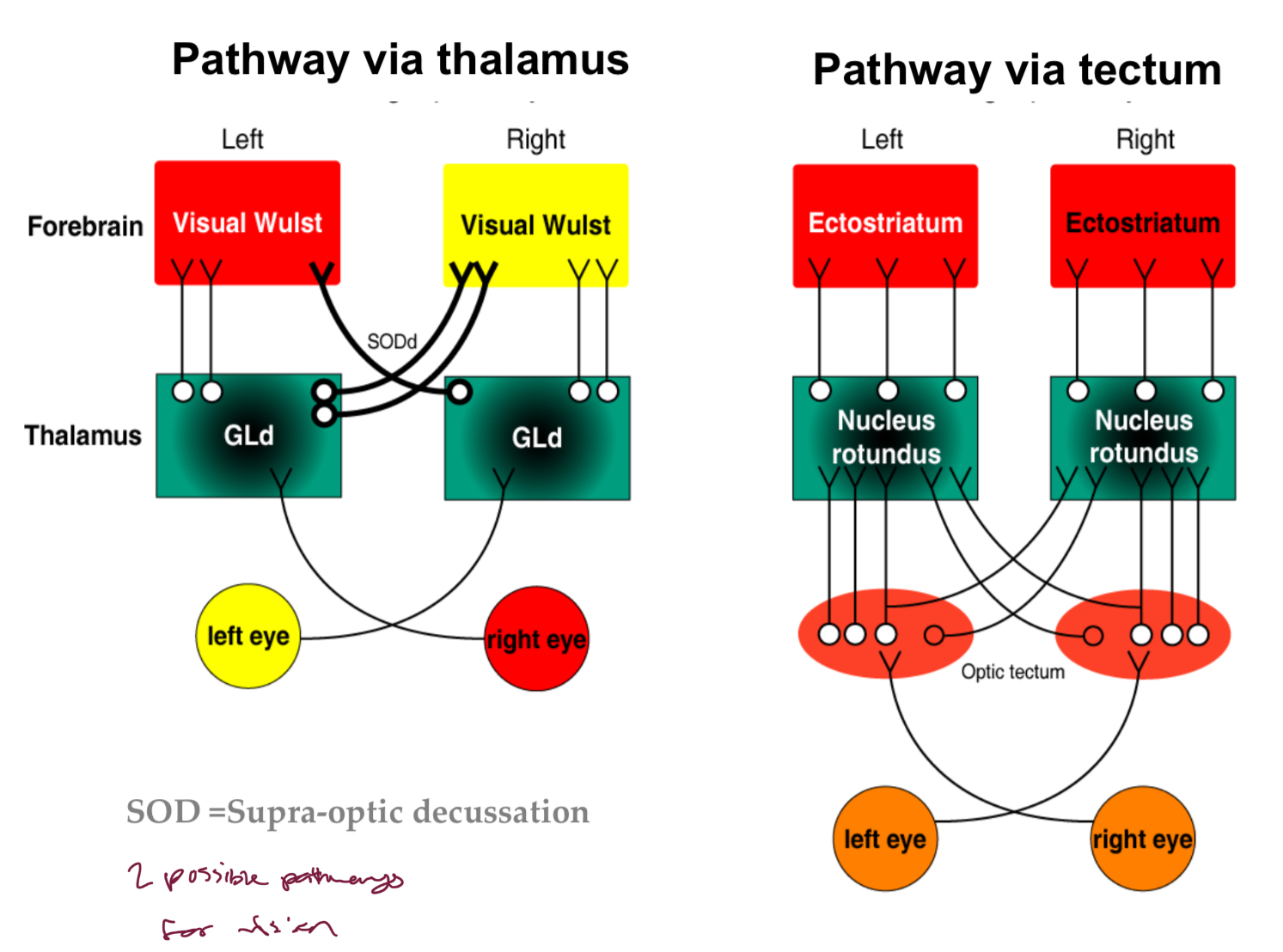
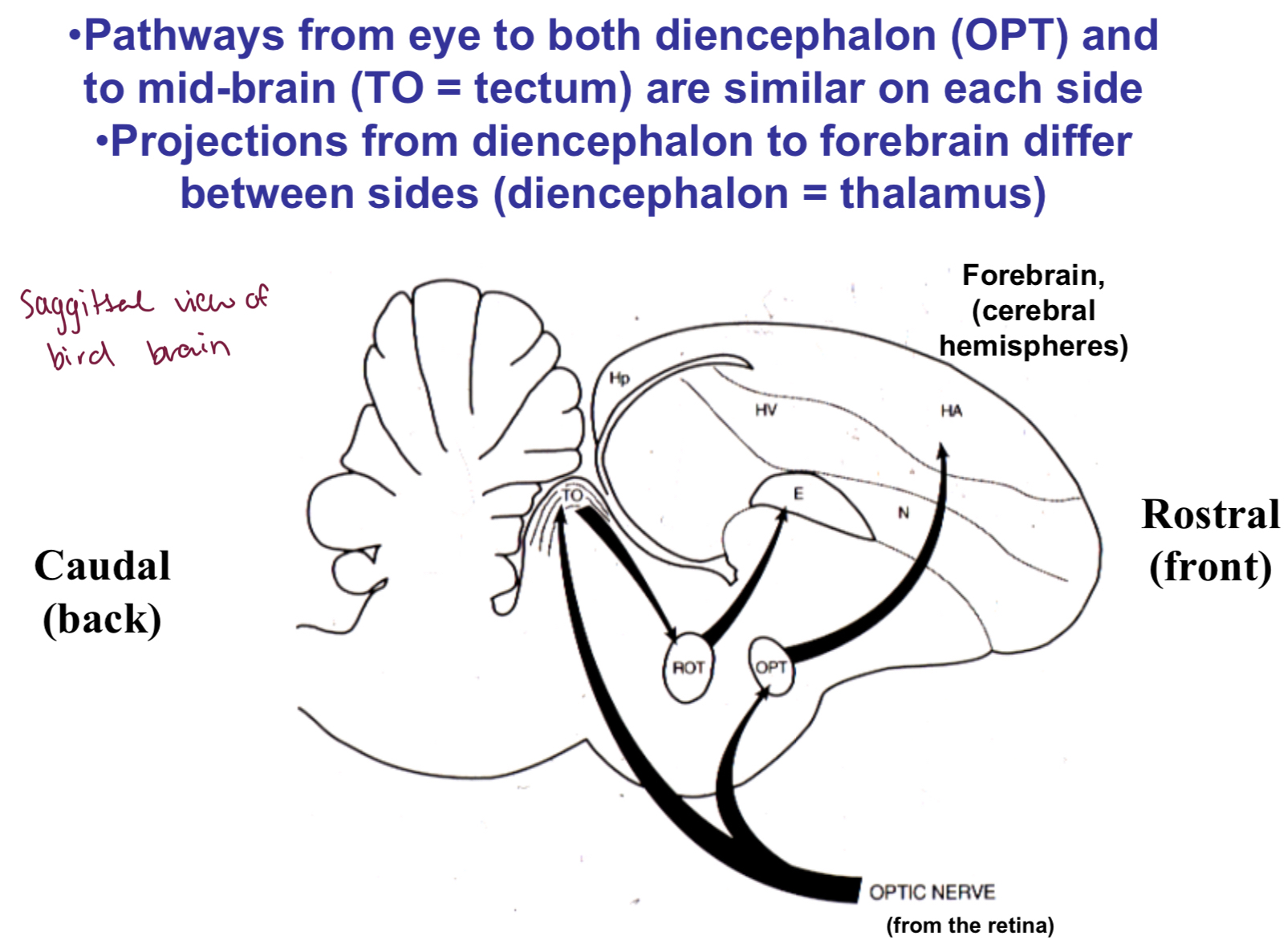
Birds also lack ipsilateral projections and have alternative pathways for visual information transfer, notably involving optic tectum and thalamus communication that integrates visual data across the brain.
Research on chicks shows favourable development for the right eye through differential light exposure, impacting lateralization in visual processing.
Other