controls for transformation
purpose of selective markers
eliminate cells without plasmid
identify cells without recombinant DNA
antibiotic resistance gene: cells that did not take up the plasmid are not resistant to ampicillin and do not form colonies on media containing this antibiotic
lacZ gene: cells that took up plasmids without DNA fragments have functional lacZ genes, hence are able to metabolize X-gal, and turn blue on media that contain X-gal
controls are experiments run alongside the test sample to ensure that
all test subjects/components/reagents/devices used in the experiment are functional
serve as a benchmark so we know how different the test sample is from the benchmark
Positive control: test conducted using a sample that is known to show positive result
Negative control: test conducted using a sample that is known to show a negative result
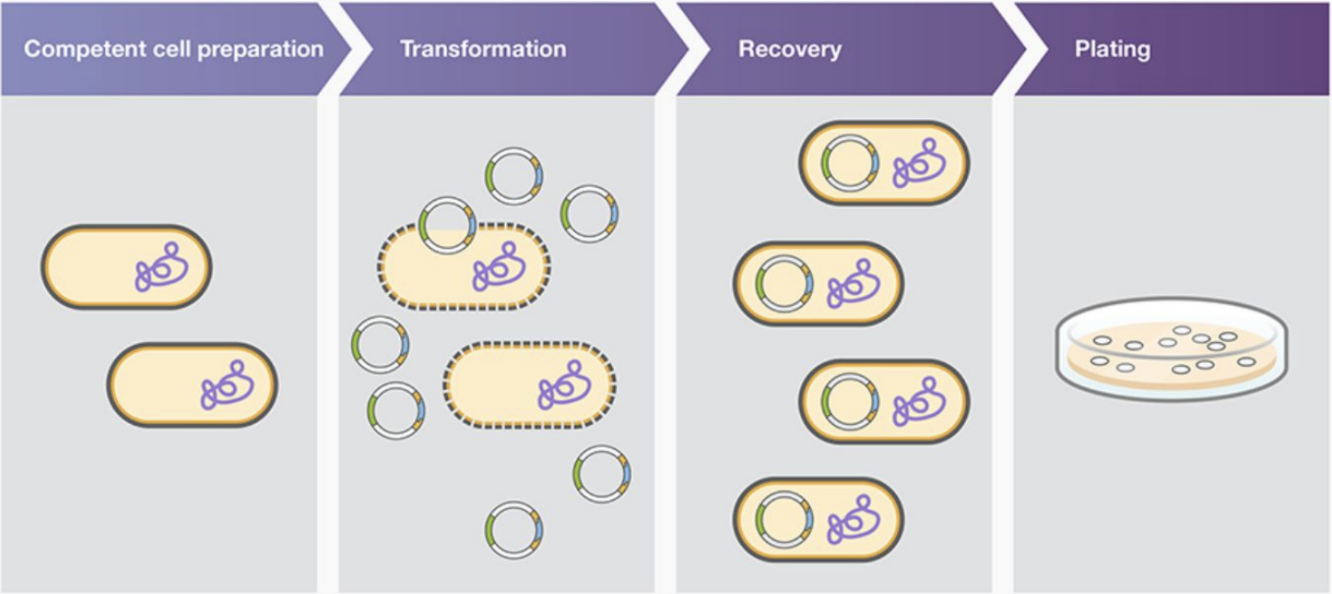
Purpose of transformation - insert recombinant plasmid into host cell
steps for transformation: heat shock at 42ºC for 1 min
what needs to be in the agar to select for transformed cells: antibiotics, X-gal
what to expect after transformation
Blue colonies - bacteria with plasmid
White colonies - bacteria with recombinant plasmid
if spread plate contains only has white colonies: ampicillin not functional, bacteria culture contaminated, X-gal not working
Need to count the ratio of blue to white colonies
Negative control for transformation
competent cells + buffer, spread on agar with antibiotic + X-gal
expect no colonies
checks if antibiotic in the agar is functional
checks if any contamination occurs
mistakes result in colonies
purpose: to show that cells are competent and can take up the intact plasmids
No colonies formed (possibilities)
LB plate not prepared properly or not suitable for bacterial growth - incorrect pH/nutrient/antibiotic
the cells were not competent to take in plasmid
all competent cells died even before experiment
transformation steps were not correctly done
Positive control for transformation
competent cells + undigested plasmid, spread on agar with antibiotic + X-gal
expect only blue colonies
checks if transformation steps are successful
checks if the cells are competent
checks if competent cells are healthy/dead
checks if the medium/agar is well prepared (suitable pH, nutrient content, X-gal, etc)
any mistake results in plate full of white colonies / no colony
purpose: to show that non-transformed cells are susceptible to the antibiotic
bcs in the neg control they would die to the antibiotic to this is to check if they are actly dying because of the antibiotic - check if they are actly working or jsut bcs there are no cells
how to ans these qns: biological molecule (what it has) - biochemical action (what will happen) - observations (what we see)
example:
negative control
antibiotic will kill cells, plasmids that contain antibiotic resistant gene would not be killed hence those cells with the recombinant plasmid can express enzymes to break down the antibiotic and survive in the presence of the antibiotic and colonies are formed