MODULE 13: ANIMALS- INVERTEBRATES PART 1
Characteristics of animals- What is an animal? What characteristics are used to classify animals?
Diversity of invertebrates- What are some of the main phyla of invertebrates? What characteristics do members of each phyla have? Where do they live? What and how do the eat?
Characteristics Of Animals
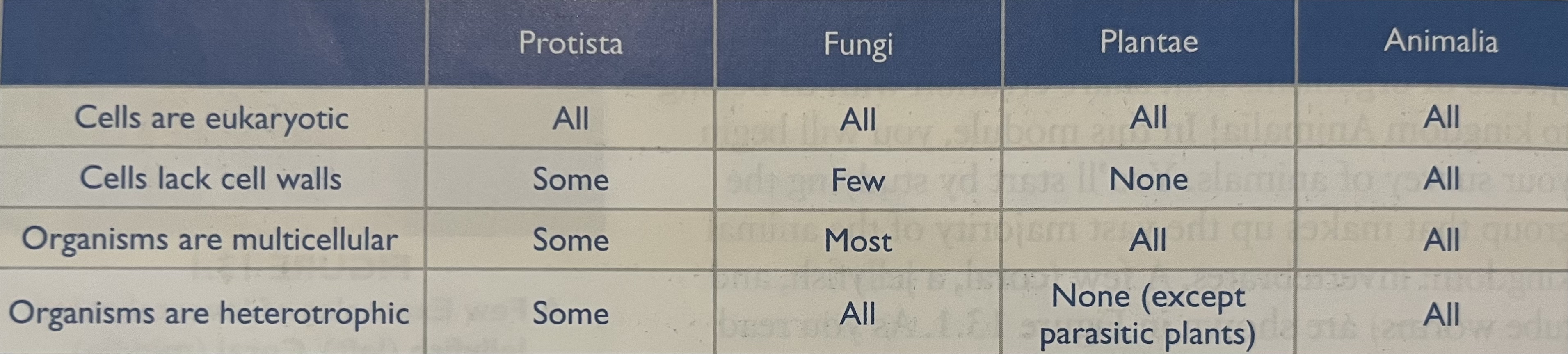
all animals share four basic characteristics that separate them from organisms of other kingdoms.
Invertebrates and vertebrates
Invertebrates- Animals that lack backbones.
Vertebrates- Animas that possess a backbone.
95% of all animal species are invertebrates. Invertebrates make up all of the phyla in the kingdom Animalia except for phylum Chordata. The other 5% of animal species are vertebrates. They include fish, amphibians, reptiles, birds, and mammals.
Symmetry
Another way scientists describe animals is by their symmetry.
Spherical symmetry- An organism possesses spherical symmetry if it can be cut into two identical halves by any cut that runs rough the organism’s center.
Radial symmetry- An organism possesses radial symmetry if it can be cut into two identical halves by any longitudinal cut through its center.
Bilateral symmetry- An organism possesses bilateral symmetry if it can only cut into two identical halves by a single longitudinal cut along its center that divides it into right and left halves.
The concentration of sense organs and nerves in the head of an animal is called cephalization.
Anterior end- the end of an animal that contains its head.
Posterior end- the end of an animal that contains its tail.
Diversity Of Invertebrates
There are over 30 phylum’s of invertebrates.
Sponges- phylum Poriferia
Sponges are asymmetrical.
Sponge anatomy
Epidermis- An outer layer of cells designed to provide protection.
Endodermis- An inner layer of cells.
Mesenchyme- The jellylike substance that separates the epidermis from the inner cells of the sponge.
A sponge is supported by a network of spicules that are found mostly in the mesenchyme. Some sponges do not have spicules. These sponges are supported by a tough web of protein called spongin.
Feeding
Collar cells- Flagellated cells that push water though a sponge.
Amoebocytes- Cells that move using pseudopods and perform different functions in different animals.
Reproduction
Sponges have several modes of reproduction: sexually by budding; regeneration; gemmule.
Gemmule- A cluster of cells encased in a hard, spicule-reinforced shell.
Uses of sponges
Sponges are used for many things other than cleaning.
Phylum Cnidaria
Members of this phylum have two basic forms: the polyp and the Medusa.
Polyp- The sessile, tubular form of a cnidarian with a mouth and tentacles at one end and a basal disk at the other.
Medusa- A free-swimming cnidarian with a bell-shape body and tentacles.
Cnidarian anatomy
Cnidarian have an outer layer of cells and an inner layer of cells separated by a jellylike layer. Each of these layers of cells is an epithelium, and they are separated by a mesoglea.
Epithelium- Animal tissue consisting of one or more layers of cells that have only one free surface, because the other surface adheres to a membrane or other surface.
Mesoglea- The jellylike substance that separates the epithelium cells in a cnidarian.
The epithelial layers of cells in a cnidarian are home to nerve cells and contractile cells. The nerve cells sense outside stimuli and coordinate the organism’s response to it, while the contractile cells bend the organism’s body to produce movement. All members of phylum cnidaria have radial symmetry. Their bodies consist of tentacles, a mouth, and a sac-like gut. The tentacles catch prey by releasing nemotocysts.
Nemotocysts- Small capsules that contain toxin that is injected into prey or predators.
Phylum Annelida
Phylum annelida is made up of worms. There are several different types of worms in the kingdom animalia. Phylum annelida contains only segmented worms. The basic anatomy of the common earthworm is characterized by a segmented body divided into numerous ring-like segments, each containing muscle layers that aid in locomotion and burrowing. They posses bilateral symmetry. An earthworm also has a clitellum, which is a barrel-shaped swelling that usually starts at segment 32 and extends to segment 37, playing a crucial role in reproduction by secreting a cocoon for fertilized eggs. It also helps with distinguishing the head from the tail. The anterior end of the earthworm is usually more pointed than the posterior, and it is also usually darker than the rest of the body. The easiest way to tell the anterior end from the posterior end is to look for the clitellum. The anterior end is closest to the clitellum. The earthworms mouth is at the tip of the anterior end, and it has another hole at the tip of the posterior end called the anus. The earthworm moves with a combination of two muscle layers and small bristles called setae. The worm has a circular layer of muscles that, when contracted, makes the earthworm long and thin. When the other layer contracts, the earthworm gets short and thick.
Feeding habits of the Earthworm
The earthworm is the first animal we’ve studied that has a complete digestive tract. A complete digestive tract has two openings, a mouth at the anterior end and an anus at the posterior end. The earthworms ingests soil into it’s mouth by using its powerful pharynx to create a sucking action.
The Respiratory and Circulatory systems in an Earthworm
Earthworms have what is known as a closed circulatory system.
Closed Circulatory system- a system in which blood stays in vessels designed to transport food and other necessary substances throughout a creature’s body.
Although the earthworm has a closed circulatory system, it does not have a heart. Instead, the two main blood vessels, the dorsal blood vessel and the ventral blood vessel, are linked together by a series of strongly muscled vessels known as aortic arches. To be able to absorb oxygen and release carbon dioxide in this way, the earthworm’s epidermis is covered in a moist layer called the cuticle. The earthworm has a complex nervous system that allows it to respond to outside stimuli.
Nervous system- A system of sensitive cells that respond to stimuli such as sound, tough, and taste.
The nervous system is controlled by a small “brain“ composed of two masses of nerve cell bodies that biologists call ganglia.
Ganglia- Masses of nerve cell bodies.
The Earthworm’s reproductive system
Earthworms are hermaphroditic.
Hermaphroditic- Possessing both the male and female reproductive organs.
Sperm by the testes of an earthworm are stored in seminal vesicles until the earthworm mates. eggs produced in the ovaries are likewise stored in the oviducts. When the earthworm mates, it finds another earthworm pointing in the opposite direction, and the two worms attach themselves together with a slime tube, exchanging their sperm.
Phylum Platyhelminthes: The Planarian
The members of phylum platyhelminthes are more commonly called flatworms, because they are rather flat compared to the cylindrical segmented worms. Planrians sexually reproduce much like earthworms They are hermaphroditic but can sexually reproduce only upon the exchange of sperm with mate. One interesting way that planarians can asexually reproduce is by regeneration.
Regeneration- The ability to regrow a missing part of the body.
Phylum Nematoda
Members of phylum Nematoda, often called roundworms, are tiny, cylindrical worms that posses bilateral symmetry.
Phylum Mollusca
Mollusks include clams, oysters, snails, squid, and octopuses. They are divided into three main groups: gastropods, bivalves, and cephalopods. All mollusks are soft-bodied animals that usually have either and external pr internal shell.
General Anatomy
Most members of phylum Mollusca have an open circulatory system that includes a heart. most also have a mantle, a visceral hump, a foot, and a radula.
Open circulatory system- A system in which blood is pumped through vessels into various chambers or body cavities where it comes in direct contact with cells, tissues, and organs.
Mantle- A sheath of tissue that encloses the vital organs of a mollusk, makes the mollusk’s shell, and functions in respiration, waste disposal, and sensory perception.
Shell- A tough, multilayered structure secreted by the mantle, generally used for protection, but sometimes for body support.
Visceral hump- A hump the contains a mollusk’s heart, digestive, end excretory organs.
Foot- A muscular organ that is used fro locomotion and takes a variety of forms depending on the animal.
Radula- An organ covered in teeth that mollusks use to scrape food into their mouths.
Gastropods
Gastropods usually have a single shell and can be found in freshwater, marine, and terrestrial enviroments. The snail is also known as a univalve, meaning only one shell.
Univalve- An organism with a single shell.
Bivalves
Bivalve- An organism with two shells.