Population Dynamics
describing genetic diversity:
Populations: Same species, same place, same time
Gene Pool: All of the alleles in a population
hardy-weinberg → allele and genotype frequencies in a population will remain constant over generations in the absences of other evolutionary frequencies
→ IF ALL OTHER FACTORS REMAIN CONSTANT THE GENE POOL WILL REMAIN CONSTANT - evolution upsets hardy-weinberg
→ the five hardy-weinberg assumptions:
NO mutation
NO gene flow (migration- immigration and emigration of genes)
NO natural selection (equal viability, fertility, and mating ability of all genotypes)
random mating (no selective breeding)
infinite population size (large)
→ if any of these things occur, the gene may evolve and allele frequencies will change
allele frequency: the fraction of all the gene copies within a population that a specific alleles makes up
genotype frequency: the fraction of individuals within the population that have a specific genotype
allele frequency equation: p+q=1
→ example:
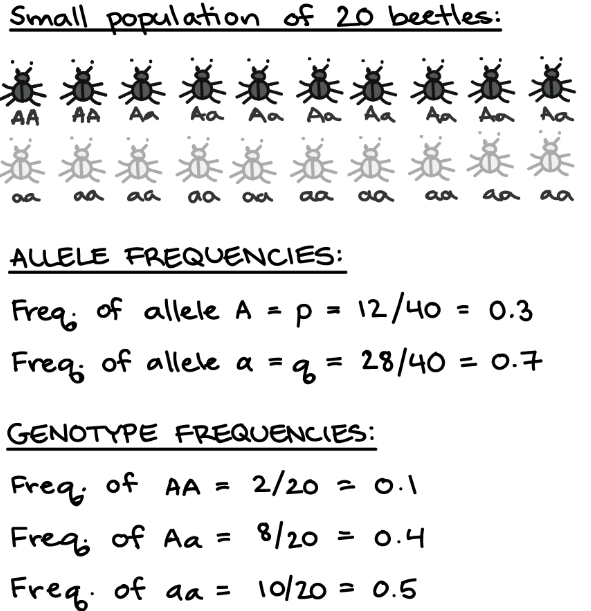 essentially: the number of individuals with that frequency, divided by the number of individuals within the entire population
HARDY-WEINBURG EQUATION
p: dominant or frequency of A q: recessive or frequency of a
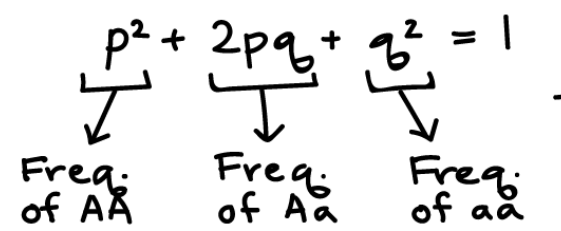 *populations are in a hardy weinberg state of equilibrium when the equation is equal to one*
using a modified punnett square to determine equilibrium and the likelihood of the genotypes in offspring:
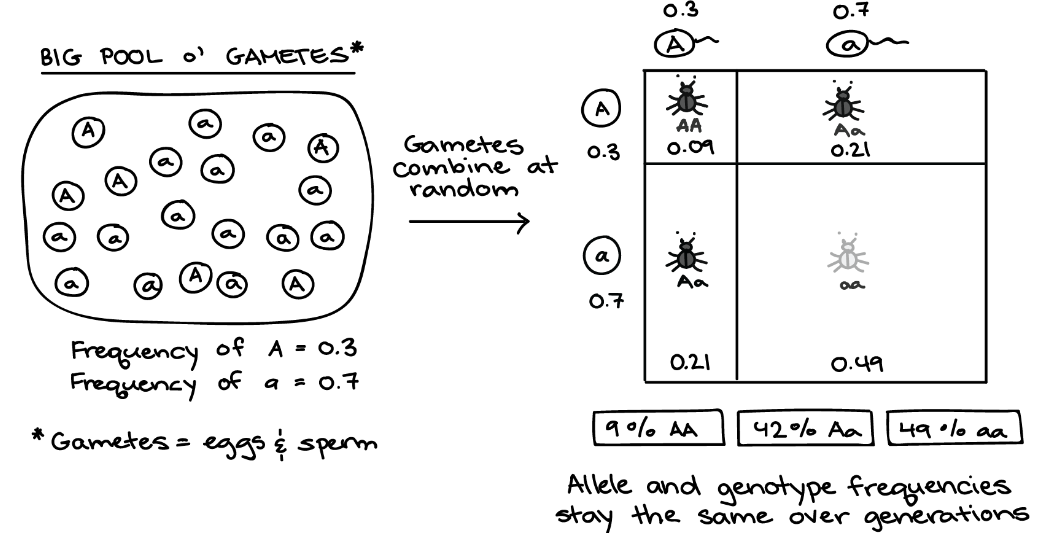 if the data is different from before or is not equal to one we know micro-evolution is occurring
the causes of evolutionary change (violations of hardy weinberg)
MUTATION: a change in DNA during meiosis
gene mutation is the rearrangement of DNA base pairs, where they now code for something else- potentially cystic fibrosis, tay-sachs, or sickle cell
occur in each generation (although rare) and may even be masked for a few generations
mutations are good (gene pool variation) and can be bad (harmful to individual)
mutations are caused by TERATOGENS: anything that can cause malformation in the development of an individual (drugs, alcohol, chemicals, etc.)
GENE FLOW: the movement of alleles from one population to another
immigration: the entrance of new allele and genotypic frequencies
emigration: the removal
important because this increases genetic diversity which creates a better ecosystem
NON RANDOM MATING: choosing a mating partner selectively
choosing specifically p or q
random mating within a population may be unlikely because of preferred phenotypes and inbreeding (self fertilization)
GENETIC DRIFT: change in breeding populations allele frequency due to random events
→ mechanisms of genetic drift
a) founder effect: a gene pool is formed by a small group of individuals- they now have a genotypic frequency that is not true to the original population
there is a random windstorm and only red birds get blown over to the next island.
b) bottleneck effect: quick reduction in a population that leaves only the surviving alleles to be represented in the next population (less variant offspring)
example: a huge forest fire burned almost all of the brown beetles, the surviving population is mostly red with just a little brown
NATURAL SELECTION: the genes that survive better in the environment they are in survive and are more likely to produce offspring
leads into non-random mating- causes it
density and distribution of populations
population size: the number of organisms within a population
population density: number of individuals in a defined area or volume (example geese/hector)
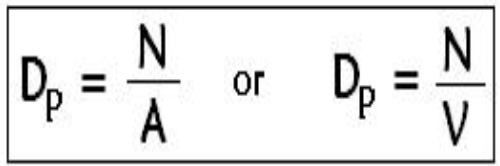 N = number of organisms, V = volume, A = area
distribution of populations: → population patters are determined by type of organism and resources
random: no order, no rhyme or reason
mostly scattered, some clumps
usually means ecosystem has a ton of resources and everyone is happy
example: clover here, tree here, another tree there, etc.
uniform: starts to show territorialism and competition amongst species
“if you come to close to my territory i’m gonna fight you”
competition for resources, moisture, space
example: mountain lions, bears, cougars
clumped: gathered around an attractant (food, water source, breeding season to mate, the asexual reproduction of strawberries)
could indicate an environmental disturbance
can be for good things or for avoidance
example: someone dumped a pile of toxic waste over there or right here is the only water supply
example: a school of fish, field of flowers
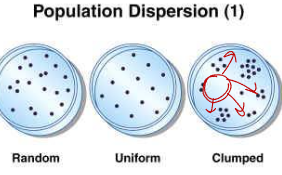 seed dispersal mechanisms in this context:
windblown fruits: random
adherent fruits: uniform
fleshy fruits: clumped
→ however, in reality this is ecology. with evidence, and as long as you can make a descent argument, you can argue anything.
population growth patterns (deltaN) is determined by four factors
natality (b) -birthrate which +
mortality (d) -deathrate which -
immigration (i) -moving in which +
emigration (e) -moving out which -
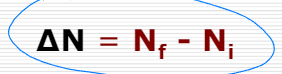 OR
OR
→ population growth or growth rate (gr) is used to keep density populations relevant
 positive gr number results means there is a rising population (and vice versa)
PER CAPITA GROWTH RATE (how many babies is each individual having)
populations grow both fast and slow dependent on the number of organisms present and the fertility of each individual
rate means how much a population grows per organism

FACTORS AFFECTING POPULATION GROWTH
biotic potential: maximum number of offspring that can be produced in ideal conditions
regulated by:
maximum number of offspring per birth
maximum number of times a year procreation can happen
the chance of an organism reaching its reproductive age- capacity of survival
the age at which maturity for reproduction is reached
the lifespan of an individual
environmental resistance: all factors that limit population growth
lack of resources, emigration, climate change, disease, predation, competition
GROWTH CURVES
nearly all populations will grow exponentially if not limited
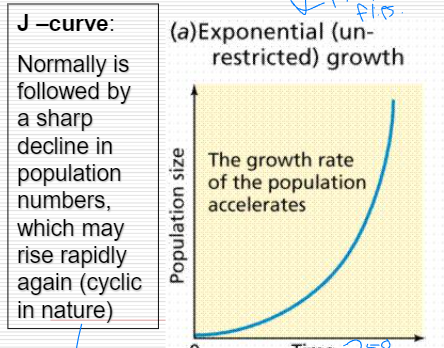 example: fruit flies and bacteria
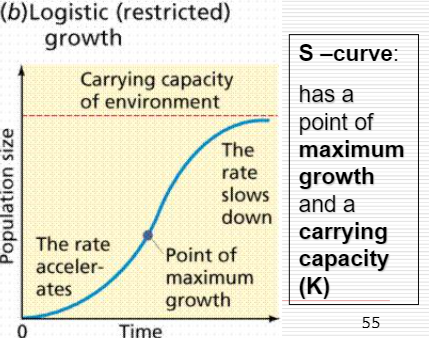 carrying capacity: the maximum number of organisms the ecosystem can support. you can go over, but you will likely fall under again simply because that amount of organisms will not survive.
growth curve phases:
→ LAG: + = -
→ GROWTH + > -
→ STATIONARY + = -
→ DEATH + < -
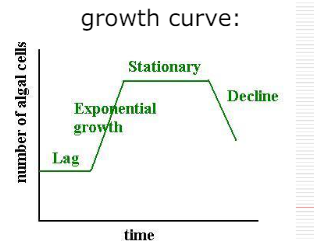
density independent factors: will affect population regardless of it’s size → mostly abiotic (weather, floods, drought)
density dependent factors: more organisms, the more death → disease, parasites, food, competition
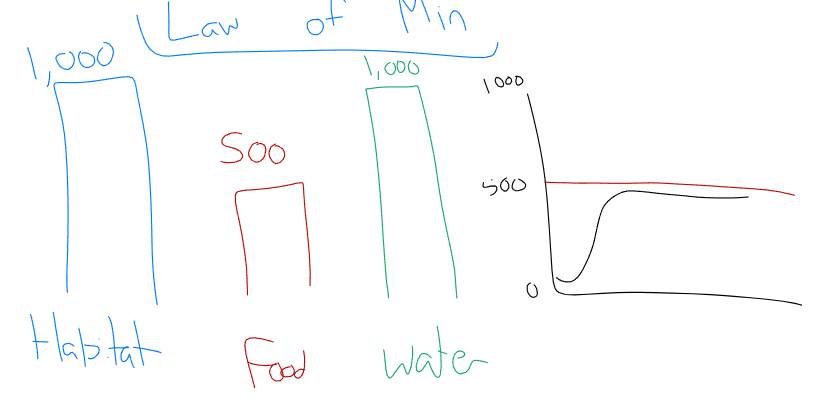
the law of the minimum means that out of all of the essential substances required for growth, the one in shortest supply will determine the population numbers
shelford’s law of tolerance: too little or too much of something can be harmful to an organism (example salt, temperature)
tolerance = survivability = more niches filled
if a lake automatically just became salt water, all the fish would die. but for some reason one fish has a mutation and can survive in salt water. it was tolerant so it survived.
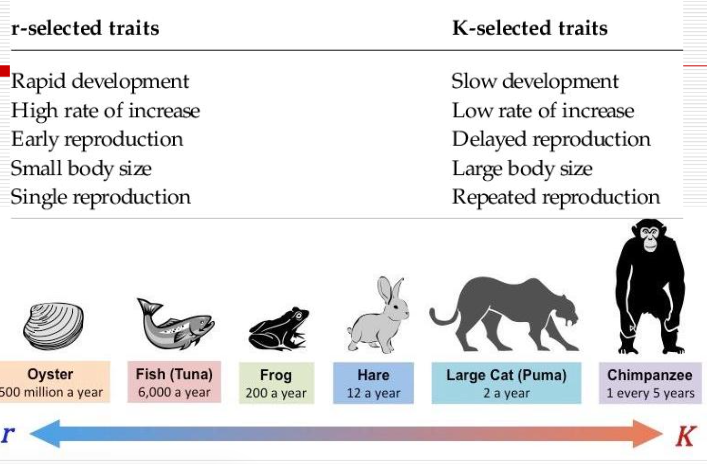
r-species (opportunist): highly reproductive, short lifespan
small body size, high offspring number, little parental control, fast growing (example: fruit flies, weeds)
k-species (equilibrium): limited by carrying capacity of habitat
large body size, small number offspring, slow growing, require parental care (example: bears, humans, trees)
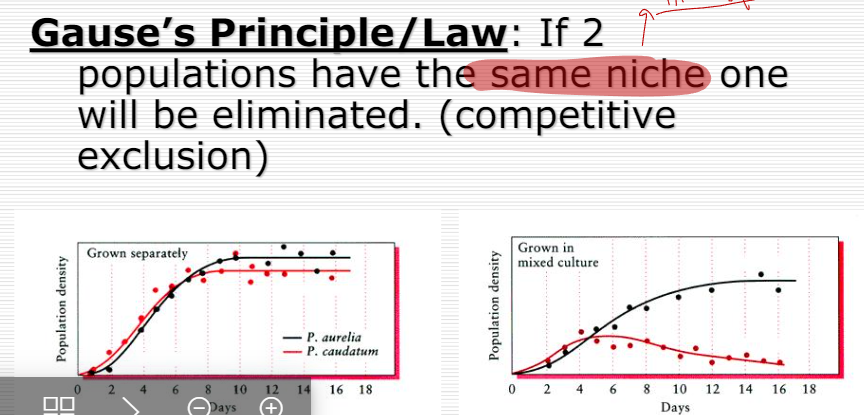
COMPETITION→ density dependent
a) interspecific competition involves competition among DIFFERENT species for the same resources
b) intraspecific competition involves competition between the SAME species for the same resources
predator and prey relationships:
 first degree consumers form a relationship with their producer, and with their predator
all members in a life cycle can limit each others populations → this can often lead to boom and bust cycles
ecological concepts
→ coevolution: selective pressure by the adaption of species due to pressures they exert on each other. The relationship between predator/consumer and prey /plant leads to coevolution .
defense mechanisms:
camouflage
biochemical (bitter taste)
armor
warning colorations
mimicry
batesian: a trick! not a harmful mimicry but it looks harmful
Mullerian: both the original and the mimicry is harmful
succession: gradual change in organisms from a pioneer community to a climax community
climax community: most adapted/peak
pioneer community: first version
primary succession: no community existed before (was rocks, glaciers)
secondary succession: succession following a destructive event
succession species:
pioneer: first to arrive, mostly weeds/grasses/lichen, their dead bodies produce initial soil
seral/intermediate: longer lifecycles, require more nutrients, mostly shrubs/softwood trees
climax: long lifecycle, stabilize environments, mostly hardwood trees
human population growth jumps due too:
agricultural revolution: invention and agriculture
industrial revolution: better machines for food production and the transportation of food
medical science: water purification and sewage treatment. increased infant survival rate and higher chance of making it to reproductive age
population histograms: useful to study animals with a life cycle of more than a couple years to see if animals population will decline, stabilize, or grow.
allows to structure by age and proportion of male to females
does now show immigration and emigration numbers
all graphs need titles