Parental (IV) Medications 💧
Overview
Page 1
Introduction to Parenteral (IV) Medications
Welcome to the module on intravenous IV medications. This module teaches the purposes, advantages, and disadvantages of IV therapy. You will learn about the most commonly used IV solutions and gain an understanding of the importance of osmolarity. Then you will learn how to use IV equipment to administer IV therapy. Finally, you will learn how to calculate flow rates for IV infusions.
Learning Objectives
Describe the goals and needs of a client receiving IV fluid therapy.
Identify the potential risk and complications associated with IV fluid therapy.
Explain the differences including additives between various types of IV solutions and the effect each solution has on osmolarity.
Perform dosage calculations for IV infusions.
Introduction to IV Therapy
Page 1
The goals of IV therapy are to restore and maintain fluid and electrolyte balance with the use of fluid infusion, and to provide a medium for delivery of medication directly into the bloodstream.
infusion
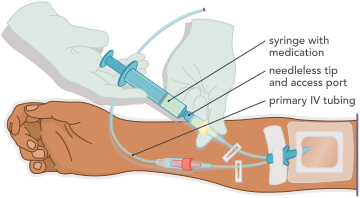
BASIC IV THERAPY
Advantages of IV Therapy
There are many advantages of IV therapy.
IVs administer medication directly into a vein, so the medication takes effect almost immediately.
IV administration allows for the delivery of precise amounts of medication and large volumes of fluid infusion.
The IV route can administer medications that are irritating to tissues and thus cannot be administered by other routes.
IV administration can prevent the discomfort that can occur with subcutaneous or intramuscular injection.
Risks of IV Fluid Therapy
IV therapy places the client at risk for local and systemic reactions. Local reactions include phlebitis, infiltration, and extravasation. Systemic risks of IV therapy include speed shock, fluid overload, catheter embolism, and allergic reactions.
systemic
phlebitis
infiltration
extravasation
embolism
Phlebitis
Phlebitis is a localized inflammation of a vein.
Mechanical causes of phlebitis include inserting an intravenous catheter in an area of flexion, using an excessively large IV catheter, and inadequately stabilizing the catheter after insertion.
Chemical causes include infusion of irritating solutions and rapid infusion rates.
Bacterial causes include a break in asepsis during insertion and a break in the integrity of the dressing covering the insertion site.
In general, observe IV sites for signs of complications every 4 hr for alert, oriented adults and every 1 to 2 hr for all other clients. (Policies can vary based on facility.)
Manifestations of phlebitis include the following.
Skin darkening or redness, warmth, or swelling at the insertion site
Client report of discomfort from the IV
Skin darkening or redness and increased firmness along the cannulated vein
If any of these findings are present, stop the infusion immediately and remove the catheter. A new catheter will need to be inserted at a different site either proximally to the discontinued site or on another extremity. Ensure that IV therapy is still needed before starting a new IV. Depending upon the type of solution or medication that was infusing, a warm or cool compress should be applied to the inflamed area, and the appearance documented in the client record.
Guidelines to prevent phlebitis and infection include the following.
Use the correct size IV catheter for the vein.
Secure the IV catheter and tubing carefully to prevent irritation of the site.
Use the aseptic technique.
Cover the IV site with a clear dressing to allow for frequent monitoring and prevent contamination with microorganisms.
Change the dressing if it becomes wet or dislodged.
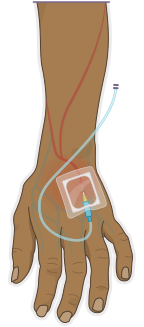
Infiltration and Extravasation
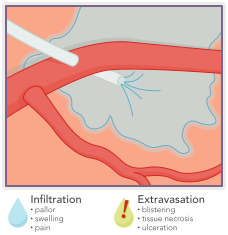
Infiltration and extravasation can occur when an IV catheter slips out of the vein or when fluid leaks into the tissues from another puncture site close to the IV catheter.
To prevent infiltration and extravasation, do the following.
Monitor IV sites frequently.
Use care when administering vesicant medications.
Assess potential for extravasation when administering medications intravenously.
vesicant
Infiltration
Manifestations of infiltration include a change from usual skin color (blanching), swelling, and pain at the IV site. Swelling can be significant if a large amount of IV fluid leaks into the tissues. Stop the IV immediately and remove the cannula from the vein to treat infiltration. Elevate the affected extremity, and apply warm, moist, or cold compresses. Specific policies for treating infiltrations vary by facility depending on the type of fluid infused. Document the size of the infiltrated area, estimate the amount of fluid present, and monitor the site.
Extravasation
Extravasation can occur if the solution that leaked into the tissue contains a vesicant. Examples of vesicant medications and solutions include chemotherapeutic medications, vancomycin, dopamine, and digoxin. Findings of extravasation can initially be the same as for infiltration, but then blistering of the skin, tissue necrosis, and ulceration can occur. Treatment depends on which vesicant medication leaked into the tissues and facility policy. The peripheral IV catheter might be left in place to allow for the instillation of an antidote medication.
Speed Shock
Speed shock is a systemic reaction that occurs when an IV medication is administered too rapidly, causing blood levels of the medication to rise to possibly toxic levels. Findings with speed shock include chest pain or discomfort, lightheadedness, palpitations, and tachycardia. Additional findings depend on the effects of the medication being administered. Shock and cardiac arrest can occur if the condition is untreated. To treat speed shock, stop administering the medication, change the IV fluid to an isotonic solution, notify the provider, treat the effects, and carefully monitor vital signs. Be sure to document the occurrence.
isotonic

Preventing Speed Shock
Use an electronic infusion pump or other control device.
When administering IV bolus medications, administer over at least 1 min.
Check medication references for medications that require slower administration.
Dilute IV bolus medications appropriately.
Administer intermittent IV bolus at the recommended rate.
Fluid Overload
Fluid overload (also known as circulatory overload) can occur if the rate of administration of IV fluid is faster than the client can tolerate. If fluid overload is suspected, slow the rate of the infusion, raise the head of the bed, and administer oxygen as prescribed. Notify the provider. Anticipate a prescription for a diuretic and possibly other medications. Document all findings, and closely monitor vital signs.
Manifestations of Fluid Overload
Shortness of breath
Intake greater than urine output
Increased blood pressure, heart rate, and respiratory rate
Crackles in the lungs
Neck vein distention
Extremity edema

FLUID OVERLOAD
Allergic Reactions
An allergic reaction occurs when a client is hypersensitive to a medication. Reactions range from a mild local or systemic reaction to a severe reaction that can cause anaphylactic shock.
anaphylactic shock
Mild to Moderate Reactions
Manifestations of Mild to Moderate Allergic Reactions
Generalized rash that can consist of hives or vesicles
Pruritus
Edema
Rhinitis
Excessive tearing
Nausea
Vomiting
Diarrhea
Wheezing
Dyspnea
pruritus
rhinitis
An allergic reaction can occur any time from a few minutes to 2 weeks after the client receives the medication. To treat a mild to moderate allergic response, stop the medication infusion, replace the IV tubing, infuse 0.9% sodium chloride (NaCl), and notify the provider.
Severe Reactions
Manifestations of Severe Allergic Reactions
Itching
Hives
Erythema and angioedema of eyes, lips, and tongue
Respiratory distress
Increased mucus production
Hypotension
Tachycardia
Diaphoresis
Respiratory or cardiac arrest
A severe allergic reaction to a medication can precipitate anaphylactic shock, which can be life-threatening. Patients can initially note a feeling of apprehension or weakness when experiencing a severe reaction. Generalized itching and hives can quickly appear, followed by erythema and angioedema of the eyes, lips, and tongue. Respiratory distress, increased mucus production, hypotension, tachycardia, and diaphoresis can also occur. Respiratory or cardiac arrest can occur within minutes after the medication is administered. If the client has a severe systemic response, have another nurse call the rapid response team while you stop the medication and initiate oxygen at 90% to 100% via nonrebreather face mask. Replace the IV tubing and infuse 0.9% NaCl. Elevate the head of the client’s bed to 45° to help with shortness of breath. If hypotension is present, elevate the head of the bed only to 10°. Anticipate administering epinephrine and diphenhydramine. Prepare to initiate emergency measures, such as cardiopulmonary resuscitation.
epinephrine
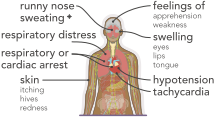
ANAPHYLAXIS
IV Catheter Embolism
An IV catheter embolism occurs when part of an IV catheter breaks off in a vein. This is usually due to catheter damage during insertion, or too much force when flushing the catheter or administering a medication. The embolism can travel to the heart, lungs, or elsewhere in the body, and the consequences for the client can be serious. A catheter embolism can occur with a peripheral IV catheter, central IV catheter, or peripherally inserted central catheter (PICC) line. Findings depend on where the catheter fragment lodges. If a catheter embolism is suspected in a peripheral IV, remove the IV catheter and inspect it for damage to the tip. Apply a tourniquet above the IV site if a broken piece can be palpated. Notify the provider and anticipate obtaining an x-ray.
peripherally inserted central catheter (PICC)
Findings of Catheter Embolism
Pain in the extremity proximal to the IV insertion site
Signs of shock (shortness of breath, cyanosis, tachycardia)
Cardiopulmonary arrest.
Catheter Embolism Prevention
Inspect catheters for damage prior to insertion.
During insertion, never reinsert a needle into an IV cannula after removing it.
After removing an IV catheter, inspect the catheter to ensure it is intact before discarding.
A nurse is caring for a client who has fluid overload during a continuous IV infusion at 200 mL/hr. Which of the following actions by the nurse is appropriate?
A
Reduce the IV fluid rate.
B
Place the client in the orthopneic position.
C
Remove the IV catheter.
D
Place the client in modified Trendelenburg position.
A nurse is monitoring a client who is receiving an IV medication. The client reports dizziness and a feeling of chest tightness. The nurse notes that the client’s face is flushed and warm. These findings indicate which of the following systemic complications of IV therapy?
A
Speed shock
B
Extravasation
C
Anaphylactic shock
D
Fluid overload
A nurse is caring for a client who is receiving norepinephrine by continuous IV infusion. During a routine assessment of the IV site, the nurse notes that the catheter is no longer in the vein and the vesicant medication has infused into the subcutaneous tissue. Which of the following actions should the nurse take?
A
Apply a tourniquet proximal to the IV site.
B
Call the rapid response team and start oxygen.
C
Prepare to administer a diuretic.
D
Stop the infusion and prepare to administer an antidote.
A nurse is planning care for a client who is receiving IV therapy. Which of the following measures should the nurse include to prevent phlebitis?
A
Change the IV site weekly.
B
Apply a warm compress to IV site.
C
Use a clean technique when replacing the transparent dressing over the IV site.
D
Use a small-gauge catheter when initiating IV therapy.
A nurse is caring for a client who is receiving an antibiotic by intermittent IV infusion. The client reports feeling short of breath and is wheezing. Which of the following actions should the nurse take?
Select all that apply.
A
Initate oxygen.
B
Call the rapid response team.
C
Prepare to administer acetylcysteine.
D
Remove the IV catheter.
E
Elevate the head of the bed to 45°.
Osmolarity
Page 1
Osmolarity is the concentration of dissolved particles within a solution (or solute within a solvent). Osmolarity is measured in milliosmoles per liter (mOsm/L). It’s important to know the principles of osmolarity to understand the provider’s choice of IV solution for a client. Osmolarity is the basis for determining if IV solutions are isotonic, hypotonic, or hypertonic.
hypotonic
hypertonic
Isotonic IV Solutions
Isotonic IV solutions have an osmolarity of around 250 to 350 mOsm/L. Isotonic solutions are similar in composition to body fluids and are used to maintain or increase the volume within the vascular system. Isotonic fluid stays in the veins and interstitial tissues; it does not move into cells. However, it can cause fluid overload, especially in susceptible clients.
interstitial
Two common isotonic IV solutions are 0.9% sodium chloride (0.9% NaCl) and lactated Ringer’s (LR).
lactated Ringer’s
Commonly called normal saline (NS), 0.9% sodium chloride solution is a mixture of sodium and water. It is often the preferred diluent for mixing with IV medications prior to administration. It is also the preferred solution to use when administering blood products.
Lactated Ringer’s solution contains electrolytes, sodium, chloride, potassium, calcium, and lactate. The liver metabolizes lactate to form bicarbonate, so this solution is used to treat acidosis. Refer to the following table.
lactate
acidosis
IV Solutions
IV Solution
Uses
Contraindications
0.9% sodium chloride (0.9% NaCl)
Increase intracellular fluid volume.
Administer blood transfusions.
Replace fluid losses.
Heart failure
Pulmonary edema
Renal failure
Hypernatremia
Lactated Ringer’s (LR)
Provide fluid resuscitation.
Correct metabolic acidosis.
Heart failure
Renal failure
Head injury
Liver disease
Respiratory alkalosis
Selecting IV Fluids
There are more than 200 IV solutions available. Use care when administering an IV solution to ensure it exactly matches the prescription.
Hypotonic IV Solutions
Hypotonic IV solutions have an osmolarity of less than 200 mOsm/L. They are less concentrated than blood and other body fluids. These solutions are used to treat a fluid and electrolyte imbalance by moving water into the cells. A client who has hypernatremia might have a prescription for a hypotonic solution to dilute body fluids and rehydrate the cells.
hypernatremia
Continued infusion of hypotonic solutions can cause the cells to rupture, also known as hemolysis. It can also cause cerebral edema, especially in clients at risk for increased intracranial pressure, such as clients with head injuries. An example of a hypotonic IV solution is 0.45% NaCl—also known as half normal saline (½NS).
hemolysis
A special mention is needed for dextrose 5% in water, also known as D5W, which is an isotonic solution that becomes hypotonic soon after it enters the body. This solution contains water and a small amount of carbohydrate, which provides 170 kilocalories per liter. It is isotonic with an osmolarity of 252 mOsm/L before infusion. However, the dextrose metabolizes quickly after infusion, leaving only water, which freely moves into the cells and interstitial spaces. Because of its hypotonicity, providers rarely order D5W as a continuous infusion. It is used as a solution to add IV medications for intermittent IV bolus administration. It is also combined with isotonic IV solutions to provide calories for clients receiving continuous IV therapy. Dextrose solutions can be contraindicated for clients who have diabetes mellitus due to its ability to increase blood glucose levels.
bolus
Hypertonic IV Solutions
Hypertonic IV fluids have an osmolarity greater than 350 mOsm/L. Solutions with greater than 500 mOsm/L can irritate veins. Hypertonic solutions are used to correct fluid and electrolyte imbalances.
Hypertonic solutions are more concentrated than body fluids. They pull fluid from the interstitial spaces and cells into the veins. Administer hypertonic fluids with caution to clients at risk for fluid volume overload—including clients who have heart or renal failure, older adults, and young children.
Examples of hypertonic solutions include 3% sodium chloride (3% NaCl) solution and dextrose 10% in water (D10W). Other fluids—such as dextrose 5% in lactated Ringer’s (D5LR) and dextrose 5% in 0.9% sodium chloride (D5NS)—are hypertonic in the bag but become isotonic after the body metabolizes the dextrose.
Effect of Osmolarity
Which of the following is a common name for the IV solution 0.9% sodium chloride?
A
Half normal saline
B
Normal saline
C
Lactated Ringer's
D
Sodium lactate
A nurse is administering lactated Ringer’s (LR), which contains lactate. LR can be used to treat a client who has which of the following disorders?
A
Acidosis
B
Alkalosis
C
Caloric deficit
D
Caloric excess
Which of the following is the abbreviation for the IV solution half normal saline?
A
0.25% NaCl
B
0.45% NaCl
C
0.5% NaCl
D
0.9% NaCl
How many calories does 1 L of 5% dextrose in water (D5W) provide?
Enter your response and submit to compare to an expert response.
Which of the following IV solutions should a nurse use when preparing to administer a blood transfusion?
A
5% dextrose in water (D5W)
B
Lactated Ringer’s (LR)
C
5% dextrose in 0.9% sodium chloride (D5NS)
D
0.9% sodium chloride (0.9% NaCl or NS)
Match the type of IV solution with its description.
Drag the options on the left to their match on the right (or match pairs by first selecting the option on the left and then selecting its match on the right).
Isotonic
Hypotonic
Hypertonic
Moves fluid from the veins to the cells and interstitial spaces
Pulls fluid out of the cells and into the veins
Remains in the intravascular space
Hemolysis can occur with the administration of which of the following types of solution?
A
Isotonic
B
Hypotonic
C
Hypertonic
A nurse administers a solution of 3% NaCl to a client. Which of the following types of solution is this?
A
Isotonic
B
Hypotonic
C
Hypertonic
A nurse administers lactated Ringer’s by continuous IV infusion. Which of the following types of solution is this?
A
Isotonic
B
Hypotonic
C
Hypertonic
A nurse administers dextrose 5% in water (D5W) IV solution. After the dextrose is metabolized, which of the following types of solution is this?
A
Isotonic
B
Hypotonic
C
Hypertonic
Equipment
Page 1
IV Tubing
There is both primary and secondary IV tubing. All tubing must be labeled with the date and time of first use and nurse initials. This process allows for the tubing to be replaced according to facility policy to decrease infection rates.
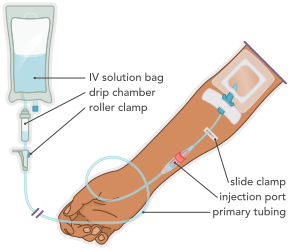
Primary IV tubing includes a drip chamber, an injection port, or ports and a roller clamp. A slide clamp to completely shut off the infusion is also common. There are many variations of primary tubing, including specialized tubing that fits in specific types of IV pumps and tubing for use with manual IV infusions that run by gravity drip. Primary IV tubing is long enough to easily attach to the IV catheter in a vein and is usually used to administer a continuous IV infusion. Regulate administration of fluid manually, by using a gravity drip, or by using an electronic infusion pump.
Secondary IV tubing includes a drip chamber and a roller clamp. The tubing is short and intended to be attached to primary IV tubing at the upper Y-port. This type of tubing is used to administer a small IV bag or bottle of medication.
Volume-Controlled Administration Sets
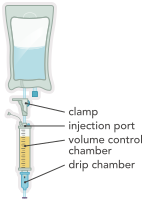
Volume-controlled administration sets are small fluid containers that attach just below the primary infusion bag or bottle. The primary IV tubing is then connected below the set. A volume-controlled administration set holds up to 150 mL of solution. These sets are used in situations where volume administration must be precisely controlled, such as with young children and some older adults. These sets can also be used to dilute IV medications by adding a volume of fluid to the chamber and then adding the medication through an access port. The nurse must attach a label to the volume control fluid chamber if a medication is added.
Medication Labels
To prevent medication errors, label medications with complete and accurate information. The Institute for Safe Medication Practice (ISMP) provides recommendations for the labeling of intermittent IV infusions.
ISMP Recommended Medical Label Components
Client’s name
Generic name of the medication in bold, lowercase letters
Client’s specific dose in bold font
Brand name of the medication in uppercase letters to differentiate it from the generic name
Second identifier (client date of birth, medical record number) to ensure the medication is given to the right client
Diluent, route, and total volume
Barcode, if available, to decrease the occurrence of medication errors
Expiration date (in month/day/year format)
Pharmacist’s initials, to indicate that the pharmacist checked the medication
Other information possibly included is the date and time that the dose is due, and the time it should take for the solution to infuse.
Electronic Infusion Devices
Electronic infusion devices (also called infusion pumps or IV pumps) deliver an accurate rate of fluid infusion. Infusion pumps deliver a specified amount of fluid during a specified amount of time—for example, 150 mL in 1 hr.
Become familiar with the devices that are available in the facility in which you work. These devices have internal detectors that sound an alarm if:
There is air in the tubing.
The remaining volume is low.
The infusion is complete.
There is a low battery.
There is an occlusion.
Flow rates on IV infusion pumps are usually set to deliver a whole number per hour. However, most pumps can deliver decimal flow rates. Use this option to deliver small volumes of fluid to clients who have fluid restrictions.
Electronic infusion pumps are often used for pediatric clients, clients who have renal or cardiac disease, clients receiving IV medications, and clients who need strict control of volume infusion.
A syringe pump (also called a mini-infusion pump) can be used to administer medications in small amounts of solution. A medication-filled syringe is clamped into the medication pump and attached intravenously to the client. The pump is then programmed to deliver the prescribed dosage of medication over the time indicated.
Signs of Infiltration
Electronic infusion devices typically infuse fluids using a lower pressure than a gravity infusion. These devices might not detect a change in pressure, which can be associated with an infiltration of an IV site. The nurse should monitor the site frequently for signs of pain, change from usual skin color, coolness, or swelling, which are associated with an infiltration.
Administration
Page 1
Intermittent IV Bolus
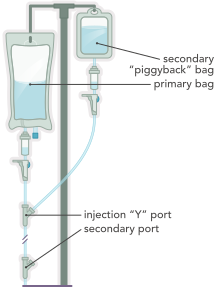
This method is used to administer a medication contained within smaller volumes of solution, usually 50 to 250 mL. It is commonly referred to as a piggyback infusion because the bag or bottle is positioned at a higher level than the primary IV bag. The nurse will use secondary tubing to connect the medication bag or bottle to the primary IV tubing at the upper Y-port of the primary tubing. This Y-port contains a back-check valve that prevents the flow of the primary infusion while the piggyback is infusing. Once the piggyback infusion has completed, the back-check valve opens and the primary IV begins to flow again. To allow the secondary intermittent medication to infuse while the primary infusion is temporarily interrupted, the primary bag must be lowered using an extender. The flow rate for each bag can be regulated using the roller clamp or with an electronic infusion device.
secondary intermittent medication
IV Bolus
Another method of intravenous administration is to use a syringe to slowly administer the medication directly into an existing IV line or an intermittent venous access, also known as a saline lock or IV lock. This method achieves a rapid serum concentration and takes effect immediately. Watch a clock during the administration to ensure delivery of the medication within the recommended time frame. Too rapid administration can lead to serious medication reactions.
IV lock
When administering an IV bolus of medication into a port or an existing IV infusion, ensure that the medication is compatible with the infusing IV fluid. Pause the continuous infusion. Then close the clamp or pinch the tubing above the injection port that is closest to the client. This action prevents the medication from traveling up the tubing away from the client. After cleansing and accessing the port closest to the client, slowly and steadily administer the medication within the recommended time frame. Release the pinched tubing or clamp after administration is complete. Restart the continuous infusion.
An IV bolus can also be administered directly into the port of the client’s IV lock. When using this method, flush the port with 0.9% NaCl before administration to ensure patency. Administer the medication within the recommended time frame, and then follow with a flush of 0.9% NaCl.
Tandem Administration
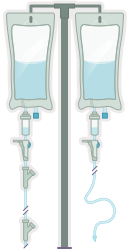
Tandem administration is when the primary and secondary IV bags infuse at the same time. With tandem administration, hang the secondary bag on the IV pole at the same level as the primary bag. Then plug in the secondary bag tubing into a lower port on the primary IV tubing. The lower port does not have a back-check valve, so both IV solutions can infuse at the same time. The flow rate of each will be controlled using the roller clamp on each bag’s tubing or by using an electronic infusion device.
Common Additives to Primary IV Solutions
Some medications can be infused as additives to a primary IV solution. Examples of medications to administer this way are potassium chloride, magnesium sulfate, oxytocin, heparin, and regular insulin. All solution additives should be prepared in the pharmacy to decrease risks to the client, such as incorrect calculations, non-aseptic preparation, and incorrect labeling. While nurses may add medications to IV fluids in an emergency, another nurse should always confirm the calculation and observe the procedure to minimize the risk of error. Some high-risk medication solutions are never to be prepared on a nursing unit.
High-Risk Medication Solutions
Heparin
Dopamine
Nitroglycerin
Potassium
Magnesium
Dobutamine
A nurse is preparing to use the piggyback method to administer a secondary IV medication. Which of the following is where the nurse should place the secondary bag?
A
Higher than the primary bag
B
Lower than the primary bag
C
Equal in height to the primary bag
A nurse is observing a newly licensed nurse administer an intermittent IV bolus to a client who has a continuous IV. The IV bolus is compatible with the continuous IV fluids. Which of the following actions by the newly licensed nurse requires intervention?
A
Choosing the port closest to the client to administer the medication
B
Flushing the line with 0.9% NaCl prior to administering the medication
C
Pinching the IV tubing above the port while administering the medication
D
Donning clean gloves prior to the procedure
A nurse is reviewing the label affixed to a bag of IV medication to be given as an intermittent IV bolus. Which of the following information must be included to meet ISMP recommendations?
Select all that apply.
A
Client’s medical record number
B
Provider's name
C
Infusion time for medication
D
Diluent solution
E
Expiration date of medication
Flow Rates
Page 1
It’s important to regulate the IV flow rate accurately to ensure client safety. If IV fluids infuse more rapidly than prescribed, the client can experience fluid overload and electrolyte imbalances. If IV fluids infuse too slowly, the client’s recovery can be delayed.
Several factors can influence the flow rate. The position of the forearm, flexion of the wrist or elbow, kinked or occluded tubing, or back pressure from an infiltrated IV can impede the flow of the fluid into the vein.
Administering IV Infusions
When caring for clients who have peripheral IV lines and central venous access devices, responsibilities include inserting peripheral IV catheters, starting continuous IV infusions, administering IV medications, and monitoring IV sites. Providers prescribe the IV fluid infusion rate.
Prescriptions include the type of IV fluid, medication if added, the volume the client should receive, and the rate at which to infuse the fluid (or the total time it should take for the fluid to infuse).
Types of IV Fluid Administration
Large-volume IV infusions on a continuous basis
For fluid and electrolyte replacement
For administering medications
Large-volume IV bolus
Usually for a one-time prescription
Intermittent IV bolus infusion, also known as IV piggyback
Usually a medication mixed in 50 to 250 mL of solution, given over 30 to 60 min
IV bolus, also known as IV push
For a small amount of medication, either concentrated or diluted
Injected over a short time, typically 1 to 5 min
IV fluids are administered in the several ways. IV flow rate usually needs to be determined for continuous large-volume infusions, one-time large-volume infusions, and intermittent IV infusions.
Calculating Flow Rates
Page 1
A prescription for an infusion might indicate a milliliters per hour (mL/hr) infusion rate, or that the nurse should infuse a specific volume of fluid over a designated period. This can be the case for either a continuous infusion or for an intermittent IV bolus infusion. If not prescribed in mL/hr, the nurse must perform calculations to determine how many mL/hr to deliver.
For example, a provider might write a prescription for D5W 2,500 mL over 24 hr. Alternately a provider can prescribe 250 mg of cefazolin in 100 mL of 0.9% NaCl over 45 minutes every 8 hr. In both situations, the nurse needs to determine the flow rate in mL/hr to ensure the client receives the appropriate amount of fluid over the time indicated.
In another example, the prescription says 0.9% NaCl with 20 milliequivalents of potassium chloride at 125 mL/hr. The provider indicated the type of IV fluid (0.9% NaCl with 20 milliequivalents of potassium chloride) and a constant rate for the fluid to infuse. The client should receive the IV solution at a constant rate of 125 mL/hr. Regulate the IV rate to ensure the client receives the appropriate amount of fluid.
Walkthrough
Dimensional Analysis
Desired Over Have
Ratio and Proportion
Select from the tabs above to change the calculation method.
Step-by-Step Practice
Watch each video segment. Answer the associated questions before proceeding to the next part.
Dimensional Analysis
Desired Over Have
Ratio and Proportion
Select from the tabs above to change the calculation method.
x mL/min=ABx mL/min=BA
Enter the number for the numerator in mL and the number for the denominator in min separated by a slash (/).
x mL=100 mL30 hr×ABx mL=30 hr100 mL×BA
Enter the numbers for A and B separated by slashes. Do not use commas. Use a leading zero if it applies.
100×60=100×60=
Enter number in mL.
30×1=30×1=
Enter the number.
6,000 mL30 hr=30hr6,000 mL=
Enter number in mL/hr. Include a leading zero if it applies.
Practice Activities
Dimensional Analysis
Desired Over Have
Ratio and Proportion
Select from the tabs above to change the calculation method.
A nurse is preparing to administer 0.45% NaCl 500 mL IV to infuse over 8 hr. The nurse should set the IV pump to deliver how many mL/hr?
Round to the answer to the nearest whole number.
Dimensional Analysis
Desired Over Have
Ratio and Proportion
Select from the tabs above to change the calculation method.
A nurse is preparing to administer D5W 500 mL IV to infuse over 6 hr. The nurse should set the IV pump to deliver how many mL/hr?
Round the answer to the nearest whole number.
Dimensional Analysis
Desired Over Have
Ratio and Proportion
Select from the tabs above to change the calculation method.
A nurse is preparing to administer D5W 200 mL IV to infuse over 6 hr. The nurse should set the IV pump to deliver how many mL/hr?
Round the answer to the nearest whole number.
Dimensional Analysis
Desired Over Have
Ratio and Proportion
Select from the tabs above to change the calculation method.
A nurse is preparing to administer famotidine 20 mg by intermittent IV bolus every 12 hr. Available is famotidine 20 mg in D5W 100 mL to infuse over 30 min. The nurse should set the IV pump to deliver how many mL/hr?
Round the answer to the nearest whole number.
Dimensional Analysis
Desired Over Have
Ratio and Proportion
Select from the tabs above to change the calculation method.
A nurse is preparing to administer ceftriaxone 2 g by intermittent IV bolus every 12 hr. Available is ceftriaxone 2 g in D5W 100 mL to infuse over 45 min. The nurse should set the IV pump to deliver how many mL/hr?
Round the answer to the nearest whole number.
Dimensional Analysis
Desired Over Have
Ratio and Proportion
Select from the tabs above to change the calculation method.
A nurse is preparing to administer lactated Ringer’s 2 L IV to infuse over 24 hr. The nurse should set the IV pump to deliver how many mL/hr?
Round the answer to the nearest whole number.
Dimensional Analysis
Desired Over Have
Ratio and Proportion
Select from the tabs above to change the calculation method.
A nurse is preparing to administer ceftazidime 1 g by intermittent IV bolus every 12 hr. Available is ceftazidime 1 g in 0.9% NaCl 50 mL to infuse over 15 min. The nurse should set the IV pump to deliver how many mL/hr?
Round the answer to the nearest whole number.
Dimensional Analysis
Desired Over Have
Ratio and Proportion
Select from the tabs above to change the calculation method.
A provider prescribes lactated Ringer’s 1.5 L IV to infuse over 12 hr. The nurse should set the IV pump to deliver how many mL/hr?
Round the answer to the nearest whole number.
Dimensional Analysis
Desired Over Have
Ratio and Proportion
Select from the tabs above to change the calculation method.
A nurse is preparing to administer 0.9% NaCl 1,000 mL IV to infuse over 10 hr. The nurse should set the IV pump to deliver how many mL/hr?
Round the answer to the nearest whole number.
Dimensional Analysis
Desired Over Have
Ratio and Proportion
Select from the tabs above to change the calculation method.
A provider prescribes dextrose 5% in 0.45% NaCl 800 mL IV to infuse over 4 hr. The nurse should set the IV pump to deliver how many mL/hr?
Round the answer to the nearest whole number.
Summary
Page 1
IV therapy is used to maintain fluid and electrolyte balance and deliver medication directly into the bloodstream.
IV therapy is acts rapidly, allows for precise amounts of medication to be administered, and can help avoid discomfort and tissue irritation.
IV therapy risks include phlebitis, infiltration, extravasation, speed shock, fluid overload, allergic reaction, and embolism. The osmolarity (isotonic, hypotonic, hypertonic) determines the effect of IV solutions on the body’s fluid balance. IV equipment includes primary and secondary tubing, mini-infusion pumps, volume-controlled administration sets, and electronic infusion devices.
This equipment allows for different types of IV administration, including intermittent IV bolus, tandem administration, and secondary intermittent infusions.
References
Legal
Credits
Chapter 49: Intravenous Therapy
Intravenous (IV) therapy involves infusing fluids via an IV catheter to administer medications, blood products, supplement fluid intake, or provide fluid replacement, electrolytes, or nutrients.
Nurses administer large-volume IV infusions, as well as IV boluses, usually in a small amount of fluid. Nurses or pharmacists mix IV medication in a large volume of fluid to give as a continuous IV infusion or intermittently in a small amount of fluid.
Procedure
The provider prescribes the type of IV fluid, the volume to infuse, and either the rate at which to infuse the IV fluid or the total amount of time it should take to infuse the fluid. The nurse regulates the IV infusion, either with an IV pump or manually, to be sure to deliver the right amount.
Nurses administer large-volume IV infusions on a continuous basis (0.9% sodium chloride IV to infuse at 100 mL/hr), or intermittently (0.9% sodium chloride 500 mL to give IV over 3 hr).
A fluid bolus is a large amount of IV fluid to give in a short time, usually less than 1 hr. A fluid bolus rapidly replaces fluid loss from dehydration, shock, hemorrhage, burns, or trauma. A large-gauge catheter (18-gauge or larger) is essential for maintaining the rapid rate necessary to administer a fluid bolus to an adult.
Nurses administer medications as an IV bolus, giving the medication in a small amount of solution, concentrated or diluted, and injecting it over a short time (1 to 2 min).
Advantages
Rapid absorption and onset of action
Constant therapeutic blood levels
Less irritation to subcutaneous and muscle tissue
Disadvantages
Circulatory fluid overload is possible if the volume of the solution is large, or the infusion rate is rapid.
Immediate absorption leaves little time to correct errors because adverse effects can occur quickly.
Solutions and IV catheters can irritate the lining of the vein.
Failure to maintain surgical asepsis can lead to local and systemic infection.
Considerations
Nursing Actions
Nurses administer IV medication infusions in the following ways:
Give the medication the pharmacist mixed in a large volume of fluid (500 to 1,000 mL) as a continuous IV infusion (potassium chloride and vitamins)
Deliver the medication in premixed solution bags from the medication’s manufacturer
Administering volume-controlled infusions
Give some medications (antibiotics) intermittently in a small amount of solution (25 to 250 mL) through a continuous IV fluid system or with saline or heparin lock systems
Infuse the medications for short periods of time and on a schedule
Use a secondary IV bag or bottle or tandem setup, a volume-control administration set, or a mini-infusion pump
Giving an IV bolus dose
Inject the medications in small amounts of solution, concentrated or diluted, over a short time (1 to 2 min)
Administer medications directly into the peripheral IV or access port to achieve an immediate medication level in the bloodstream (with pain medication)
Prepare medications in the correct concentration and at a safe rate (amount of medication per minute)
Use extreme caution and observing for adverse reactions or complications (redness, burning, or increasing pain)
Older Adult Clients, Clients Taking Anticoagulants, or Clients Who Have Fragile Veins
Avoid tourniquets.
Use a blood pressure cuff instead.
Do not slap the extremity to visualize veins.
Avoid rigorous friction while cleaning the site.
Use a small needle size, such as 22 or 24 gauge if possible.
Edema in Extremities
Apply digital pressure over the selected vein to displace edema.
Apply pressure with a swab of cleaning solution.
Cannulate the vein quickly.
Clients Who Are Obese
Use anatomical landmarks to find veins.
Preprocedure
Equipment
IV start kit if available: Tourniquet, antiseptic swabs, transparent dressing, small roll of sterile tape, 2x2 or 4x4 gauze sponges, and safety positioning device.
Correct size catheter
16-gauge for clients who have trauma, rapid fluid volume
16- to 20-gauge for clients who are having surgery, rapid blood administration
20- to 24-gauge for other clients (children, older adults, short-term therapy)
Tubing
Prefilled syringe containing 1 to 3 mL of 0.9% sodium chloride solution
Infusion pump
Clean gloves
Scissors or clippers for hair removal
Nursing Actions
Check the prescription (solution, rate).
Identify allergies to latex or tape.
Follow the rights of medication administration.
Check compatibilities of IV solutions and medications.
Perform hand hygiene.
Examine the IV solution for clarity, leaks, and expiration date.
Don clean gloves.
Evaluate extremities and veins. Clip hair at and around the insertion site with scissors. Do not shave the area because an abrasion can occur, increasing the risk of infection.
Client Education
Understand the procedure.
Lie in a comfortable position.
Intraprocedure
Nursing Actions
Apply a clean tourniquet or blood pressure cuff (especially for older adults) 10 to 15 cm (4 to 6 in) above the insertion site to compress only venous blood flow.
Select the vein by using visualization, gravity, fist clenching, friction with the cleaning solution, or heat, and choose
Distal veins first on the nondominant hand
A site that is not painful or bruised and will not interfere with activity
A vein that is resilient with a soft, bouncy sensation on palpation
Avoid the following:
Varicose veins that are permanently dilated and tortuous
Veins in the inner wrist with bifurcations, in flexion areas, near valves (appearing as bumps), in lower extremities, and in the antecubital fossa (except for emergency access)
Veins in the back of the hand
Veins that are sclerosed or hard
Veins in an extremity with impaired sensitivity (scar tissue, paralysis), lymph nodes removed, recent infiltration, a PICC line, or an arteriovenous fistula or graft
Veins that had previous venipunctures
Untie the tourniquet or deflate the blood pressure cuff.
Cleanse the area at the site using friction in a circular motion from the middle and outwardly with chlorhexidine or the cleaning agent the facility’s protocol specifies. Allow it to air dry for 1 to 2 min.
Remove the cover from the catheter, grasp the plastic hub, and examine the device for smooth edges.
Retie the tourniquet or reinflate the blood pressure cuff.
Place the extremity in a dependent position (below the level of the heart).
Ask the client to slowly open and close their fist.
Anchor the vein below the site of insertion.
Pull the skin taut and hold it.
Warn the client of a sharp, quick stick.
Use a steady, smooth motion to insert the catheter into the skin at an angle of 10° to 30° with the bevel up.
Advance the catheter through the skin and into the vein, maintaining a 10° to 30° angle. A flashback of blood will confirm placement in the vein.
Lower the hub of the catheter close to the skin to prepare for threading it into the vein approximately 0.6 cm (0.24 in).
Loosen the needle from the catheter and pull back slightly on the needle so that it no longer extends past the tip of the catheter.
Use the thumb and index finger to advance the catheter into the vein until the hub rests against the insertion site.
Stabilize the IV catheter with one hand and release the tourniquet or blood pressure cuff with the other.
Apply pressure approximately 3 cm (1.2 in) above the insertion site with the middle finger and stabilize the catheter with the index finger.
Remove the needle and activate the safety device.
Maintain pressure above the IV site and connect the appropriate equipment to the hub of the IV catheter.
Apply a dressing and leave it in place until catheter removal, unless it becomes damp, loose, or soiled.
Avoid encircling the entire extremity with tape and taping under the sterile dressing.
For a continuous IV infusion, regulate the infusion rate according to the prescription.
Dispose of used equipment and supplies.
Document the following in the medical record:
The date and time of insertion
The insertion site and appearance
The catheter’s size
The type of dressing
The IV fluid and rate
The number, locations, and conditions of previously attempted catheterizations
The client’s response
Sample documentation: 6/1/20XX, 1635, Inserted #22-gauge IV catheter into left wrist cephalic vein (one attempt); applied sterile occlusive dressing. IV dextrose 5% in lactated Ringer’s infusing at 100 mL/hr per infusion pump without redness or edema at the site. Tolerated without complications. S. Velez, RN
Threaded Case Study Part 1
Prescriptions
The nurse is teaching the newly licensed nurse how to insert an IV catheter into the client. Which of the following statements by the newly licensed nurse indicates understanding of the procedure?
A
B
C
D
“I will choose a vein in the antecubital fossa for IV insertion.”
Postprocedure
Nursing Actions
Maintaining the patency of IV access
Do not stop a continuous infusion or allow blood to back up into the catheter for any length of time. Clots can form at the tip of the needle or catheter and lodge against the vein’s wall, blocking the flow of fluid.
Instruct clients not to manipulate the flow rate device, change the settings on the IV pump, or lie on the tubing.
Make sure the IV insertion site’s dressing is not too tight.
Flush intermittent IV catheters with the appropriate solution after every medication administration or every 8 to 12 hr when not in use, according to the facility’s policy.
Monitor the site and infusion rate at least every hour.
Discontinuing IV therapy
Check the prescription.
Prepare the equipment.
Perform hand hygiene.
Don clean gloves.
Clamp the IV tubing.
Remove the tape and dressing, stabilizing the IV catheter.
Apply a sterile gauze pad over the site without putting pressure on the vein. Do not use alcohol.
Using the other hand, withdraw the catheter by pulling it straight back from the site, keeping the hub parallel to the skin.
Elevate the extremity and apply pressure for 2 to 3 min and until bleeding stops.
Examine the site.
Apply tape over the gauze.
Use a pressure dressing, if necessary.
Check the catheter for intactness.
Dispose of the catheter in the designated puncture-resistant receptacle, and the IV solution and equipment in the appropriate location.
Document.
Types of IV Access
Peripheral vein via a catheter
Jugular or subclavian vein via a central venous access device
Guidelines for Safe IV Medication Administration
Use an infusion pump to administer medications that can cause serious adverse reactions (potassium chloride). Never administer them by IV bolus.
Never administer IV medications through tubing that is infusing blood, blood products, or parenteral nutrition solutions.
Review medication references for the recommended concentration and rate of administration prior to administration.
Verify IV placement prior to administering a medication.
Verify the compatibility of medications with IV solutions before infusing a medication through tubing that is infusing another medication or IV fluid.
Needlestick Prevention QS
Be familiar with IV insertion equipment.
Do not use needles when needleless systems are available.
Use protective safety devices when available.
Dispose of needles immediately in designated puncture-resistant receptacles.
Do not break, bend, or recap needles.
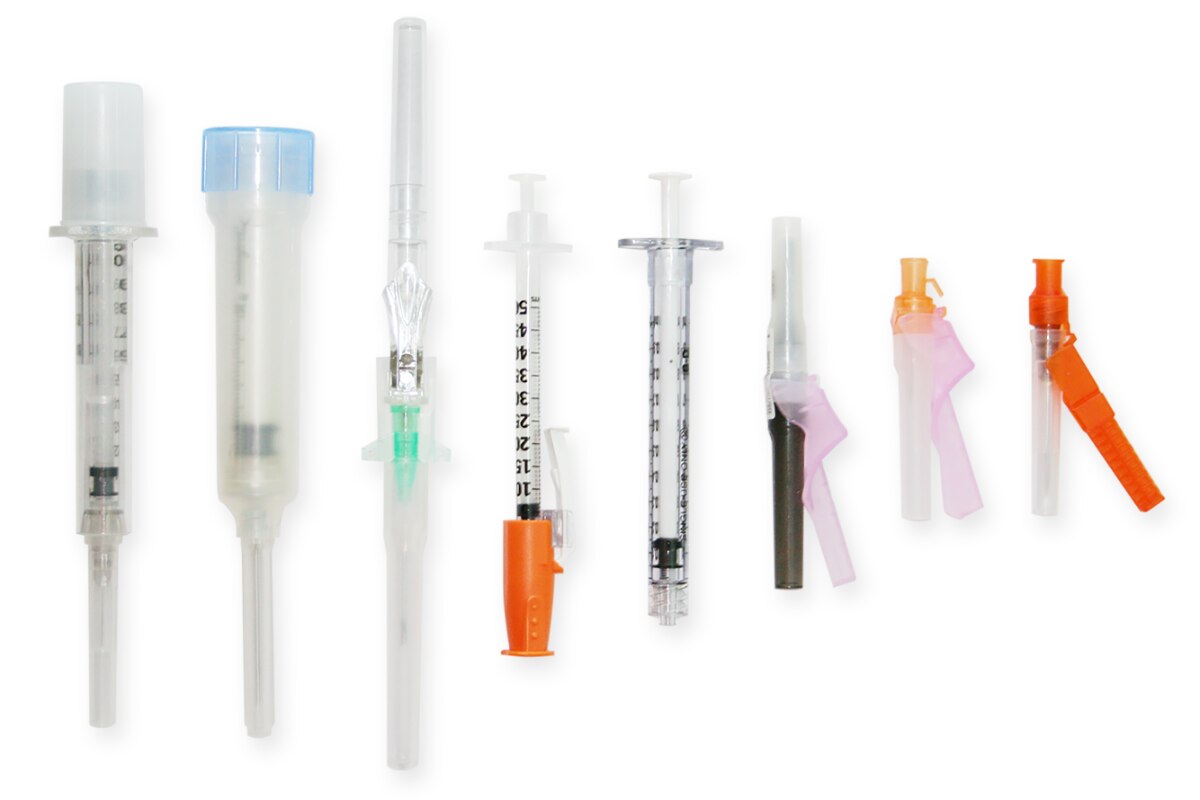
Needleless Injection System
Preventing IV Infections QS
Perform hand hygiene before and after handling IV systems.
Use standard precautions.
Change IV sites according to the facility’s policy (usually every 72 hr).
Replacement of the administration set is dependent upon the type of infusion. Administration sets with a continuous infusion of fluids with or without secondary fluids should be changed every 96 hr. Intermittent infusions should be changed every 24 hr. Some products (blood) or medications (propofol) should be changed more frequently, according to facility policy.
Remove catheters as soon as there is no clinical need for them.
Replace catheters when suspecting any break in surgical aseptic technique (during emergency insertions).
Use a sterile needle or catheter for each insertion attempt.
Avoid writing on IV bags with pens or markers, because ink can contaminate the solution.
Change tubing immediately for potential contamination.
Do not allow fluids to hang for more than 24 hr unless it is a closed system (pressure bags for hemodynamic monitoring).
Wipe all ports with alcohol or an antiseptic swab before connecting IV lines or inserting a syringe to prevent the introduction of micro-organisms into the system.
Never disconnect tubing for convenience or to reposition the client.
The nurse is teaching the newly licensed nurse strategies to reduce the risk for IV infections. What strategies should the nurse include?
Submit your response to compare it to an expert response.
Complications
Complications require notification of the provider and documentation. Use new tubing and catheters for restarting IV infusions after detecting complications.
Infiltration or Extravasation
IV solution or medication leaks into the subcutaneous tissue. Infiltration is the leak of a non-vesicant; extravasation is the leak of a vesicant solution which can damage the tissues. With extravasation, prior to regular treatment, the nurse should withdraw the solution from the client’s IV catheter, and might need to administer an antidote prior to discontinuing the IV access. Findings include pallor, local swelling at the site, decreased skin temperature around the site, damp dressing, or slowed rate of infusion.
Treatment
Stop the infusion and remove the catheter.
Elevate the extremity.
Encourage active range of motion.
Apply a warm or cold compress depending on the solution infusing.
Restart the infusion proximal to the site or in another extremity.
Prevention
Carefully select the site and catheter.
Secure the catheter.
Phlebitis or Thrombophlebitis
Edema; throbbing, burning, or pain at the site; increased skin temperature; erythema; a red line up the arm with a palpable band at the vein site; slowed rate of infusion
Treatment
Promptly discontinue the infusion and remove the catheter.
Elevate the extremity.
Apply warm compresses 3 to 4 times/day.
Restart the infusion in a different vein proximal to the site or in another extremity.
Obtain a specimen for culture at the site and prepare the catheter for culture if drainage is present.
Prevention
Change the IV site at least every 72 hr or sooner according to the facility’s policy.
Avoid inserting an IV into the lower extremities.
Use hand hygiene.
Use surgical aseptic technique.
The nurse is teaching the newly licensed nurse about complications of IV therapy. Sort the following findings into infiltration or phlebitis.
Localized warmth
Cool to touch
Red line
Pallor
Infiltration
Phlebitis
Fluid Overload
Distended neck veins, increased blood pressure, tachycardia, shortness of breath, crackles in the lungs, edema, additional findings varying with the IV solution
Treatment
Decrease the IV flow rate. and notify the provider of the change.
Raise the head of the bed.
Measure vital signs and oxygen saturation.
Adjust the rate after correcting fluid overload.
Administer diuretics.
Prevention
Use an infusion pump.
Monitor I&O.
Threaded case study Part 2
Scene 1 1515
Scene 2 1530
Scenario Conclusion
The nurse is assessing the client. Which of the following findings are a manifestation of fluid overload?
Select all that apply.
A
B
C
D
Pedal pulses
E
Neurological status
Cellulitis
Pain, warmth, edema, induration, red streaking, fever, chills, malaise
Treatment
Discontinue the infusion and remove the catheter.
Elevate the extremity.
Apply warm compresses 3 to 4 times/day.
Obtain a specimen for culture at the site and prepare the catheter for culture if drainage is present.
Administer the following:
Antibiotics
Analgesics
Antipyretics
Prevention
Rotate sites at least every 72 hr.
Avoid inserting an IV into the lower extremities.
Use hand hygiene.
Use surgical aseptic technique.
Threaded case study Part 3
Scene 1 1515
Scenario Conclusion
The nurse is caring for the client who is receiving IV therapy. Which of the following actions should the nurse plan to take first?
A
B
C
D
Discontinue the infusion.
Catheter Embolus
Missing catheter tip on removal, severe pain at the site with migration, absence of findings if no migration
Treatment
Place a tourniquet high on the extremity to limit venous flow.
Prepare for removal under x-ray or via surgery.
Save the catheter after removal to determine the cause.
Prevention
Do not reinsert the stylet into the catheter.
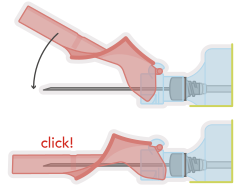
Needle Safety Cap
Active Learning Scenario
A nurse has inserted an IV catheter for a client who requires IV rehydration. What information should the nurse document in the client’s medical record? Use the ATI Active Learning Template: Basic Concept to complete this item.
Related Content: List the seven components of documentation following insertion of an IV catheter.
Click to download this file.
Active Learning Scenario Key
Click to reveal sample responses.