11. Gas exchange in humans
Overview of Gas Exchange in Humans
The gas exchange system is essential for delivering oxygen to the blood and removing carbon dioxide.
Certain features enhance the efficiency of gas exchange, including:
Large surface area for increased diffusion.
Thin surface to reduce diffusion distance.
Good blood supply to maintain concentration gradients.
Effective ventilation to support gas concentration balance.
Components of the Breathing System
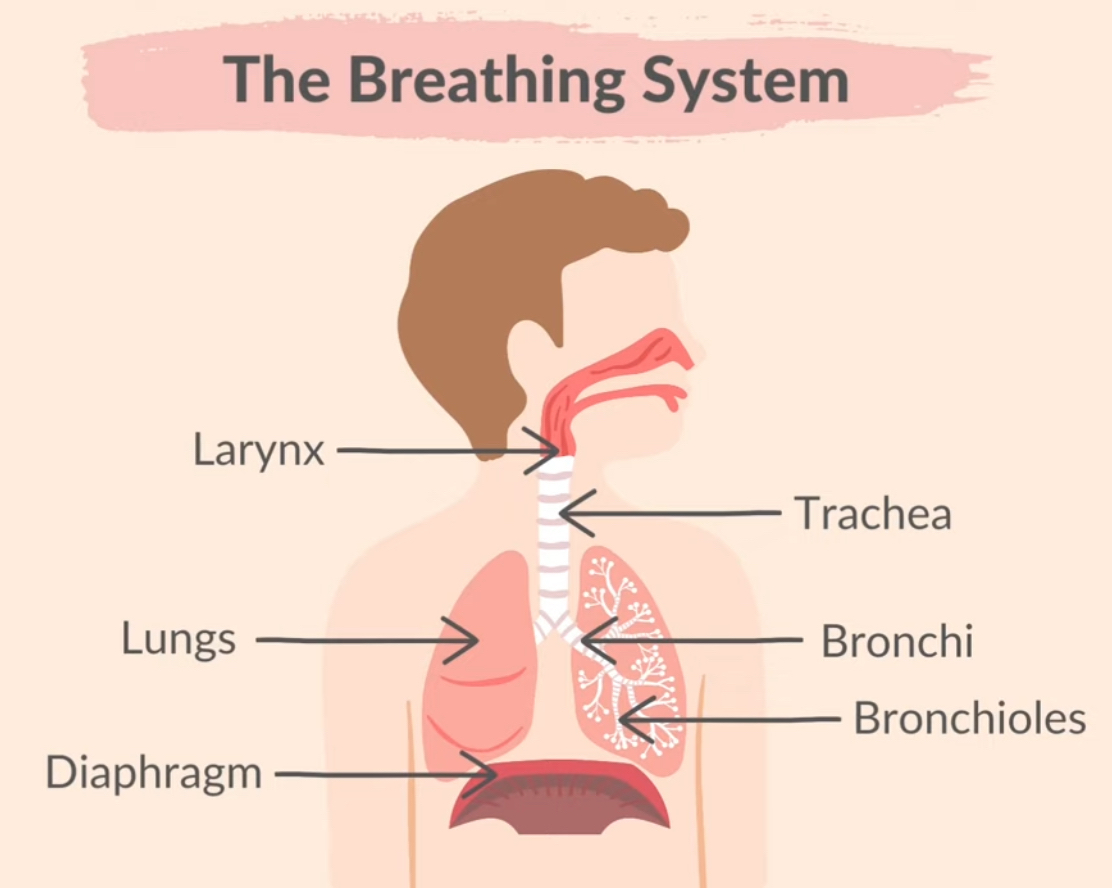
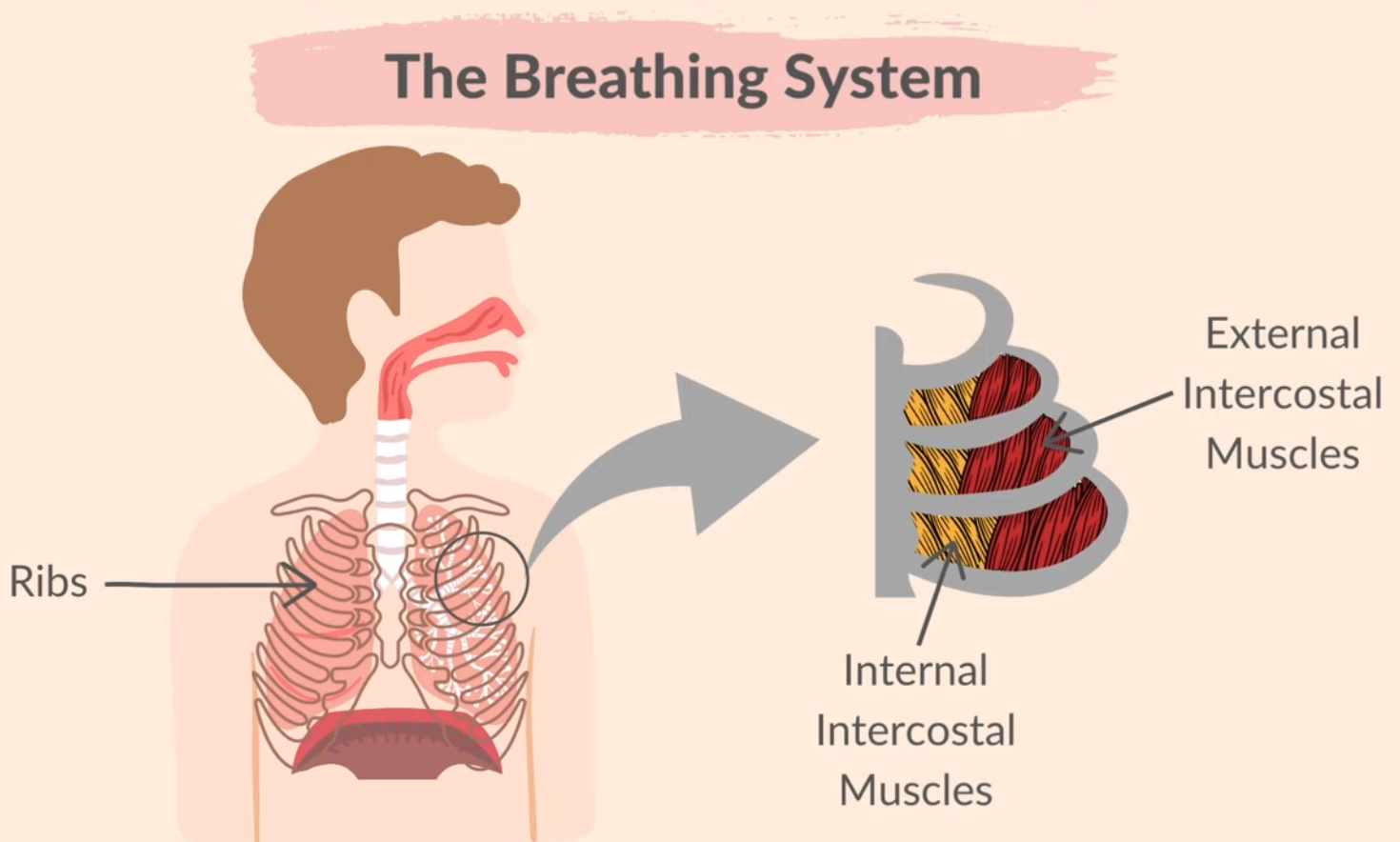
The larynx houses the vocal cords.
The trachea (or windpipe) connects the throat to the lungs.
Lungs are the primary organs for gas exchange, containing specific structures for this process.
The diaphragm is a muscle that changes chest volume during breathing.
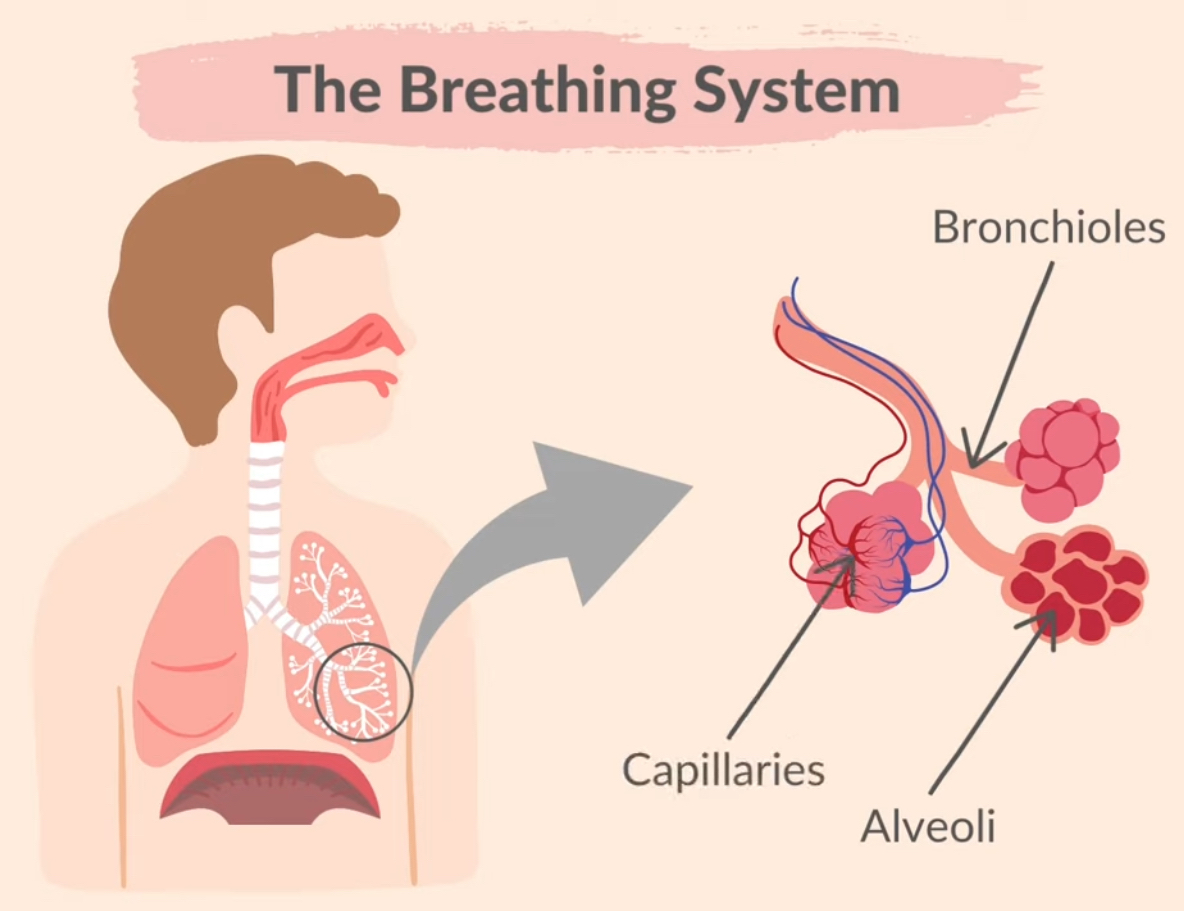
Bronchi branch from the trachea to distribute air to the lungs, leading to smaller tubes called bronchioles.
Alveoli are tiny air sacs where gas exchange occurs, surrounded by capillaries for blood flow.
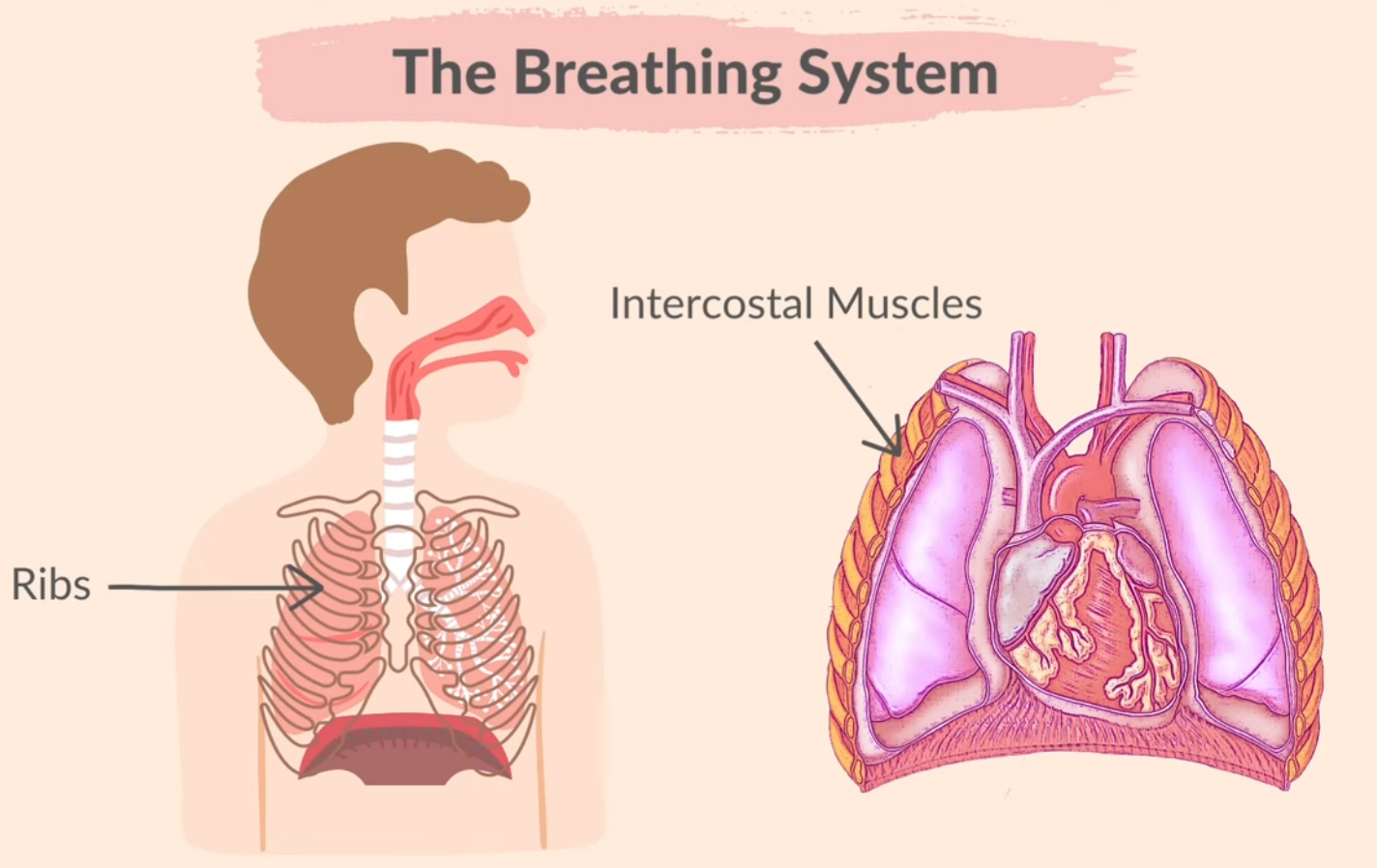
The ribcage and intercostal muscles facilitate breathing mechanics; external and internal intercostal muscles manage rib movement during inhalation and exhalation.
Function of Cartilage in the Trachea
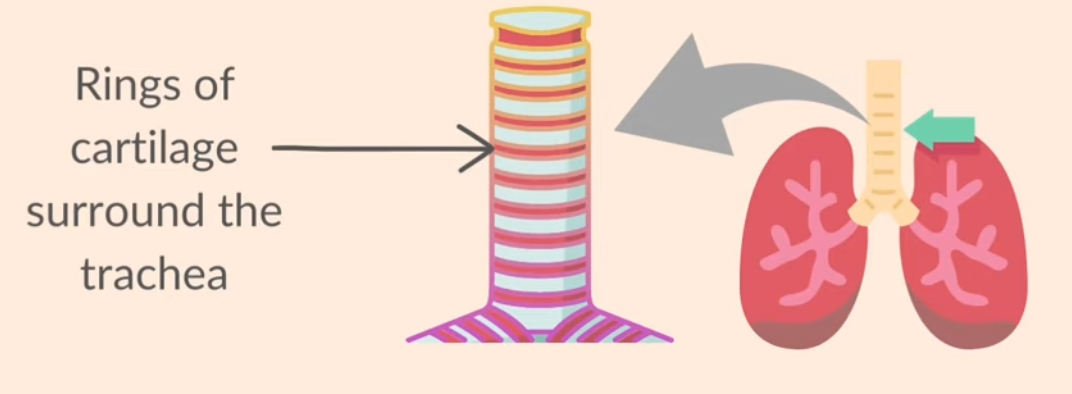
The trachea features rings of cartilage that support its structure.
These rings keep the trachea open during breathing, preventing collapse.
Mechanics of Ventilation
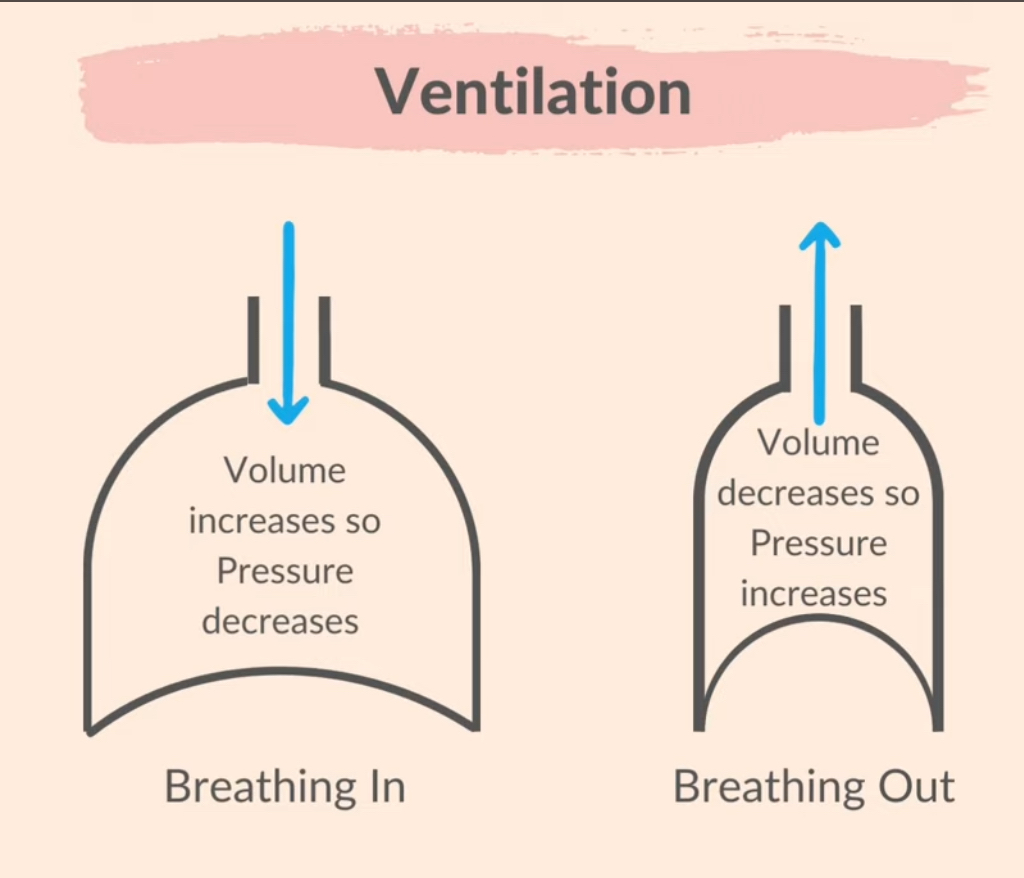
Ventilation consists of inhalation and exhalation, which is the movement of air in and out of the lungs.
During inhalation, external intercostal muscles contract, and the diaphragm flattens, increasing thoracic volume and decreasing air pressure in the lungs, causing air to flow in.
Conversely, during exhalation, the external intercostal muscles relax, internal intercostal muscles contract, and the diaphragm returns to its dome shape, decreasing thoracic volume and increasing lung pressure to push air out.
Gas Composition: Inspired vs. Expired Air
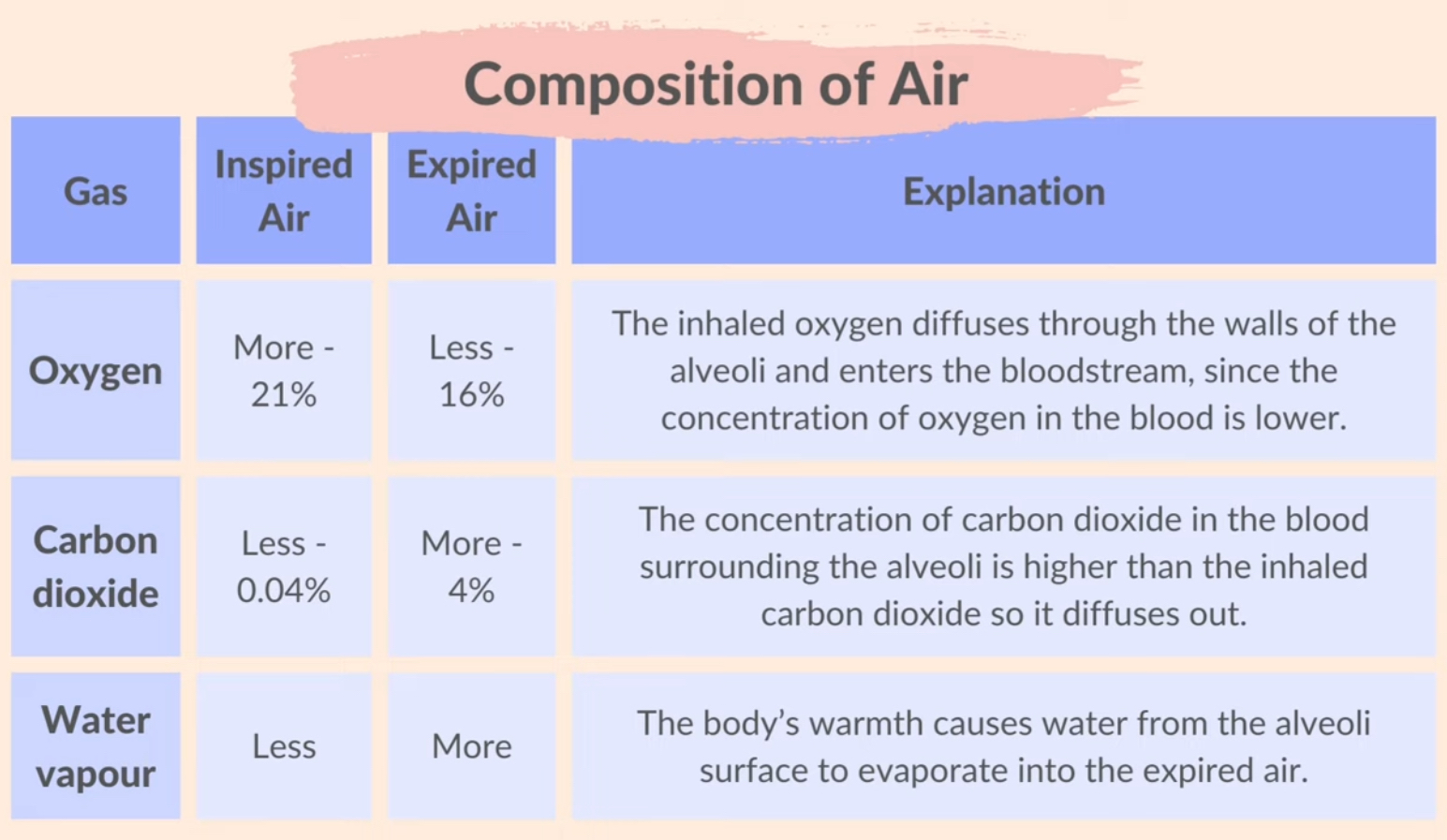
Inspired air contains approximately 21% oxygen, while expired air has about 16%.
The air inhaled contains 0.04% carbon dioxide, whereas exhaled air has around 4%.
Expired air also has more water vapor due to evaporation during breathing.
The gas exchange at the alveoli is responsible for these differences: oxygen enters the bloodstream while carbon dioxide exits.
Impact of Physical Activity on Breathing
Breathing rates and chest expansion can be measured pre- and post-exercise to evaluate the effects of physical activity.
Exercise leads to an increase in both the rate of breathing and the depth of breathing.
Increased carbon dioxide production during exercise stimulates the brain to enhance breathing efficiency for quicker gas exchange.
Protection of the Breathing System
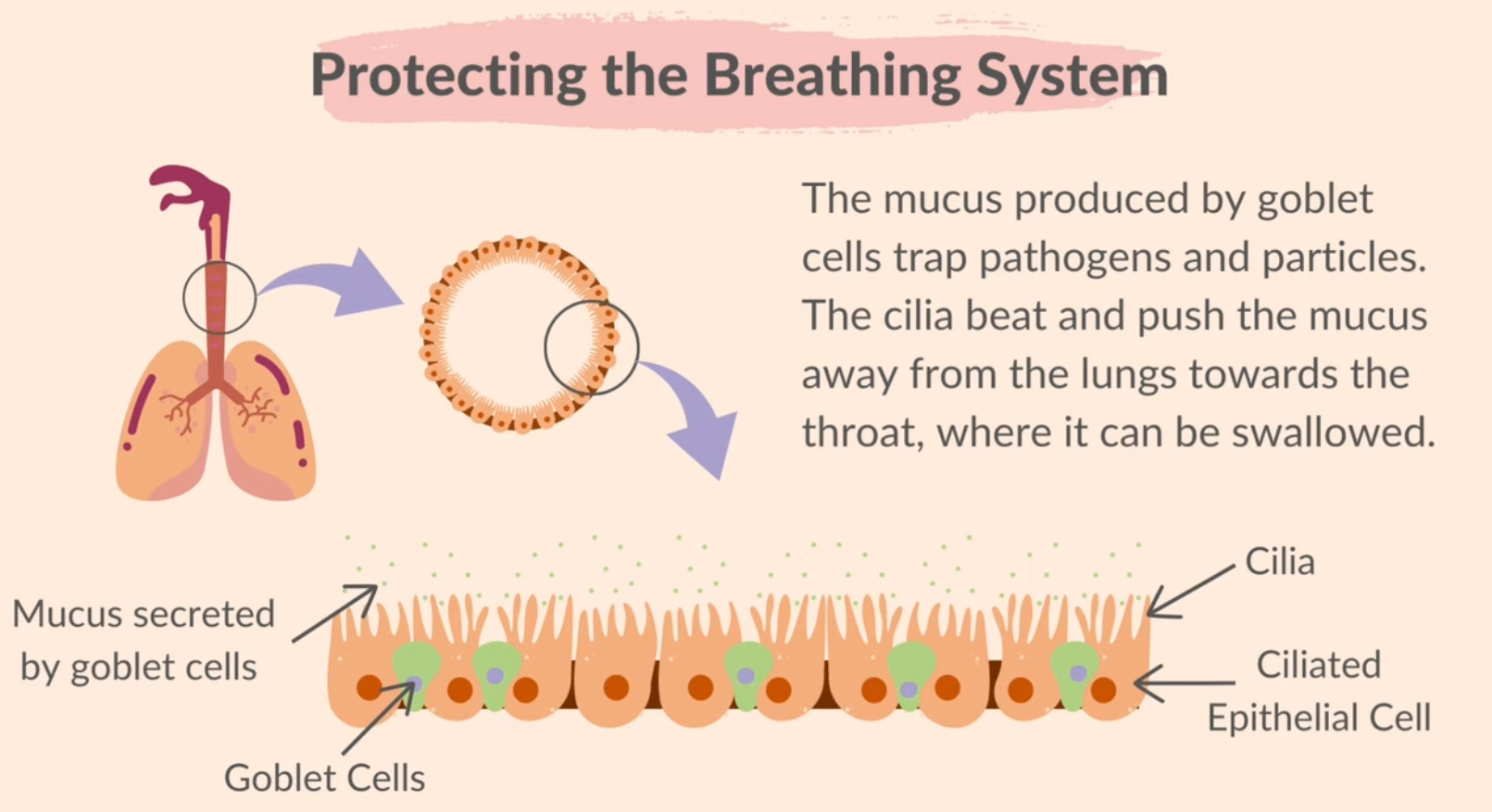
The respiratory tract is lined with goblet cells that produce mucus to trap pathogens and particles.
Ciliated epithelial cells possess cilia that help move mucus away from the lungs towards the throat, safeguarding against harmful substances.
This mechanism supports lung protection by clearing out pathogens effectively.