W1 L3: Hypothalamus, pituitary and feedback loops
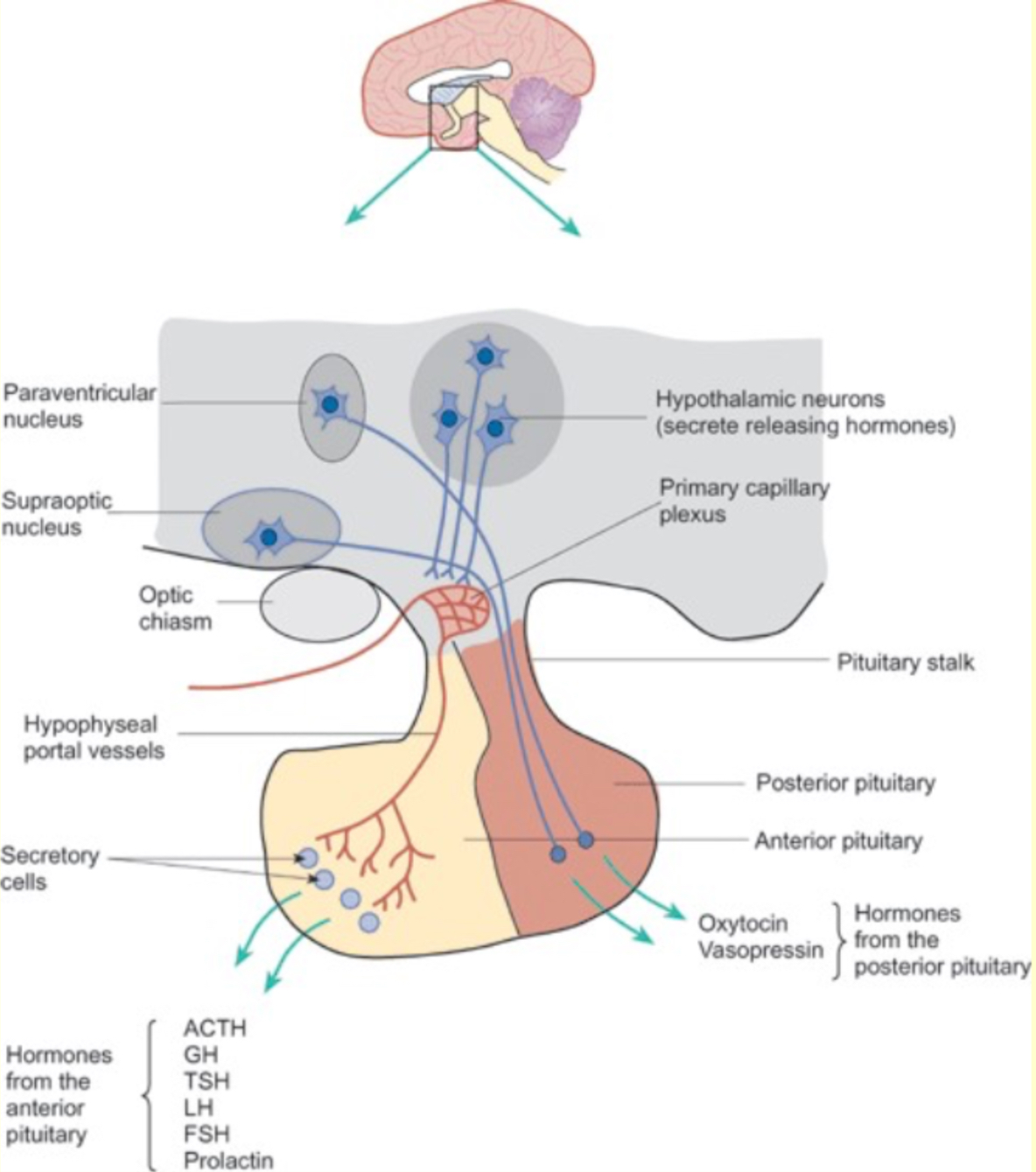
Hypothalamic regulation of the anterior pituitary gland
- Pituitary important ‘gateway’ b/w central & peripheral endocrine organs
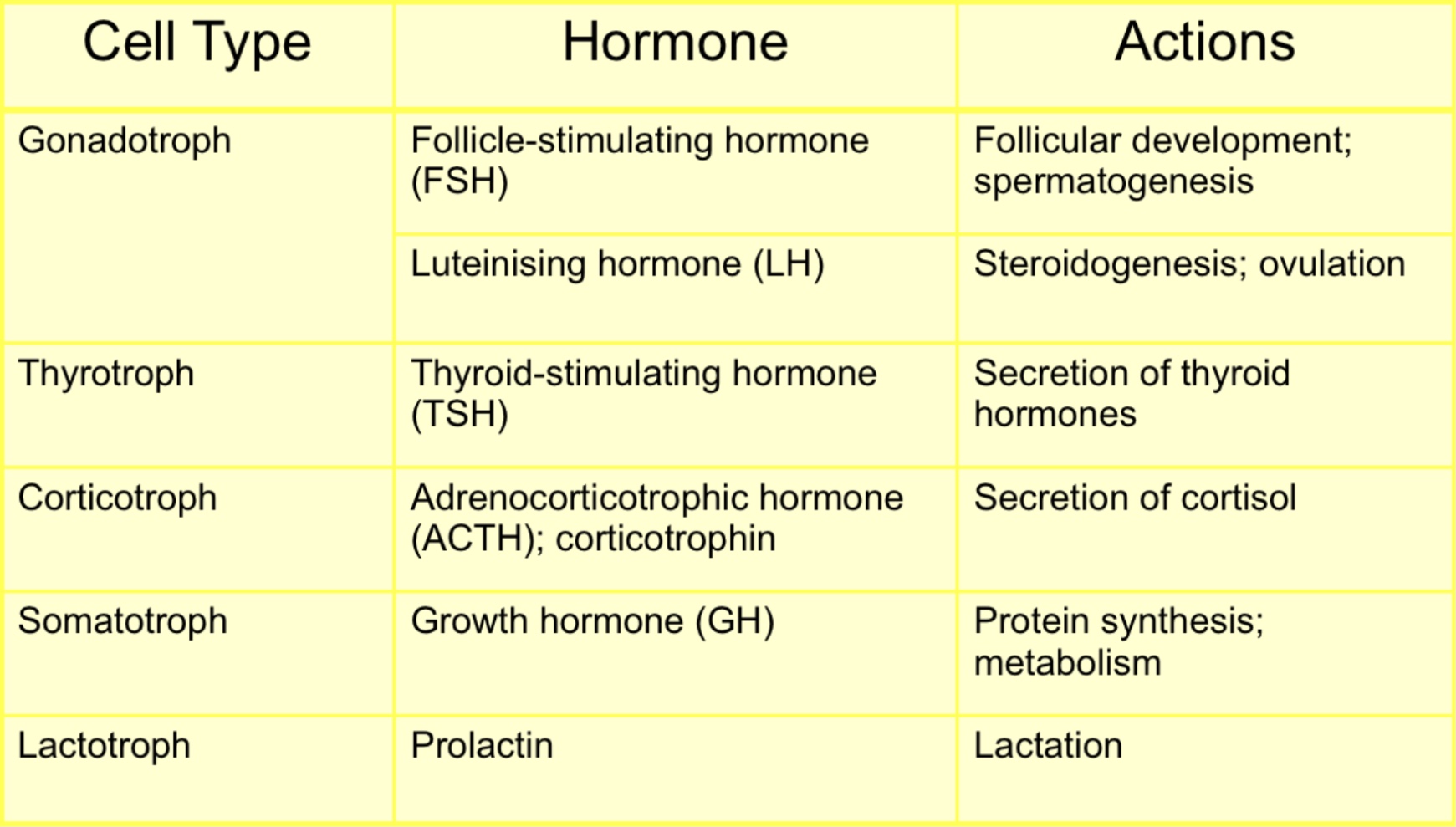
- Many (5) major endocrine cell types
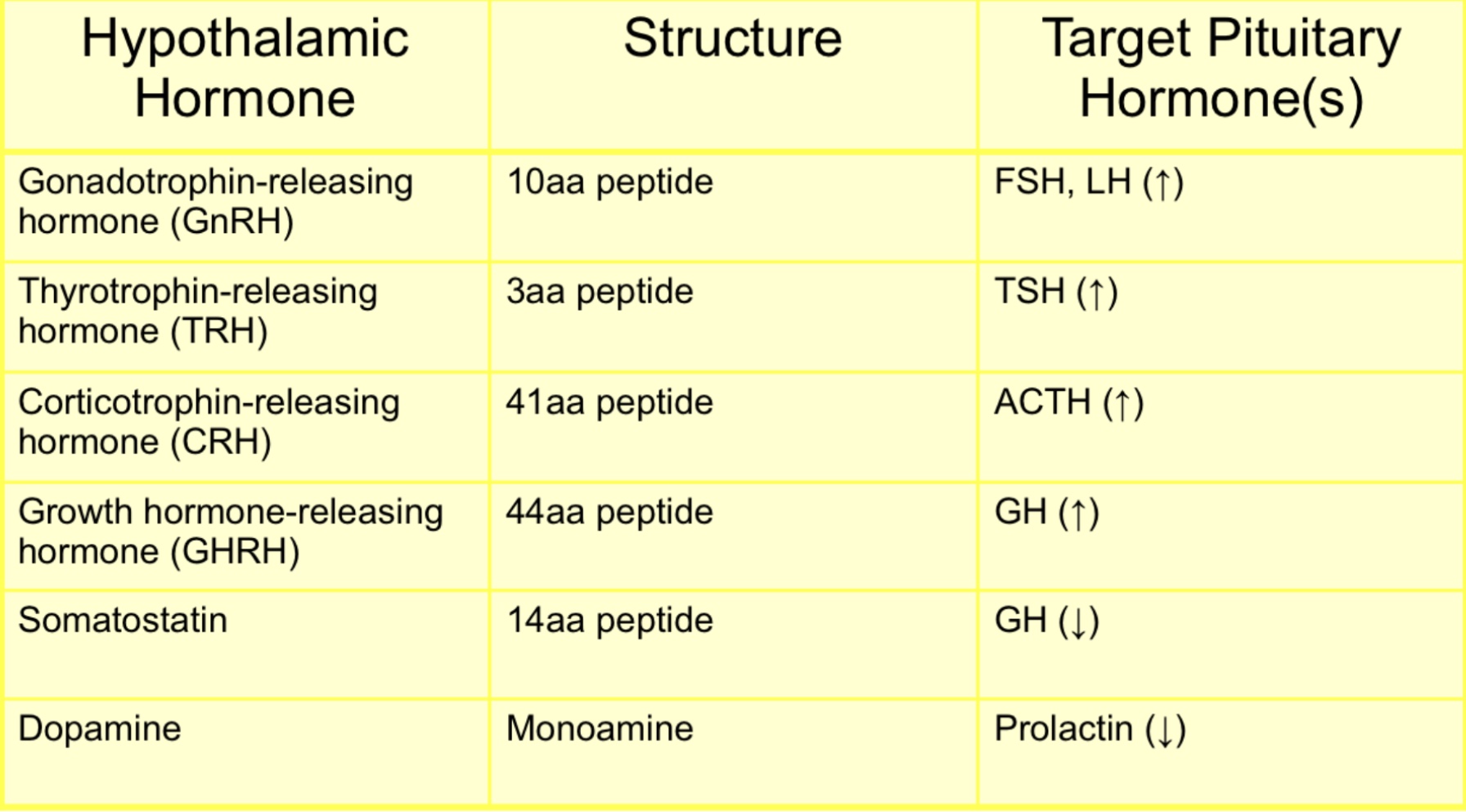
- each have regulatory control from hypothalamus via inhibitory &/or releasing factors
- Many pituitary hormones regulate 2º (“downstream” endocrine organs)
Endocrine cells of the anterior pituitary gland
Hypothalamic “releasing factors”
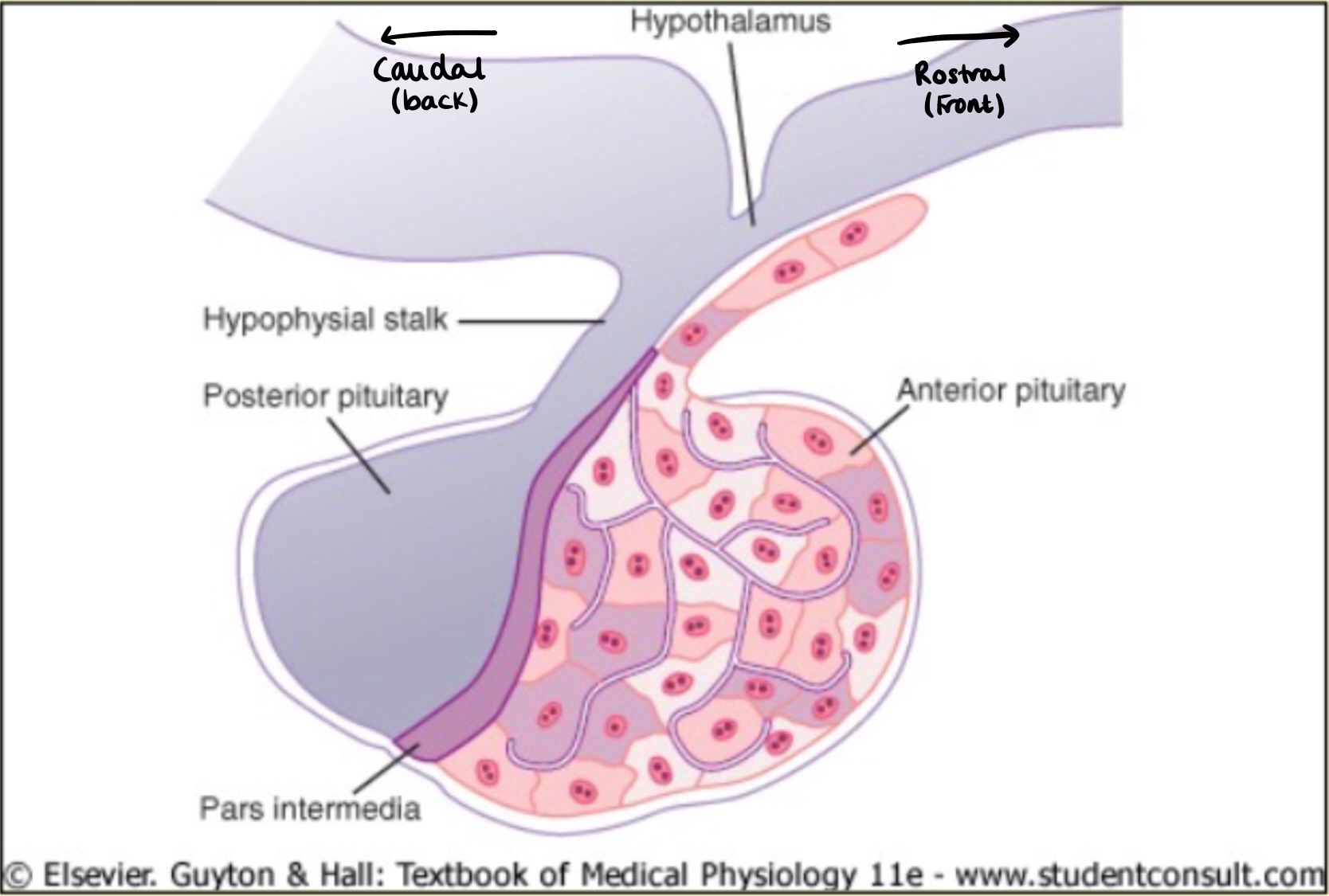
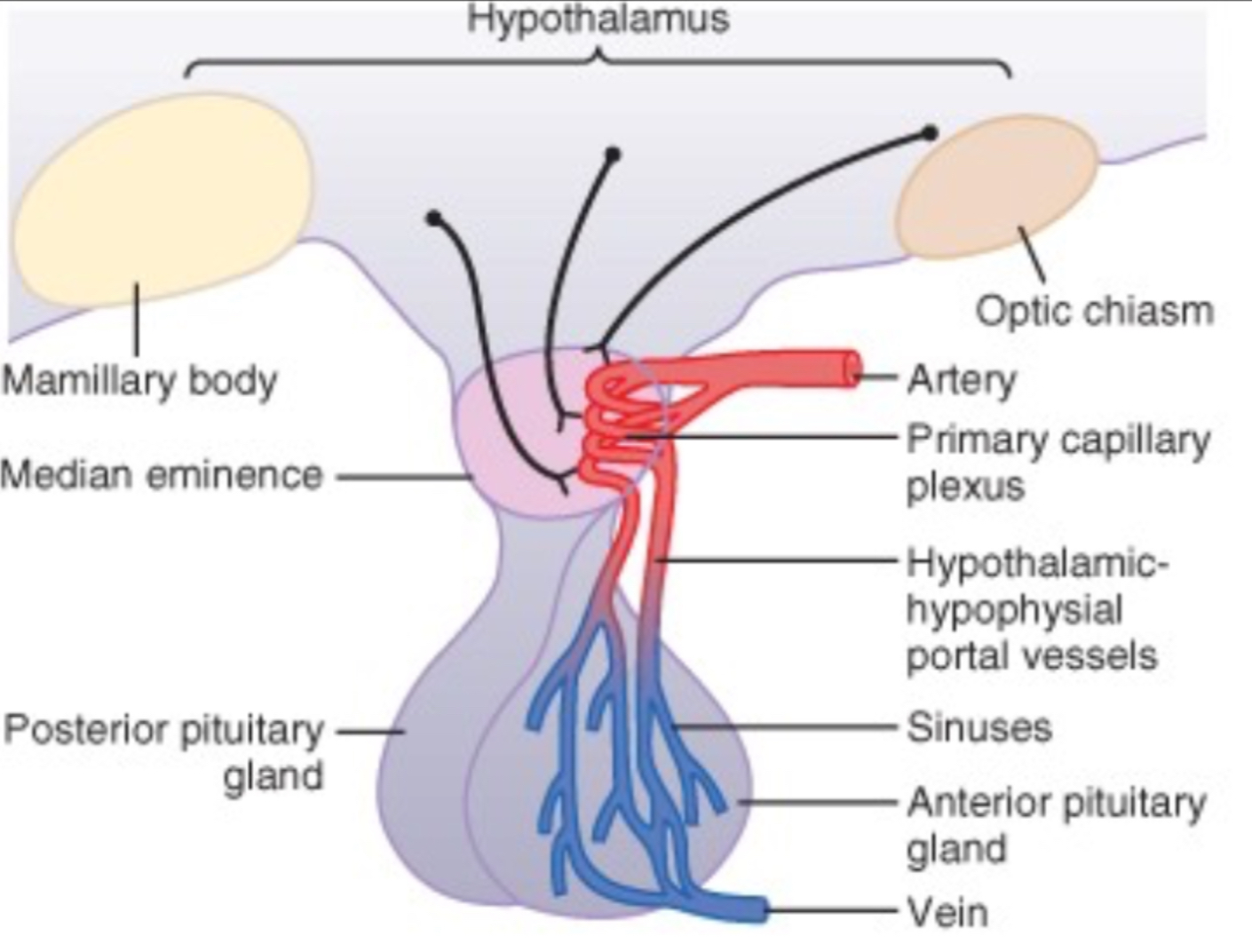
- Hypothalamic factors released into a highly vascularised region → median eminence
Median Eminence/Portal Circulation
- Portal circulation = 2 capillary beds in series
- Physiological portal systems → hepatic & pituitary
- Pituitary portal system transfers releasing & inhibitory hormones from hypothalamus to anterior pituitary
Hypothalamic regulation of the posterior pituitary gland
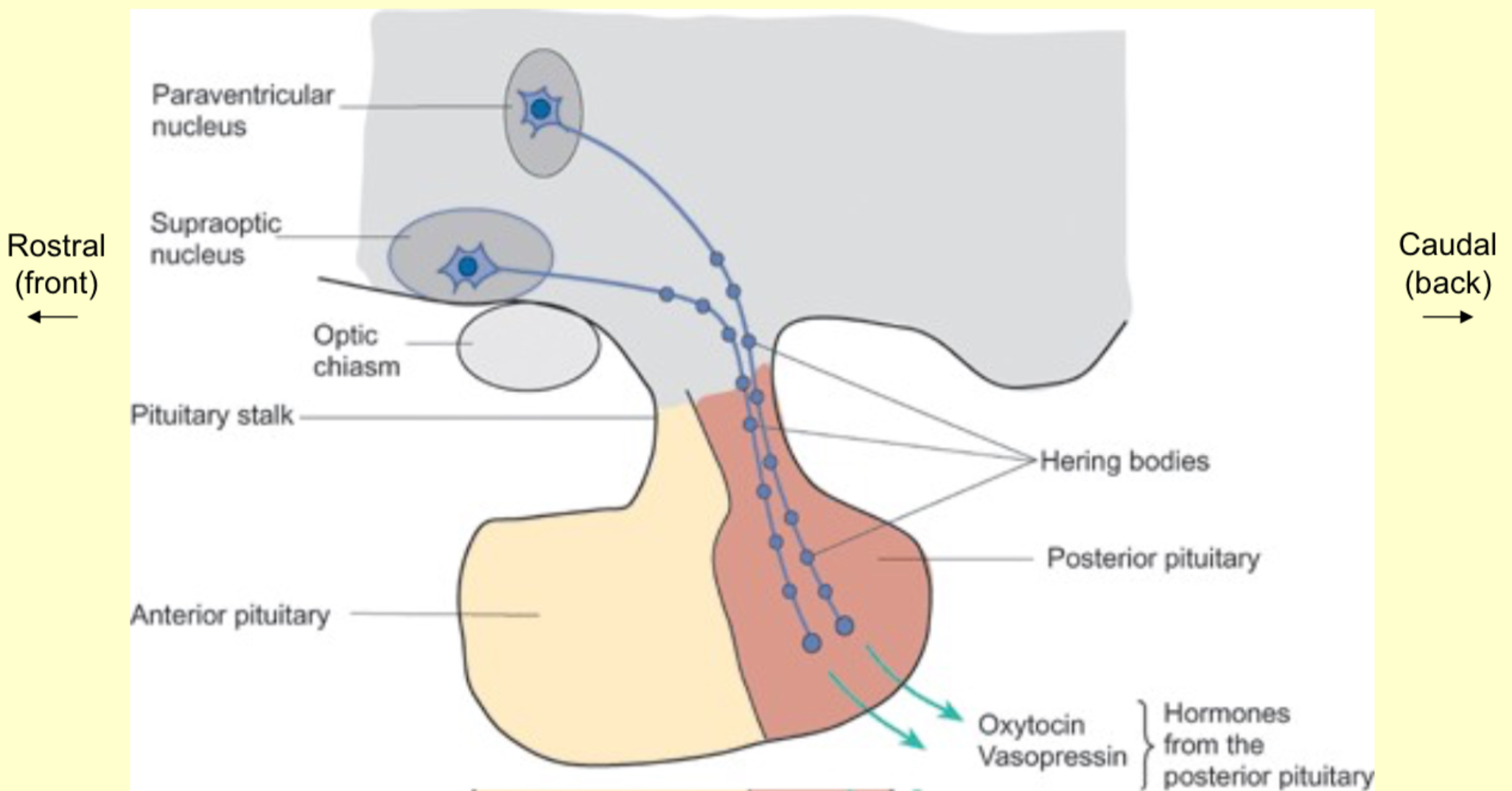
Posterior pituitary hormones
- Oxytocin
- released during parturition
- required for milk ejection in lactating mammary glands
- both related to female reproduction
- causes uterus & smooth muscle to contract & enables birth to take place
- Arginine vasopressin (AVP)
- a.k.a. antidiuretic hormone (ADH) → stops production of urine
- contraction of blood vessels to ↑ blood pressure
- secreted in response to ↑ blood osmolarity
- stops production of urine → ↑ water absorption from kidneys
- both have net effect of ↑ blood pressure
Feedback loops
- Negative
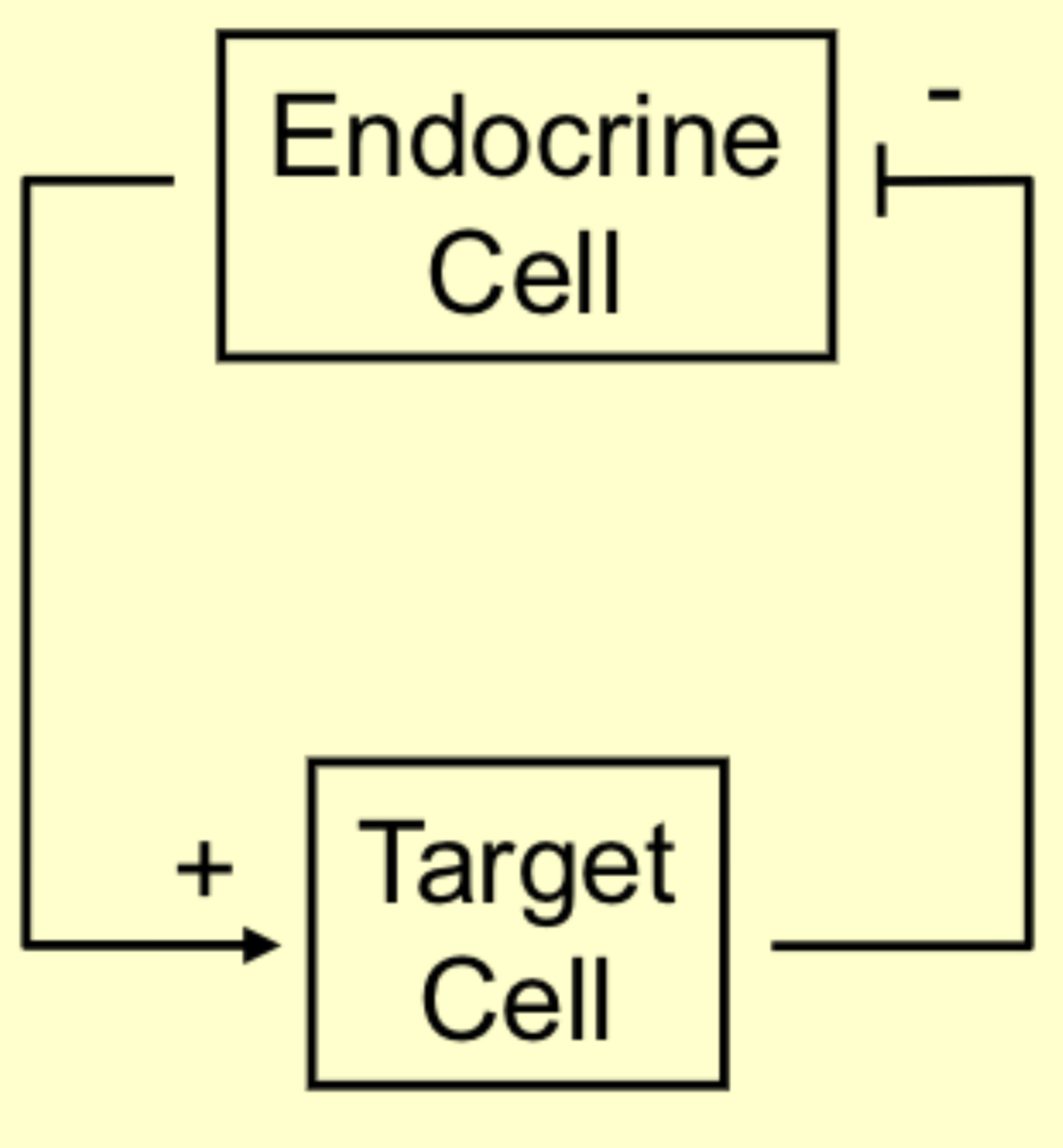
imposes “brake” on system
important for homeostasis
common in physiology (inc. endocrinology)
- Positive
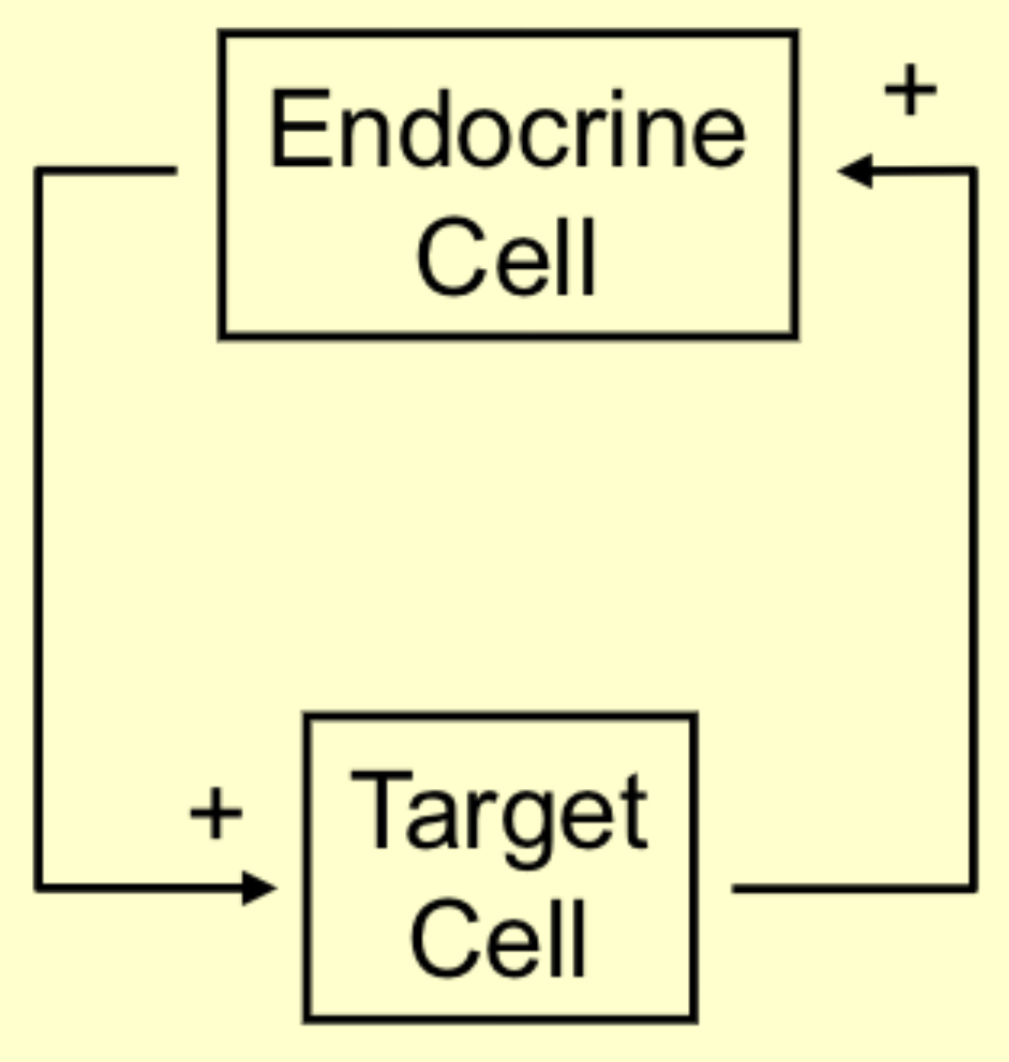
- amplifies original signal
- by itself, not compatible w/ homeostasis
- required additional control mechanisms
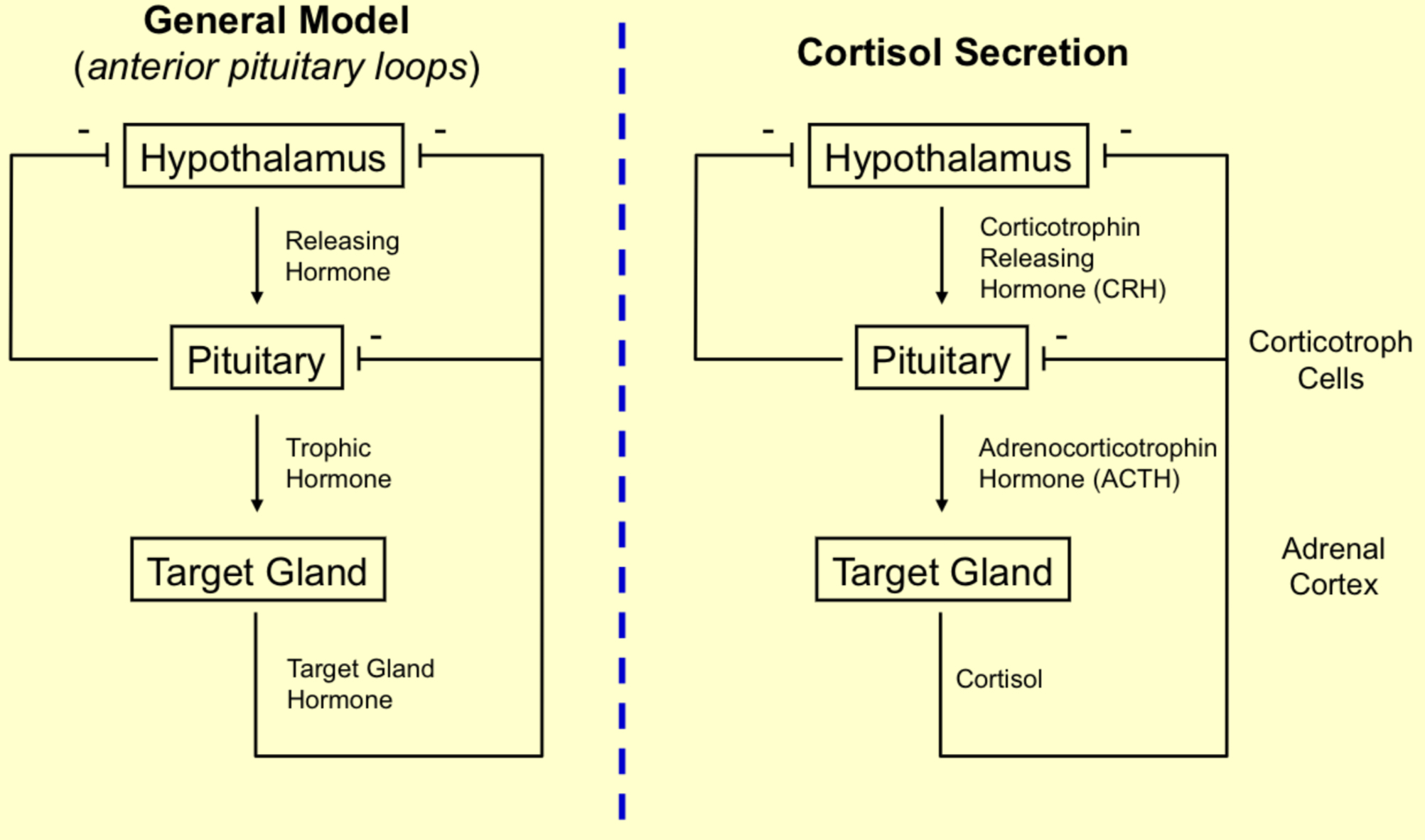
Negative feedback loops: Hypothalamo-Pituitary regulation
Positive feedback loops
- Initiating stimulus causes more to be added
- Rare in physiological systems as promote instability
- Can be useful in certain circumstances when a large response is required
- 2 notable examples in endocrinology
- LH surge prior to ovulation
- Oxytocin release during parturition → large inc. in oxytocin
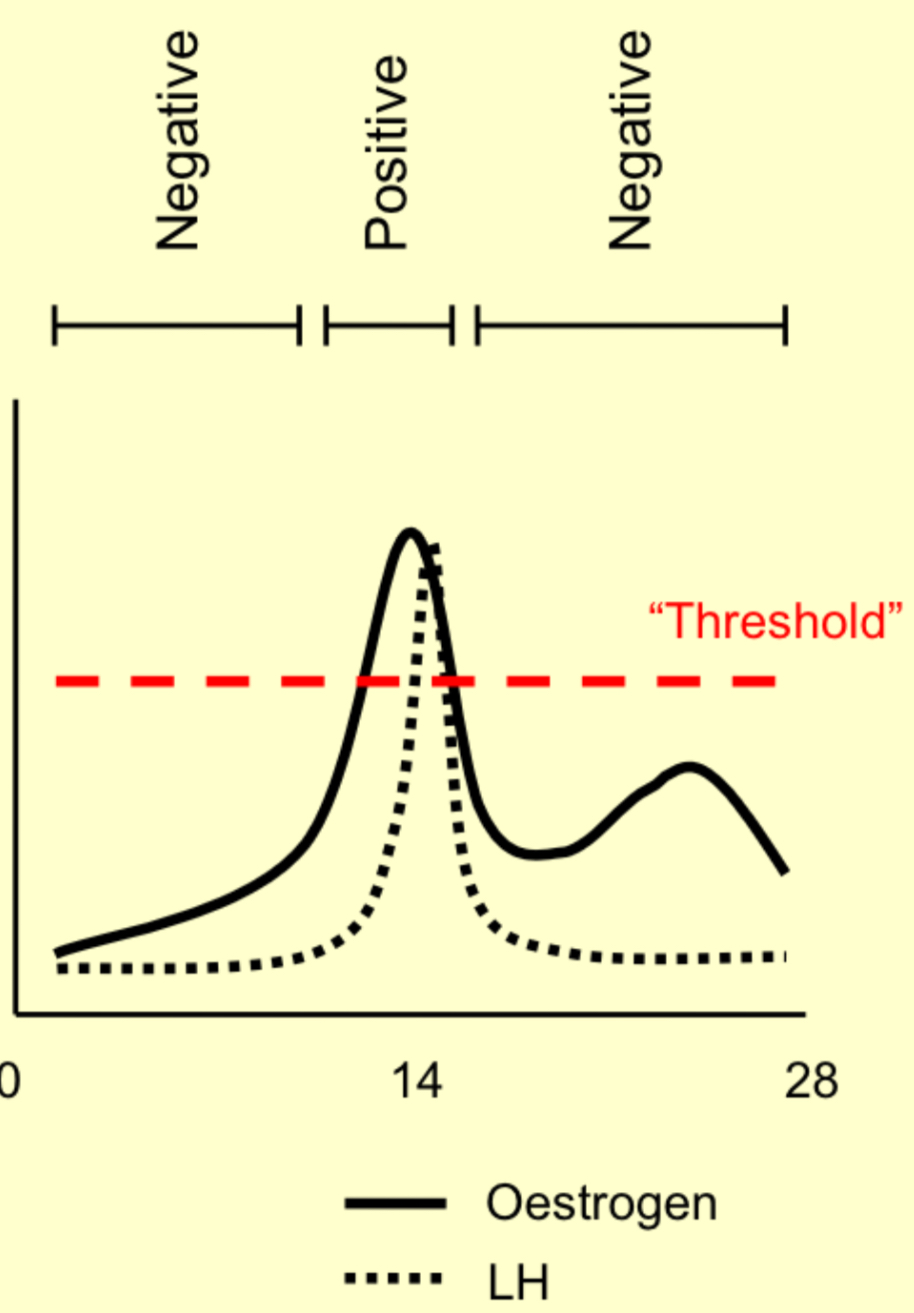
The “LH surge”
- Oestrogen usually inhibits LH secretion via -ve feedback
- But, oestrogen surge occurs around D-12 of cycle
- High oestrogen drives Δ from -ve → +ve feedback
- +ve feedback causes LH surge → induces ovulation
- After ovulation, ↓ oestrogen conc causes resumption of -ve feeback & thus LH/FSH secretion falls