Important
Understand proportion, structure, and space.
scale, light, rhythm, balance
don’t skip hand sketching
understand the restrictions before you break them
Creative ideas need to be developed and refined so that it becomes feasible
Insure you can communciate the idea before rendering it
Study how actual buildings work, read why they were designed that way, and how its tested by time, weather, and people
Who’s using the space? What do they feel? What problem am I solving? Why this material? How does this space actually feel to walk through?
Prototype scale models so hand can understand the structure
Don’t perfect things that don’t need to be perfect so you don’t burnout
Start with people, not solutions
Most people ask “what should we do?” too early.
First ask: who is affected, and what do they actually need?
If you skip this, you are solving the wrong problem from the start.Name the real problem
Not “everything is broken.”
Ask: is this a process issue, a people issue, a resource issue, or a communication issue?
Vague problems never get real solutions.Generate before you filter
Do not fall in love with your first idea.
The obvious answer is rarely the best one.
Give yourself permission to be wrong on paper before you commit.Build something cheap enough to test
A draft. A sketch. A conversation.
If you are too precious about it, you will never find out if it works.Let the feedback in
When something does not land, that is not failure. That is data.
The goal is not to be right the first time.
It is to get closer every time.Iterate like it is your job
Because it is.
The best solutions are never first drafts.
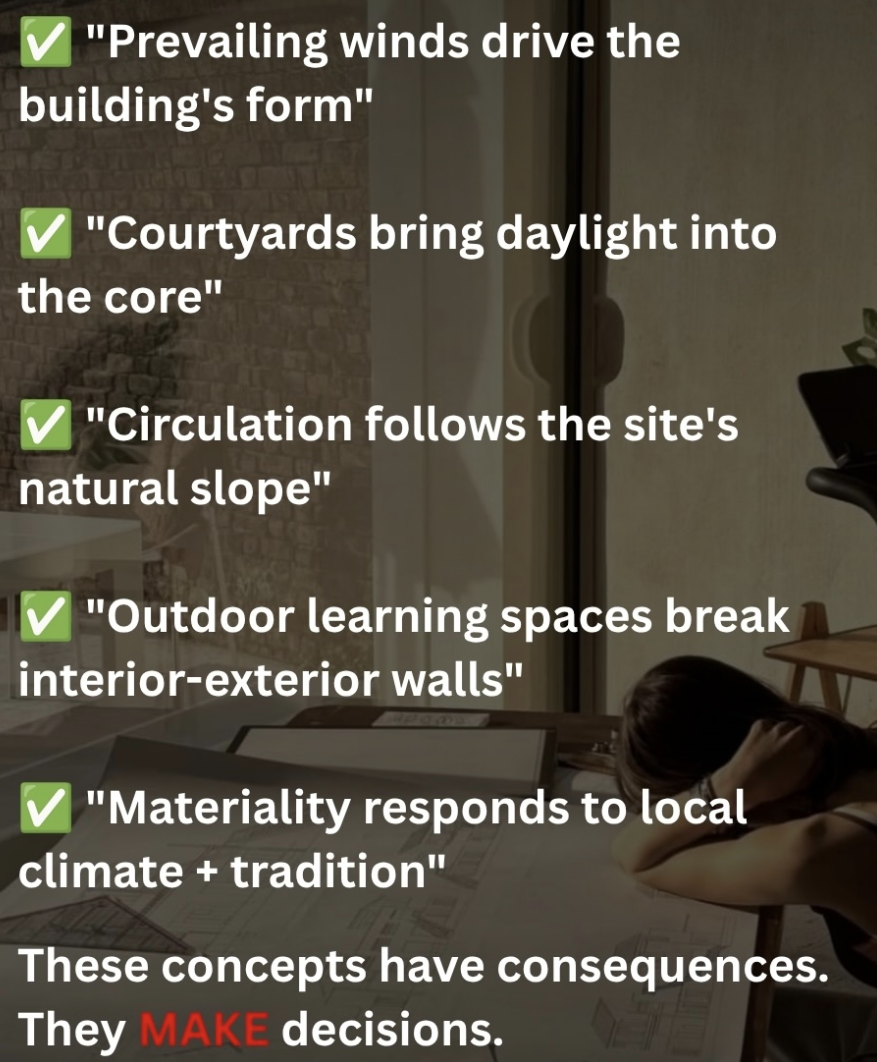
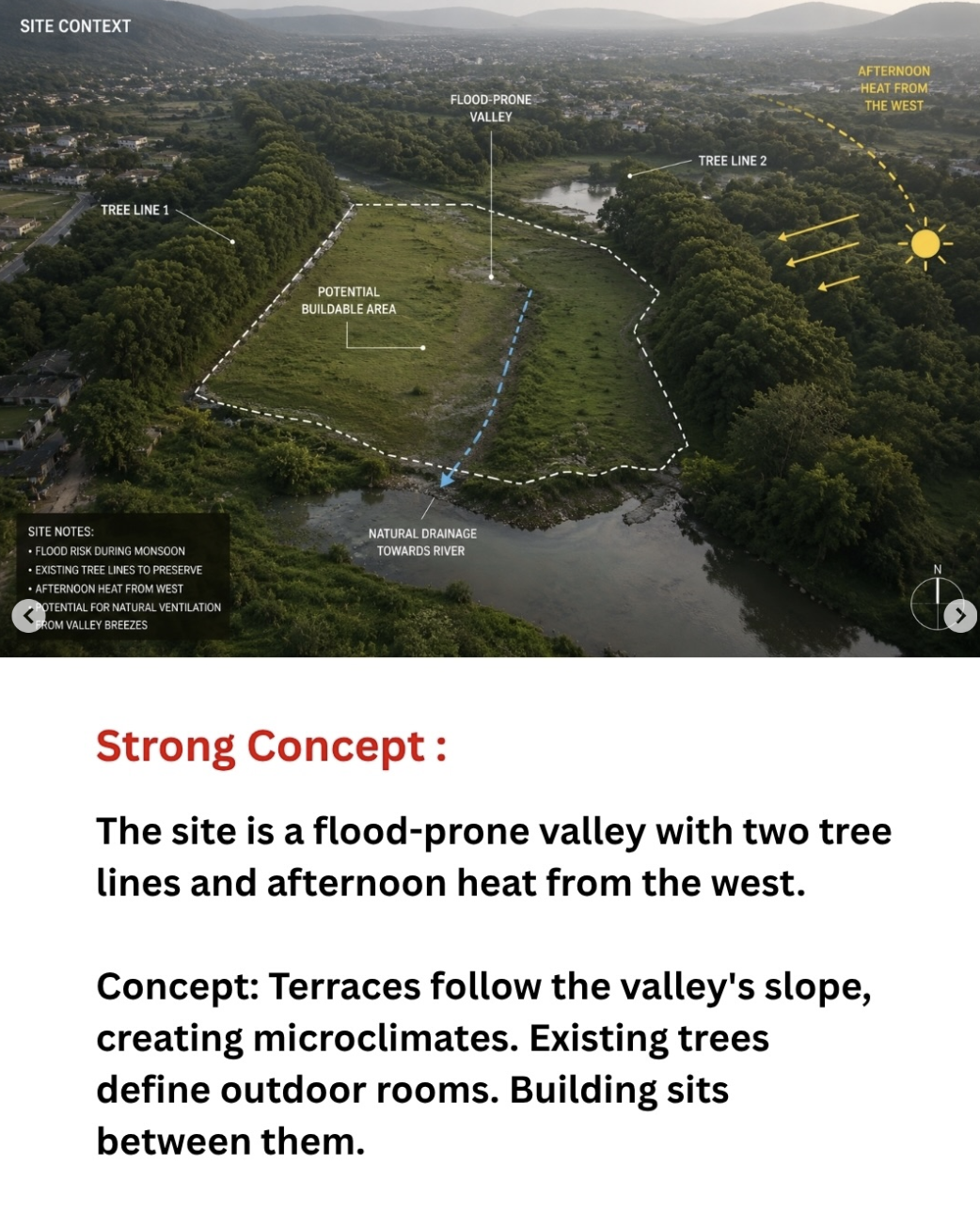
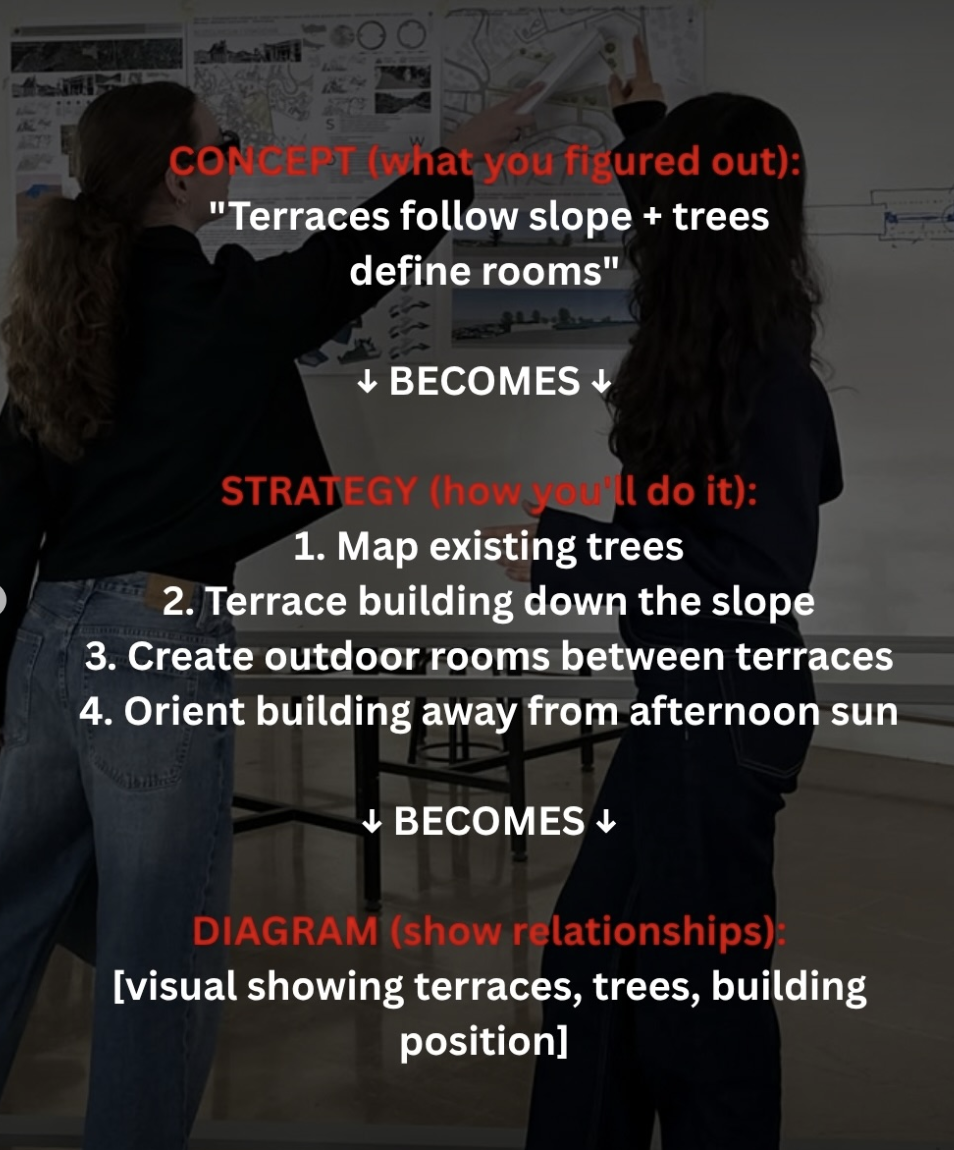
Strong Concepts
Strong concepts come from: site, climate, users, movement, problems