Language and Thought
Language conveys information. is the systematic rules of language, is the structure and order of words. is the creation of new messages and the connection of unrelated information to form new ideas.
Language Development
Around 3-4 months babies have the ability to connect speech sounds with objects. At 8 months, babies show a declined ability to distinguish between sounds not used in their native language. The critical period of a child occurs between 7 months to five years where children undergo a period of fast acquisition of words. Children need environmental stimulation to promote healthy development. Deaf children that receive cochlear implants before age 2 progress better than children who receive implants after age 2 on languages tests evaluating performance and expression. The is often called the which emphasizes more the malleability of the brain during early childhood and can still be molded later in life given proper stimuli.
It is important to note the variations of syntax and grammar across different cultures. Simple two word sentences created by children most often follow object-verb format. Most languages follow subject-object-verb or subject-verb-object format. Babies prefer speech sounds as apposed to non-speech sounds. 6 month old babies can discriminate between phonemes.
believed language was influenced by the environment. is the operant conditioning of language that is formed through reinforcements.
The is a hypothetical mechanism responsible for language that nativists attempted to find.
Broca’s area is responsible for the motor production of speech and Wernicke’s area is responsible for the comprehension of language. The inability to produce speech is known as aphasia. is the inability to produce language and is the inability to produce meaningful language. Language production takes place in the left hemisphere which can be explained by hemispheric lateralization, some functions are predominantly controlled by one hemisphere.
Words
The is the storage of words and concepts. is the melody/speech patterns of speech. are the smallest sound unit of information. is the smallest portion of a word that conveys meaning. is the meaning of a word. A is the most common form a word assumes when imagined.
The , also known as linguistic relativity, theorizes that language influence our perception.
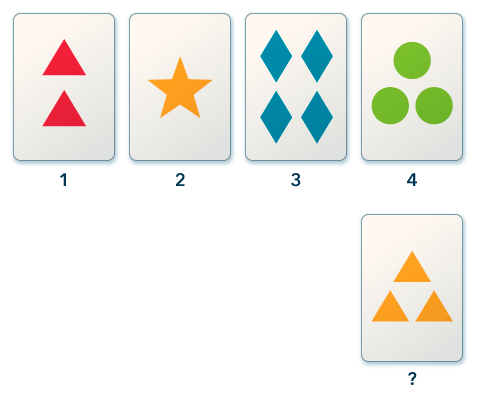
The Wisconsin card sorting task has participants match cards that have different colours and groupings of shapes by a designated rule which is not communicated but feedback was given as the task started. This task is easy, compared to a verbal shadowing of this task where more errors are made. People with Wernicke’s aphasia performed poorly with this task, demonstrating that issues in Wernicke’s area decreases an individuals ability to logically solve rules and integrate feedback.
is a person’s expectation of how to solve a problem. is the tendency to view an object as only having one function and neglecting all other potential functions.
An is a precise set of rules applied to solve a problem.
are short-cut rules used to solve a problem quickly. involves envisioning the goal and taking many measures necessary to reach the goal. involves comparing the problem to a prototype event. is making a judgement based on how easily and quickly related memories come to mind.
Creativity is the ability to come up with solutions to a problem. The creative process starts with preparation, the gathering of knowledge on the topic. Incubation occurs when working on something unrelated, your memory is processing the information and making connections. The illumination stage is when a solution is found, which often comes as a surprise. Evaluation is the final stage where you judge if you solution is valid.
is the tendency to seek information that confirms our beliefs and dismiss information that does not align with our beliefs. The framing something can change our subjective view of it. Intuition is the reliance on experience and emotions.
is our automatic way of thinking that relies on emotions and experiences. uses logic and rational thought which countermands the system 1 thinking.