Project
How would I go an study a fossil biota, what evidence can I get, what research can I do
What techniques are used, rather than knowledge found
Lecture 1- Intro
what was the environment (atmosphere and climate) like back then?
think about everything in the lagerstatten e.g. microbes
show skill of correctly and sensibly interpreting the fossil record
taphonomy→ why is this fossil in this environment
why is this exceptionally preserved? why is this really important?
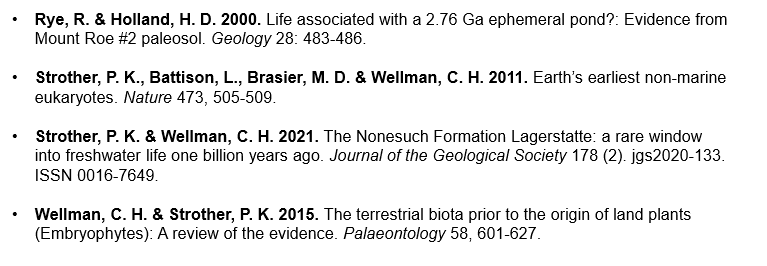
Lecture 2- The invasion of land
in every project, someone has taken rock, dissolved it up, put it on a slide, studied the spores and pollen→ NEED TO MENTION THIS, looking for total evidence, must look at the dispersed spores pollen
what was the palaeoenvironment like at the time interval I am studying? (CO2, O2 levels)
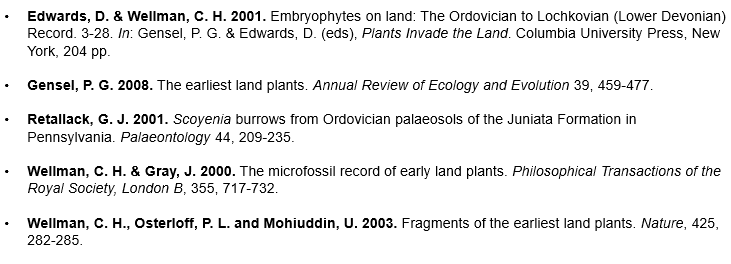
Lecture 3- The origin of vascular plants
are my plants gametophyte dominant or sporophyte dominant?
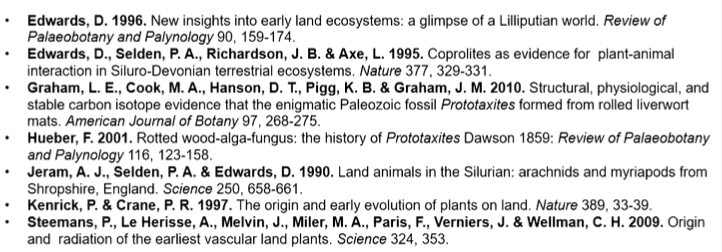
Lecture 4- The rhynie chert (case study)
guide of coursework answer is on the document
needs more insight, some areas are mentioned but not in detail
understanding of exceptional preservation and why it is important
list biota→ use taxonomic ranking if there is lots of biota
which fossils are missing in my project?

Lecture 5- The first trees and forests
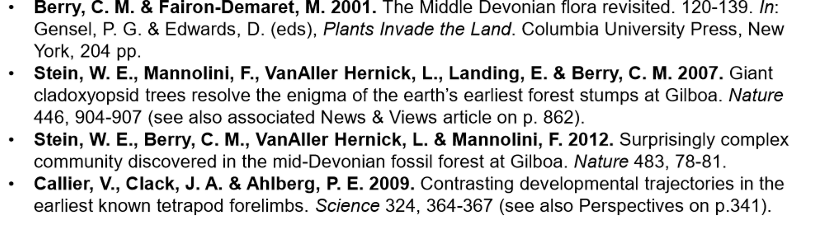
Lecture 6- Carboniferous
plant- animal interactions→ does my project show plant-animal interactions (herbivory)? this would be important
Lecture 7- Coal measure forests (case study)
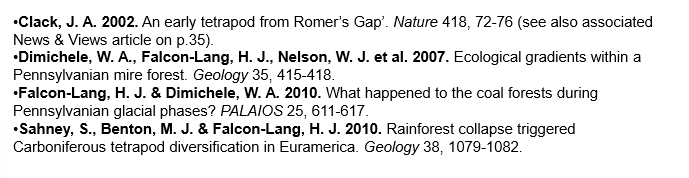
understand background
need to mention 2 fossil records:
plant megafossils
plant dispersed microfossils→ dissolve rocks up, get lots of pollen/spores, study on microscopes
each plant has a unique pollen type→ can link pollen location to sporangia
need to mention this as every project has someone dissolving up the rock and finding this

Lecture 8- Permian
Lecture 9- Tempo and mode
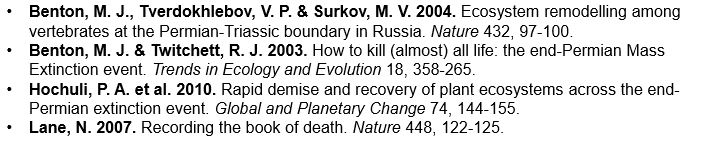
coevolution:
plant-fungal interactions
plant-animal interactions (herbivory, pollination, seed dispersal)

L10- Triassic
L11- Jurassic

L12- Origin of the Angiosperms
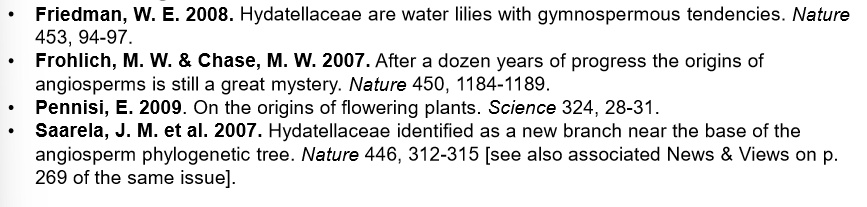
need to reconstruct the entire biota→ animals, plants, pollen, seeds
L13- Cretaceous
a good taxonomic tool→ different angiosperm groups have different wood structures, taking thin sections of wood, can see structure clearly

L14- Palaeogene
many projects have lots of organisms→ only look at the non-marine and freshwater aquatic organisms, use taxonomic groups, select a suitable taxonomic level to work at e.g. family level
list of taxa doesn’t go into the word count

L15- Neogene
grasslands expanding→ deterioration of climate→ becomes drier, get more wildfires- climate change, fire, plant-animal interactions (colin osbourne)
have 925,000 insect species today, more will be discovered, diversity relates to angiosperms in some way e.g. pollination species, feed on them- some projects main focus is evidence of plant-insect/plant-fungal interactions

Marking Rubric:
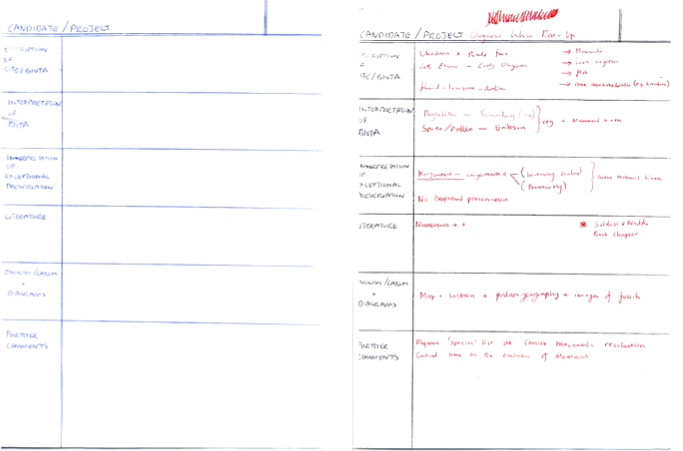
description of site biota
interpretation of biota
interpretation of exceptional preservation
literature
english, layout, diagrams
other comments
official scheme is for project
crib sheet→ has a sheet of stuff he wants to see for each project-
description of biota- formations, age rock type, type of biota
interpretation of biota- spores and pollen
interpretation of exceptional preservation- konzentrat-lagerstatten, where did it accumulate, types of exceptional preservation
literature- numbers of literature, specific authors
english, layout, diagrams- location map, section, palaeogeography, images of fossils
other comments- a species list at a sensitive taxa, critical time for a specific species
to get a first, need something more interesting/pulling together separate strands