04/05/2023: Cell Division: Signaling
Cell cycle is variable in time; not all cells divide at the same rate
Cells can have a memory
Daughter cells also inherit gene expression patter and dna modification states
- daughter cells remember gene expression patterns
Daughters cells also inherit gene expression patterns and DNA modification states
How to decide to go into cell division
Check points control when a cell enters a diff phase
think of these as ‘if/then’ statements
- if there is enough material to divide than divide
If DNA is fully replicated cell cycle can proceed
CKS initiate specific step in the cell cycle
Cyclin dependent kinase
Regulatory protein, cyclin, must bind to cdk for to become active
CDKs phosphorylation specific proteins to intitate the next phase
Amount of CDK changes through cycle
If you want a cell to divide CDK needs to be present
Every cell has a CDK with a different cyclin types; specific cdks function at each phase
CDK inhibition
- different way stop inhibit CDKs
How to regulate cdks, how to inhibit cdks, ubiquitnations ( destroying cyclin to not activate cdks) dephosphorylating (), binding of inhibitor (
inhibition via ubiquitnations ( destroying cyclin to not activate cdks)
Ubidquination _ goes to proteasome
inhibition via dephosphorylating () prevent from being active until needed
binding of inhibitor- another proteins comes in and regulates the activity of the cell
TUMOR SUPPRESSOR
tumor suppressors prevents tumors by stopping the cell cycle if something is wrong. you dont want to replicate a damaged cell
- P53 is made to come into the nucleus and cause transcription of p21, binds to cdk and stops the cell cycle to not replicate damaged DNA
Selected events of cell division
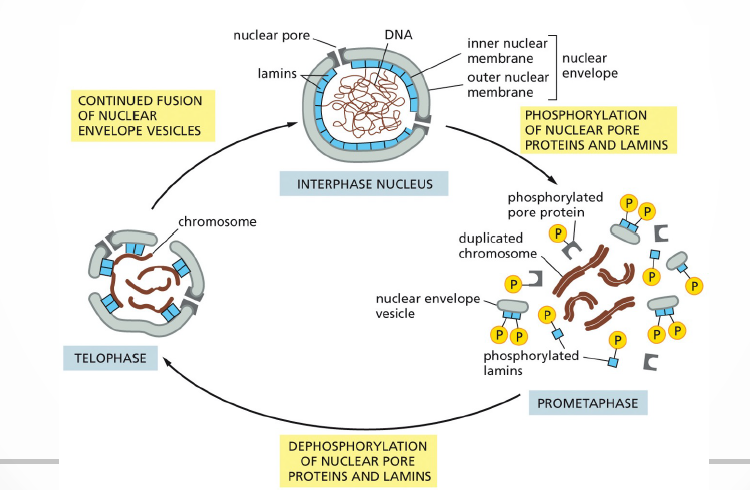
To control the desired events from the phases of the cell cycle, phosphorylation controls the nuclear membrane breakdown
- phosphorylation break down: during cell division after interphase the nuclear membrane must break to make room for the material it will generate
Phosphorylation of the nuclear membrane leads to phosphorylation of the nuclear pore proteins and lamins
while Dephosphorylation of the nuclear pore proteins and lamin fragments starts to put the membrane back together for telophase
While after continued fusion of the nuclear envelope vesicles, the interphase nucleus membrane is constructed again
Reg division via microtubules
How does Anaphase regulation take place?
- there is the inhibitory protein (securin) that binds to the inactive proteolytic enzyme (separase)
- ubiquitylation and degradation of securin
- active separate
- mitco spindles cleaved and dissociated
{
Reg cell size
In bacteria cell if to can make more stuff it gets bigger, when it's bigger it have more reason to have more material like, ~~DNA~~. The bigger the more you have of the materials that it took to make it
A Bacterial cell size depends on nutrient availability
With more ability to make cell components bacterial cells get larger and the ratio of DNA/RNA/protein to cell size remains constant
The size of a daughter cell is determined by the amount of time given and the nutrients
Larger extracellular signals control growth in a larger organism
- Saturation levels of growth factors can control cell size
- this is dependent on paracrine (in the vicinity of)/ local signalling