Oxygen Therapy and Potential Complications
Oxygen Delivery Devices
Supplemental oxygen may be required for clients with cardiopulmonary issues to achieve a fraction of inspired oxygen greater than 21%—the percentage of oxygen in room air. This therapy is used to treat hypoxemia. Oxygen is considered a medication and must be prescribed by a provider. Oxygen therapy can decrease the work of breathing in some clients and increase the amount of oxygen available to the alveoli. To prevent hypoxemia, saturations must be kept between 95% and 100% for healthy individuals and between 88% and 92% for clients with illnesses. Oxygen is usually provided to clients via a nasal cannula or by mask. Refer to Skill: Administering Oxygen.
Pediatric Considerations
The World Health Organization recommends oxygen delivery for SpO2 < 90% for children with signs of respiratory distress. The American Heart Association’s 2020 Pediatric Advance Life Support Guidelines state that oxygen should be administered and weaned to achieve SpO2 between 94% and 99%.
Nasal Cannula
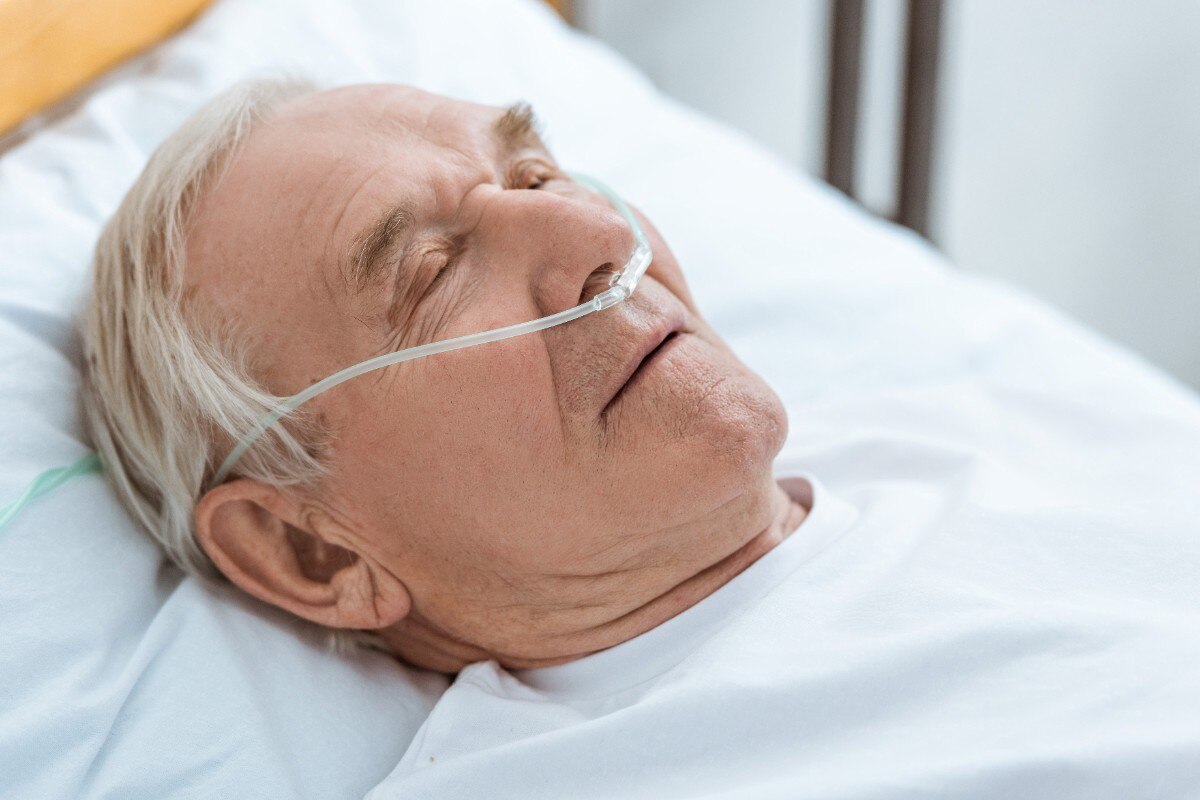
Nasal cannulas deliver oxygen to clients through prongs inserted into the nares. This is the preferred method for most clients, as it is less intrusive. Oxygen is inspired when the client inhales. Oxygen via nasal cannula can be delivered at low concentrations of 1 to 6 L/min (24% to 44% of oxygen). The cannula is attached to the tubing and goes over the client’s ears and under the chin through a connector. Nurses must know that skin breakdown can develop due to the oxygen drying out the client’s mucous membranes. Humidified oxygen can prevent this complication; it consists of oxygen mixed with water. Humidification helps keep the client’s secretions moist and easy to expectorate.
Pediatric Considerations
High-flow nasal cannula therapy is safe and more effective than low-flow for treating infants with moderate to severe bronchiolitis.
The application of humidification with low-flow oxygen delivery is not recommended.
Advantages and Disadvantages of Oxygen Delivery Devices
Types of Oxygen Masks | Advantages | Disadvantages |
|---|---|---|
Nasal cannula |
|
|
High-flow nasal cannula |
|
|
Simple face mask |
|
|
Partial and nonrebreather masks |
|
|
Venturi mask |
|
|
Simple Face Mask
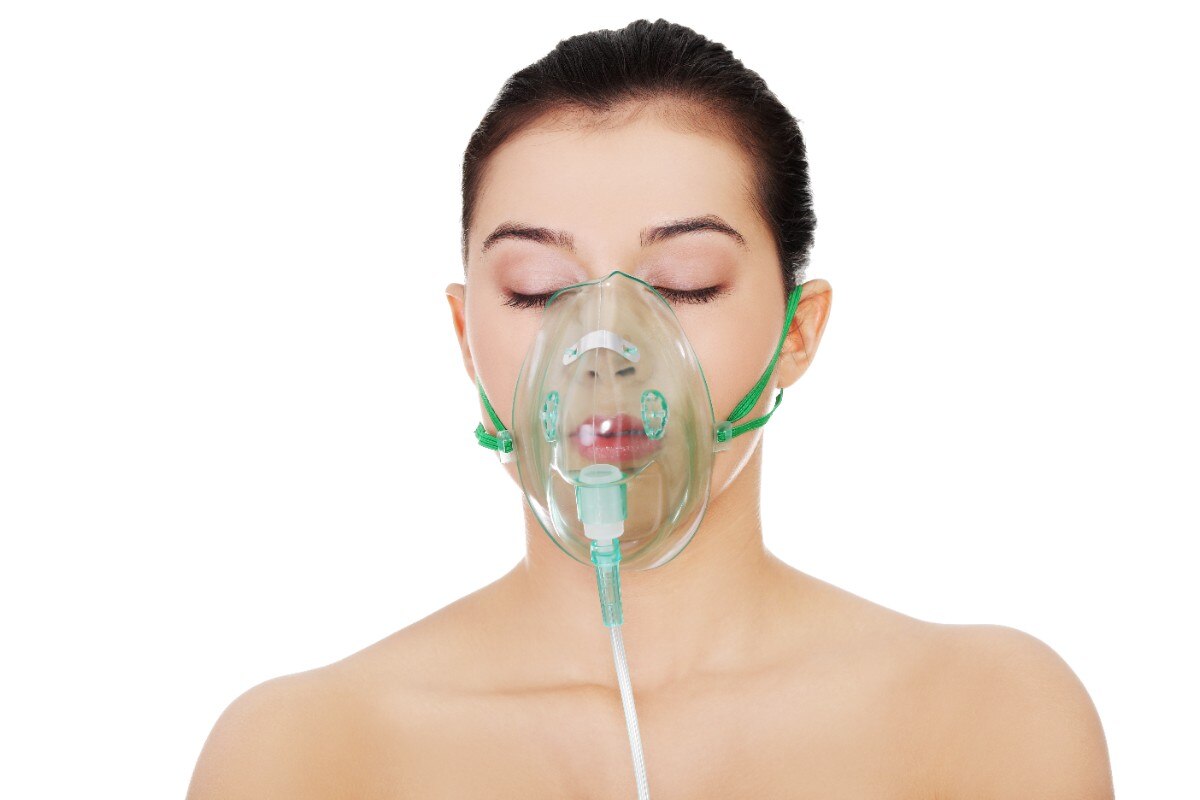
A simple face mask can deliver oxygen at a medium concentration. A flowmeter helps to keep the oxygen flow at a constant rate. Oxygen is also delivered based on the depth and rate of the client’s breathing. The simple face mask can deliver oxygen at a rate of 5 to 10 L/min (35% to 60% oxygen concentration). It can retain carbon dioxide when the client exhales, so it is contraindicated for clients with carbon dioxide retention. Skin care must be provided to clients with long-term face mask use due to the risk of skin breakdown.
simple face mask
Partial Rebreather Mask
The partial rebreather mask is similar to the simple face mask but has a reservoir bag. With this device, oxygen is delivered at a higher flow rate (10 to 15 L/min) and at a higher concentration (60% to 90%) compared to the simple face mask. On inspiration, the client’s air is drawn into the holes of the mask and oxygen by the inflated bag. On exhalation, gases are sent to the reservoir or out through the holes in the mask, and oxygen is drawn in from the inflated bag. When the client inhales again, oxygen and carbon dioxide are mixed. This mixture is diluted with the high-flow oxygen into the reservoir bag. The reservoir bag must remain inflated to prevent retention of carbon dioxide that the client exhales.
Nonrebreather Mask
The nonrebreather mask is similar to the partial rebreather mask except for the valves going into the reservoir bag and holes in the mask. These valves ensure that exhaled gases are not returned to the bag. A snug fit to the client’s face is needed to ensure that the client receives the prescribed amount of oxygen. Nurses should ensure that the reservoir bag, which supplies the inhaled oxygen, does not completely collapse with exhalation. Using this type of device, oxygen can be delivered at a high flow (10 to 15 L/min) and as a high concentration (80% to 95%). The fitting and function of the mask need to be monitored regularly to verify the client is not breathing in carbon dioxide. Nonrebreather masks are not recommended for clients with COPD or respiratory failure for long-term use due to a risk of oxygen toxicity.
Venturi Mask
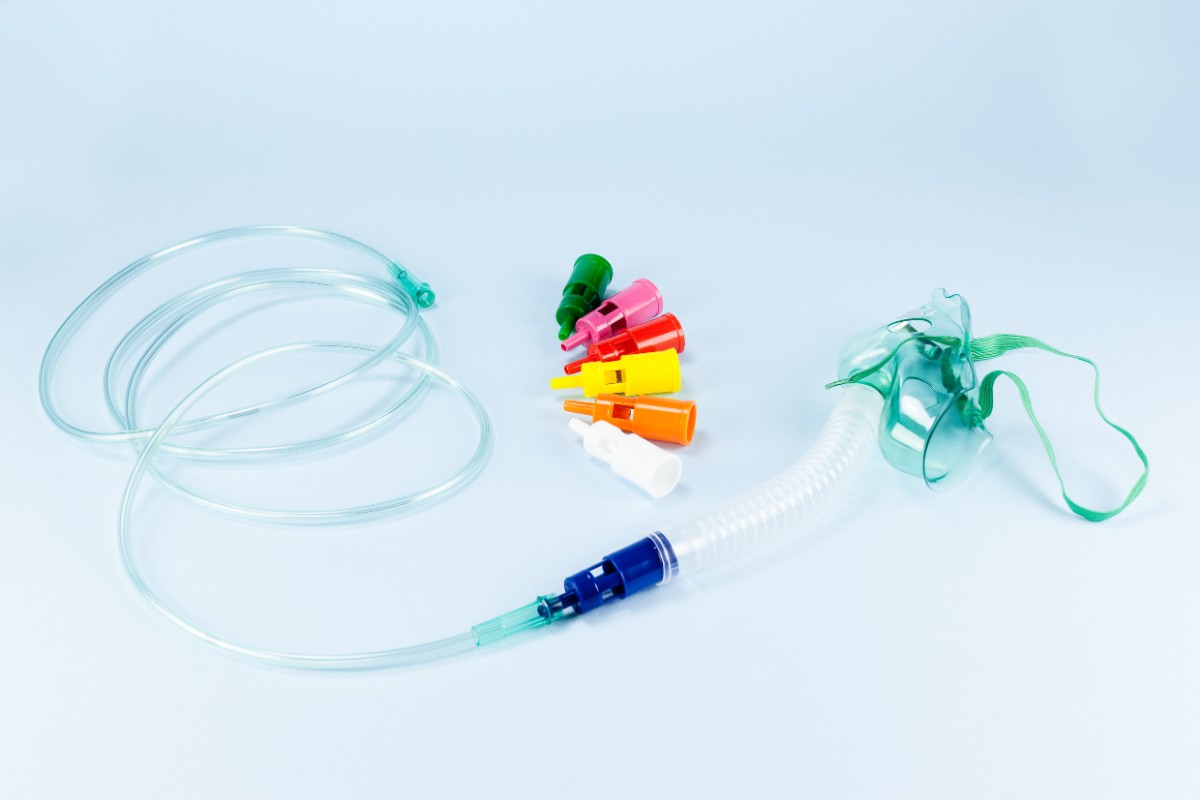
The Venturi mask is a fixed-performance device that delivers oxygen at high concentrations. With this device, oxygen may be delivered at flow rates in the range of 4 to 15 L/min (24% to 60%). Venturi barrels are used to change the amount of oxygen delivered to the client. These barrels are located at the base of the mask, which has holes that deliver oxygen at a high velocity along with room air. A good fit will ensure the accuracy of the oxygen concentration delivered.
venturi mask with barrels
Aerosol Mask
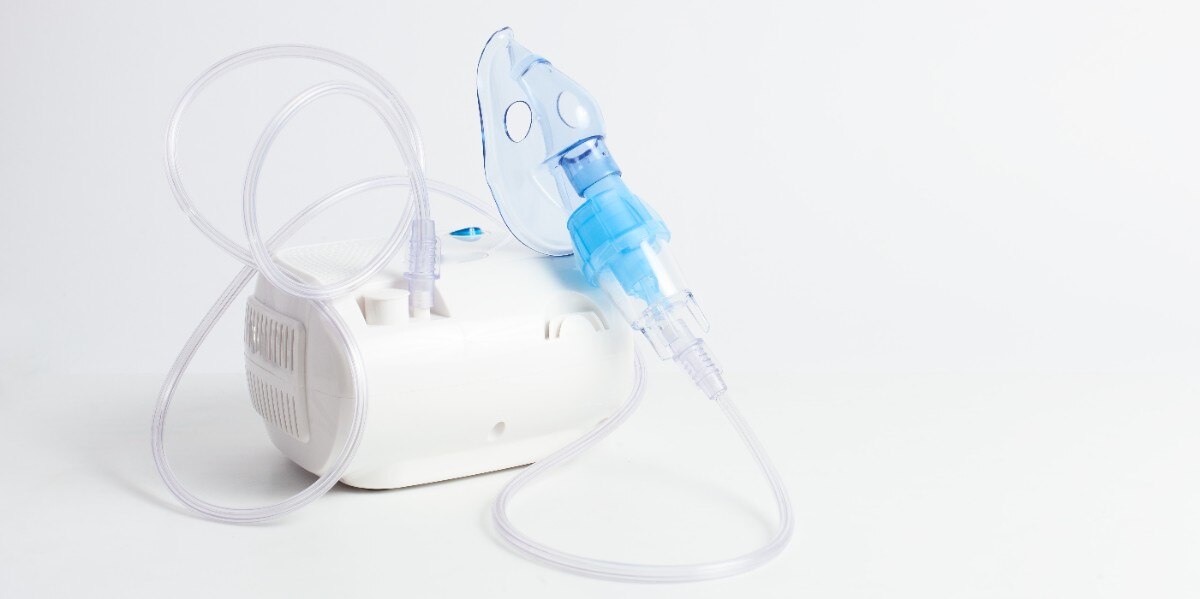
An aerosol mask is used to administer nebulized solutions—that is, medications that are changed from a liquid form into a mist, which the client inhales. Nebulizers can be used at home as well as in medical facilities; they may be plugged into an electrical outlet or be portable units powered by batteries.
aerosol mask and machine
Aerosol masks may come with either a mouthpiece or a mask. For children younger than age 5 years, a face mask covering the nose and mouth is recommended due to the ease of breathing through their nose; a mouthpiece is recommended for older children.
The medications used with a nebulizer are better known as breathing treatments. They include corticosteroids, which decrease inflammation in the lungs, and bronchodilators, which open the airways.
Positive Airway Pressure Treatment
A continuous positive airway pressure (CPAP) device is a machine with a hose and either a mask or nosepiece that delivers a flow of constant and steady air, creating a positive pressure to keep the upper airway open. CPAP keeps the alveoli open and improves the amount of oxygen in the client’s blood. It is used as a treatment for obstructive sleep apnea (OSA), premature infants, and clients with cardiopulmonary diseases such as stroke, hypertension, and CAD.
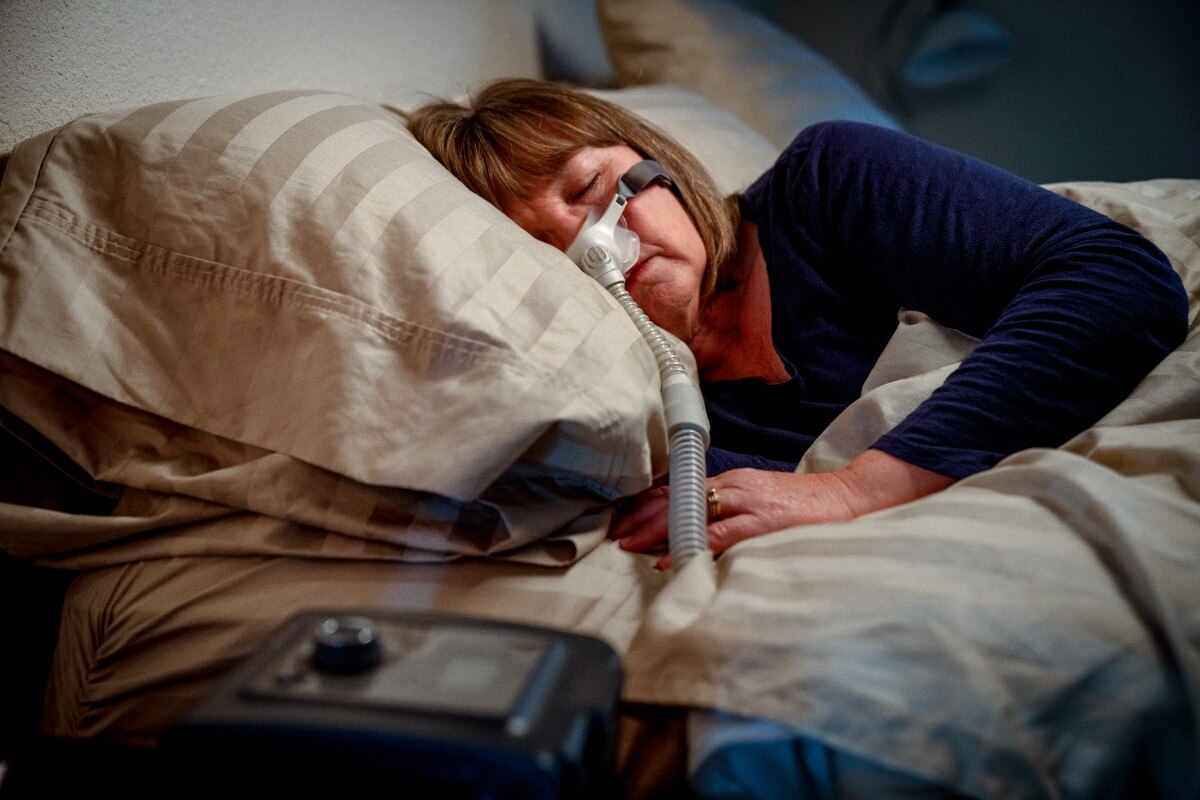
Continuous positive airway pressure/bilevel positive airway pressure mask
In clients with OSA, partial or complete closure of the upper airway occurs during sleep. As a result, the client has apneic episodes, which can last for longer than 10 seconds. Manifestations include a morning headache, extreme daytime drowsiness, loud snoring, and restlessness. OSA can be associated with heart failure, hypertension, injury, atrial fibrillation, and other arrhythmias.
The CPAP device consists of a mask that covers the nose and face, with a strap to hold the mask in place extending across the forehead and cheeks. A properly fitted mask is needed to ensure the client actually receives the treatment. CPAP can be utilized with or without supplemental oxygen. If the client’s oxygen level falls too low overnight, supplemental oxygen can be prescribed to help maintain the desired oxygen level in the blood.
A bilevel positive airway pressure (BiPAP) machine may also be ordered by the health care provider. With this device, air moves through a tube into a mask that fits over the client’s nose. BiPAP pressures are higher when inhaling and lower when exhaling, whereas CPAP delivers a single pressure. BiPAP is recommended for clients whose airway collapses while they are sleeping, which causes difficulty breathing and leads to decreased air exchange in the lung. BiPAP may also be required for clients who have disorders that cause muscle weakness that inhibits breathing. Thus, clients with COPD, heart failure, and sleep apnea may benefit using a BIPAP machine, whereas CPAP is primarily used for OSA.
How much oxygen can be delivered by a nasal cannula?
Oxygen can be delivered via nasal cannula at low concentrations at 1 to 6 L/min (24% to 44% oxygen).
What are the disadvantages of using a nasal cannula?
Disadvantages include nasal irritation and the potential to cause headaches. The amount of inspired oxygen depends on the client’s flow settings and respiratory pattern. Other disadvantages are that the nasal cannula can deliver only flow rates of less than 4 L/min, it is not suitable for clients with nasal obstructions, and it is not as accurate as fixed performance systems.
Complications of Oxygen Therapy
Oxygen is essential for life, but at high concentrations it can cause oxygen poisoning or toxicity. If a client is exposed to high concentrations of oxygen for short periods (acute) of time, cellular damage could occur. Prolonged exposure to low concentrations of oxygen may damage pulmonary function. Complications related to mishandling oxygen and failure to follow safety guidelines associated with oxygen use require education and follow-up with all clients prescribed oxygen therapy.
Oxygen Toxicity
Oxygen toxicity can be either acute or chronic. In extreme cases, oxygen toxicity may lead to damage of cells and death. Cellular damage develops due to high partial pressures that cause oxidative damage to the cellular membranes. This damage causes the alveoli to collapse—an adverse effect that can happen within 24 hours of exposure to pure oxygen.
Acute toxicity affects the central nervous system (CNS). CNS manifestations may appear as twitching of the hand muscles; prolonged exposure can lead to nausea, generalized convulsions, dysphoria, and tinnitus (ringing in the ears). Aggravating factors include stress, cold, and increased carbon dioxide in the blood.
With chronic oxygen toxicity, manifestations affecting the pulmonary system include atelectasis, coughing, dyspnea, pleuritic chest pain, and heaviness substernally. However, once oxygen is discontinued, symptoms lessen within 4 hours.
Prevention of oxygen toxicity includes avoiding stress, cold, or fatigue. If oxygen toxicity has already occurred, it is managed by decreasing exposure to increased levels of oxygen. Oxygen administered at the lowest concentration can be provided to alleviate hypoxia in the tissues, and antiseizure medications can be prescribed for clients experiencing convulsions.
Safety Considerations for Home Oxygen Use
Providers sometimes order oxygen for the client to use at home. A blood test or pulse oximetry will determine the amount needed. Oxygen may be needed continuously, for exercise, or during sleep. Although oxygen is generally a safe gas, it can be highly combustible in the presence of certain materials. Safety guidelines to consider with use of oxygen at home include the following:
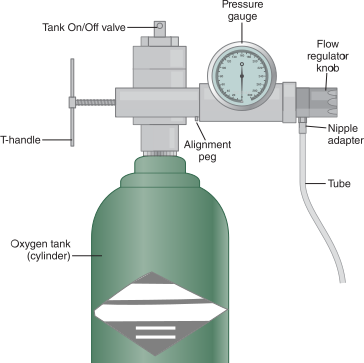
Preparing the oxygen cylinder for use
Never smoke around oxygen supplies, and keep oxygen equipment away from open flames.
“No Smoking” and “No Open Flames” signs should be posted inside and on the outside of the home.
Any heat source should be kept away from the oxygen system, including candles, heaters, electric stoves, curling irons, hair dryers, and areas around fireplaces.
Flammable liquids should be kept away from oxygen, including paint thinner, aerosol sprays, and cleaning fluids.
Any products containing petroleum, oil, or grease should never be placed on the upper chest or face of the client using oxygen therapy. This includes petroleum-based creams and ointments such as Vaseline.
Aerosol sprays, including air freshener and hair spray, are very flammable, so they should never be used around oxygen.
Before handling oxygen equipment, any hand sanitizer with alcohol should be rubbed into the hand and be completely dry.
Bedding should be 100% cotton if oxygen is used while sleeping.
Oxygen containers should be kept upright. They should be attached to a fixed object to prevent them from falling over and should not be stored in an enclosed space like a closet.
Oxygen tubing should not be longer than 50 feet to avoid tripping.
Oxygen concentrators should be kept several inches away from curtains or walls.
A fire extinguisher should be kept nearby in case of a fire, and a smoke alarm should be installed. The fire department and the electric company should also be made aware that oxygen is being used in the home.
An oxygen cylinder stores oxygen at a higher pressure. To prepare a cylinder for the administration of oxygen, the nurse should ensure the flow regulator is set at zero, the T-handle should be tight, and the wrench of the cylinder should be placed on the on/off valve. The valve should be turned counterclockwise one full turn when open; a gauge will show the amount of pressure in the cylinder. When the cylinder is full, it will read about 2,000 pounds per square inch (psi). The flow regulator can then be adjusted to the rate prescribed by the provider. The tubing is attached to the nipple adaptor on the regulator.