Week B1 - Module Introduction, What is Knowledge
Week B1 - Module Introduction, What is Knowledge
02 February 2026
20:10
LEARNING OUTCOMES =>
- Discuss the precursors of, and prerequisites for, scientific thinking;
- Demonstrate understanding of the origins of scientific thought;
- Describe key events in the history of ancient Greek philosophy.
1)LEARNING OUTCOME: Discuss the precursors of, and prerequisites for, scientific thinking;
PRECURSORS FOR SCIENTIFIC THINKING
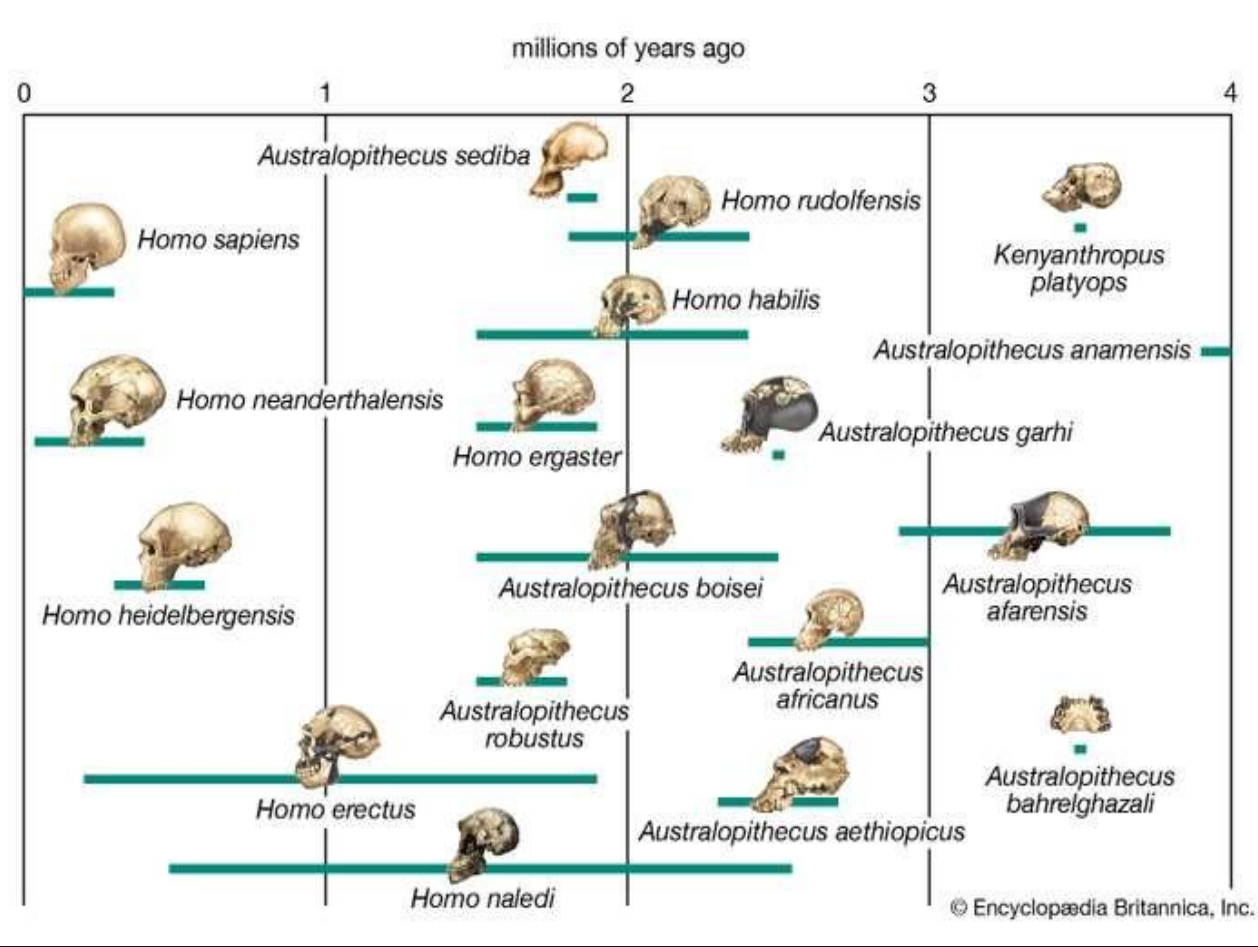
- HOMO SAPIENS = wise man
- The brain is constantly adapting in response to the environment around us & different challenges that we have in the environment causes gradual adaptations over time
- Diagram shows about 20,000 years of the homo sapien species
- We recognise Neanderthals behind us
- When talking about intelligence & knowledge acquisition: what this has looked like over time & how we've arrived to where we are today
- Thinking about innovations & developments in the environment around us, e.g., what we're seeing now with the advances in things like AI is that science is developing at a quicker time rate than any time at any point in history. Thinking about = are we able to adapt to this?
- There's a lot of interesting work about the fast-paced development of AI & modern anxiety & depression
EARLY MODERN HUMANS =>
- The origins of homo sapiens traced to a Mitochondrial Eve, 200,000 years ago
- Expanded out of Africa 50,000 years ago -> Spread across Europe and Asia, and reached North America about 30,000 years ago
Q: DID THEY THINK SCIENTIFICALLY?
- No written records; need to use alternative sources of evidence
- To answer whether these individuals think scientifically, need to understand what is meant by scientific thought
- Are we talking about specific developed methodologies?
- Are we talking about things like abstract thinking?
- These are the types of questions that philosophers will begin to ask
- Looking at evidence through history
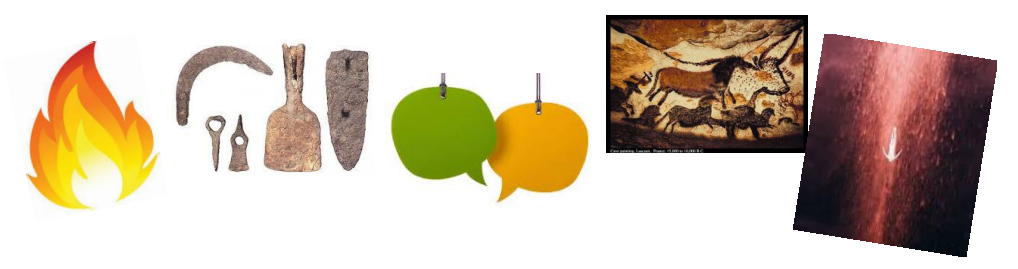
- e.g., for early modern humans, evidence of things like making fire
- Also looking at tools that we use & what that means in terms of things like problem solving
- Evidence of communication
- e.g., how vocal tracts have developed in terms of looking at this part of the bone structure. Making estimates about things like diaphragm, vocal pitch
- e.g., if we find pictures that were drawn: can use to try to understand what questions were being asked at specific time points
- Look at evidence to try to understand what the way of thinking was at different time points & what was the way of scientific thinking at different time points
- To answer whether these individuals think scientifically, need to understand what is meant by scientific thought
- No written records; need to use alternative sources of evidence
EVIDENCE FROM ANTHROPOLOGY & ARCHEOLOGY =>
ANTHROPOLOGY -> the study of humans & human behaviour
ARCHEOLOGY -> looking at artefacts that have been left behind
3 main points to try & understand what was the level of thinking…
- Study of oral traditions
Trying to understand & map how people communicated with eachother. Can look at, e.g., the development of bones as well as stories that people told to eachother.
- e.g., stories of natural disasters - what was the way of thinking for that?
When we get closer to modern society, we may have more evidence of what these oral traditions might be…
- Try to map how these have evolved over time
- Folktales, sayings
- Songs, or chants
- Looking at things like particular songs that have been passed down over time
- Try to map how these have evolved over time
Allowed the passing down of knowledge
- As a story gets retold, it naturally evolves over time
However unreliable as stories likely to change over time and may be lost completely
- This can cause LIMITATIONSB as we do not know the pure origin of the story and what it meant
BUT we can also map the development to see how development in thinking has changed over time.
- Study of artefacts
Can map the sophistication of the tools & how they were developed over time to problem solve, etc.
- Sophistication of tools tells us the level of thinking at the time
Things like pictures etc. tells us about the level of thinking around problem solving, but also mainly things that are in that time spiritual or natural disasters.
Artifacts sometimes involves a lot of guess work…
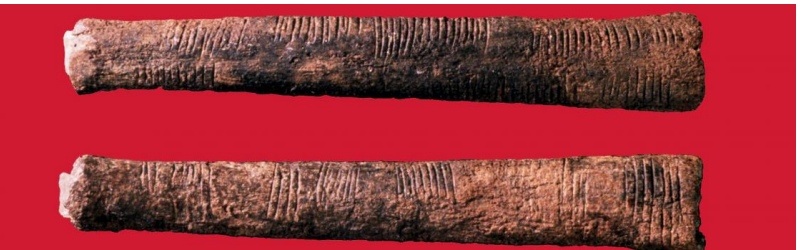
The Ishango Bone – (20-25,000 years old)
- Discovered in the present-day Democratic Republic of Congo
- A counting tool for simple mathematical procedures ?
- Has been proposed that this was probably some kind of a mathematical counting tool
- Study of contemporary illiterate cultures
Can go to various points in the world where we have illiterate cultures who are very cut off from modern technologies, etc.
- Can see: what is the way of thinking, what is the belief system, how are problems solved
KNOWLEDGE IN PRELITERATE CIVILISATIONS =>
Assumed that most of the knowledge acquired was done by trial & error.
ANTHROPOLOGICAL RESEARCH:
- Skills based on practical rules of thumb…
-> Emphasis on ‘knowing how’
…without theoretical understanding of underlying principles
-> Idea that things were worked out without necessarily knowing the pure science behind it.
- e.g., individuals understood that if they cause friction to two pieces of wood, a spark might catch and fire might come.
- BUT didn't necessarily have the knowledge that we have today: you need 3 things to create a fire, fuel, oxygen and heat.
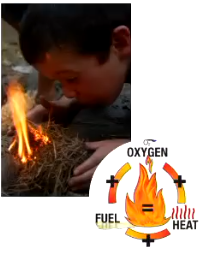
A lot of philosophers questioned whether this process of trial & error counts as true knowledge or not.
THE ROLE OF MYTHS & STORIES:
A lot later on, we start to see that we develop methods of communication science (methods of communication science important).
- Prior to that, we have people communicating scientific information through storytelling.
- BUT eventually we see the development of written language.
- Enforced the values and attitudes of the community
- Provided explanatory principles
What happens when we write these stories down?
- once we write things down, it means that we have a huge expansion in scientific knowledge sharing, critique, etc.
- Information that is written down can be checked by other individuals, confirmed, contested, etc.
-> Scientific knowledge cannot emerge without written language (Lindberg, 1992)
PREREQUISITES FOR SCIENTIFIC THINKING: WRITTEN LANGUAGE
We have the invention of written language separately across all times.
Written language appeared separately four times
- China 6000 BCE (BCE = before the common/current era)
- Egypt 3200 BCE
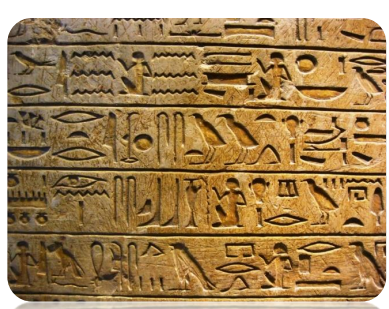
- Sumer 3200 BCE
- America (Olmec and Mayan) 300 BCE
Later had development of printing press, etc. In modern times, we have the internet & you can google anything & get an answer in less than a second.
- Writing things down & information sharing is important for us to get to the absolute seed of what is scientific knowledge, what is accurate in terms of the sites that we're sharing.
- In academia, we share our research freely. One researcher can collect a massive data set of information & put this on a data website, and a scientist on the other side of the world can open it & analyse it - could say 'why didn't you do it this way?' & researcher could explain reason.
- This creates opportunities for discussion & through that we should arrive at a purer form of knowledge.
-> writing things down is IMPORTANT.
THE INVENTION OF WRITING =>
Writing provides an external memory and enables the accumulation of knowledge
HOWEVER:
- Limited by the availability of the sources
- Limited by the extent of literacy
DESPITE THIS, by doing this process we can look back historically at:
- what has been documented
- again understand how innovations have come from this
- how our understanding of scientific development has changed over time.
2)LEARNING OUTCOME: Demonstrate understanding of the origins of scientific thought;
THE ORIGINS OF SCIENTIFIC THINKING CAN BE LINKED TO… =>
- The invention of writing and numeric systems
- Important for the expansion of scientific thinking.
- Through this process, we've developed specific methodologies for acquiring knowledge, e.g., the scientific method, ethical practice, etc.
- Refined how we collect data, how we analyse data & how we communicate it with the population around us.
- Literacy; accumulation of knowledge
- Through this process, we have our critical approach to knowledge…
- Critical approach to knowledge
- development of methodologies in a critically accurate way
3)LEARNING OUTCOME: Describe key events in the history of ancient Greek philosophy.
ORIGINS OF WESTERN PHILOSOPHY IN THE ANCIENT GREEK THINKING
Around this time we have a deep period of reflection in understanding how knowledge is acquired.
Big questions asked around this point in time, e.g. =
- what is the meaning of life?
- Trying to understand:
- Various existences of different gods
- The role of human beings
- Much rooted into the purpose, but also questions around our existence: why are we here?
During this time, see a period of debate and discussion being encouraged; an invitation for debate and discussion from everybody.
- Through this process of debate & discussion, trying to get to the root of pure knowledge & through pure knowledge we can develop methodologies that help us to answer those bigger questions in a more scientific way.
THE EARLY HISTORY OF PHILOSOPHY =>
- Beginning of Western philosophy in Greece approx. 600-200 BCE
- Tradition of debate and democratic decision-making
- Democratic Greek city-states with equal citizens
At this time point, see this idea that we shouldn't be depending on someone's character to determine authenticity of knowledge that is being communicated.
- Not just going to listen to the people who have money or status. What we want to do is encourage everybody to share their opinions
- When looking at forensics & forensic psychology = the word forensic comes from the Latin adjective "forensis", meaning "of a forum". This is rooted in this time period where these massive forums were built where people could come to discuss and debate a particular problem.
- If we think about context of modern judgement of criminal behaviours, for example, we have a jury that is set up in England. We have jury members who are supposed to be equal citizens that represent the moral standards & expectations of a community. We also have our experts, prosecution & defence, who are trying to debate & discuss the behaviour of a particular individual. Then, its these equal citizens, the jury members, who listen to these different pieces of information & ultimately, they're the ones who make the judgement at the end after listening to the evidence.
- Thus, the way that we set up our courtrooms in the present & the word forensics is linked to this historical concept.
What we see at this time is these big forums being built so that we can have open discussions, etc., built to be used if we need to judge something with communities invited. Idea being that communities understand the moral expectations and have similar experiences & can therefore make judgements.
-> IMPACT
- Teachers and schools
- At the time, see this invitation of people to attend schools & to be educated. Education centres were opened and offered to lots of different people with lots of different backgrounds rather than just the rich.
- Teachers and schools
-> teachers & schools offered.
- ‘Open’ instead of ‘closed’ thought
- Invitation to question things. By asking various questions, by discussing and debating, we can start to look for things like problems in our assumptions about things.
- ‘Open’ instead of ‘closed’ thought
-> SO, we can question in a different way.
- During the rule of Alexander the Great (356-323 BCE), Greek influence from Egypt to India
WHAT IS KNOWLEDGE? =>
PROTAGORAS (c. 490-320 BCE) =
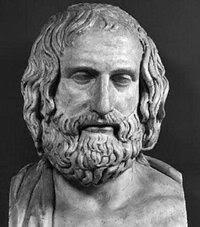
- Had a background in law…
- Always interested in people's backgrounds & experiences BECAUSE it determines their way of thinking.
- E.G., the way you have experienced your life so far will determine particular opinions that you have on things & if you have a particular opinion on something, you're going to, for example, seek particular information perhaps to support that opinion. Thus, always interested in people's backgrounds & why they think the way that they do.
- Always interested in people's backgrounds & experiences BECAUSE it determines their way of thinking.
- Had a background in law…
Suggested: Every argument has two sides, and both may be equally valid.
- If we think about the modern criminal justice system, we present legal issues as two sided in the courtroom; prosecution & defence.
-> Can see, based on his background, how he came to the conclusion that every argument has two sides, & both may be equally valid. Idea that we need to understand someone's point of reference & how it shaped their perspective.
Suggested: Philosophical speculations about the ultimately unknowable is pointless.
- If we discuss the purpose of gods, the purpose of human existence, we're never going to get a true known example about it. SO, why are we all arguing about it? Idea that we should listen to each other's opinions & understand each other's point of view.
Puts humans in the centre of philosophical argument, to an examination of human behaviour.
- Suggested that we should INSTEAD be thinking about the personal experience & the subjective nature of how knowledge is acquired.
-> Man is the measure of all things
- MEANING: people are at the centre of their knowledge acquisition; how they acquire knowledge & how they communicate it.
EXAMPLE OF EVERY ARGUMENT HAS TWO SIDES, BOTH MAY BE EQUALLY VALID =
QUESTION: is it hot or cold?
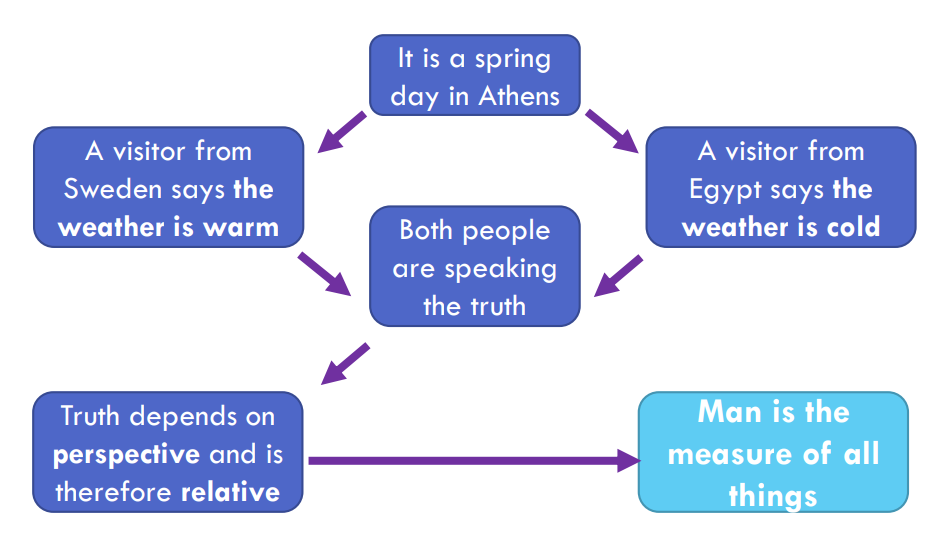
- Talking about point of view.
- We can think about this process in terms of scientific investigation or ideas that we promote.
- For example, personal belief that offender populations can be rehabilitated with the right care.
- Giving individuals opportunities they perhaps didn't have before coming into prison. Belief that they can live a useful & fulfilling life.
- This is an opinion based on a belief system.
- Belief that current prison system does not work.
- E.g. of opposition: other people believe punishment should be harsher for things like knife crime.
-> these opinions come from our own belief systems based on our own experiences.
- Individual that believes in rehabilitation may look at all the research that says rehabilitation is possible for knife crime. HOWEVER, the person against it is going to look at the research that says rehabilitation is not possible for knife crime.
- Based on personal perspective, it is going to bias how one investigates.
- Our own experiences, our own perspectives, drives how we seek truth. &, in some cases, there is no truth; it purely depends on the individual.
- Whether it is "warm or cold in Athens today?" purely depends on the individual's speculation.
- Could do an objective analysis of this question: could look at temperature of Athens every day over the past year & say where this day sits, BUT, here we're talking about the subjective representations.
- Whether it is "warm or cold in Athens today?" purely depends on the individual's speculation.
- Individual that believes in rehabilitation may look at all the research that says rehabilitation is possible for knife crime. HOWEVER, the person against it is going to look at the research that says rehabilitation is not possible for knife crime.
“Many things prevent knowledge, including the obscurity of the subject and the brevity of human life”
- Some topics are easier to answer than others, in particular cases.
- He suggested that right & wrong become relative terms.
- This is important in the world of forensic psychology; right & wrong become relative terms to the experience of the individuals.
SOCRATES (469-320 BCE) =
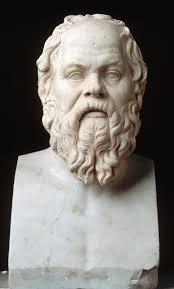
Often referred to as one of the founders of Western philosophy.
Persistently asked the questions he wanted to ask, and in doing so evolved a new way of thinking.
- Promoted this idea that we should constantly be asking questions, even if we believe we are an expert in a particular field. When we become experts in particular fields, what can happen is perhaps we don't update ourselves regularly on new information, perhaps we think we know all the answers already & we stop asking the basic questions that are important.
- Thus, Socrates suggested that even if you're an expert, if you truly want to understand a particular field or a particular question, you should constantly be starting from the beginning and questioning things as if you have no knowledge.
- This will help to alleviate some of the biases we've developed in our thinking on particular topics.
-> asking questions is key for knowledge acquisition.
Dialectical method.
- Promoted what we now call the dialectical method = process of constantly asking specific questions in a specific way.
What happened with Socrates is that he started asking so many questions to so many people who felt they held the expertise that he started to irritate people. He continuously asked these questions which led to particular individuals feeling quite ashamed or embarrassed in those moments.
EXAMPLE OF SOCRATES' DIALECTICAL METHOD:
Socrates says to a priest…
Q. You think the Gods know everything?
A. Yes, because they are Gods.
Q. Do some Gods disagree with each other?
A. Yes, they are always fighting.
Q. So Gods disagree about what is true and right?
A. I suppose they must do.
Q. So some Gods can be wrong sometimes?
A. I suppose that is true.
-> Therefore the Gods cannot know everything…
- People with strong opinions about various things or people who thought they were experts, etc. - Socrates was trying to introduce this way of questioning so that we could reflect on our own knowledge & understand our own limitations, our own gaps in understanding. BUT, this was seen as quite a radical way of thinking
“A life which is unexamined is not worth living”
- According to story: Eventually Socrates was given the option of death or leaving forever and never coming back. His crime was the corruption of young minds; encouraging radical thinking in the younger generation, which caused political unrest. Socrates chose death over exhalation, the suggestion being that he would rather leave this world than be chained to ignorance; live in a place where he couldn't ask the questions that he wanted to ask.
EXAMINATION OF LIFE =
A process of questioning the meaning of essential concepts that we use every day but have never really thought about.
“I know nothing except the fact of my own ignorance”
- We should always be thinking about where our ignorance lies, & this will help us to move towards a period of enlightenment with the knowledge that we acquire.
- One good: Knowledge.
- One evil: Ignorance.
- When we look at a lot of modern day big issues, ignorance is at the root.
- E.g., when looking at forensics on genocide, we can see that this is rooted in ignorance & fear.
- When we look at a lot of modern day big issues, ignorance is at the root.
-> we should always be thinking about questions to enlighten ourselves.
PLATO (c. 427-348 BCE) =
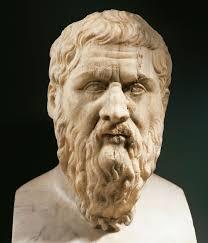
- Studied under Socrates in his teens (Socrates was approximately in his 60s when they overlapped).
- Wanted to carry on the themes that have been raised
Coining the term ‘philosophy’, defined as ‘love of wisdom’
- Important when we label particular branches of what we call science or the arts.
- If we name something, what that means is we give ownership to the discipline & from that, naturally, what we start to develop are laws or regulations about how that particular discipline functions.
- Important when we label particular branches of what we call science or the arts.
Creation of the field of epistemology, the study of knowledge, or “the search for truth itself”
- If we think about psychology, psychology emerged from philosophy & becoming an independent discipline meant scientists who were interested in psychology had to start thinking about: how we're going to study this field, what does this field represent, what does it mean?
- From psychology, we have all these different sub-branches: educational psychology, clinical psychology, forensic psychology, sport psychology etc.
- Even within these small disciplines, we follow the broader strokes of what psychology is & how we collect data, how we promote information. BUT, within them, they have their own independent methodology as well.
- From psychology, we have all these different sub-branches: educational psychology, clinical psychology, forensic psychology, sport psychology etc.
- If we think about psychology, psychology emerged from philosophy & becoming an independent discipline meant scientists who were interested in psychology had to start thinking about: how we're going to study this field, what does this field represent, what does it mean?
-> when we name something, it gives it more stability, growth, etc., and eventually independence & respect.
- Plato coined the term philosophy.
Plato started to question where knowledge comes from…
- Discussion around information or knowledge that we can say is innate; we have some kind of innate understanding of something OR information & knowledge that is acquired by observing the world around us.
- Around this time, philosophers are interested in: when we have knowledge, where does it come from?
- Is it something innate or is it something that is happening that we observe in the world around us & draw conclusions from?
- Can see in some cases it's a balance of things. E.g., may have an innate reaction to a spider running across a table; have a fear sensation & might deduce from this that spiders are dangerous.
- Is it something innate or is it something that is happening that we observe in the world around us & draw conclusions from?
- Bodies possess the senses -> perceive the material world.
- Our bodies allow us to hear, see, feel in reaction to things, etc.
- SO, our bodies possess the senses for seeing the world around us.
BUT…
- Soul possesses the reason -> perceive the realm of Ideas.
- Our soul has the innate knowledge. This innate knowledge is the accurate, true knowledge.
- SO, what we have within us, the innate knowledge, is accurate truth.
- Soul possesses the reason -> perceive the realm of Ideas.
-> What we sense around us, what we observe, distorts our understanding. This is the knowledge that we should rely less on for authenticity, accuracy, etc.
KNOWLEDGE VS OPINION:
- Knowledge is certain, derived from forms
- Opinion is uncertain, derived from senses
Comes from a particular theory of forms: the idea being that souls exist in a world where true information is all around, and in this world we have true forms, e.g., the true form of a doll, the true form of a chair.
- When we are born, the soul enters the body & we're now in a different realm from the true realm & everything is a reflection.
- THUS, what we're doing is relying on our senses to make an assumption.
- For example, if you see a dog, your innate knowledge from your soul which came from the real place tells you this is a dog.
- What we're thinking about here is the question of: what knowledge do we trust? Do we trust our innate understanding OR do we trust what we see in the world around us?
- Plato is suggesting we need to question things to get to the root of innate knowledge.
We can look at a dog in the street &, although dogs all look very different from eachother, something within us lets us understand that this is a dog.
- Might look at a particular dog & not be sure if it's a dog because we're dependent on our senses. BUT, if we think within ourselves, our innate knowledge will confirm that this is a dog.
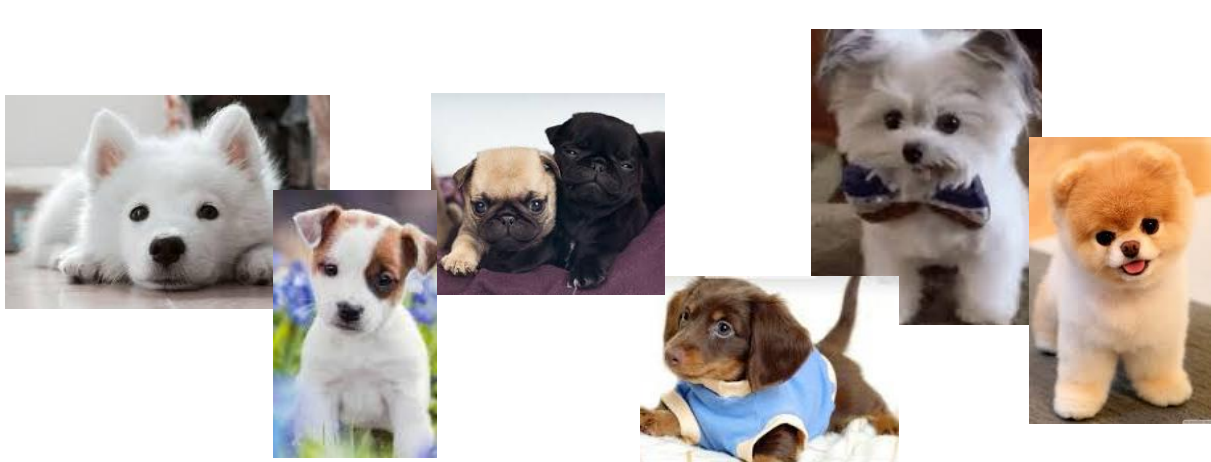
- This is a conception of Ideal Forms, from the realm of Ideas, and must be innate.
ARISTOTLE (348-322 BCE) =
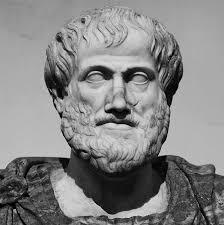
Study under Plato, who had already devised his theory of Forms
QUESTIONED THE THEORY OF FORMS:
- Said that what we should be doing is observing the world around us; observation of the world around us is important, that is where we get our true knowledge from.
- There's nothing innate, what we're doing is we're taking information from the world around us, we're trusting our senses, & from that we are coming to particular conclusions through a process of connecting dots, looking for patterns, etc.
- The reality of things can already be seen on Earth
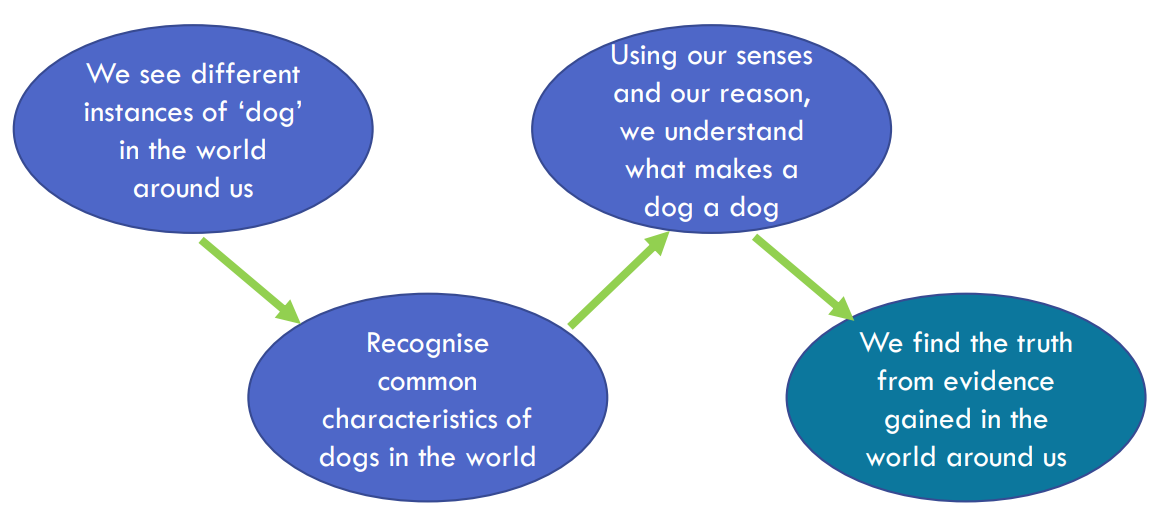
- Even if we are faced with something & we're not quite sure, we will look for patterns to make assumptions.
- Human beings rely on this pattern making & assumptions; its rooted into how we make decisions to maintain our own safety. It's an evolutionary trait that we try & look for patterns in the world around us that can ensure our safety.
- THUS, we do rely on our senses.
- Even if we are faced with something & we're not quite sure, we will look for patterns to make assumptions.
ARISTOTLE'S CLASSIFICATION OF LIVING THINGS =
- From this, we start to develop particular ways of thinking that can help us answer questions more clearly.
- We're not always going to be accurate, but this is how people generally think & process information.
For example, if we are presented with an owl, what we're doing unconsciously, to conclude that it's an owl, our brain is answering little questions to get to the right answer…
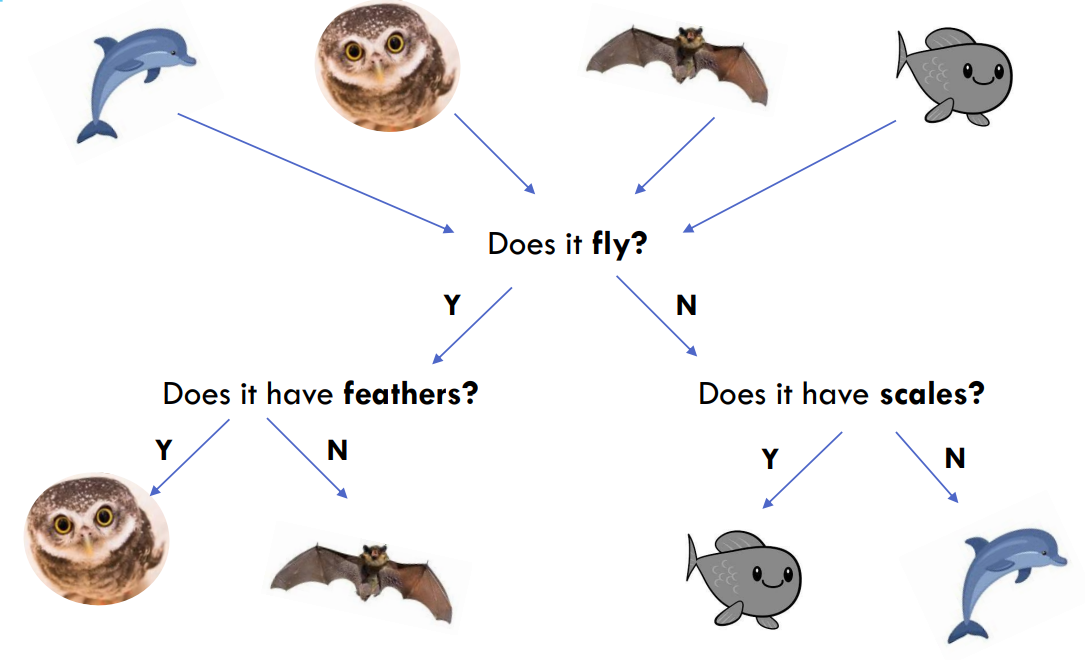
- Through this process of looking for patterns, what we can do is classify particular problems that we're faced with.
- What we see from this way of thinking is that it's really injected itself into the world of biology; this way of asking questions, coming to conclusions, etc.
- Un-scribed tablets, no innate ideas
- Aristotle suggested that there are no innate ideas & its exposure to the world around us that fills us with knowledge.
- We are "un-scribed tablets"; as we acquire knowledge, information is inscribed on the tablet, safe to our memory somewhere if it's important, recycled if it's not, etc.
- Observation of how things manifest, recognise the qualities things have in common, slowly build our understanding
- We should rely on observation.
- Fundamental question of epistemology or the theory of knowledge
- Its key in biology & biological investigation, its observation, & also in particular branches of psychology.
- Information that is important to use will be stored in our memory & the information that is not will be recycled or thrown away.
- Un-scribed tablets, no innate ideas
-> this links back to the subjective nature of knowledge acquisition. For example, what's important to one person may not be important to another & vice versa, so we hold onto information that is important for ourselves.
Thinking about background of individuals & how that shapes the ideas & the way that we acquire knowledge…
PLATO: BACKGROUND BASED IN MATHEMATICS =
There are lots of things in maths which we don't see in the world around us, for example, a perfect circle in mathematics but not in nature.
Mathematics and geometry - abstract concepts that are removed from the every-day world
Innate ability centre of knowledge
- Plato, with his background in mathematics & geometry, was used to abstract concepts & removal from direct application; more abstract application.
ARISTOTLE: INTERESTS LAY IN WHAT WE NOW CALL BIOLOGICAL SCIENCES =
Key to biology is the observation of the natural world around us, etc.
Certain constraints can be discovered by examining the natural world
Learn through our experiences through our senses to deduce what something is
-> HENCE, can see how the background of these two individuals meant that one of them felt knowledge acquisition was innate & the other one felt that knowledge acquisition was about trusting our senses & observation.
FROM ANCIEST GREECE TO THE SCIENTIFIC REVOLUTION IN EUROPE =>
The emergence of modern science: from 16th until 18th century
- 200 BCE to 1500… what happened?
Only started thinking more scientifically about things around 1700 years. Had a lot of philosophical debate & then there was suddenly an expansion, called the scientific revolution.
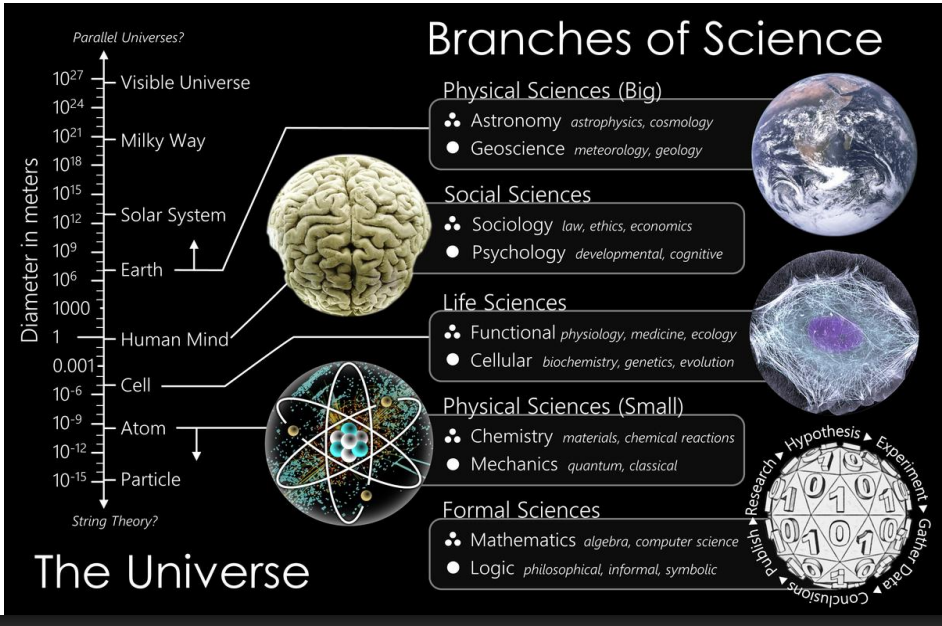
- What we see here is a different way of thinking.
- When we look at innovations in scientific thought, what we're really depending on is a kind of political movement.
- For science to progress, what we need is stability of a country:
- Political stability = politics are at a rested state for progress, even if it's not the politics the country wants
- Economic stability = because innovations in science are very expensive
- Stability in belief systems = whatever those beliefs may be, so that we have a consensus of the direction of scientific innovation.
- When we start to see these things, around this time in particular countries, what we then start to see is the investment into scientific expansion.
- For science to progress, what we need is stability of a country:
As we have different sciences being explored, different types of questions being brought to the arena, what happens is that we start to get the emergence of different disciplines of science that are best equipped to study these things.
Similarly to how philosophy emerged, it coined a name, it's changed the methodology, etc., we see the same thing in the development of all these different sciences.
Society & innovation works hand in hand.
FOR EXAMPLE: in the present, neurodiversity is a huge thing in psychology, & it's a huge thing that is being asked by society as well. In the context of a primary school teacher; types of questions being asked by parents is very different in how we support children who are neurodivergent in comparison to approximately 20 years ago, when it wasn't really spoken about.
THUS, society will drive in part the types of things that we explore, & now, for example, there's a lot of research open for neurodivergency.
- WE NEED: stability in the country, the money to support research & also need specific questions driving specific points of investigation.
LEARNING OUTCOMES =>
- Discuss the precursors of, and prerequisites for, scientific thinking;
- Scientific thought can be traced back to homo-sapiens, with an emphasis on ‘knowing how’
- Demonstrate understanding of the origins of scientific thought;
- The origins of scientific thinking can be linked to the invention of writing and numeric systems, lliteracy and accumulation of knowledge, and a critical approach to knowledge
- Describe key events in the history of ancient Greek philosophy.
- Ancient Greek philosophy led to the democratic debate of information and a new way of acquiring knowledge
- Important recognition of the limitations of our own ignorance and accumulation of empirical information
- The emergence of modern-day science is dependent on political stability, economic prosperity, technological investigation and prevalent belief systems
- Discuss the precursors of, and prerequisites for, scientific thinking;