Jefferson's America
Election of 1800
First major election with clearly defined political parties
Federalists vs. Democratic-Republicans
Electors cast two votes for President rather than one of President and one for VP under the constitution
Before the 12th amendment
Jefferson and Burr tied in the Electoral College (73 votes)
Decision went to House, Jefferson won
Why Was the Election Important?
First peaceful transfer of power between parties in U.S. history
Set a precedent for future elections
Marked the decline of the Federalists and rise of Democratic-Republicans
Exposed flaws in the original electoral system
Led to the 12th amendment to prevent future ties like this
The Jefferson Administration
Aimed to reduce the size and power of the federal government
Cut military spending and reduced its size
Lowered national debt by reducing government expenses
Ended unpopular taxes like the whiskey tax
Kept the national bank despite opposing it
Louisiana Purchase strengthened nationalism + encouraged westward expansion
Barbary Wars ~1801-1805: Fought North African pirates attacking U.S. ships
Showed Jefferson would use force to protect trade
Louisiana Purchase
Spain secretly returned the Louisiana Territory to France under Napoleon Bonaparte ~1800
Jefferson worries that French control of New Orleans would threaten American trade on Mississippi River
Napoleon offered to sell the entire territory for $15 million
Needed money for wars in Europe + was facing rebellion in Haiti
$15 million → 3 cents per acre
Did Jefferson Have the Power?
Believed in a strict interpretation of the Constitution
Only power explicitly stated
Constitution doesn’t say that the president could buy land, resulting in struggle of whether it was legal
Justified Louisiana Purchase as part of the president’s power to make treaties
This marked a looser interpretation of the constitution
Expanded presidential authority
Louisiana Purchase encouraged
Westward expansion and exploration
Boosted national unity and pride
Weakened the Federalist Party
Opposed the purchase as unconstitutional + feared it favored rural interests
Lewis & Clark
Jefferson ordered for:
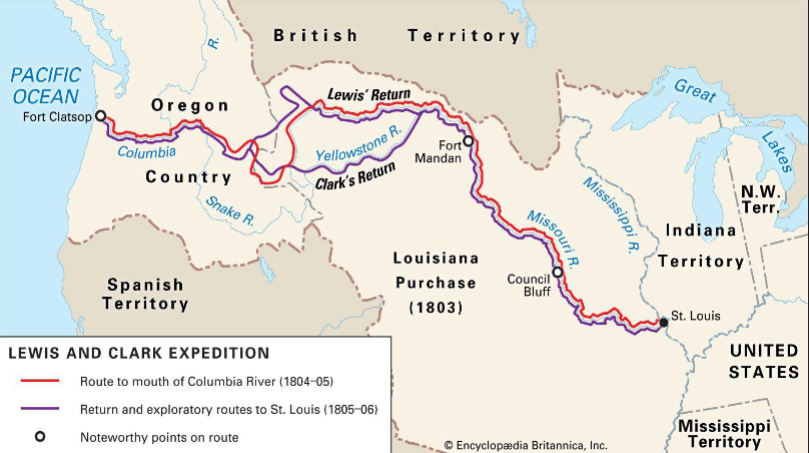
The new territory to be explored
A water route to the Pacific to be found
A U.S. presence in the region to be established further west before Europeans could
Meriwether Lewis and William Clark led about 40 men on the journey from St. Louis to the Pacific Ocean and back
Sacagawea served as a guide and translator, helping the group communicate with Native tribes and find food
Marbury vs. Madison
John Adams appointed several “midnight judges” to keep Federalist influence in government ~Jefferson’s win in the Election of 1800
One was William Marbury and did not receive his commission before Jefferson took office
Jefferson’s Secretary of State, James Madison, refused to deliver it
Marbury sues, asking the Supreme Court to force Madison to hand over the commission
Judicial Review
Federalist Chief Justice John Marshall had to decide if Court could issue such an order
Judiciary Act of 1789 gave the Court that power
Marshall ruled that part of the Act was unconstitutional
Court couldn’t force Madison to deliver the commission as a result
Marbury didn’t get his job, but Marshall declared that the Supreme Court has the power of judicial review
The authority to declare laws unconstitutional
Strengthened federal judiciary → gave them the power to check the powers of Congress and the President
Missouri Compromise
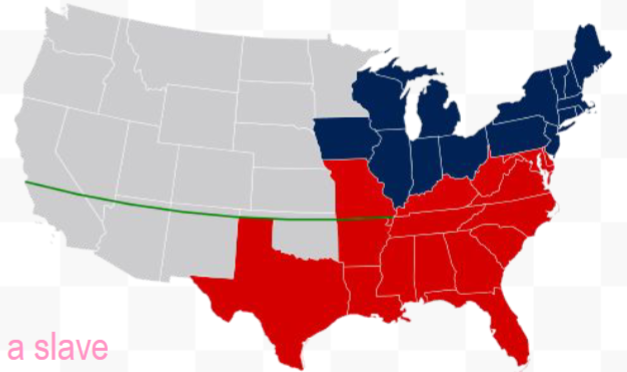
Tensions rising between North and South over spread of slavery into new western territories ~1820
Missouri’s application for statehood as a slave state threatened to upset balance of power in the Senate
Henry Clay proposed Missouri Compromise to resolve it
Missouri would enter the Union as a slave state, Maine would enter as a free state, and slavery was banned north of the 36°30 latitude in the rest of the Louisiana Territory
The Panic of 1819
The first major economic depression in U.S. history
Americans bought land and goods on credit and banks issued easy loans during the post-War of 1812 boom
European demand for American goods dropped → prices fell sharply and banks began calling in their loans
Many farmers and businesses couldn’t repay their debts, leading to foreclosures, bankruptcies, and widespread unemployment
Created widespread suspicion of banks and the national bank