Unit 7 Cognition - Testing
- Around of age of five, free play and creativity is discouraged in school and therefore declines every year until it plateaus at teen years
- Society and our brain starts to place unnecessary restrictions and guidelines that we are convinced we can’t function without
Problem-Solving
Types of Problems
- Note: Most real world problems are multiple kinds of these distinctions
- The three types are inducing structure, arrangement, and transformation
Problems of Inducing Structure
- <<Understanding the relationship of different parts to understand the whole<<
- Example: Cat to feline, dog to _____
* Canine - Sequencing: A B M C D M __
* E F M - There is outside information you need to know to complete these context-based problems
- Picking a gift is much easier if you know the person and details about their likes/dislikes, etc.
- Planning a trip and the people that come, the place you’re going, the things you’re planning to do, do you have the time to do it, etc.
Problems of Arrangement
- <<Requires rearranging/organizing a problem to satisfy a criterion<<
- Often trial and error, but not always!
- Often needs a burst of insight
- Going through a maze
- Schedule conflicts, resolved by moving the event to another time or day
- Trying to fit things in a suitcase
- Putting books on shelves
* This one isn’t trial and error, since you know how you’re going to put them up before doing it, but it was still rearranged - You can get this on the first try, but things have to be arranged in some way
Problems of Transformation
- <<Requires a sequence of steps to achieve goal<<
- Something does have to change
- Tower of Hanoi
* Like the kids toy with the rings you move from one side to the other, but only smaller rings can be put on top of a larger one
* The tower is changed in the process of moving
Well-defined problems
- The initial state and goal state are explicitly and completely specified
- Math, school
Ill-defined problems
- Any or all of the problem features are vaguely specified, or not specified at all
- Multiple right answers
- Can be a clear goal but not always a clear way to get there
- Moral/ethical questions, policy
Obstacles to Problem-Solving
Irrelevant Information
- Sometimes our natural inclinations to solve backfire and hide logic
* We like logic so much that we ignore common sense
Functional Fixedness
- The idea that an object has one single use and cannot be used in any other way
- We fixate on the one purpose of an object and ignore others
Mental Set
- Using an approach that has worked in the past
- Once a method works, we assume its the only possible way to complete a goal
- If that method doesn’t work, we can struggle to find a new solution
Unnecessary Constraints
- Assumptions we make about a problem that may put arbitrary constraints upon our ability to solve
- Stems from a desire to be “right”
Bias
- There are many kinds of bias
- Bias is a preference or inclination that may inhibit judgment
- Anchoring bias
* If we are predisposed to an idea that turns out to be inaccurate, it will still pull our judgment in its direction
* Many school and social examples - Framing
* Like wording effect but outside survey context
* A knife vs THE knife
* 25% X or 75% Y? Which is a more accurate representation?
* Advertisement and persuasion uses this bias a lot - Overconfidence bias
* The tendency to overestimate the accuracy of one’s beliefs and judgment
* Inaccuracy in eyewitness accounts often occurs due to people’s tendency to be overconfident about the reliability of memory
* This affects not only memory but also your effort and result - Hindsight bias
* Thinking you knew it all along once the right answer is revealed
* Will impair future preparation - Confirmation bias
* Believing so strongly in a predisposition that you ignore information that disproves it
* This can lead to stereotypes
* Always looking for proof of your own idea and not opposing opinions
Methods of Problem-Solving
Algorithms
- All the possible paths to solve a problem, guaranteeing a solution
- Step-by-step, well-defined problem
- A fool-proof, logical path to solving a problem
- Legos, baking, following directions
Heuristics
- Shortcuts, “rules of thumb"
- Used by humans
- Brute-forcing, simple solution
Availability Heuristics
- Problem-solving based on the quickest and most accessible information in your mind
- Estimating the likelihood of events based on availability in memory
- What comes to your mind first, can be very incorrect
Representativeness Heuristics
- We align options with prototypes of our concept of a feature
- We assume a Harvard professor is smarter than a bar bouncer
* The Harvard professor is very close to our prototype of the concept of smart
* The bouncer is not close to that prototype
* This assumption can be incorrect - Judging likelihoods based on how something best illustrates your existing prototypes
Intelligence
- Intelligence is the ability to learn from experience, solve problems, and use our knowledge to adapt to new situations
- More often than not, the operation definition for intelligence is extremely focused on school-smarts
Theories of Intelligence
Charles Spearman - General Intelligence
- Focuses on school smarts
- Black and white, you’re either smart or not
- Factor analysis
* Factors are like categories on a test (reading comprehension, word problems, number problems, etc.)
* Sees the score on each category, then compiles into a total score
* People either did poorly or really well across the board
* This leads to the conclusion that smart people are smart in every part of life - Dominant until the ‘80s
Robert Sternberg - Multiple Intelligences (3)
- Creativity is it’s own intelligence
- Creativity tests
* Remote Associates Test
Howard Gardner - Multiple intelligences (8)
- Doesn’t care how you test it, just wanted to identify how the brain works and what intelligence is
- Cognitive or mental processes - how the mind is working, not the skill
IQ
- IQ = (mental age / chronological age) x 100
* Supposed to indicate “how smart” you are - Sometimes interpreted as ‘potential’
- But this mathematical count doesn’t take that into account… its completely school-smart based
- Alfred Binet
* Designed the first intelligence test in France, commissioned by the government to find our why some kids were thriving and who were not
* Wanted to find who needed extra help - Terman adapts Binet’s test for American school system and names the revision the Standford-Binet Test / IQ Test
* Used it for eugenics, segregation, categorizing on race
* “Improving the human race,” promotes ‘superior’ traits
* NOT the good reason that Binet had
* We hate Terman
* Dominant IQ test for a long time, still used today sometimes but not alone - David Wechsler designs the most modern test
* Wechsler adult intelligence scale (WAIS) and Wechsler intelligence scale for children (WISC)
* Still book smarts, but also performance (street smarts, open ended problems)
EQ
- Understanding your own emotions, others emotions, and reacting properly
Test Construction and Criteria
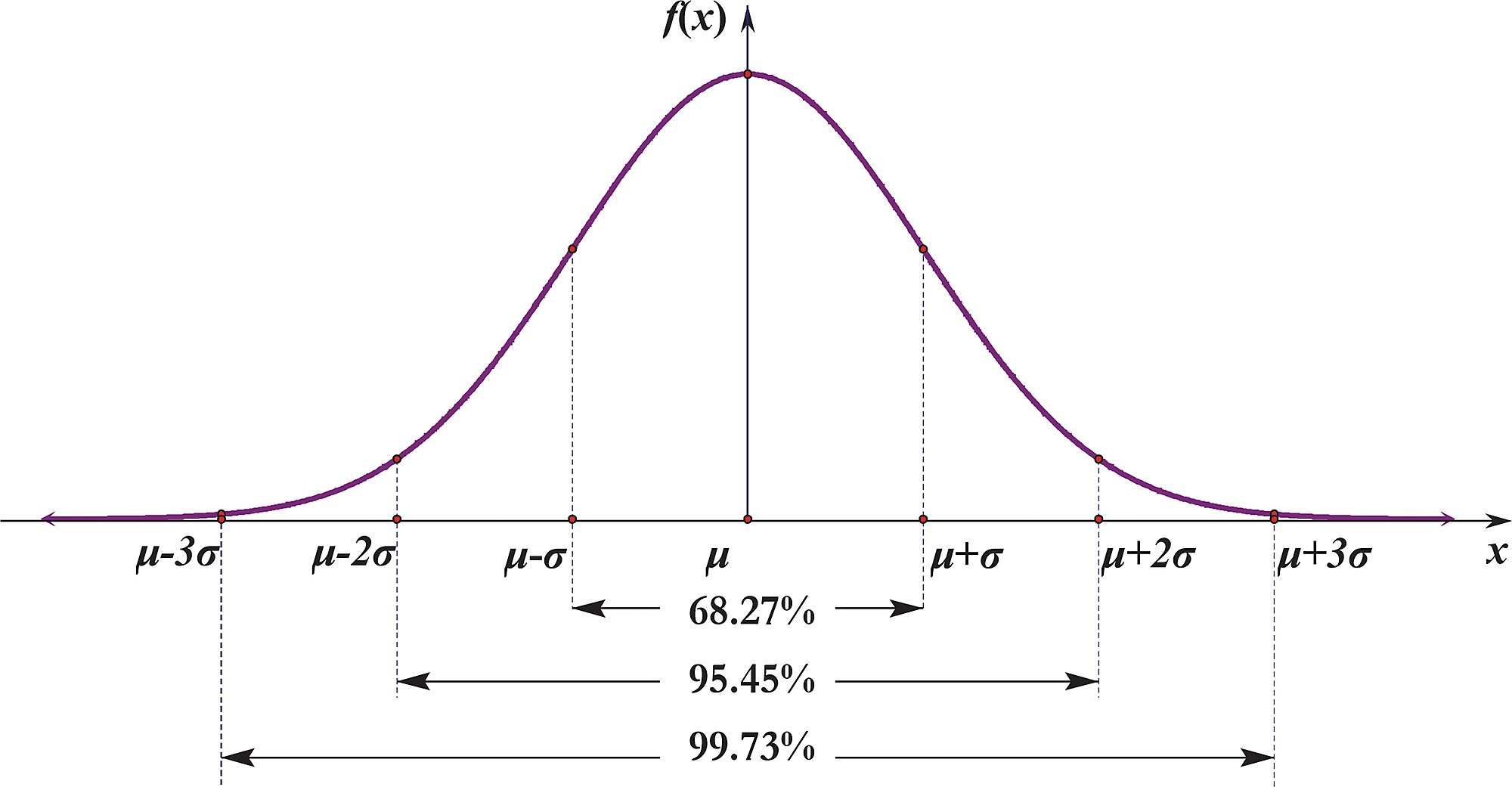
- The mean for the IQ tests (Weschler and Binet) is 100
- 68% are 85 to 115, 95% are 70 to 130
Reliability
- Ability to get consistency in testing results
- Split-half
* Random halves should look the same when visualized into data - Test-retest
* Similar groups get similar scores/score distributions
Validity
- Content validity
* Is it measuring what it intends to? - Predictive validity
* See if future matches the prediction
* SAT struggles
\