Writing, 3
APA 7 Formatting
Line spacing (double space)
Insert one space after punctuation
1 inch margins on both sides
Align to the left, the right margin remains uneven or “ragged”
Indent the first line o fevers paragraph 0.5 inch (use tab)
→ Quotations
Fewer than 40 words = short quotations
Keep the quotation within your paragraph
Include author, year and page number
Place the period after the citations when it follows the quotation
Ex. Nursing students described clinical learning as “an important opportunity to develop confidence” (Smith, 2025, p.18).
40 words or more = block quotation
Format the quotation as a separate block of text
Start a new line
Indent the entire quotation (0.5 inches from left margin)
Double space the entire quotation
Do NOT use quotation marks
Include author, year and page number
Period comes before the citations
Ex. Nursing students described their first clinical experiences as important opportunities to connect theoretical knowledge with nursing practice while developing confidence in communicating with patients and members of the healthcare team. These experiences also helped students begin to understand their developing professional role. (Smith, 2025, p.18)
References
Provide information necessary for the reachers to identify and retrieve each work cited in the text
Start on a new page with the title “References” that is bolded and centred
Double space all reference list entries with 0.5 inch indent at the first line of each
Main components are author, date and pages, title and location

→ Bibliography vs reference list
Bibliography includes sources that you read, even if you did not quote or directly use them in the work
Reference list includes everything quoted in the work, everything in the reference list has a citation within the work
Personal communications (texts, private phone calls, emails, unrecorded lectures) are cited IN-TEXT ONLY. They are not included in the reference list because the reader cannot access them
Narrative citation: E. M. Paradis (personal communication, August 8, 2019)
Parenthetical citation: (T. Nguyen, personal communications, February 24, 2020)
Last weeks review→ Nursing scholarship and evidence
Evidence informed decision- making is the ongoing process that incorporates evidence from research findings, clinical expertise, clinical preferences and other available sources to inform decisions that nurses make about a client
Major types of research methodologies: qualitative, quantitative, mixed methods
Research design: Experimental, quasi-experimental, descriptive, correlational, phenomenology, ethnography, grounded theory, case study, etc.
Methods: Surveys, interviews, focus groups, observations, physiological
measurements, chart review, etc.
Qualitative = phenomenology (a persons lives experience), grounded theory (explores a process or interaction, uses data to develop an explanatory theory)), ethnography (explores culture, shares practices or group behaviour, after involves observations in a natural setting)
Quantitative = experimental (research introduces and intervention, participants may be randomly assigned), quasi-experimental (examines the effects of an intervention, lacks one or more features of a true experiment), non-experimental (no intervention is introduces, researchers observe, describe or examine relationships)
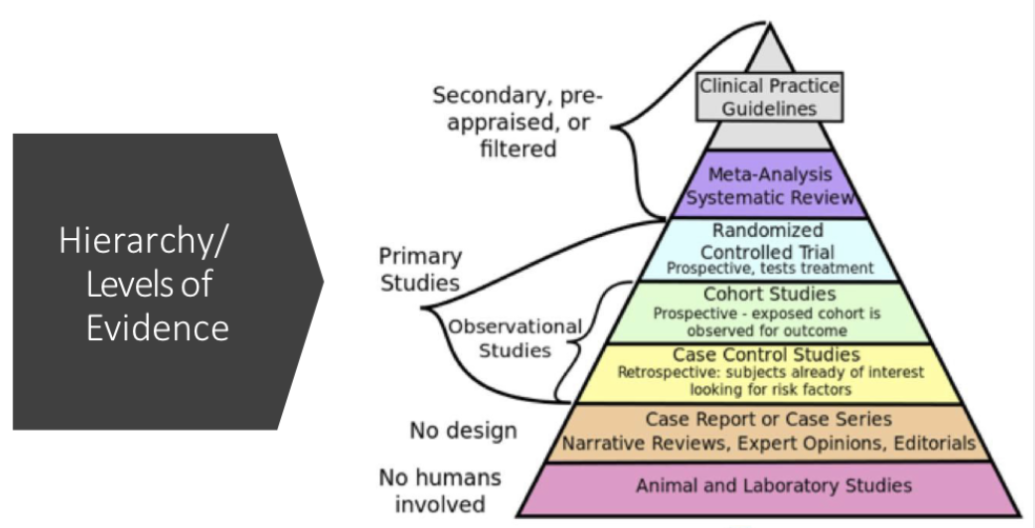
The pyramid is useful to:
Help select sources - starting at the top and working your way down to show you have considered the strength of your source
Demonstrates critical thinking - you can explore when you are writing why you chose this level of evidence
Can apply it when writing about clinical practice - explains WHY that type of study is the most appropriate
Organize your written work by highest level of evidence - gives your paper a logical flow and ability to weigh evidence
State/acknowledge limitations - discuss why you are using a lower-level study where applicable
Socratic questions can be used to unlock critical thinking
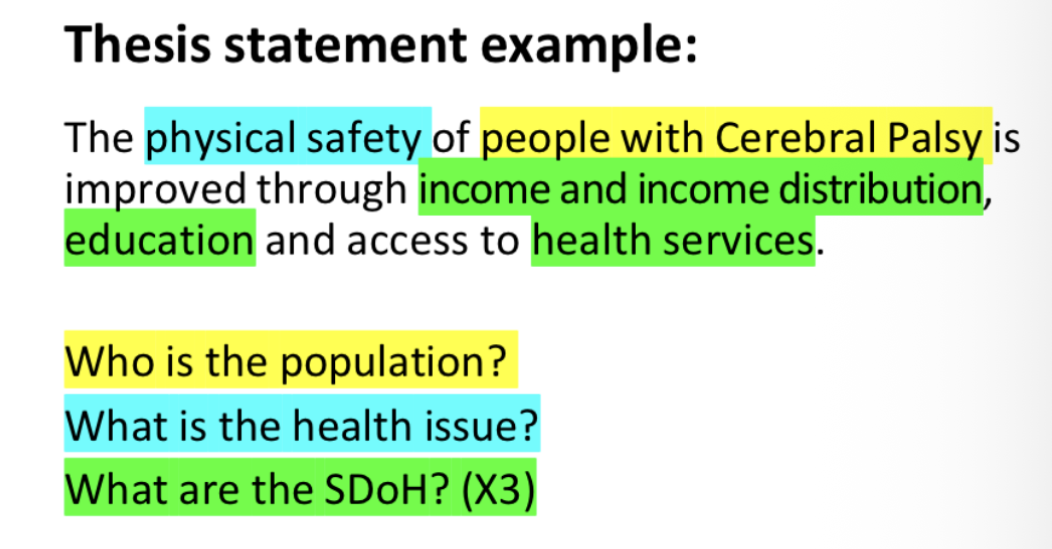
SDoH - Social Determinants of Health
Reflective writing is important because you will be writing journals during clinical placement as part of the assessments. It allows us to self-reflect and self-regulate
“Today at clinical I took care of one patient. I took their vital signs, helped them to get washed up and change their gown, helped them with their meal try at breakfast and dinner and observed their nurse give their medication.” Is not a good example of reflective writing; does not show any reflective ideas or observations nor has any meaningful content.
Important to: be vulnerable & descriptive, think critically & analyze, and choose a topic or situation that is meaningful to you
Look back
Examine experiences
Appraise & analyze
Research & revision
New perspective
Types of reflective writing:
Journaling, “free writing”- regular record of experiences, thoughts, feelings
Learning logs - reflects on educational experiences, tracks learning & identifies areas for improvement
Project diary - provides insights into decision making process and management strategies. Documents progress, challenges, learning
Curriculums Vitae (CV) or Electronic curriculum vitae (eCV) - writing effective resumes that use cohesive storytelling techniques in sentence and paragraph format
Articles
Key components: abstract (brief description of what the research did and concluded), introduction, methods (describes techniques used), results, discussion (researchers explanation of results and what they think the study means for practice and future research) and conclusion
When reading an article, use:
Currency
Relevance
Authority
Accuracy
Purpose/pov
Don’t forget about the sandwich method of writing:
Main idea, evidence, analysis, link
As the reader you must consider; is the research creditable, what are the strengths and limitations of the article?
Many journals are not peer-reviewed by experts in the same area of study, and these sources are generally not considered scholarly
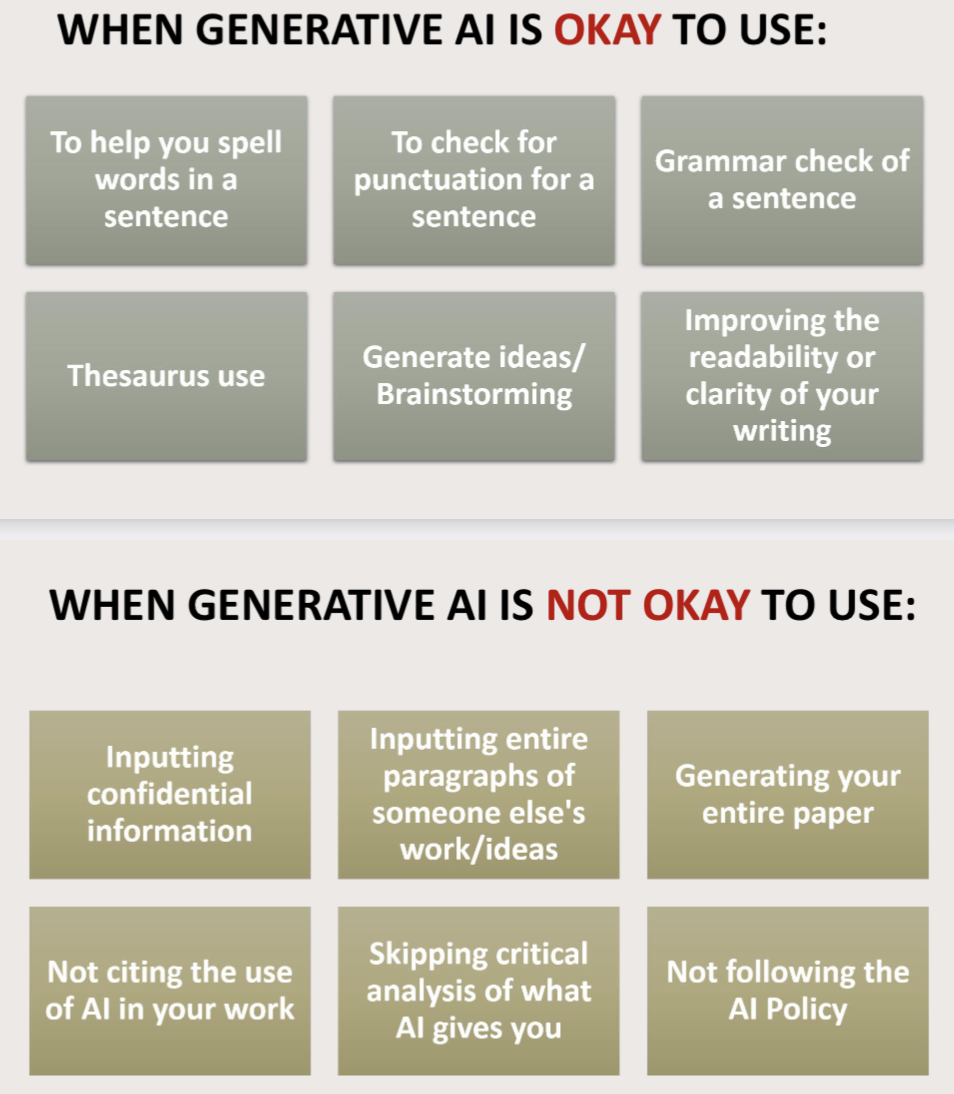
AI, if used, must be cited