Impact of inventory
Effects of purchasing and selling inventory
Assets = Liabilities + Equity
The relationship between a business’s resources (assets), its debts or obligations (liabilities), and the ownership interest in the business (equity)
Purchasing inventory
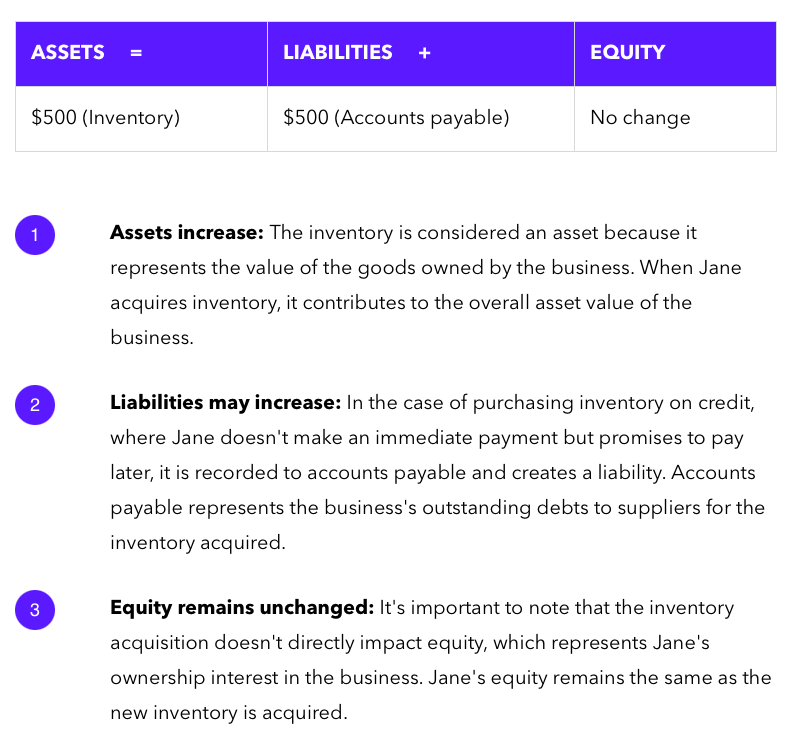
When Jane purchases $500 in inventory from suppliers on credit, it affects the accounting equation in the following manner:
 Selling inventory
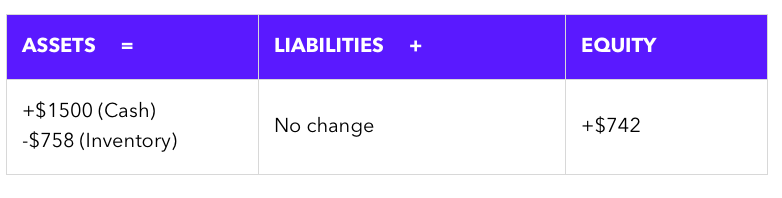
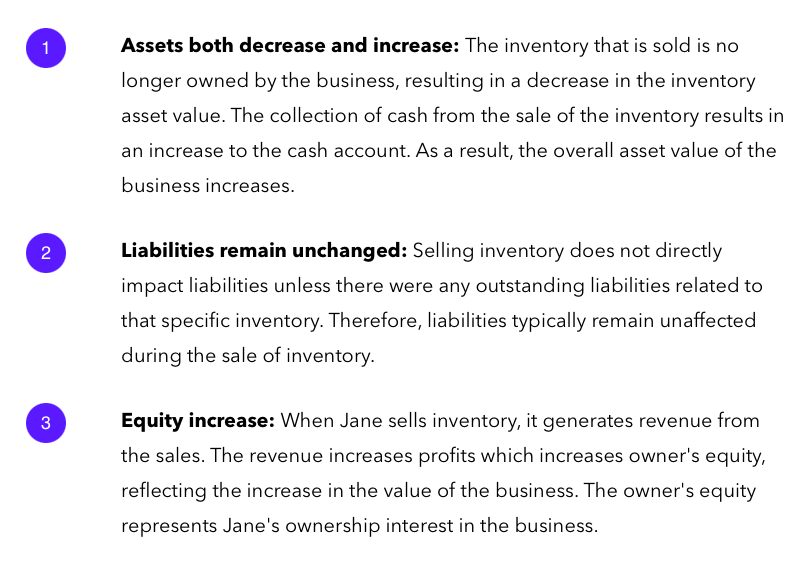
When Jane sells $758 of her inventory to customers for $1500, the following changes occur:
 COGS raw material to finished goods
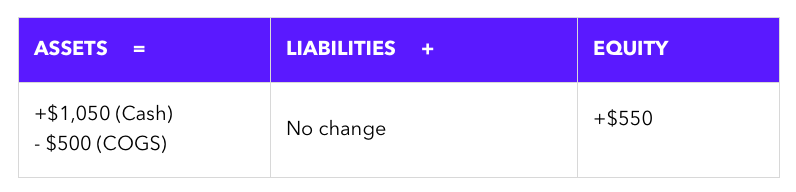
$500 of finished goods is sold and generates $1,050 in sales (finished goods). The goods are paid for with cash.
 If ending inventory is overstated
Assets are overstated
Ending inventory is an asset, but if mistakenly recorded at a higher value, it inflates the overall asset value, leading to over reporting of the business’s assets
Equity is overstated
Overstating assets affects equity directly as assets are a part of the accounting equation.
Equity is affected by net income, and COGS affects net income, so a lower COGS value results in an overstatement of equity
Liabilities remain unaffected
Inventory counting errors have no direct impact on the liabilities of the business.
Inaccurate inventory records could indirectly affect liabilities if they lead to wrong expense or payable calculations
If ending inventory is understated
Assets are understated
Since ending inventory is an asset, this decreases the overall reported asset value
Equity is understated
Similar to the effect on assets, an understatement of assets directly affects equity
With lower asset values, the equity of the business is also decreased
Liabilities remain unaffected
Inventory counting errors generally do not directly impact liabilities.
If they result in incorrect calculations of expenses or payable amounts, they could indirectly affect liabilities