Chapter 14
- Organelle genomes lead to non-Mendelian inheritance
- four-o’clocks have green or variegated leaves
- this trait is inherited from the mother (maternal inheritance), due to genes found on chloroplast genome.
- mitochondria and chloroplasts are nonnuclear organelles with their own small genomes
- Structure and function of mitochondria
- mitochondria: membrane bound cytoplasmic organelle
- many mitochondria in each eukaryotic cell
- outer membrane of mitochondria surrounds wrinkled inner membrane
- mitochondria produce energy packets (ATP) through the Krebs cycle and oxidative phosphorylation
- Human mitochondrial genome
- compact gene arrangement
- 16.5 kb genome
- 37 genes encoding tRNAs, rRNAs, and proteins for oxidative phosphorylation
- no introns
- Variation in mitochondrial genomes
- vary in size from 6-2400 kb
- some have introns and space between genes
- some have circular mtDNA (people, animals) and some have linear mtDNA (plants, fungi)
- some protozoan have a single mitochondrion (kinetoplast) with interlocking circular mtDNA
- Mitochondrial exceptions to the universal code
- mitochondrial genetic code varies in different organisms
- in humans, there are 5 differences between the universal and mitochondrial genetic codes
- UGA universal: stop; UGA mtDNA: Trp
- AGG universal: Arg; AGG mtDNA: Stop
- AGA universal: Arg; AGA mtDNA: Stop
- AUA universal: Ile; AUA mtDNA: Met
AUU universal: Ile; AUU mtDNA: Ile-elongation Met-initiation
- Structure and function of chloroplasts
- chloroplasts: membrane bound cytoplasmic organelles in plants
- in corn, each cell has 40-50 chloroplasts
- outer membrane surrounds wrinkled inner membrane
- capture solar energy and store in chemical bonds of carbohydrates
- Chloroplast genomes
- most Chloroplast genomes between 120-160 kb long
- more than one copy of Chloroplast genome in each chloroplast
- compact gene arrangements (no introns) in Chloroplast genomes
- circular, linear, and branched forms in Chloroplast genomes
- Chloroplast genomes have more genes than mitochondria
- Making transgenic chloroplast by biolistic transformation
- use gene gun: coat small metal particles (bullets) with DNA, shoot DNA bullets at cells, DNA rarely enters chloroplasts and recombines into genome
- transgenic cells identified using selectable marker
- transgenic cell cultured to produce a transplastomic plant
- Mitochondria and chloroplasts have characteristics of prokaryotic cells
- Endosymbiont theory: mitochondria and chroloplasts descended from bacteria and fused with nucleated cells
- have their own DNA, like bacteria, mtDNA and cpDNA not arranged into nucleosomes
- inhibitors of bacterial translation block mitochondrial and chloroplast translation, but not eukaryotic translation
- comparisons of rRNA gene sequences suggest mitochondrial and chloroplast genomes derive from a common ancestor of non-sulfur and cyanobacteria, respectively
- Cooperation between nuclear and organellular genomes
- mitochondria and chloroplasts require nuclear gene products to assemble and function
- cytochrome oxidase c: functions in mitochondrial electron transport; 7 subunits (3 encoded by mitochondrial genome genes, 4 by nuclear genes)
- nuclear genes encode majority of protein required for gene expression in mitochondria and chloroplasts
- Implications of gene transfer between organelles and the nucleus
- organelles must function inside the cell
- organelle genes incorporated into nuclear genome
- organelle copy of the genes becomes redundant
- changes may make it non-functional
- different organelle genes transferred to nucleus in different lineages leading to organelle diversity
- Mutations in organelle genes often produce whole-organism phenotypes
- mtDNA mutations may result in slow cell growth leading to small cell colonies or weak tissues
- cpDNA mutations may decrease chlorophyll production leading to a change in leaf color
- DNA polymorphisms can be followed by DNA sequencing
- Mechanisms leading to maternal inheritance
- Gamete size:
- female gamete may be much larger
- zygote receives many female organelles and few paternal organelles
- paternal organelles may be actively excluded or destroyed
- paternal organelles may segregate into non-embryonic cells
- fertilization may prevent organelles from entering the egg
- Inheritance of organellular genomes explains variegation in four-o’clocks
- variegated plants have green, white, and variegated branches
- the plant is variegated because it has 2 types of chloroplasts
- wild-type cpDNA genes make chlorophyll
- mutant cpDNAs have a mutation that prevents chlorophyll production
- heteroplasmic cells: mix of organelle genomes
- homoplasmic cells: one type of organelle genome
- Segregation of organelles during mitosis
- mitotic progeny of homoplasmic cells are also homoplasmic
- mitotic progeny of heteroplasmic cells can either be heteroplasmic, homoplasmic wild-type, or homoplasmic mutant
- uneven distribution of organellular genomes has distinct phenotypic consequences
- Relationship between cytoplasmic segregation and variegation
- threshold effect: a certain fraction of wild-type organelles is sufficient for the normal phenotype
- in four-o’clocks, heteroplasmic cells make enough chlorophyll to be green
- Characteristic pedigree for mitochondrial disease
- several diseases of the human nervous system are caused by mutations in the mitochondrial genome
- mutations are passed from mothers to children
- symptoms vary due to heteroplasmy
- Mitochondrial mutations may have an impact on aging
- oxidative phosphorylation system in the mitochondria generates free radicals, which can damage DNA
- accumulation of mtDNA mutations over time may result in age-related decline in oxidative phosphorylation
- evidence in support of role of mtDNA and aging:
- percentage of heart tissue with a mitochondrial deletion increases with age
- brain cells of people with Alzheimer’s diseases have abnormally low energy metabolism
- 20%-35% of mitochondria in brain cells of most AD patients have mutations in cytochrome c oxidase genes, which may explain the low energy metabolism
- Oocyte nuclear transplantation can sidestep transmission of mitochondrial disease
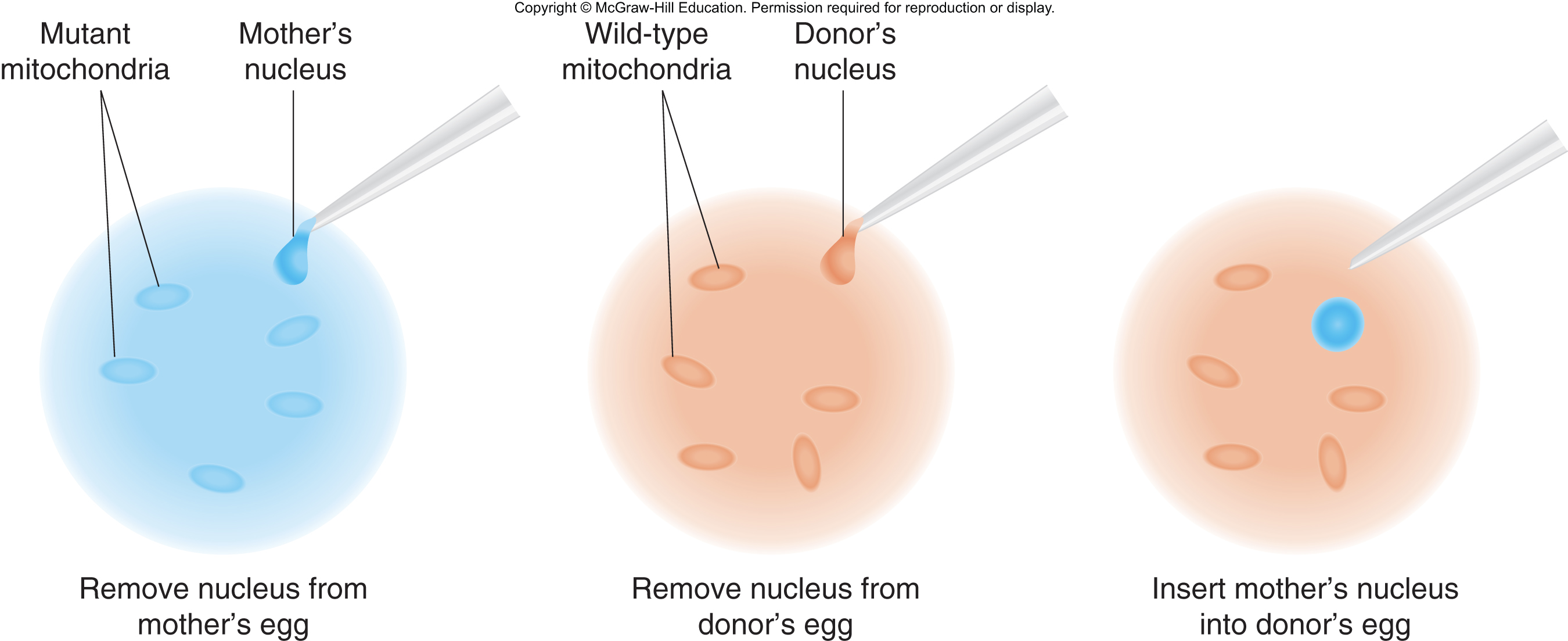
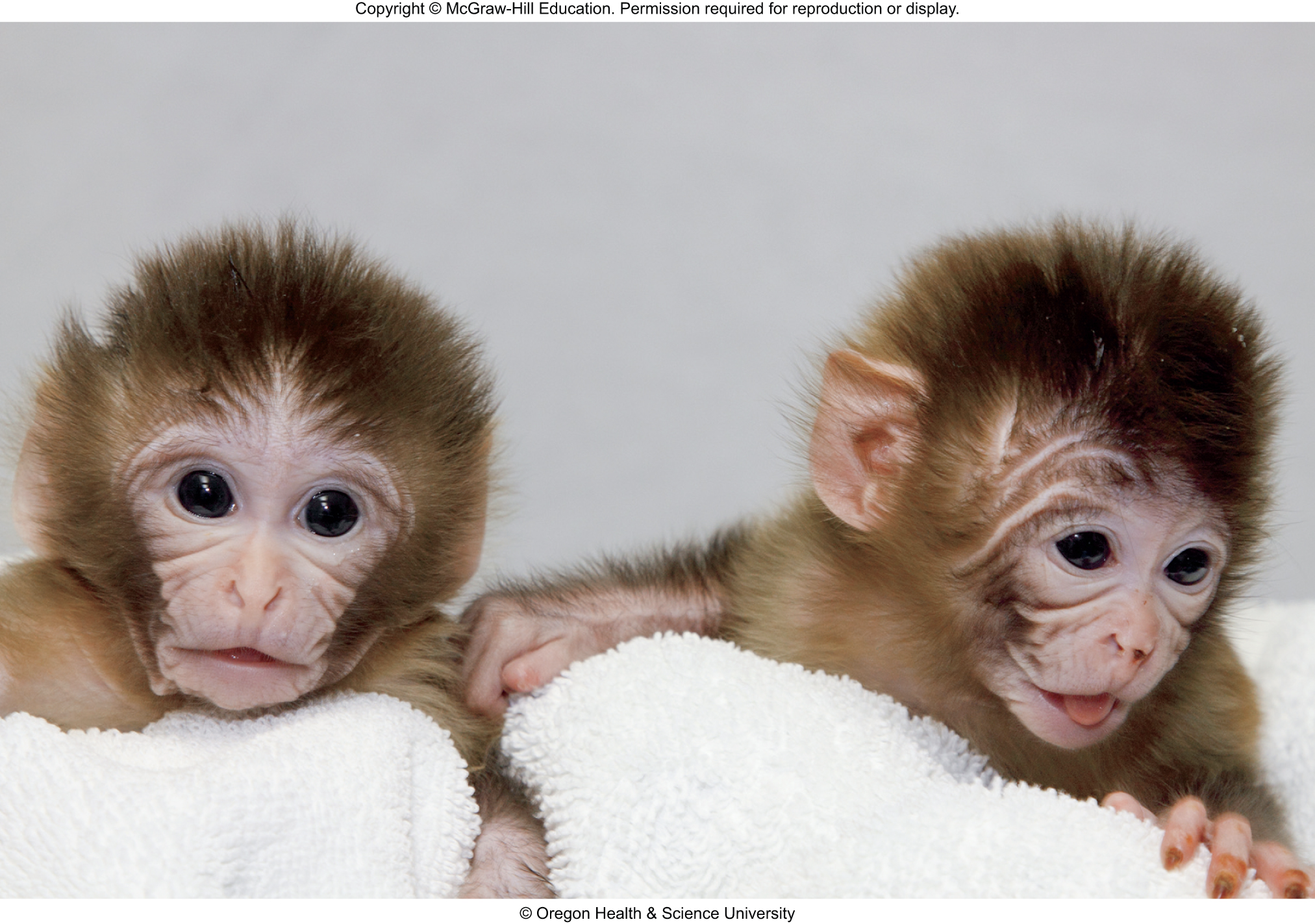
- Oocyte nuclear transfer is possible in primates