Exchange Rates
Earlier in the course, we introduced the foreign exchange (or forex) market, which allows traders to exchange different currencies. This is frequently done by travelers who are visiting other countries. If you're an American visiting Europe, for instance, you have to exchange dollars for euros. The number of euros you receive for each dollar is called the exchange rate—the rate at which one currency is exchanged for another.
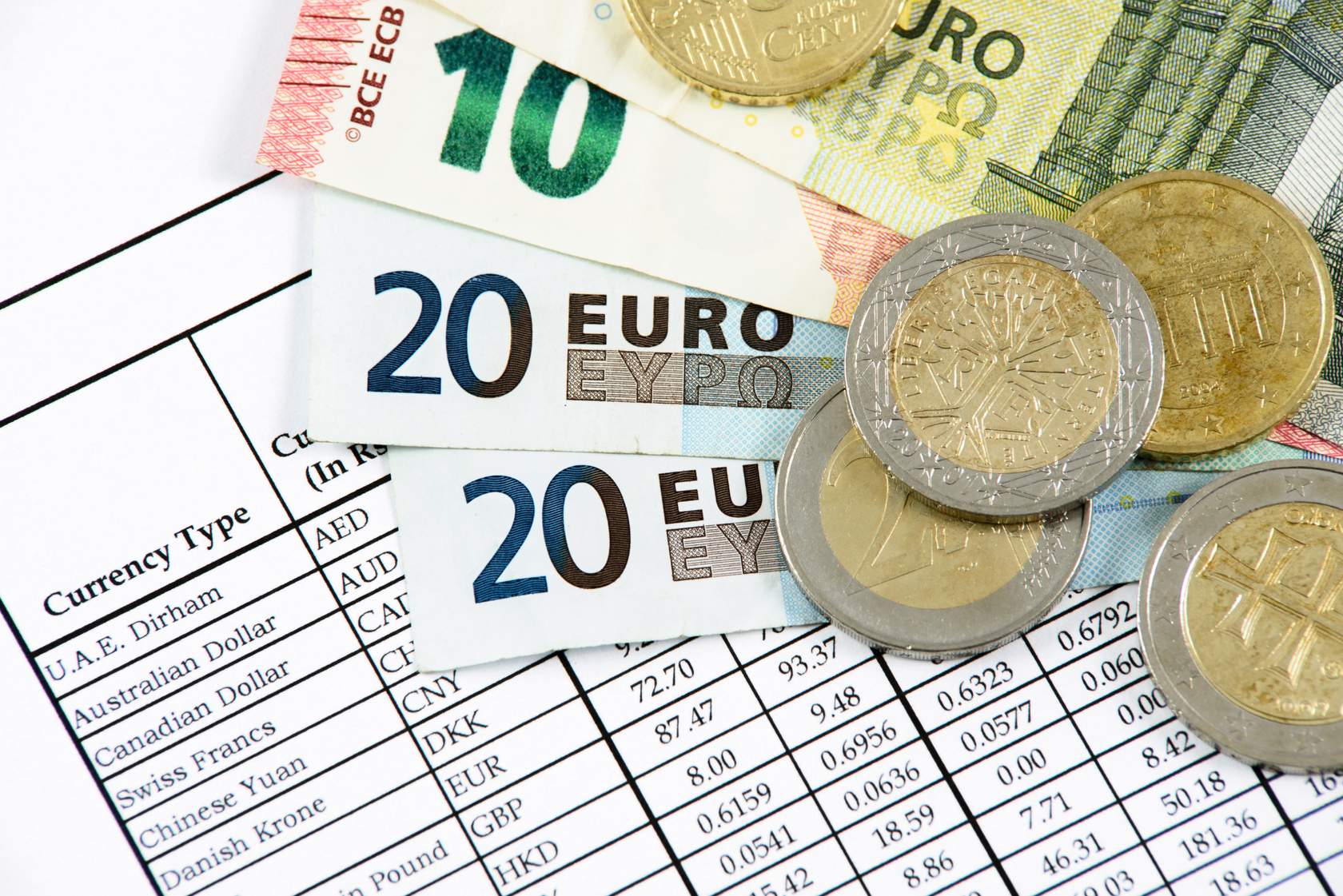
US Dollar Exchange Rates (as of 2022)1
$100 = 101 euros
$100 = 89 British pounds
$100 = 137 Canadian dollars
$100 = 1,993 Mexican pesos
$100 = 14,715 Japanese yen
Every day, the forex market averages over five trillion dollars of trading. Plus, the exchange rates are constantly changing. Today, you might get 101 euros for $100, while tomorrow you'll only get 99. How is this exchange rate decided? Ultimately, traders on the foreign exchange market decide through the forces of supply and demand, but there are two primary methods for determining the value of a specific currency: fixed exchange rates and floating exchange rates.
Fixed vs. Floating

Fixed

Floating
There are two ways that countries can control the value of their currency. One is by employing a fixed exchange rate, in which the value of a currency is set at a specific value relative to another currency or some other measure of value. Throughout history, many nations fixed their currency to a set quantity of gold (this was referred to as the gold standard). Each country kept reserves of gold in vaults and issued money that was backed by the value of that gold. For example, in the United States, one ounce of gold used to be worth $35. This exchange rate was fixed and constant. Today, some nations fix their currencies against the US dollar. For instance, Saudi Arabia has fixed the value of its currency, the riyal, so that one US dollar will always be equal to 3.75 riyals.
Most countries today, however, use a floating exchange rate, in which the value of a currency is determined by the forces of supply and demand. Supply and demand affect these exchange rates in the same way they affect all the other markets we've studied. Higher demand and lower supply will raise the value of a particular currency, while lower demand and higher supply will decrease its value. A big factor in the forex market is international trade. For instance, if a lot of Americans are buying products made in Europe, then they will need euros to pay for those products. They'll have to "sell" their dollars and "buy" euros. This increases the supply of American dollars available on the foreign exchange market, which lowers the value of the dollar (a positive change in supply lowers the equilibrium price). At the same time, it increases the level of demand for euros, which increases the value of the euro (a positive change in demand increases the equilibrium price). Just like supply and demand for goods and services are always changing, supply and demand for the world's currencies are also constantly changing. This is why exchange rates can change on a daily basis. Look at the chart below to see how the exchange rate between the euro and the dollar has changed over time.
US Dollar to Euro ($100 to ___ euros)
Euros per $100
Year
Strong Dollar vs. Weak Dollar
Dollars
Euros
Pounds
If the American dollar gets stronger, that means that dollars can be exchanged for more of another currency than before. So if you can trade a dollar for more euros than you could before, that means the dollar has gotten stronger. A weak dollar is the opposite of this. If a dollar gets you less of another currency than before, then the dollar has grown weaker. To put it more simply, a strong US dollar means the dollar has a higher value, while a weak US dollar means the dollar has a lower value. In the chart above, the US dollar was strongest compared to the euro in 2022, when you could've traded $100 for 101 euros. The dollar was weakest in 2014, when you would've only gotten 73 euros for $100.
A strong dollar sounds like it would be a good thing for all Americans, while a weak dollar sounds like a bad thing. On the whole, that is likely true, but (like with most things we've studied in this course) not everyone in the economy is affected in the same way. Indeed, some Americans are hurt by a strong dollar and helped by a weak dollar. In general, a strong dollar helps importers and hurts exporters, while a weak dollar helps exporters and hurts importers.
A strong dollar helps Americans traveling abroad or buying imports because it makes foreign goods and services less expensive. If you can trade one dollar for two euros, you'll be able to buy a lot more than if you had to trade one dollar for one euro.
Conversely, a strong dollar hurts Americans who sell exports to other nations because those goods will be more expensive. Let's say you make chairs that you have to sell for $200 to make a profit. If the exchange rate between dollars and euros is one to one, then you can sell your chairs in Europe for 200 euros (because $200 equals 200 euros). That's great! Plenty of Europeans will be willing to buy your chairs at that price. But, if the dollar becomes stronger and the exchange rate changes to one dollar to two euros, then you'll have to charge 400 euros for your chairs (because $200 now equals 400 euros). At that price, you'll likely lose most of your European customers.
A weak dollar, in contrast, helps Americans who sell exports to consumers in other nations because those goods become cheaper to foreigners. In our chair company scenario, what would happen if the dollar weakened and the exchange rate changed so that two dollars could be traded for one euro? It would mean your $200 chairs would now only cost 100 euros (because $200 now equals 100 euros). This would make them a bargain for European shoppers, and your sales would skyrocket. On the downside, a weak dollar would hurt Americans traveling abroad or buying imports because it makes everything more expensive.
Review of Key Terms
exchange rate: the rate at which one currency is exchanged for another
fixed exchange rate: when the value of a currency is set at a specific value relative to another currency or some other measure of value
floating exchange rate: when the value of a currency is determined by the forces of supply and demand
strong dollar: when the US dollar has a high value relative to other currencies
weak dollar: when the US dollar has a low value relative to other currencies
Exchange rates are a key part of international trade. If a nation's currency becomes devalued or weak compared to other currencies, it makes it difficult for that nation to conduct international trade.