bacteria
archaebacteria vs eubacteria
| archaebacteria | eubacteria |
|---|---|
| unicellular | unicellular |
| autotroph/heterotroph | autotroph/heterotroph |
| extreme environments | common environments |
| first organisms on earth | most numerous species |
| cell wall w/o peptidoglycan | cell wall w/ peptidoglycan |
| ex: thermophiles, halophiles, methanogens, acidophiles | ex: streptococcus, e.coli, salmonella, staphylococcus |
| motile & non-motile | motile (flagella & spinning) & non-motile |
divisions of archaebacteria:
methanogens - make methane
- live in low oxygen habitats: ice, earth’s crust, desert sand, hot springs, hydrothermal vents, swamps, and cow’s guts
halophiles - live bodies of concentrated salt
- ex: dead sea, great salt lake
thermophiles - live in extremely hot and acidic environments
- ex: sulfur springs & geysers
extremophiles: live in environments resembling earl yearth
visual differences
- shapes: coccus (circular), bacillus (rods), spirillum (spirals)
- growth in nutrients
- preference for # oxygen in environments
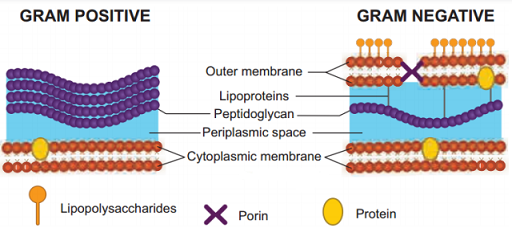
- gram positive (thicker cell wall) vs gram negative (thinner cell wall) bacteria
| gram positive | gram negative |
|---|---|
| inner most plasma membrane | inner most plasma membrane |
| thick peptidoglycan cell wall | thin peptidoglycan cell wall |
| another plasma cell membrane | |
| outer capsule | outer capsule |
| better treated w/ antibiotics | not well treated w/ antibiotics |
| stains purple after gram stain | stains red/pink after gram stain |
reproduction
- bacteria divides every 20 minutes
binary fission (asexual)
cell divides in half
- provides 2 identical daughter cells
- clones
conjugation (sexual reproduction)
- cells exchange genetic material
- done by connecting together by a bridge (pili)
- conjugation increases genetic diversity
importance
decomposers - break down organic compounds into simpler molecules
- used in water treatment plants
nitrogen fixation - bacteria converts nitrogen gas into ammonia
- ammonia is the main ingredient of fertilizer
- only source of nitrogen plants that can be used to make proteins
food products - bacteria carry on fermentation
- use sugar as energy
- produce lactic acid waste
ex: yogurt, pickles, sour cream, kimchi
oxygen production - cyanobacteria photosynthesis produce half of the world’s oxygen
bacterial diseases
causes
- damage the cells & tissues of host
- use cells for food
- release toxins that travel through body
- disrupt normal activities
prevention
vaccines: expose body to weakened bacteria
- body learns to make antibodies before real bacteria attack
curing
antibiotics: compounds that kill bacteria/prevent reproduction
controlling bacterial growth
disinfectants: chemical solutions that kill pathogens
- lysol, soap, alcohol, iodine
pasteurization (sterilization by heat): most bacteria die at high temperatures
- cooking food kills bacteria
refrigeration: low temperatures prevent bacteria from reproducing
- enzymes of bacteria are affected by temperature
- bacteria cannot grow/reproduce at low temperatures