structure of the liver
the liver produces urea, it contains three main blood vessels:
Hepatic Artery - oxygenated blood is carried to the liver via aorta
Hepatic Vein - deoxygenated blood is carried away from the liver, returns to vena cava
Hepatic Portal Vein - carries blood from the intestines and other parts of the digestive system to the liver
blood carried in the hepatic portal vein is rich in the products of digestion - e.g amino acids which take part in metabolic reactions in the liver
liver cells are called hepatocytes - they have large nucleus and prominent golgi apparatus because they synthesise and secrete a range of molecules
hepatocytes form cavities called sinusoids
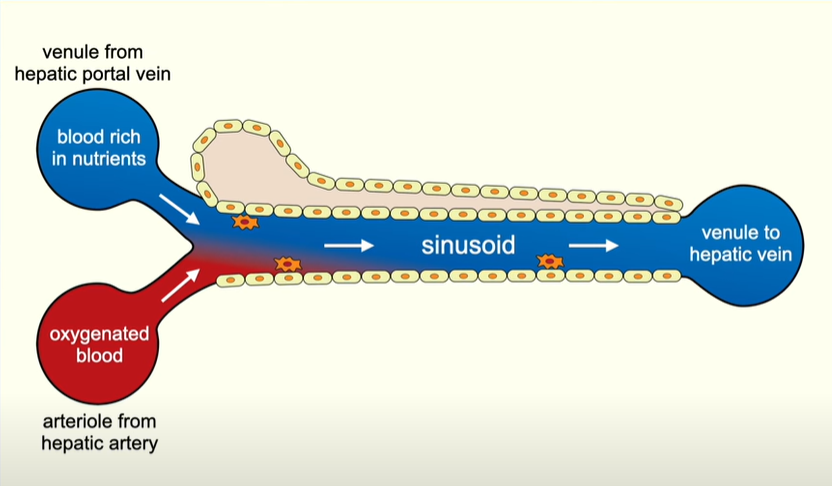
blood enters the sinusoid via an arteriole from the hepatic artery, this blood is very rich in oxygen
blook also enters the sinusoid via a venule from the hepatic portal vein, this blood is rich in nutrients from the digestive system
→ the blood from these two blood vessels mixes in the sinusoid
the blood goes through the sinusoid and leaves via a venule leading to the hepatic vein
as the blood makes its way down the sinusoid oxygen diffuses from the blood to the hepatocytes
other products such as amino acids and proteins also pass into the hepatocytes and the make urea
the urea diffuses from the hepatocytes into the blood in the sinusoid cavity
the urea is later removed when the blood passes through the kidneys
in the sinusoid Kuppfer cells are also found, these are macrophages, as the blood passes through the sinusoid the kuppfer cells ingest any foreign material
an essential role of the liver is in the formation of bile
when red blood cells reach the end of their life they are broken down and the haemoglobin is converted into other molecules - bile pigments, these are excreted in bile
bile is formed by hepatocytes
the bile is then secreted into spaces called canaliculi - it is drained from the canaliculi into bile ductules which form the bile duct
which then transfers bile to the gall bladder which stored the bile until it passes into the digestive system
bile plays an important role in speeding up the digestion of lipids