The Neoclassical Period
Neoclassicism
In 18th-century England, what was old became new. Neoclassicism was a movement in which visual artists like painters, sculptures, and architects revived the Greco-Roman stories, techniques, and images of classical antiquity. Artists throughout Europe longed for and tried to recapture the elegance and grandeur of ancient Greece and Rome.
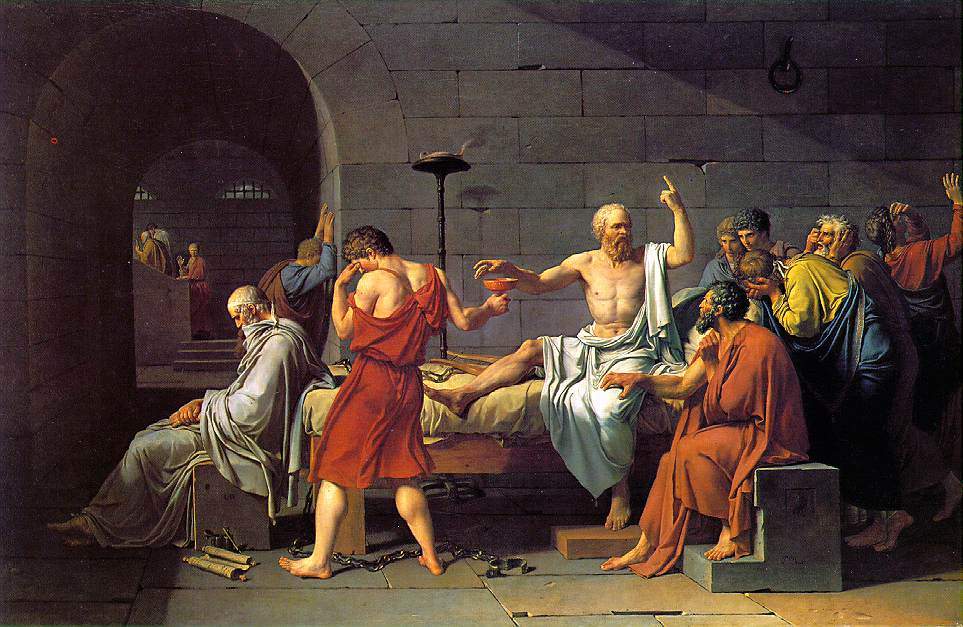
The Death of Socrates by Jacques-Louis David, 1787
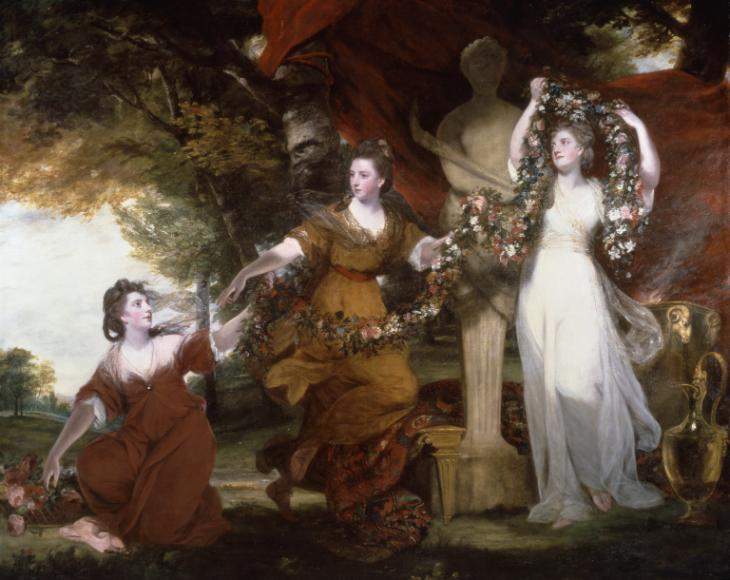
Three Ladies Adorning a Term of Hymen by Joshua Reynolds, 1773
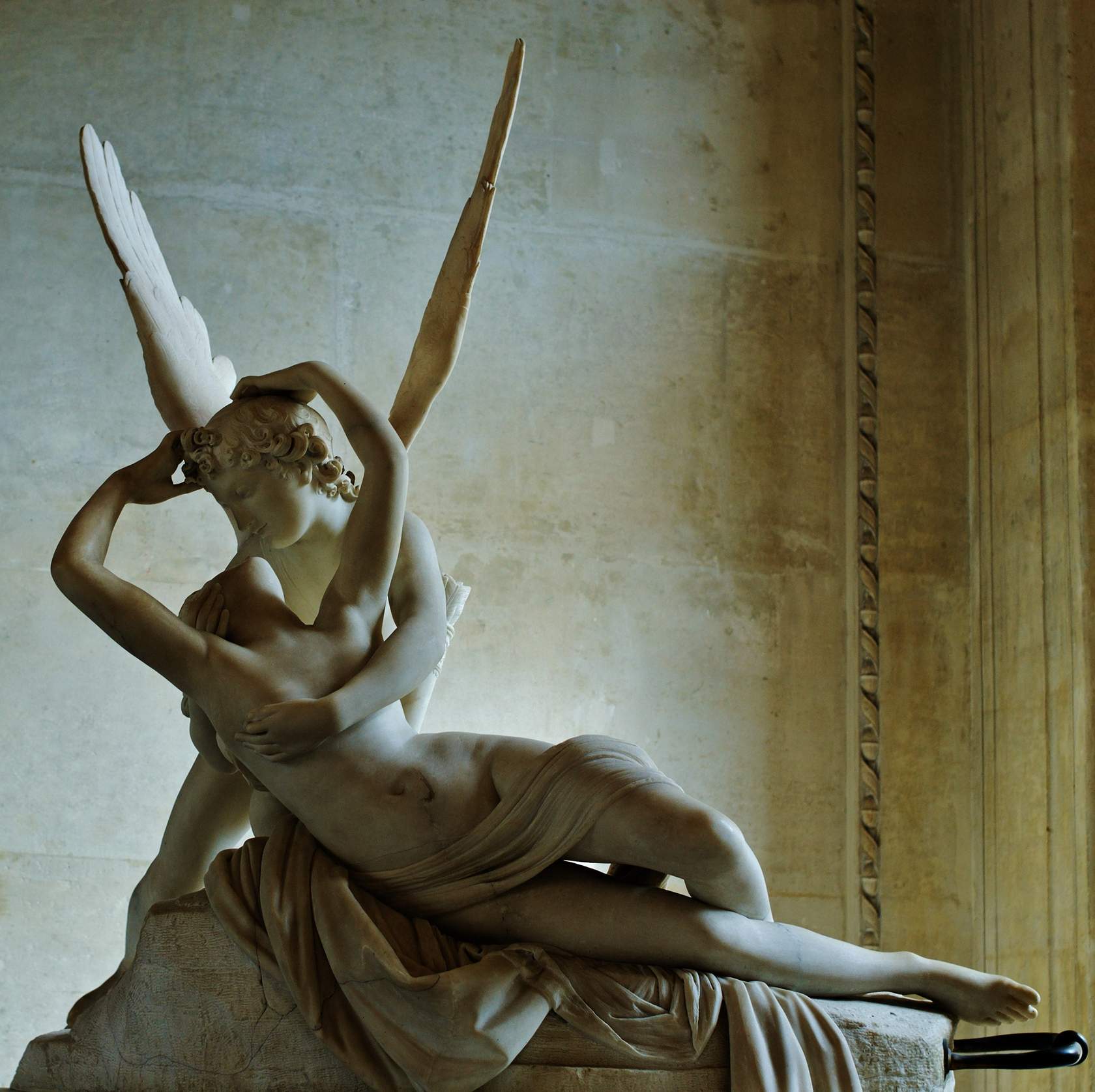
Psyche Revived by Cupid's Kiss by Antonio Canova, 1787
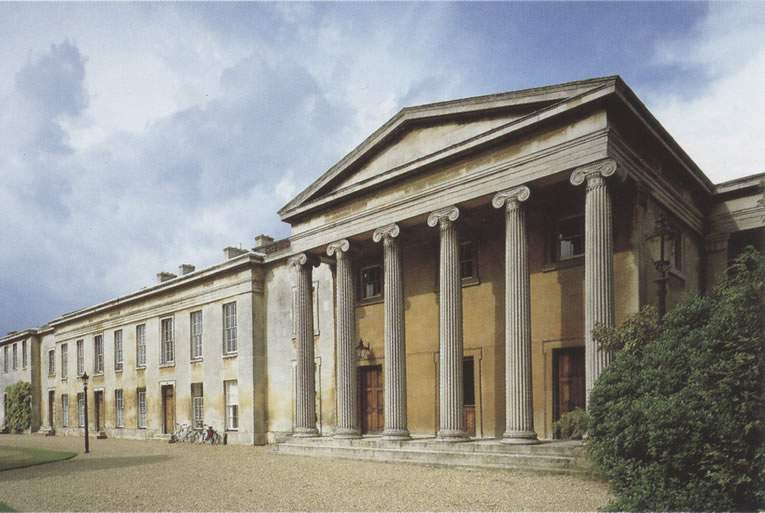
Example of imitation Greco-Roman architecture
Several things sparked this "new classicism" in Western art. First, around the middle of the 18th century, more and more Greek and Roman sites were uncovered, including Pompeii in 1748! These discoveries excited popular interest in Europe; in England, much of the Georgian architecture, fashion, literature, and music took inspiration from the classical period.
Many influential artists and philosophers of the time proposed that in order to achieve artistic greatness, it was necessary to model the ancients, who expressed their ideals gracefully and exquisitely. In this way, neoclassical art contrasted strongly with the previous style of art, Rococo, which was highly ornamental and flashy. The scene was primed for a more refined and meaningful mode of artistic expression.
Finally, Greco-Roman images and ideals fit well with and helped spark the Age of Revolutions. Supporters of the American Revolution (1765–1783), the French Revolution (1789–1799), and the Irish Rebellion (1798) longed for the democratic/republican governments of ancient Greece and Rome.
Neoclassical Literature and Poetry
Unfortunately, there is no way to classify British literature perfectly neatly! The labels on these periods of literature reflect either their general time period or their relation to important movements (like Romanticism). With this in mind, neoclassical literature is a broad term that includes:
Restoration literature (1660–1700)
Augustan literature (1700–1750)
Pre-Romantic literature (1750–1790)
Like neoclassical art, this literature took cues from classical stories, characters, styles, and philosophies.
As we will observe, British poetry in the 18th century demonstrates the following neoclassical elements.
Classical Stories and Characters
Poems in this period are full of allusions to ancient myths and figures. Here is a reference to Homer's Odyssey in Alexander Pope's famous poem:
The Goddess with a discontented air
Seems to reject him, tho' she grants his pray'r.
A wond'rous Bag with both her hands she binds,
Like that where once Ulysses held the winds.Rape of the Lock, Canto IV
Rationalism and Didacticism
Like ancient philosophers, neoclassical writers favored mind over heart, intellect over emotion, and reason over imagination. They generally approached writing as an opportunity to teach, enlighten, or challenge rather than an opportunity to express their deepest feelings.
This may be why so much neoclassical poetry is satirical: satire requires a strong intellect, as well as a strong sense of right and wrong and a desire to correct society.
Realism
Again, neoclassical writers felt their responsibility was to portray the world around them accurately. Unlike some Renaissance writers and Romantics, they tended not to view the world through rose-colored lenses.
Classical Form and Style
Neoclassical poets usually adhered to the strict rules of classical form and style. This includes everything from rhyme scheme to syntax to tone to genre. Alexander Pope, in particular, loved to play with classical genres, penning many "mock" epics and pastoral poems.