week 2- market segmentation to make effective marketing decisions
customer profile:
tells you everything about the ppl you wnat on ur custumer lift. they are all importnat bcs you wnat to know who your marketing ur product to and who ur customers are
market segmentation:
demographical
geographic
behavioural
pyschographic
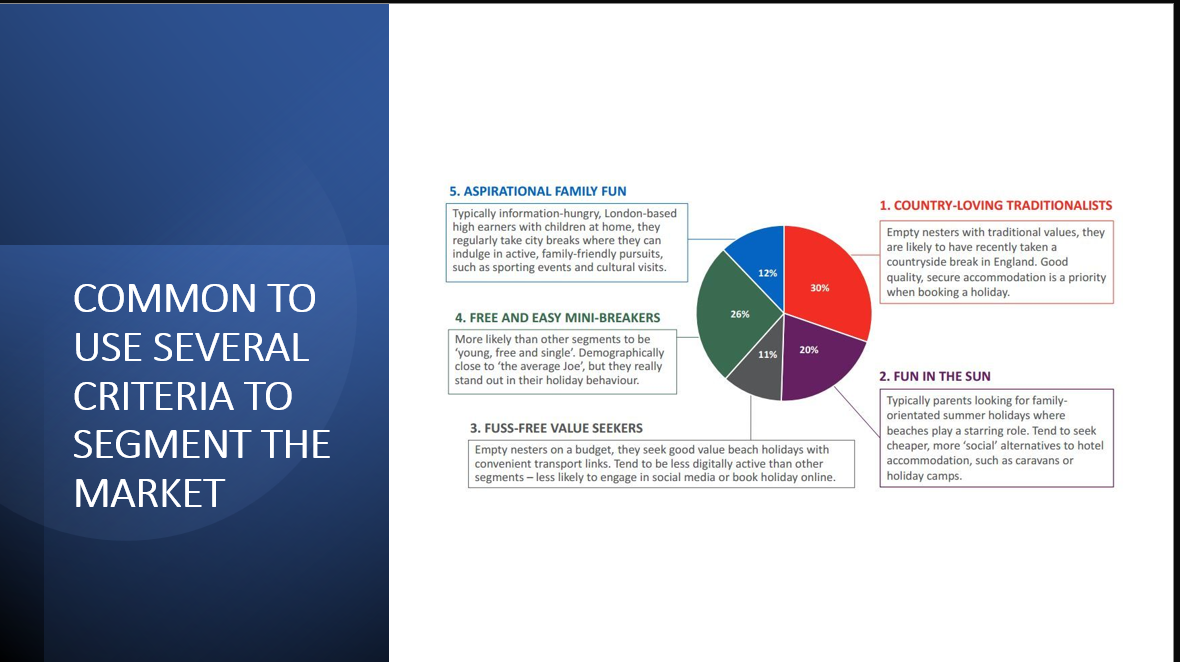
Segmentation can be achieved using one or more criteria
splits the whole market into sub groups more similar characteristics
segmentation by lifecycle stage:
e.g single: living away from parents- travel summer
single income no kids- travel anytime
double income, no kids- travel anytime
full nest- youngest child- travel anytime
full nest- two younger children- can travel on holidays, e.g. half term
full nest three dependent children- can travel anytime
Solitary survivor 1- older working single- they will want to travel on non-busy destinations, may be on a budget bcs of less budget
empty nest- older working couple, no dependent kids- they can go whenever, kids are out of the house
You have to be able to tailor to all these family situations
Socio-economic profile:
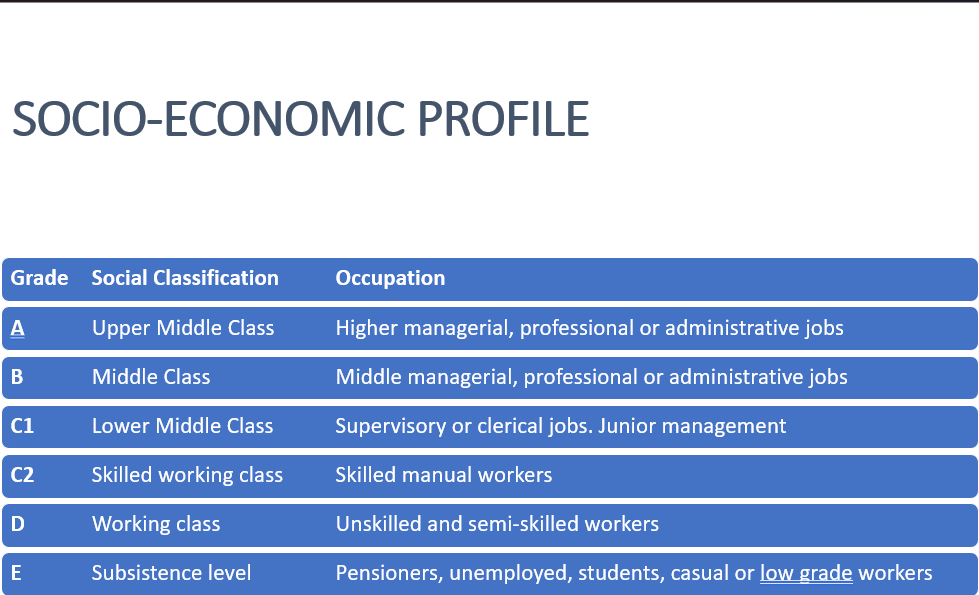
white collar workers- higher class
blue collar workers- lower workers
behavioural characteristics:
first time or repeat customer
channel prferrence, are you booking through the website, coming in, or on the phone?
party size
frequency of booking
value of sale
lead time for booking
Psychographic characteristics:
values
beliefs
attitudes
interests
lifestyles
personality traits
Segments must be…
measurable in terms of size, purchasing power, and characteristics
accessible through distribution/ promotion
substantial enough to be worth targeting
differentiable in terms of how they respond to marketing programmes
actionable by the organisation within the limits of its budget and resources
Segmentation theory to include in assessment:
reic 2016
using segmentation in the marketing mix (STP)
segmentation- dividing a total market into groups with relatively similar characteristics
targeting - tailoring marketing to the needs of specific clusters or segments
positioning-- designing marketing mix to create an image among the target market relative to competitors
Consumer behaviour: B2C- Business to consumer:
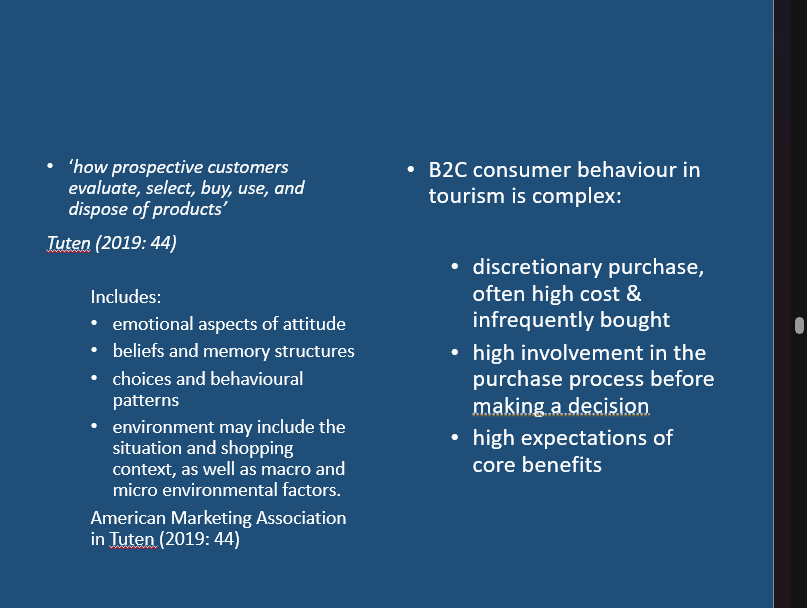
When looking for a holiday ppl expect:
tranqulity
You want to feel authentic
having a good overall high expectation
ppl want their money’s worst
The classic consumer decision-making process: (Tuten 2019)
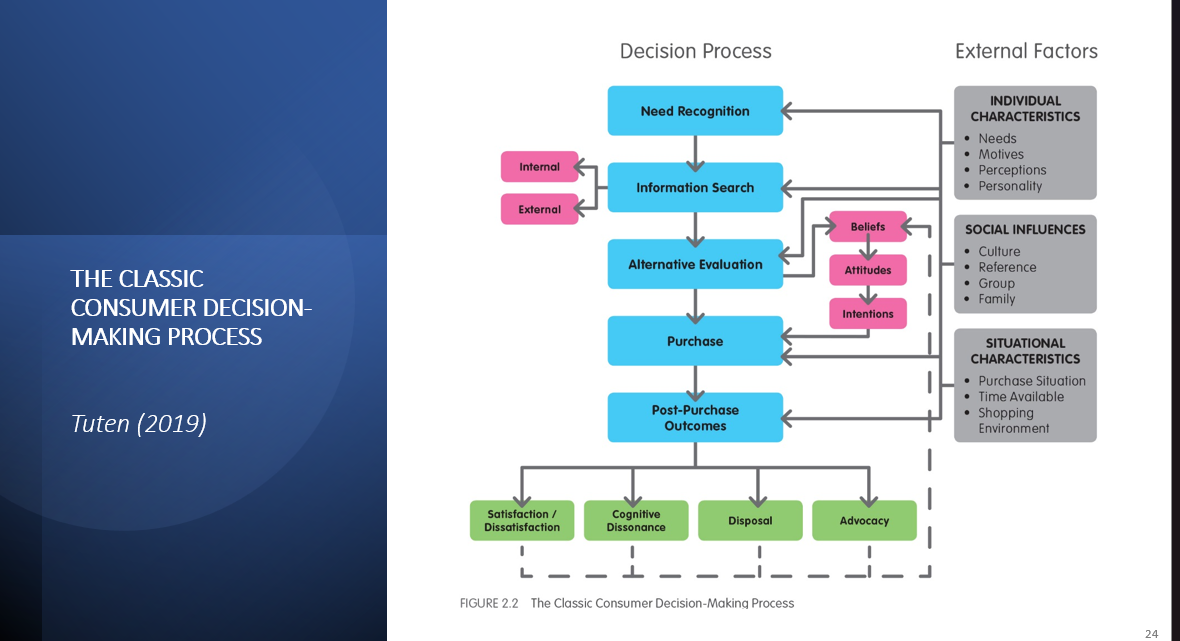
advocacy- talking about it positively, e.g. social media, you posting about ur hotel is advocating the place you went to influence others
The marketing funnel: Tuten (2019)
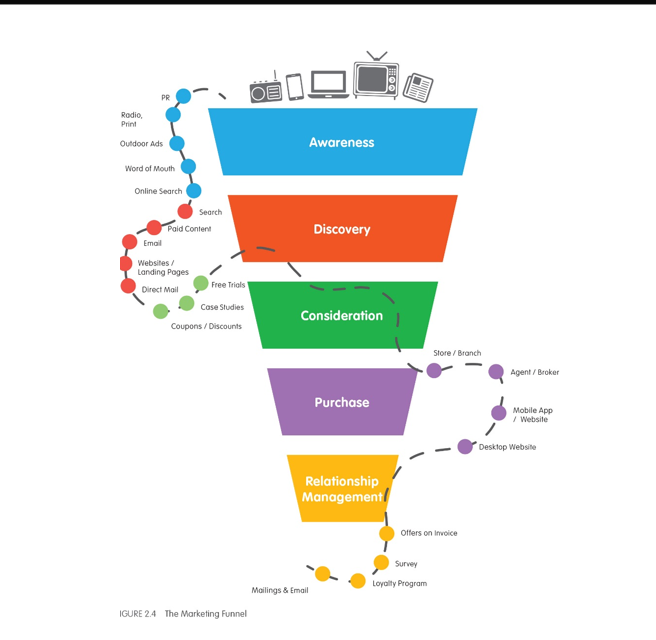
AWARNESS- make the consumer aware, you are advertising on their phone, keep popping up into their mind
DISCOVERY- you would want to get the consumer to sign up for their email and their information, so you can keep on getting their attention
CONSIDERATION- coupons/ discounts
PURCHASE- mobile app, make it easier for the customer, like having their bank details and names saved
RELATIONSHIP MANAGEMENT- you will want to create loyal customers, someone who
will come back, you should send offers, and surveys, like’ how did we do?’, or loyalty cards e.g., Tesco clubcard
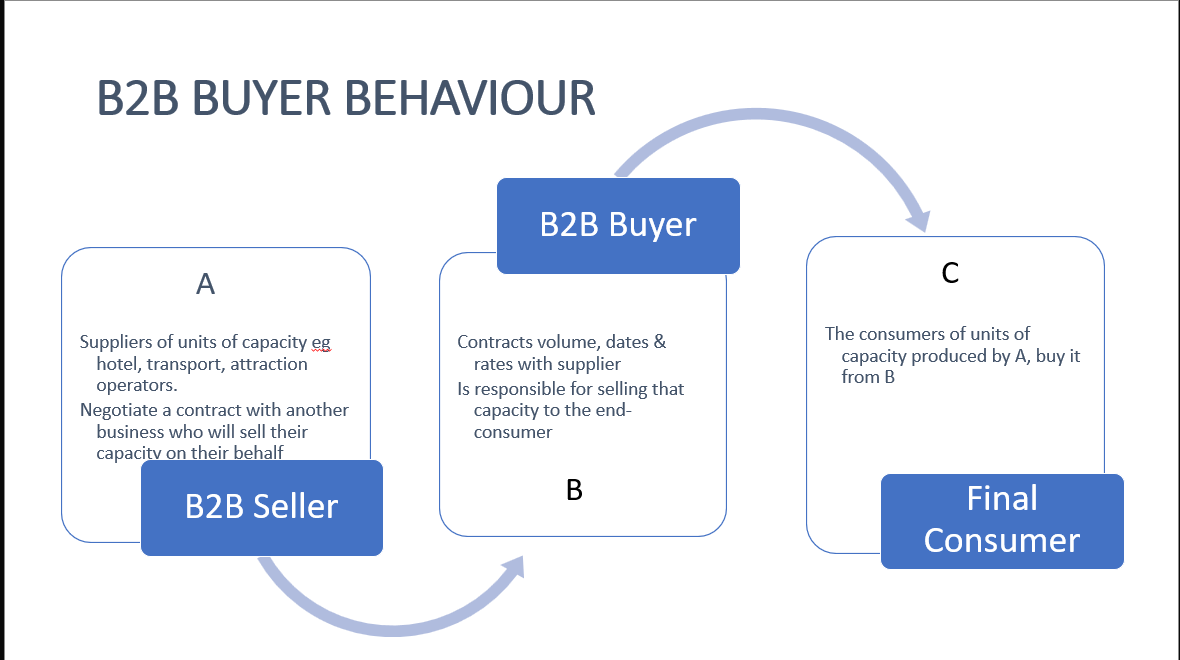
B2B Buyer Behaviour:
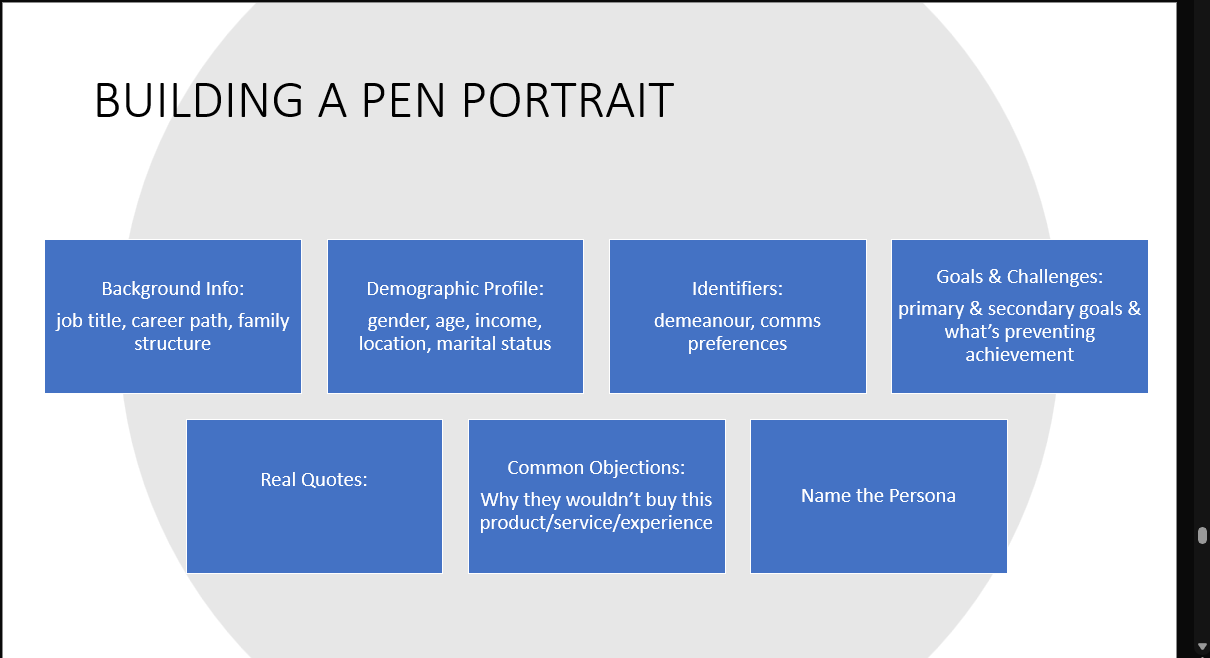
Buyer personas/ pen portraits:
a semi-fictional representation of the ideal customer with a specific segment
to determine where to focus time and resources
•inform product development, comms channels & messages, and create alignment across the organization
•Based on market research (& actual data about existing customers if appropriate)
•Including demographic data, behaviour patterns, motivations, and goals
•Communicated in a pen portrait
A pen portrait includes: