lecture 7 Baroque Architecture Notes
Overview of Baroque Architecture
Introduction
Focuses on architecture from the Middle Ages to Baroque.
Examines Reformation and Counter Reformation's influence on architecture.
Highlights first churches of the Counter Reformation, notably Il Gesu.
Analyzes key Baroque architects Bernini and Borromini.
Progression of Worldview
Diversity in the 17th Century
Transition from a unified cosmos in the Middle Ages to pluralism in the 17th century.
Renaissance inspired human freedom questioning, leading to a dynamic Baroque epoch.
Baroque age marked by movement and force in art and architecture.
Religious Context
Reformation: Initiated by Martin Luther's Ninety-five Theses (1517).
Key events: Luther’s excommunication, translating the Bible into German.
Counter Reformation: Responses to Protestant Reformation.
Council of Trent (1545-1563) led the Catholic Church to reform.
Establishment of Jesuit Order by St. Ignatius of Loyola.
Church as a Key Element
Importance of the Church
The church serves as a central urban focus in Baroque architecture.
Shift towards integrating centralized and longitudinal church plans, e.g., oval shapes.
The Role of Persuasion and Participation
Architecture serves as a means of persuasion, encouraging participation in religious life.
Baroque regarded as a theatrical space where roles are assigned to individuals.
Characteristics of Baroque Architecture
Core Features
Articulation: Key relationship between inside and outside spaces.
Action: Representing movement and energy through design.
Open and dynamic character counteracting static Renaissance principles.
Evolving Architectural Forms
Use of non-symmetrical shapes, emphasizing dramatic expression and theatricality.
Engaging manipulation of space to invite participation and provoke emotions.
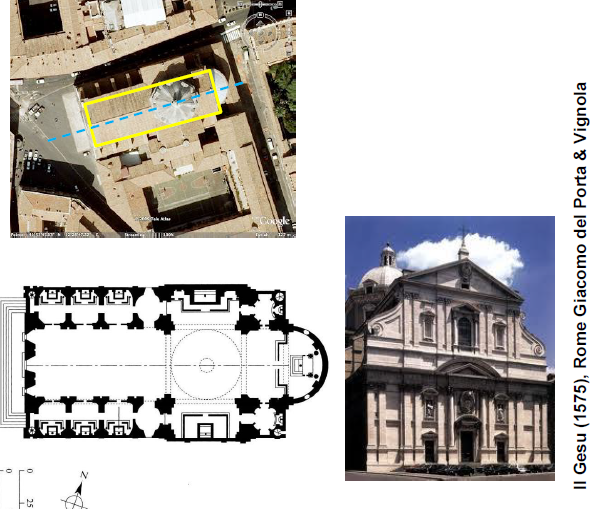
Example: Il Gesu integrates longitudinal and centralized designs, altering traditional forms.
Key Figures
Gian Lorenzo Bernini (1598-1680)
Known for dramatic public spaces, e.g., St Peter's Basilica, Piazza.
Developed a grand visual language through architecture that reinforced authority.
Francesco Borromini (1599-1667)
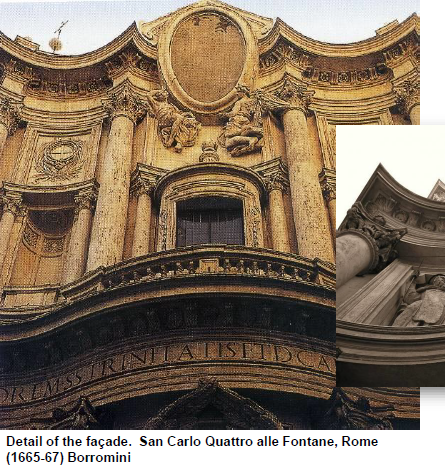
Famous for fluid façade designs in churches such as San Carlo alle Quattro Fontane.
His innovative styles break from square and circular forms.
Conclusion
Baroque architecture reflects the spiritual and socio-political atmosphere of the Counter Reformation.
The transition from historical narratives towards the architectural emphasis on persuasion and the dynamism of space allows for deeper engagement with viewers, showcasing the era’s complexity and creative inventiveness.
Introduction
Baroque architecture spans from the Middle Ages to the height of the Baroque period in the 17th and early 18th centuries. It reflects a complex interplay between artistic expression and the socio-political dynamics of its time. This period examines the profound influences of the Reformation and Counter-Reformation on architectural styles and church designs. Among the key features of Baroque architecture are the early churches associated with the Counter-Reformation, particularly the renowned Il Gesu, which became a model for numerous Catholic churches across Europe. Prominent architects of this era, such as Gian Lorenzo Bernini and Francesco Borromini, redefined the aesthetic and functional dimensions of religious architecture, merging art with spatial dynamics.
Progression of Worldview
Diversity in the 17th Century marked a significant transition from the earlier concept of a unified cosmos prevalent during the Middle Ages to a more pluralistic worldview. The ideological shifts sparked by the Renaissance inspired questions surrounding human freedom, individuality, and authority, leading to the dynamic and expressive nature of the Baroque era. This artistic movement is characterized by intense emotional experiences, movement, and a sense of grandeur that are integral in both art and architecture, fostering an environment rich in innovation and legacy.
Religious Context
The Reformation, initiated by Martin Luther's Ninety-five Theses in 1517, triggered monumental changes within the Christian church, including Luther's excommunication and pivotal moments like the translation of the Bible into German, increasing accessibility and personal interpretation of scripture. In response, the Counter-Reformation emerged as the Catholic Church sought to reaffirm its influence and address issues raised by Protestantism. Key events during this period include the Council of Trent (1545-1563), through which the Catholic Church instituted critical reforms to improve clerical education, reaffirm doctrinal positions, and respond to Protestant critiques. Additionally, the establishment of the Jesuit Order by St. Ignatius of Loyola played a significant role in the Counter-Reformation, emphasizing education and a mission to spread Catholicism further.
Church as a Key Element
In Baroque architecture, the church serves as a central urban focus and a symbol of faith, often dominating the landscape of cities. There is a notable shift towards integrating centralized and longitudinal church plans, resulting in innovative designs such as oval shapes that embody the Baroque spirit. After the conclusion of the
Council of Trent (1563) a more pronounced
negative attitude towards the centralised plan became general. The reason
The Role of Persuasion and Participation
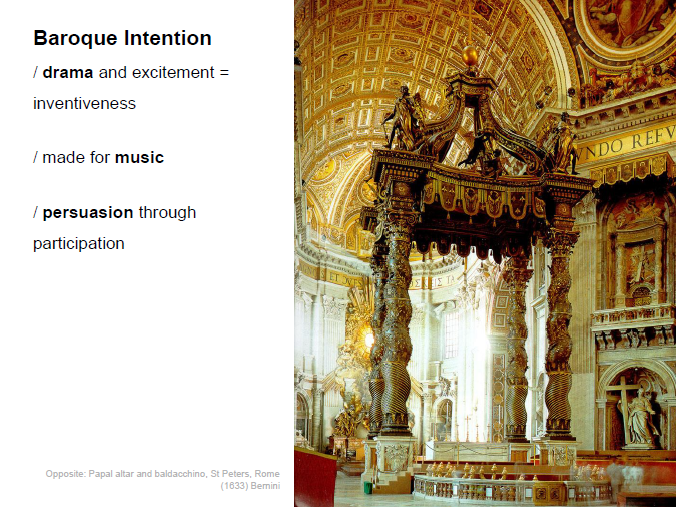
Architecture during this period is viewed as a powerful tool for persuasion, designed to foster active participation in religious life. Baroque spaces are theatrical in nature, as they assign specific roles to individuals and evoke emotional responses, drawing them into a deeper experience of worship and community. sermons in the common language and sacred music; and finally, the Absolute
monarchy used great festivals and fêtes to make the glory of the system
visible.
Characteristics of Baroque Architecture
Core Features
Articulation: A crucial relationship is crafted between indoor and outdoor spaces, enhancing the overall experience of a structure.
-The Classical Orders are of particular
importance in this connection. The Orders are the alphabet of architecture.
-rustication which was considered to represent nature itself something unformed and raw existing as a dialectical
-Place and its environment = ‘places’, ‘paths’, ‘domains’ organised to form a hierarchy focused on a dominant centre.
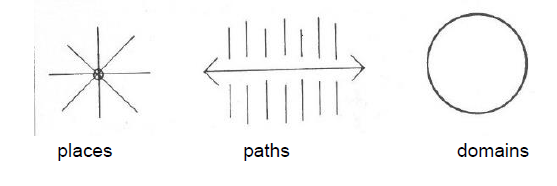
the traditionally enclosed city is opened up;
the church is organised relative to an axis which integrates it with the urban environment;
the palace becomes a centre of radiating movements.
Action: Baroque architecture is distinguished by its representation of movement, energy, and dynamism through architectural design, contrary to the static nature of prior Renaissance works.
Open and Dynamic Character: Baroque designs reflect an evolving ethos, embracing fluidity over symmetry, moving towards forms and arrangements that transgress the rigidity of classical definitions.
Evolving Architectural Forms
The use of non-symmetrical shapes in Baroque architecture emphasizes dramatic expressions that capture the theatricality of the era. Architects engaged in manipulating space in a way that invites participation and provokes emotional responses from the audience. An exemplary case is Il Gesu, which integrates both longitudinal and centralized designs and alters traditional structural forms to create a unique worship experience.
Baroque
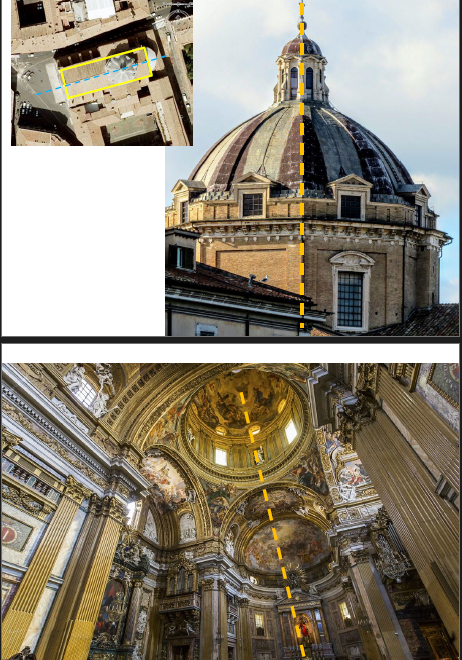
Features Present in Il Gesu
Integration of longitudinal and centralised schemes and church becomes
part of urban space = achieved through articulation of the facade with the
interior.
Centralisation two plan typologies = centralised longitudinal church (Il
Gesu ) and the elongated centralised church (St Peters + San Quattro alle
Fontane)
Space gains a (new) constitutive importance modelled according to inner
and outer forces. Baroque space relates properties such as movement,
openness and enclosure.
Key Figures
Gian Lorenzo Bernini (1598-1680)
Contributions: Renowned for designing dramatic public spaces, including the iconic St. Peter's Basilica and its expansive Piazza. Bernini's work articulates a grand visual language that reinforces the authority of the Church while engaging the public in its spiritual mission.
Francesco Borromini (1599-1667)
Contributions: Famous for his fluid facade designs, particularly in churches like San Carlo alle Quattro Fontane. Borromini's innovative style breaks away from conventional geometric forms, contributing significantly to the complexity and richness of Baroque architecture.
Conclusion
Baroque architecture serves as a reflection of the spiritual and socio-political atmosphere of the Counter-Reformation. The transition from historical narratives towards an architectural emphasis on persuasion, emotional resonance, and dynamic space allows for deeper engagement with viewers, deftly showcasing the era’s remarkable complexity and creative inventiveness.