Lecture 1 - Introduction to Macromolecules
Macromolecules
macromolecule: large molecule
four major macromolecules essential for living organisms:
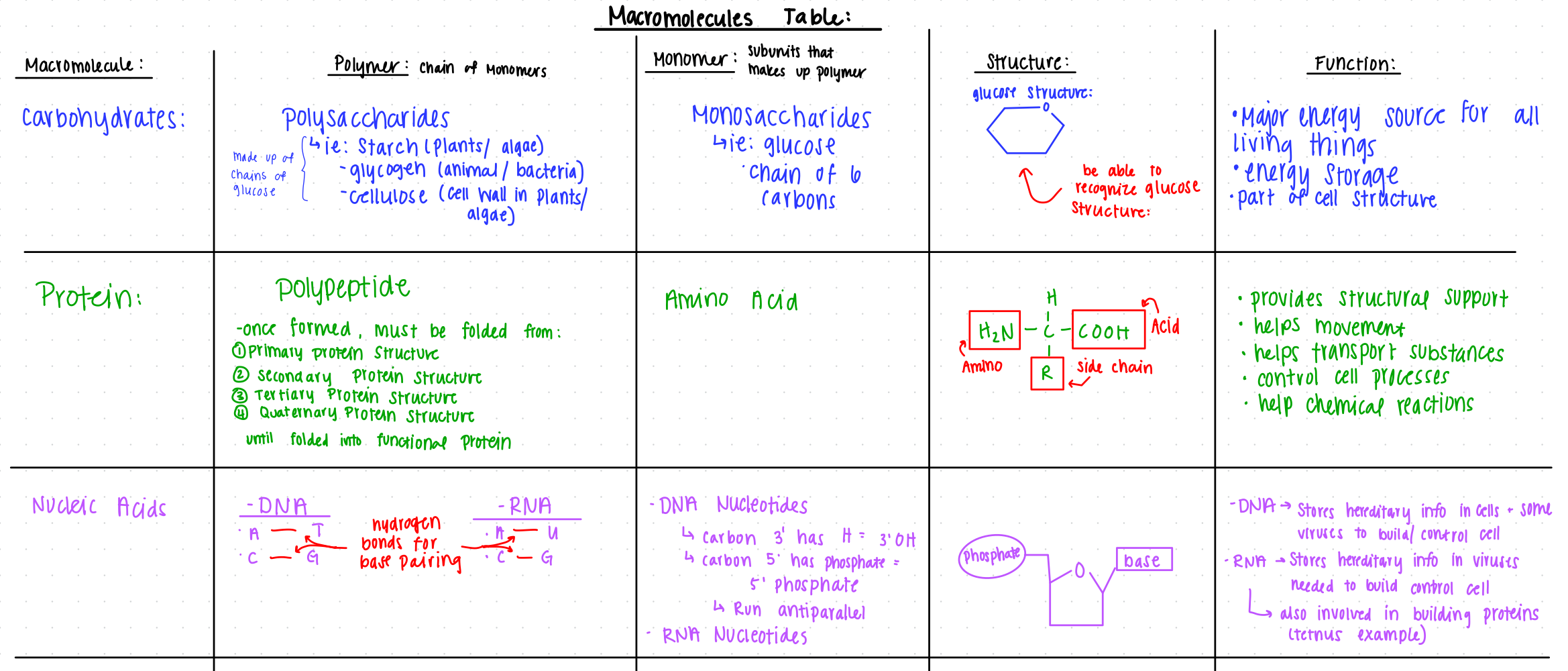
Carbohydrates
Proteins
Nucleic Acids
Lipids
Monomer: subunit that makes up a polymer
Polymer: chain of monomers
Carbohydrates
Functions of carbohydrates:
Major energy source for living organisms, including humans.
Energy storage in cells.
Structural components in cells, such as cell walls and capsules around bacteria.
Key carbohydrate involved in cellular respiration: Glucose
Glucose: Glucose is a monosaccharide and serves as a monomer for carbohydrates.
Carbohydrate Structure:
Composed of six carbon atoms attached to hydroxyl groups and hydrogens.
Can exist in a linear form or a ring structure; the ring form is more common in storage.
Common representation: a hexagon shape with an oxygen on one corner.
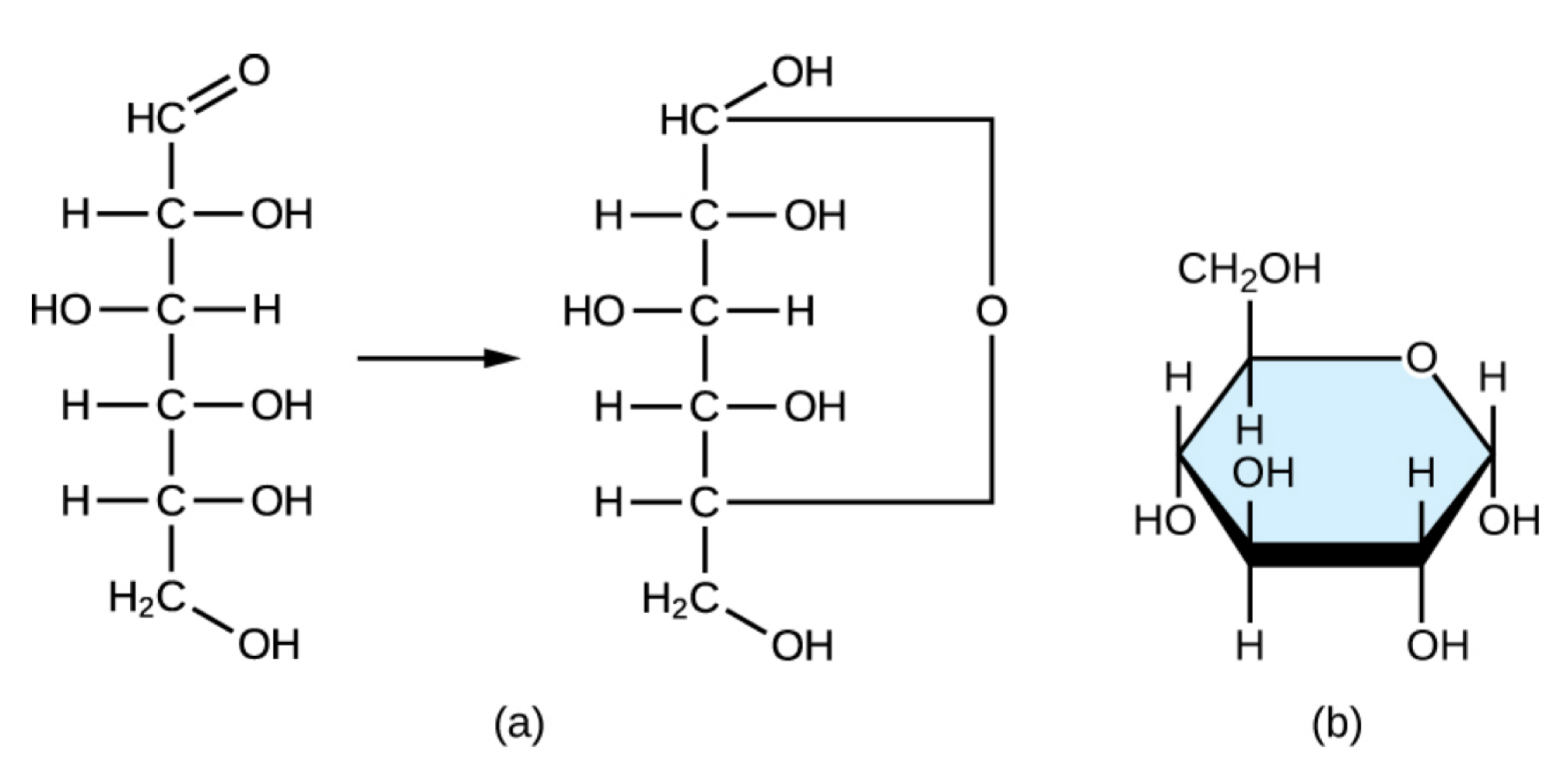
Monomer of Carbohydrates: Monosaccharide
Simplest form
example: glucose.
Polymer of Carbohydrates: Disaccharide and Polysaccharides
Polysaccharides examples:
Starch: Energy storage in plants and algae.
Glycogen: Energy storage in animals and bacteria.
Cellulose: found in plant cell walls
Dehydration and Hydration Reactions:
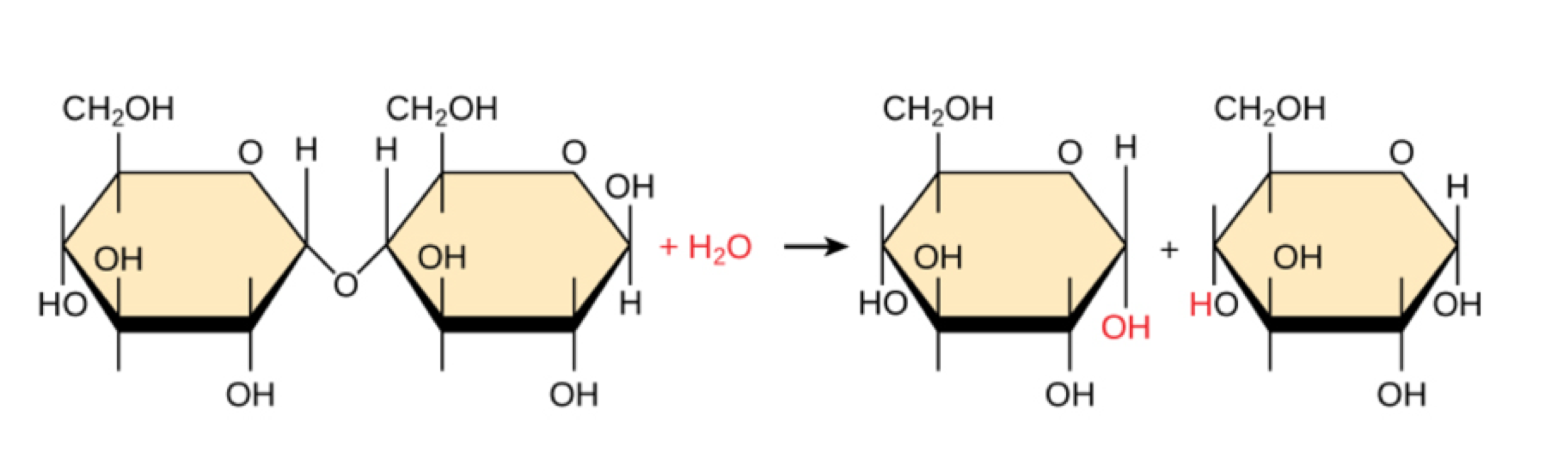
dehydration synthesis: making a polymer by removing water
also called condensation
water is being removed, molecule is dehydrated
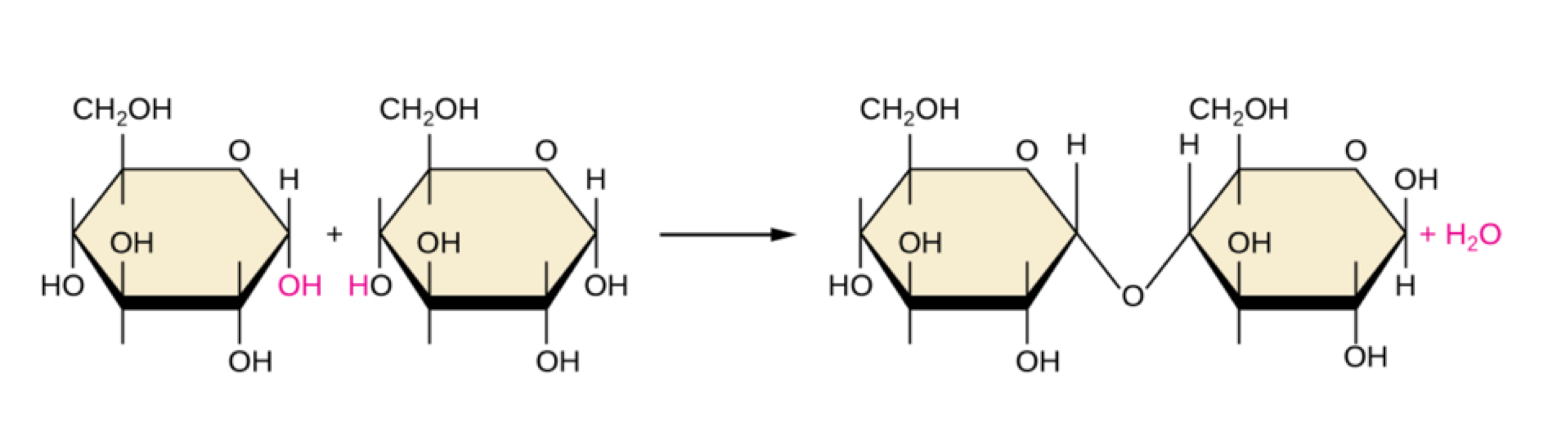
hydration synthesis: breaking a polymer by adding water
also called hydrolysis, decomposition, and degradation reaction
adding water to break a bond
Proteins
Functions of proteins:
Serve as structural components of cells.
Play a vital role in cellular mobility, help movement
Help transport substances in and out of cells
Regulate chemical reactions and processes
enzymes are proteins that speed up reactions.
Example Disease – Tetanus is a Protein
toxic protein affecting neurotransmission.
blocks human neurons that inhibits muscle contraction
leads to rigid paralysis and death
Monomer of proteins: amino acids
polymers of proteins: polypeptide
polypeptides are bonded by peptide bonds, created via dehydration synthesis.
Structure of Proteins:
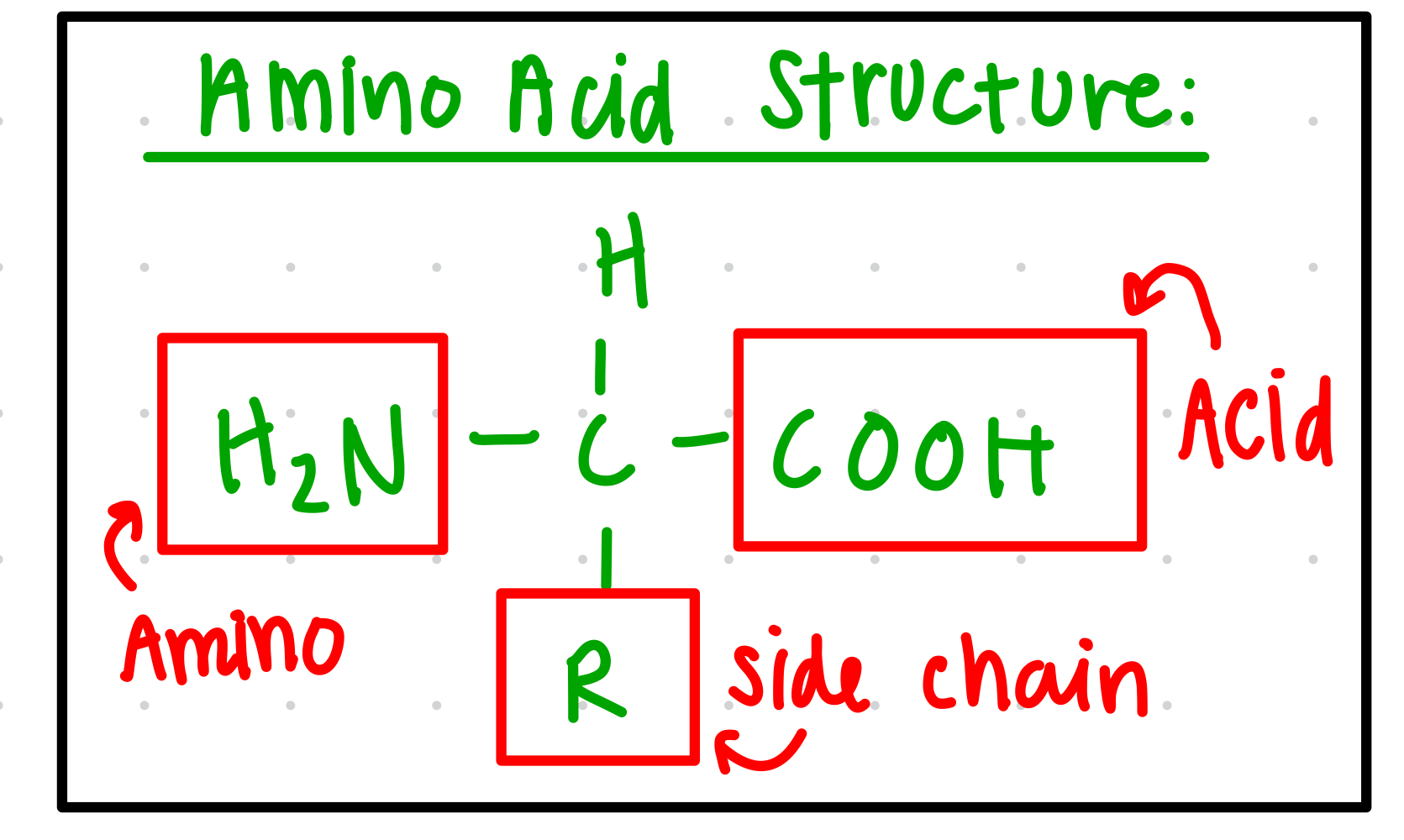
Amino group (NH2)
Carboxylic acid group (COOH)
Hydrogen atom (H)
R group (side chain): Varies among amino acids, determining their properties
Protein Folding Levels:
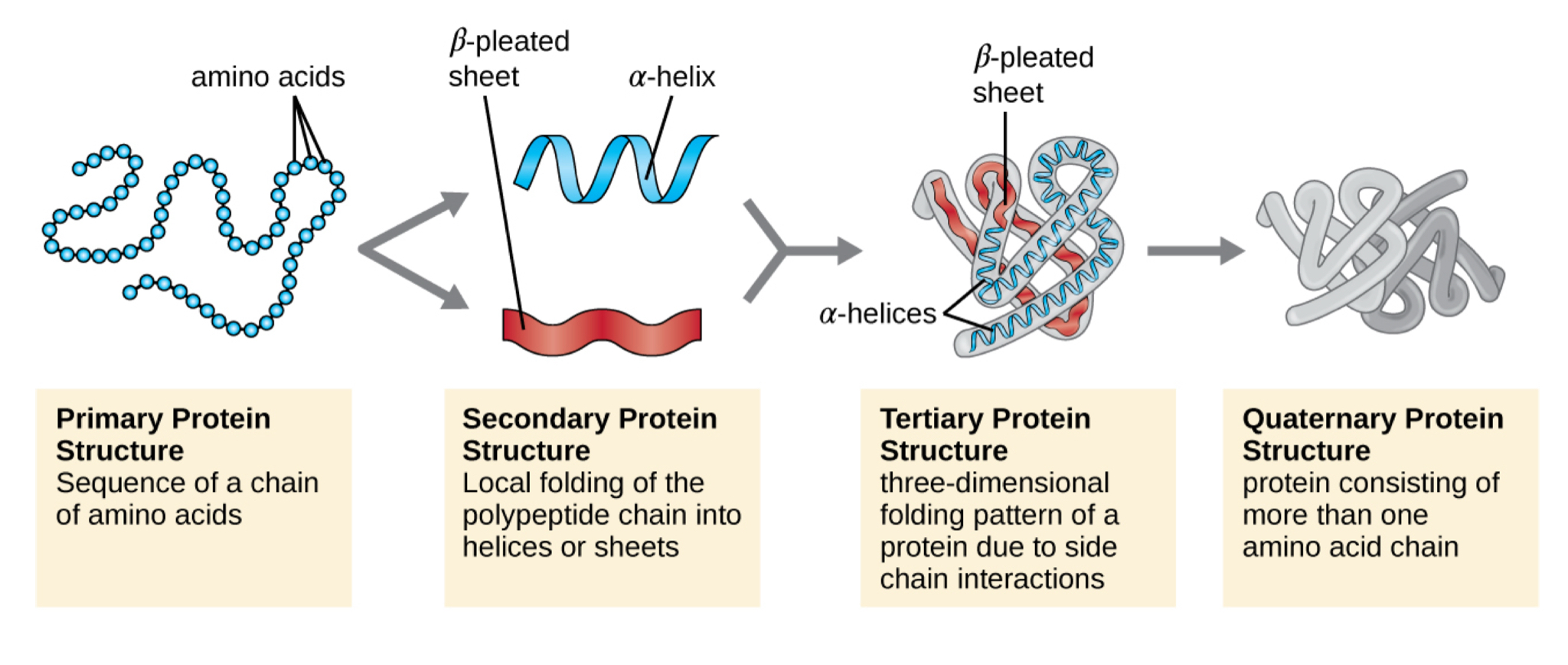
Primary Structure: Sequence of amino acids.
Secondary Structure: Localized folding patterns held together by hydrogen bonds.
forms alpha helices OR beta sheets
Tertiary Structure: Overall 3D shape determined by interactions between R groups.
sometimes, done folding and completely functional at tertiary structure
other times need quaternary structure to be functional
Quaternary Structure: Combination of multiple polypeptide chains into one functional proteins
Denaturation: Unfolding of proteins, caused by extremes in temperature, pH, or chemicals; results in loss of function.
occurs due to heat, chemicals, pH levels
example: killing microbes via cleaning
Nucleic Acids
Functions of nucleic acids:
DNA store hereditary information in cells and some viruses
information is needed to build and control cells
RNA store genetic information for viruses.
information is needed to build and control cells
functions in building proteins
Monomer: Nucleotide
Polymer: DNA and RNA
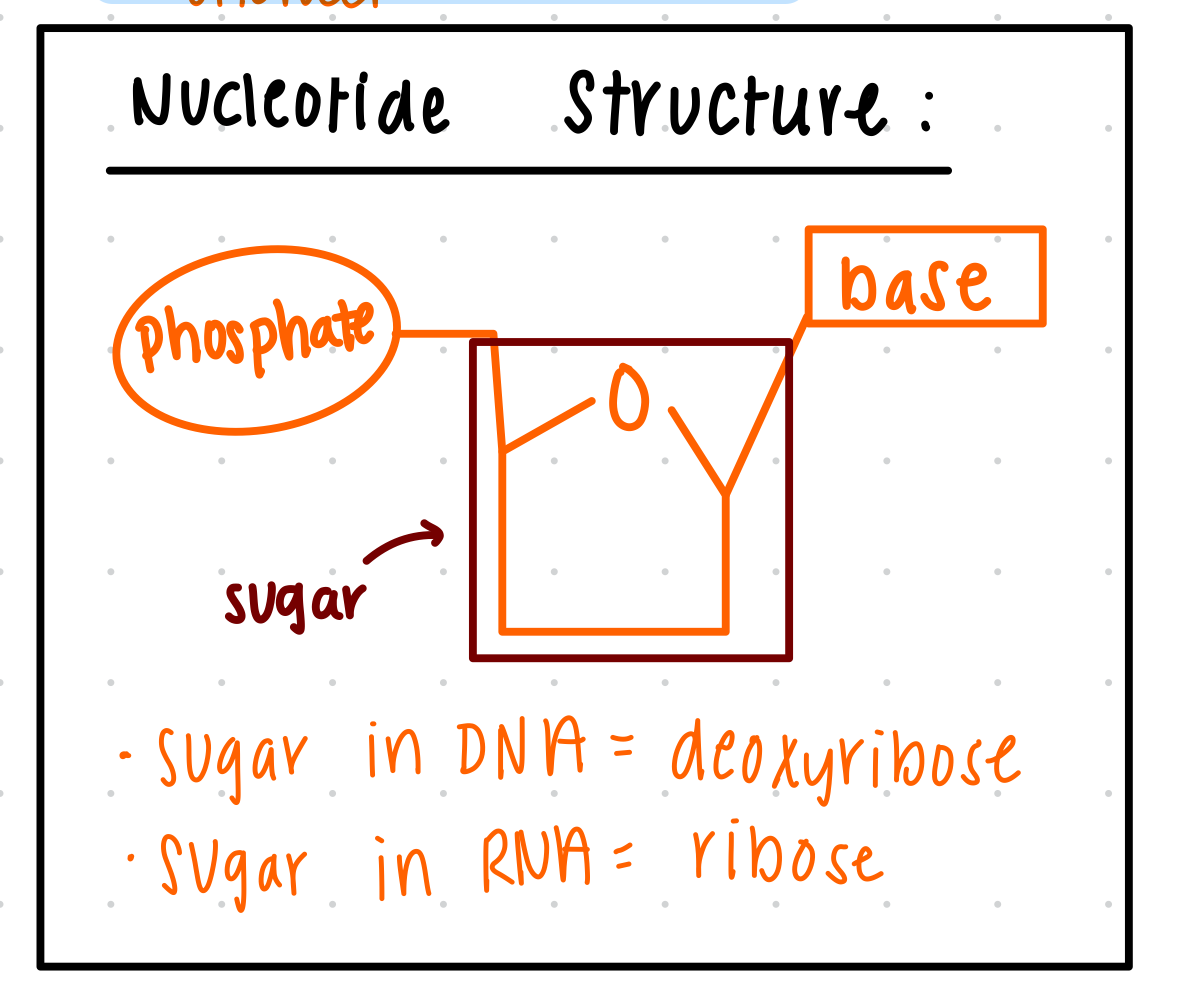
Structure of a nucleotide includes:
Sugar: (deoxyribose in DNA; ribose in RNA)
Phosphate group
Nitrogenous base: (Adenine, Thymine, Cytosine, Guanine for DNA; Adenine, Uracil, Cytosine, Guanine for RNA)
Base Pairing Rules: A pairs with T (or U) and C pairs with G
DNA Structure:
Double helix model where the strands run antiparallel
Each strand has a 5' and 3' end
3’ end contains OH
5’ end contains phosphate
held together by hydrogen bonds
Transcription and Translation
Transcription: copying DNA sequence to mRNA
mRNA: copy of gene that encodes proteins
Translation: decoding mRNA dequence into chain of amino acids (protein)
rRNA: part of ribosome
tRNA: delivers amino acids to ribosomes
Lipids
Lipids are hydrophobic molecules and are insoluble in water.
Types of lipids:
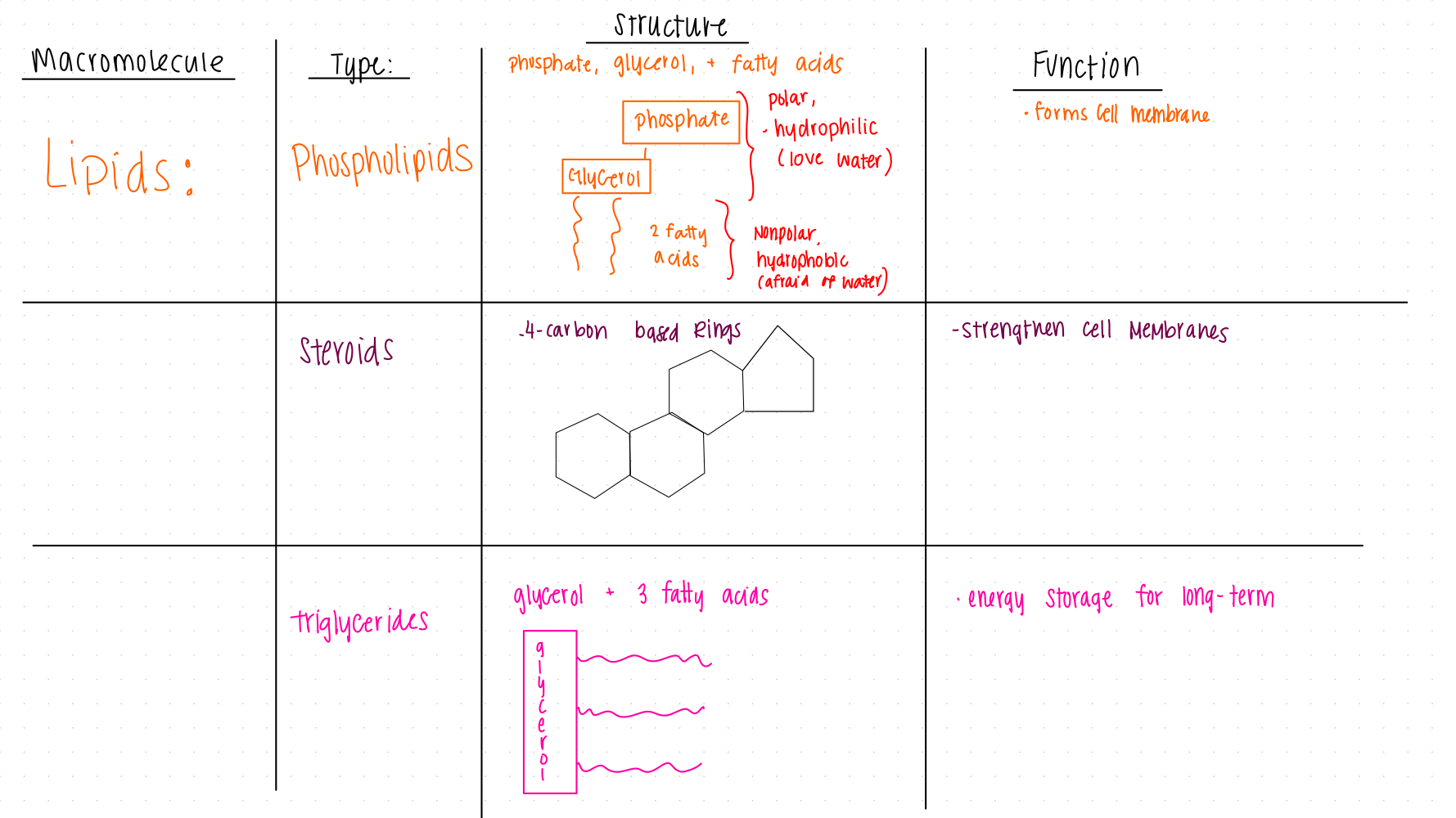
Phospholipids:
function: Major component of cell membranes
structure: phosphate group, glycerol, and 2 fatty acids
phosphate group, glycerol: hydrophilic (polar) head
2 fatty acids: hydrophobic (nonpolar) tails.
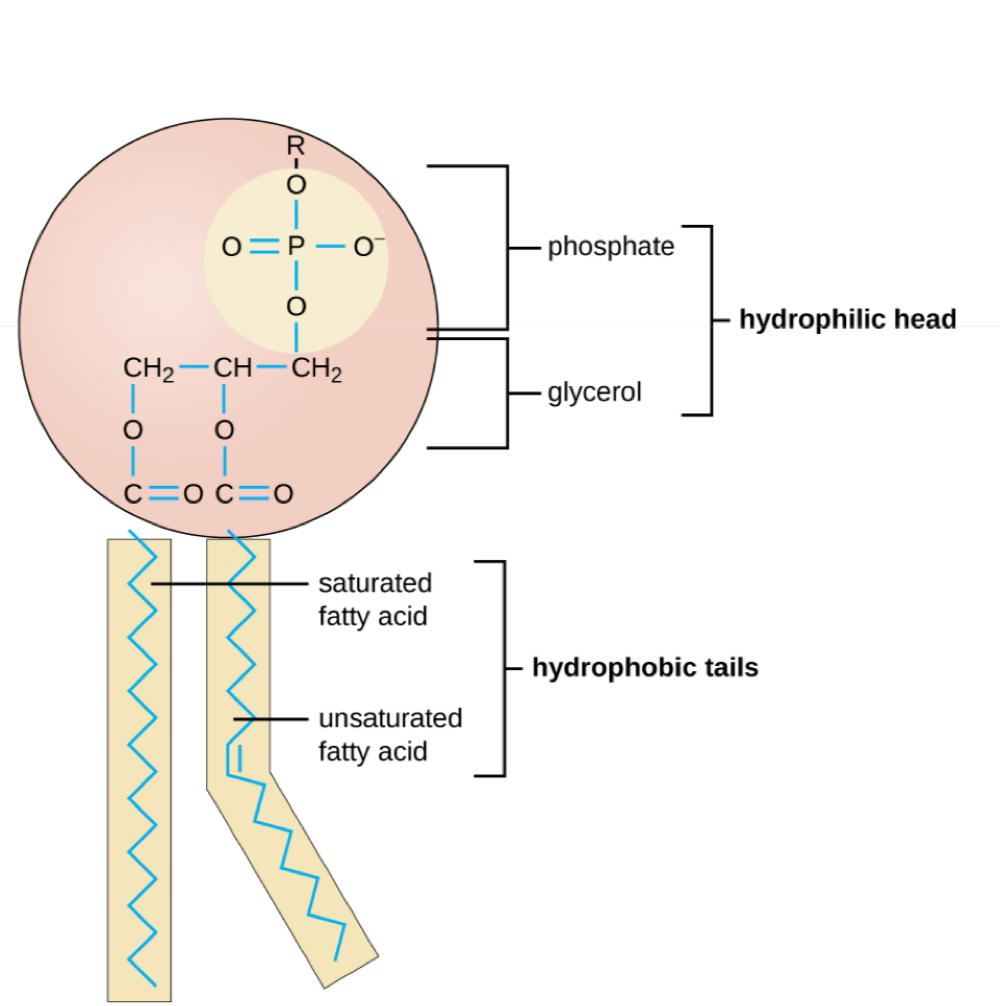
Membrane Structure:
Phospholipids form bilayers in aqueous environments
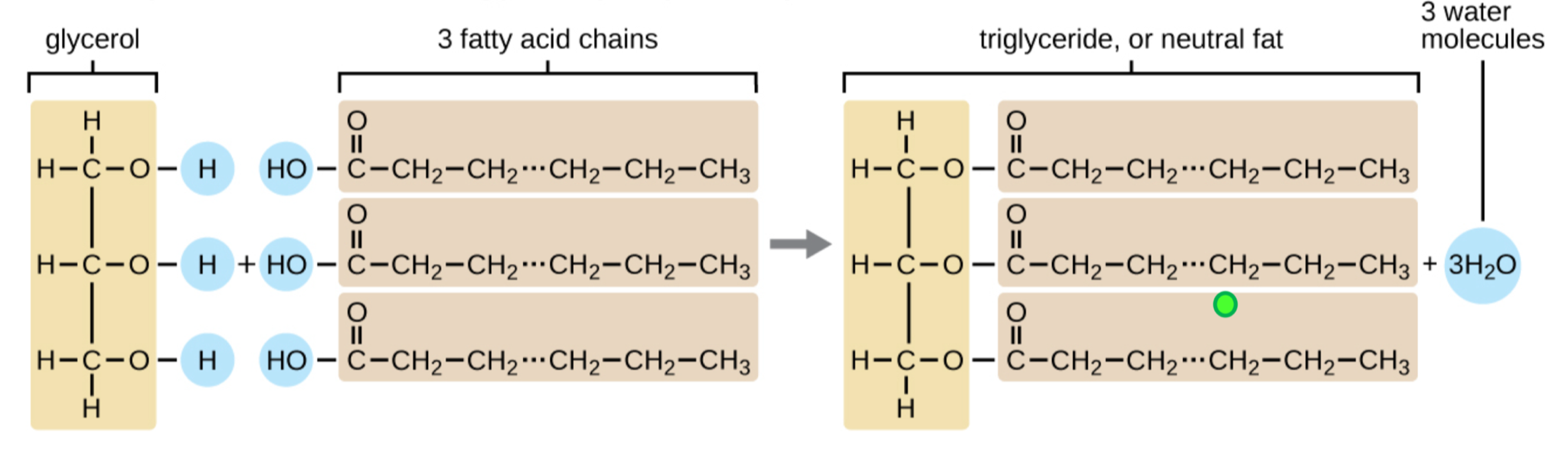
Triglycerides:
function: Long-term energy storage
Structure: made of glycerol and three fatty acids
also formed through dehydration synthesis.
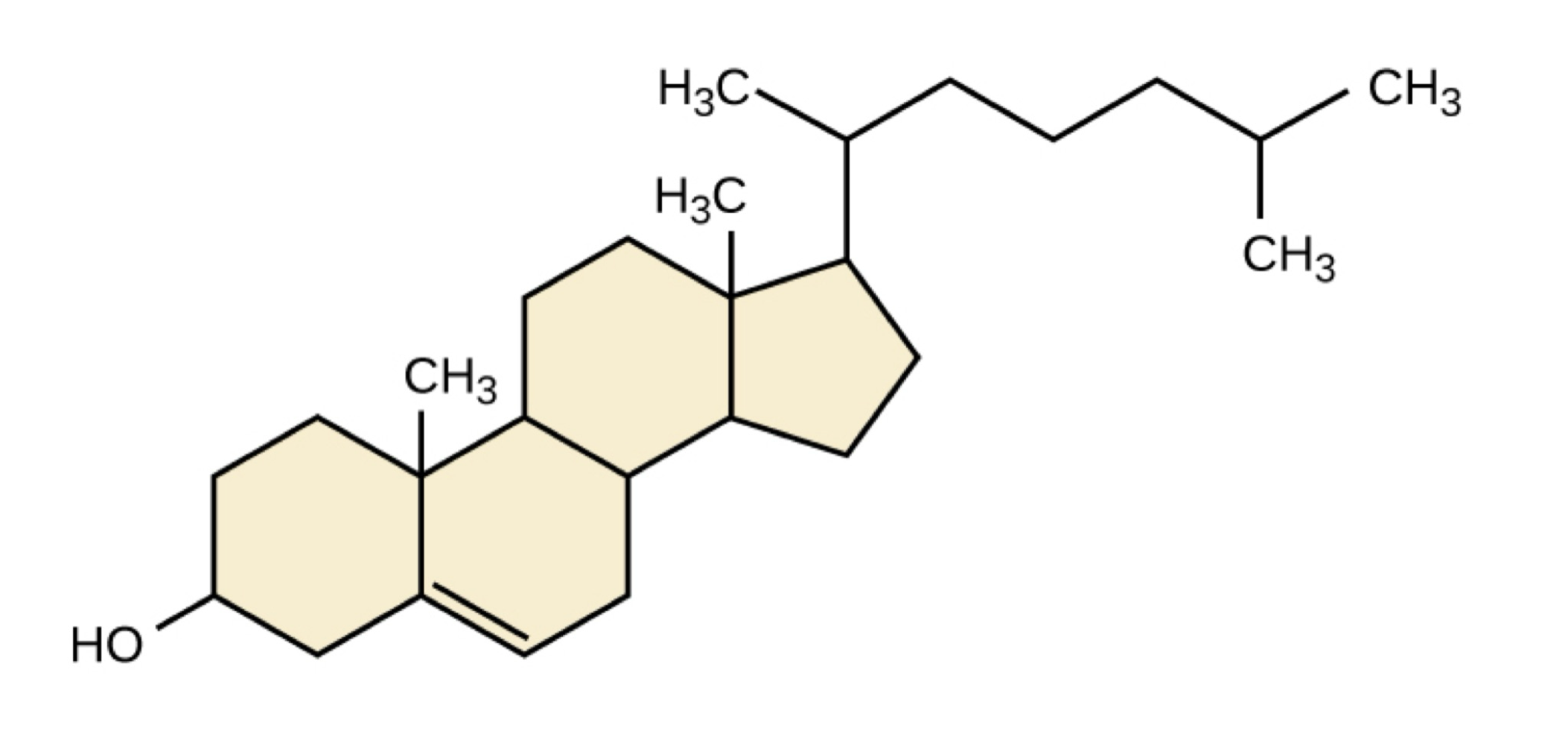
Steroids:
function: strengthens cell membrane
Structure: Composed of four fused carbon rings
three 6 carbon rings and one 5 carbon ring
Types of steroids:
cholesterol in eukaryotes which regulates fluidity in membranes and can act as hormones.
hopene in prokaryotes cell membranes
/