Nucleic acids
Nucleic acids
two types
RNA (ribonucleic acid)
DNA (deoxyribose nucleic acid)
DNA
stores genetic information
RNA
transfer of genetic information to protein
Properties of nucleic acid
DNA and RNA are polymers of nucleotides
polynucleotides
nucleotide - monomer
nucleotides
phosphate group
pentose sugar
organic nitrogenous base
formed by condensation reactions
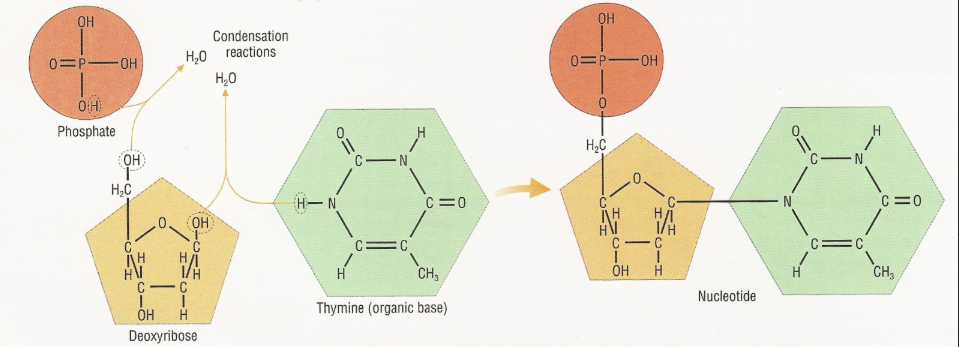
Formation of nucleotides
condensation reactions
4 different nucleotides can be formed
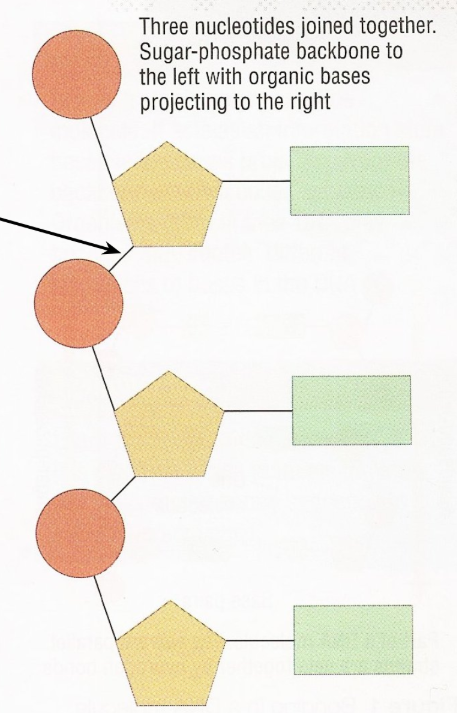
joined together by condensation reactions between the sugar and phosphate groups into chains of polynucleotides
phosphodiester bonds are formed
the order of the nitrogenous bases determine the genetic code
A polynucleotide
phosphodiester bond
polynucleotides can be broken down by hydrolysis reactions
the phosphodiester bonds are broken to release the nucleotides
Structure of nucleic acids
RNA is single stranded
small so it can fit through the nuclear pores and leave the nucleus
DNA is double stranded
large to contain genetic information
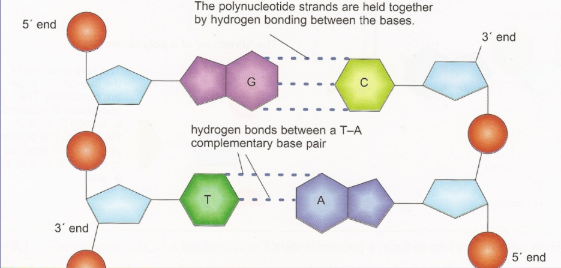
made of two polynucleotide strands held together by hydrogen bonds
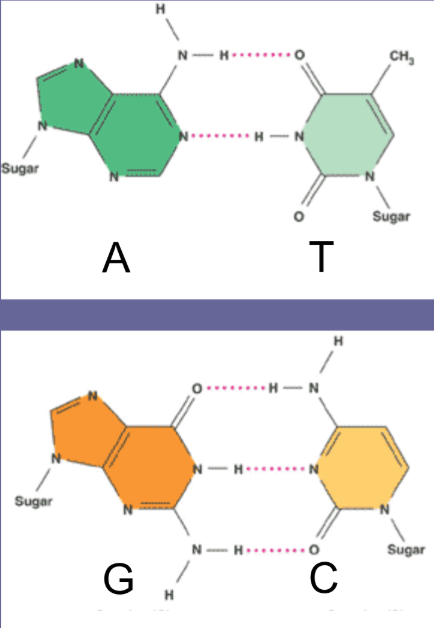
Complementary base pairing
the sugar phosphate backbone is on the outside
bases pair together on the inside
A pairs with T
C pairs with G
Purines
larger - A and G
Pyrimidines
smaller - T and C
strands are antiparallel
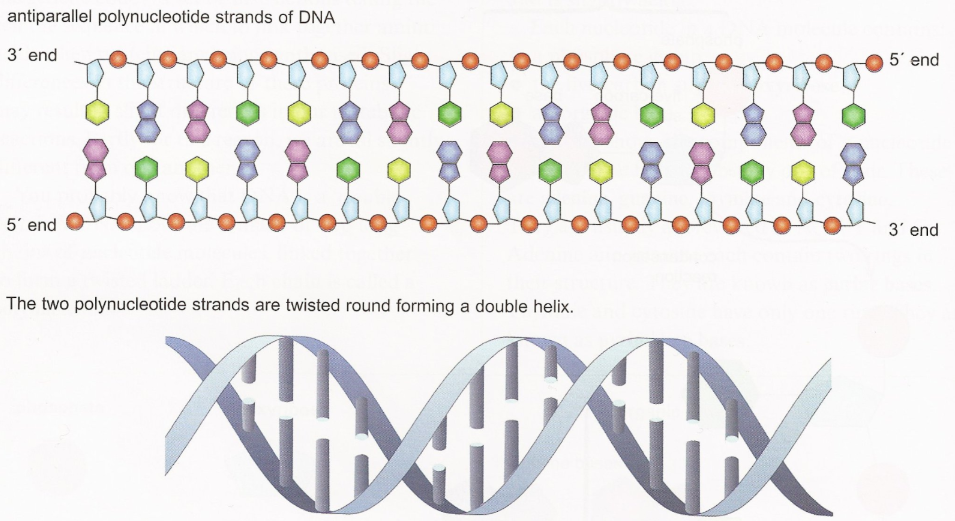
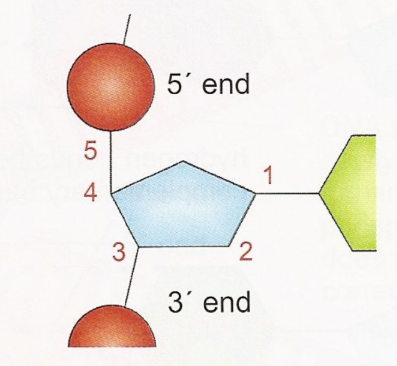
Polynucleotide direction
top phosphate is attached to carbon number 5 in the pentose sugar
5’ end
bottom phosphate is attached to carbon number 3
3’ end