Chapter 2 Book Notes
— CHROMOSOMES AND CELLULAR REPRODUCTION —
replicated chromosomes line up at the centromere and the sister chromatids of each chromosome are pulled in opposite directions
cohesin holds these sister chromatids together until it is cleaved by separase
the resulting chromosomes separate & the cell divides
prokaryotic and eukaryotic cells differ in a number of genetic characteristics
prokaryote - a unicellular organism with a relatively simple cell structure; includes bacteria and archaea
bacteria - one of the three primary divisions of life, consisting of prokaryotic unicellular organisms
archaea - one of the three primary divisions of life, consisting of unicellular organisms with prokaryotic cell structure
eukaryote - one of the three primary divisions of life; an organism that has a compartmentalized cell structure, including a nuclear envelope and membrane-bounded organelles. Eukaryotes may be unicellular or multicellular.
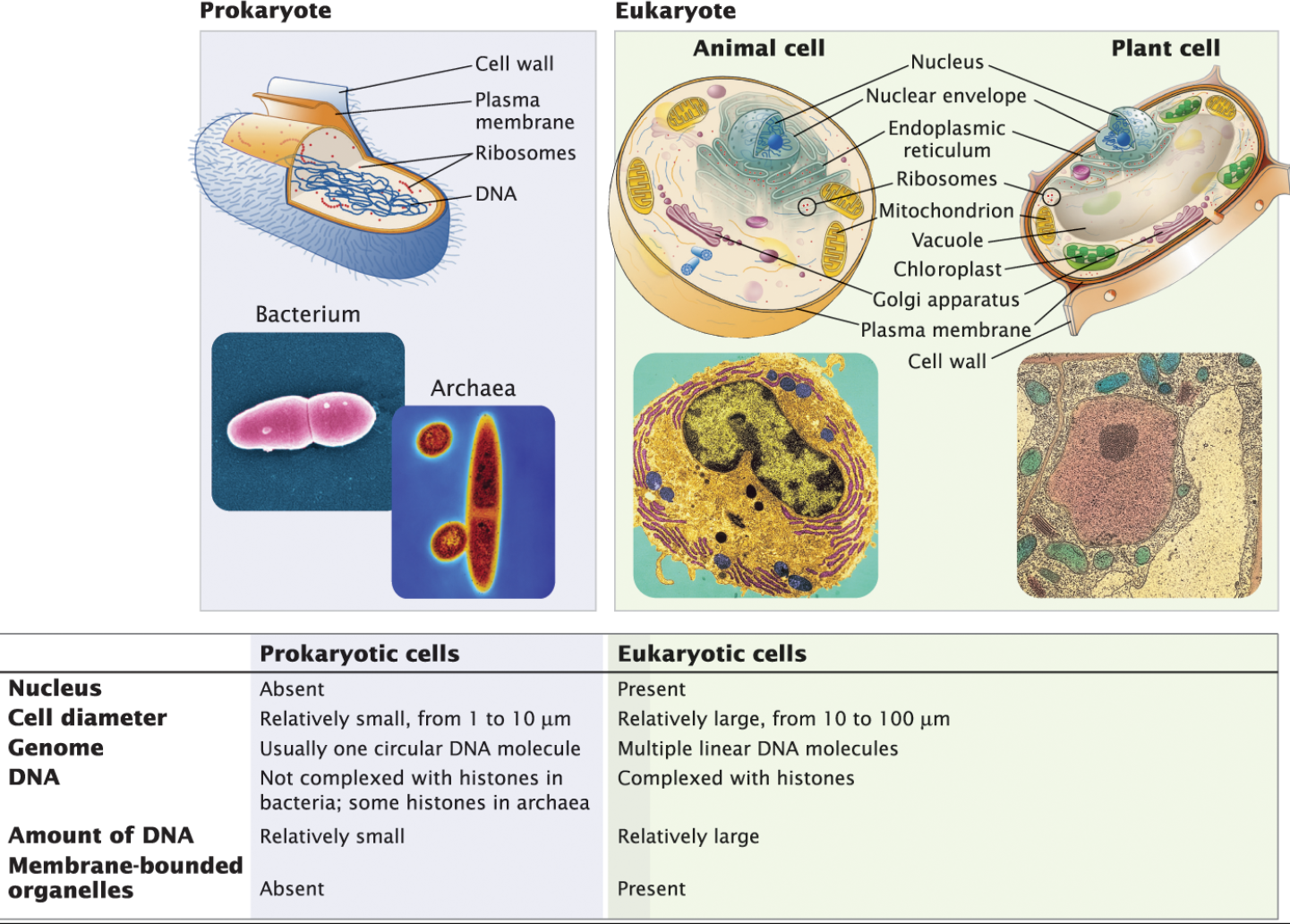
a key difference between the two is the presence of a nucleus in the organism
the nucleus functions to separate the DNA from the other cellular components
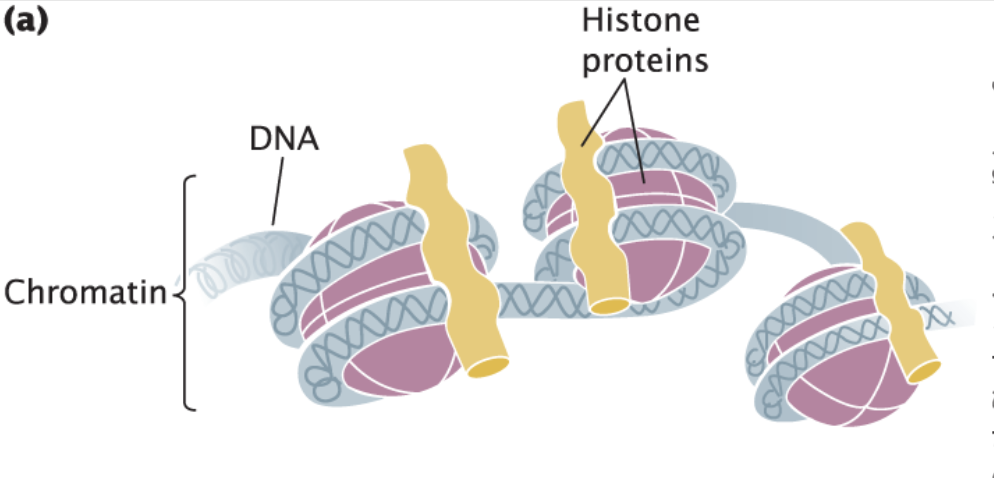
another fundamental difference between the two is the packaging of the DNA
in eukaryotes, the DNA is wrapped around histone proteins (chromatin)
histones function to regulate the accessibility of DNA to enzymes & other proteins that copy and read DNA
archaea have related but distant evolutionary composition of histones; archaeal chromatin differs from the kind in eukaryotes
bacteria do not possess histones and their DNA is not highly ordered
the gene of prokaryotic cells are located on a single circular molecule of double-stranded DNA
a few bacteria have more than one chromosome and some genes have plasmids
the gene of eukaryotic cells are located on multiple, usually linear DNA molecules
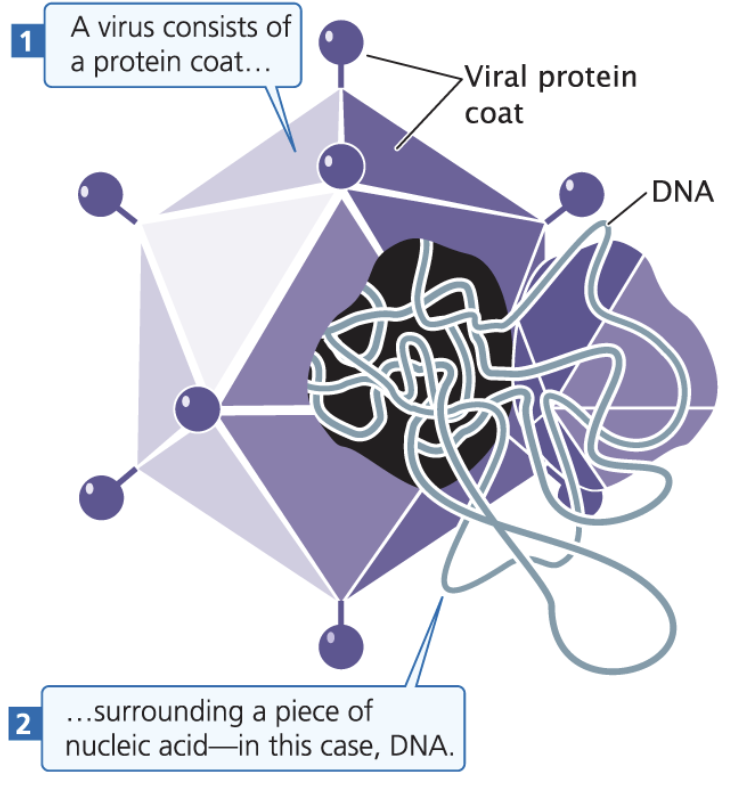
viruses are neither prokaryotic or eukaryotic because they do not possess the structure of a cell
they reproduce in a host cell, hijacking cell machinery
cell reproduction requires the copying of genetic material, separation of the copies and cell division
prokaryotic cell reproduction by binary fission
replication starts at the origin of replication & the origins of the two newly replicated chromosomes move in the opposite directions within the cell
structural maintenance of chromosomes (SMC) complexes encircle the DNA to keep the DNA from tangling
a new cell wall forms between the two chromosomes, producing two cells that both have an identical copy of the chromosome
eukaryotic cell reproduction
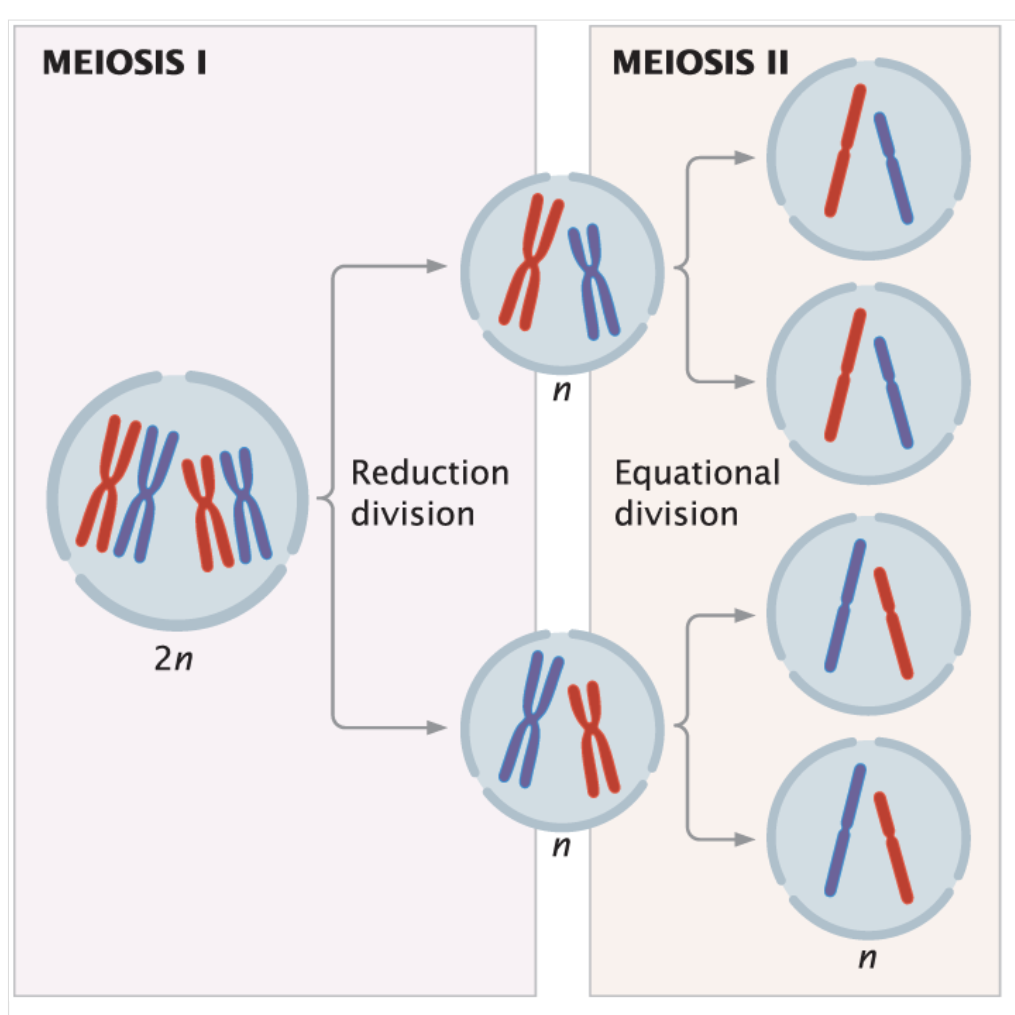
sexual reproduction produces genetic variation through the process of meiosis
sexual reproduction consists of two processes: meiosis & fertilization
MEIOSIS I
during interphase, the chromosomes are relaxed & indistinguishable
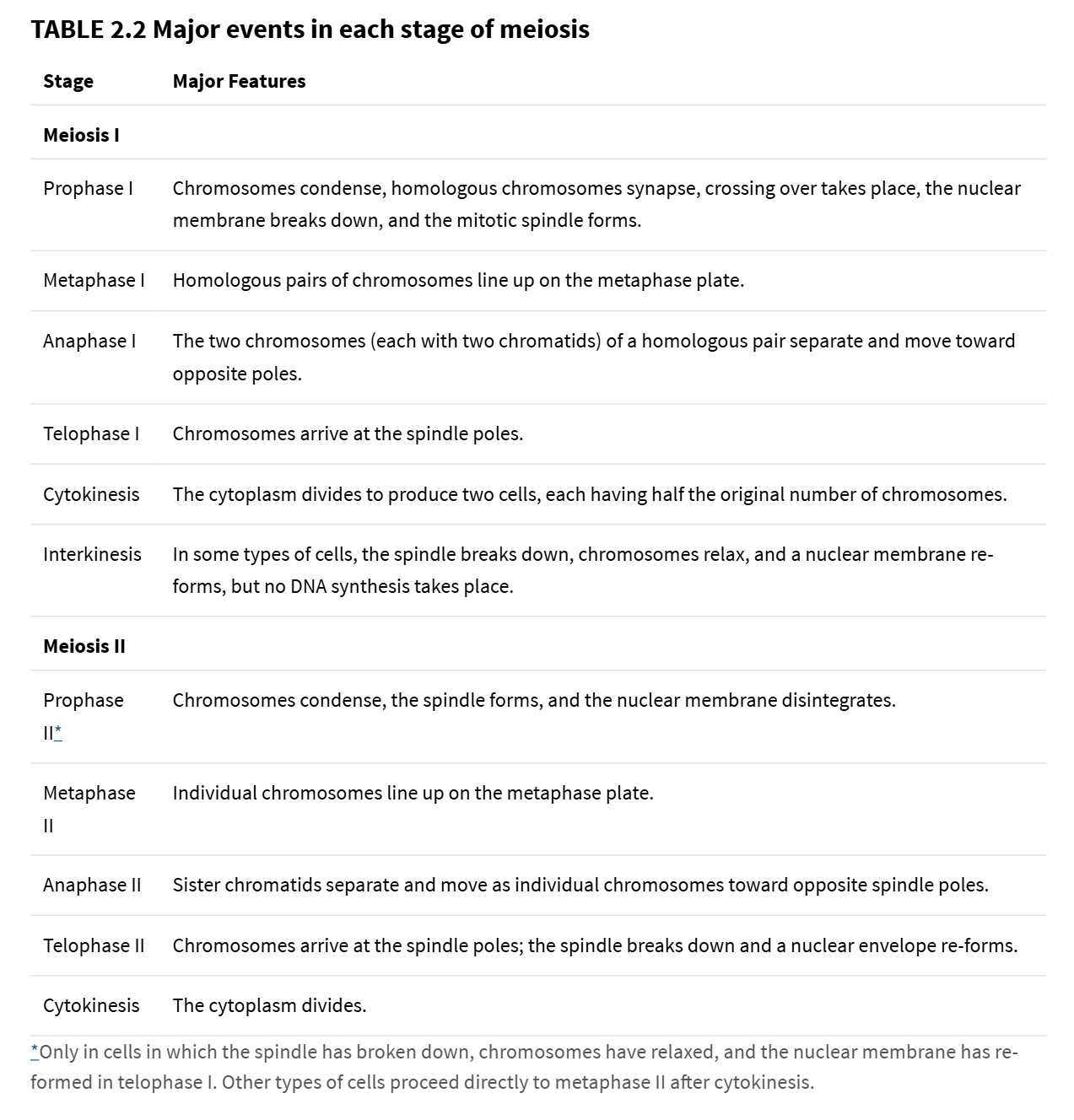
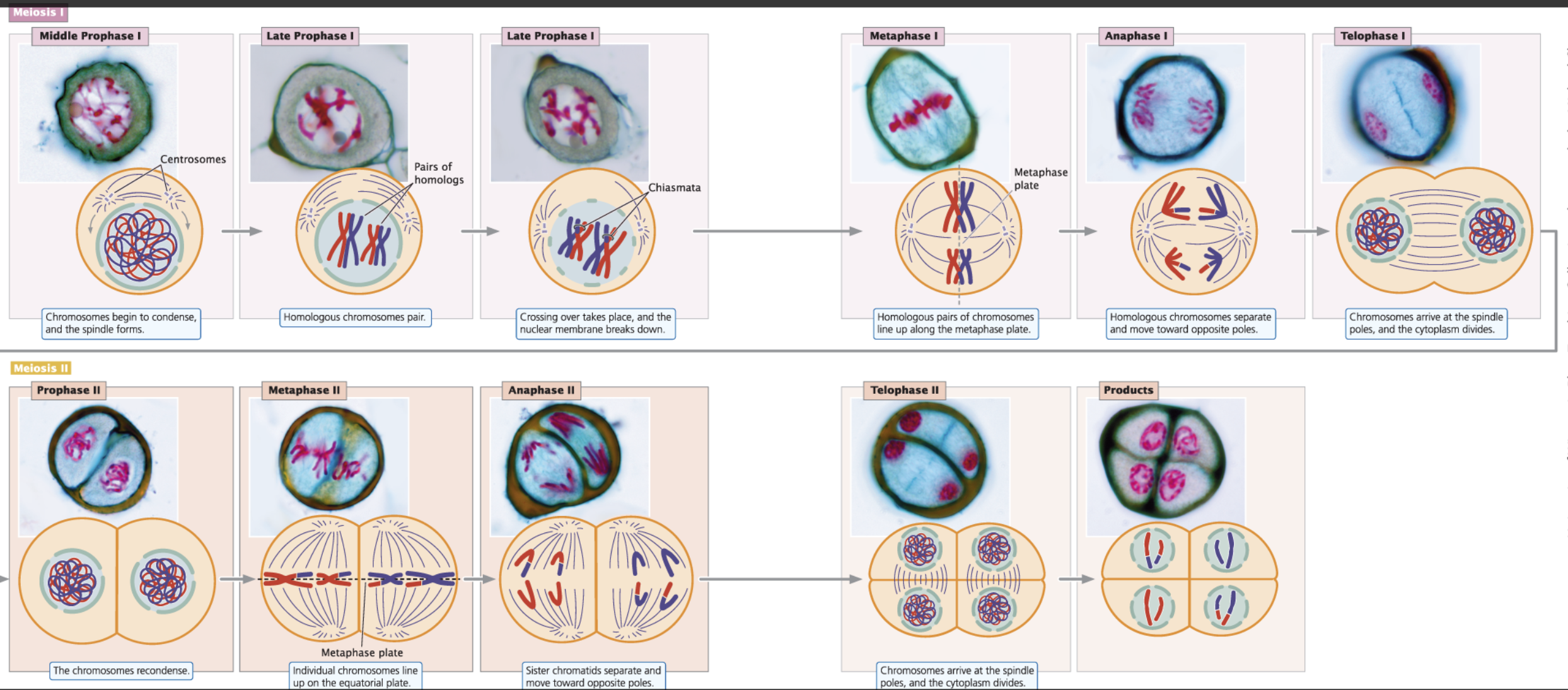
Prophase I:
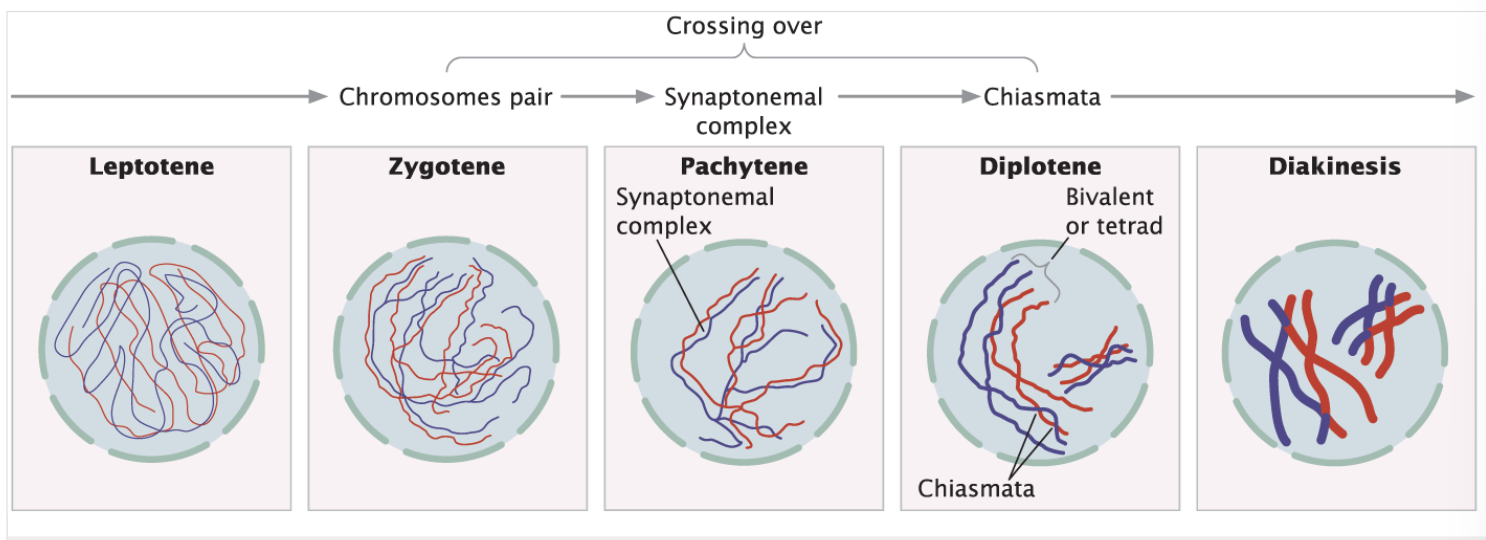
leptotene - the chromosomes condense and become visible
zygotene - the chromosomes continue to condense; homologous pair of synapsed chromosomes consist of four chromatids
pachytene - the chromosomes become shorter & thicker; a three part synaptonemal complex develops between homologous chromosomes
diplotene - the centromeres of the paired chromosomes move apart but the two homologs remain attached at each chiasma
diakinesis - the final substage of prophase I; chromosome condensation continues, the nuclear membrane breaks down and the spindle forms
Metaphase I:
initiated when homologous pairs of chromosomes align along the metaphase plate
a microtubule from one spindle pole attaches to one chromosome of a homologous pair, and a microtubule from the other pole attaches to the other member of the pair
Anaphase I:
marked by the separation of homologous chromosomes
The two chromosomes of a homologous pair are pulled toward opposite poles; the sister chromatids remain attached and travel together
Telophase I:
the chromosomes arrive at the spindle poles, and the cytoplasm divides
MEIOSIS II
the period between MI and MII is interkinesis in which the nuclear membrane re-forms around the chromosomes clustered at each pole, the spindle breaks down and the chromosomes relax
Prophase II:
the chromosomes recondense, the spindle re-forms, and the nuclear membrane once again breaks down
if the chromosomes remain condensed and the spindle does not break down during interkinesis, the cell can move directly from cytokinesis into metaphase II
Metaphase II: the replicated chromosomes line up on the metaphase plate, with the sister chromatids facing opposite poles
Anaphase II:
the sister chromatids separate, and the chromatids are pulled to opposite poles
each chromatid is now a distinct chromosome
Telophase II:
the chromosomes arrive at the spindle poles, a nuclear membrane re-forms around the chromosomes, and the cytoplasm divides
the chromosomes relax and are no longer visible
Sources of Genetic Variation in Meiosis
consequences of meiosis include comprising of two divisions, so each original cell produces four cells, chromosome number is reduced by half, so cells produced by meiosis are haploid, and lastly cells produced by meiosis are genetically different from one another and from the parent cell
crossing over: refers to the exchange of genetic material between nonsister chromatids (chromatids from different homologous chromosomes)
initiated in zygotene and is completed near the end of prophase I
Crossing over is the basis for intrachromosomal recombination
in the process of crossing over, there are breaks in the DNA strands
some breaks are repaired in such a way that segments of nonsister chromatids are exchanged
random separation of homologous chromosomes
the random distribution of chromosomes in anaphase I after their random alignment in metaphase I yields genetic variation