Week 3- Creating and costing a client quotations for a catered event
when hosting an event menu dish you dont not want it to be the same colour e.g. not too brown e.g. bread as a starter, roasted potatoes as a main and dessert is a brownie - you want as much colour in your dishes, e.g. seasonal veg for starters or a prawn salad
avoid oysters because of food poisoning the chances are high, bad reputation
raw meat and sushi you should avoid too because of food poisoning
you could get sustainable foods, like local foods e.g. Regents Park honey, which is sustainable and less food miles
questions to ask for catering quotations:
event details:
what is the date, time, and location of the event
what is the expected duration of the event
guest info:
how many guests are expected to attend
are there any dietray restrictions or preferences e.g. vegetarian, vegan allergies
type of catering services:
what type of catering is required e.g. buffet, plated, service, food stations, cocktails?
is there specific theme or style for the menu?
Budget:
what is the budget for catering per guest or overall?
menu preferences:
are there specific cuisines or dishes the client would like to include
should alcoholic beverages be included? if so, what type
local requirements:
is there access to the kitchen (facilities or prep areas at the venue)? some venues dont have kitchens they only have prep kitchen so ppl need to bring their own oven and hot utensils for hot food
are tables, chairs, linens, or cutlery required as part of the service?
additional services:
Will staff be required to serve, bartend, or clean up?
are there special requirements (e.g. bespoke, desserts, signature cocktails)? do ppl want a big chocolate fountain or a champagne tower? is it a wedding cake? will there be a special knife for the cake?
timelines:
when will the setup and breakdown occur
are there specific timelines for food service during the event- if the event is only three hours and u are serving a 4 course menu will there be enough time?
are you serving the desert after or before the reward ceremony for example, or put the desert down and do rewards whilst ppl are eating their dessert/ or will it be nibbly bits for dessert
menu characteristics:
the central focus of any food and beverage operations:
sets the scene for service level
sets of the scene for food type- e.g. cultural, traditional
sets the scene for the layout
defines the type and volume of raw ingredients needed
defines the preparation/ cooking processes
defines the selection, training and development of staff
sets the benchmark for the profitability of the catering unit
separate beverage menus are sometimes used in more formal settings
it is the KEY marketing tool
for example if you are cooking deep fatty greasy foods like chips the whole venue could smell of that and therefore it could be offputting for the guests
The 5W’s of food and beverage services:
WHO must be fed
WHY they must be fed
WHAT they must be fed
WHEN they must be fed
WHERE they must be fed
WHO must be fed
WHY they must be fed
WHAT must they be fed?
special diets and preferences:
religious beliefs
food allergies
vegetarian/ vegan
cultural considerations
quality and nutrition:
healthy options- low fat/ low calorie
seasonal/ local food
meat safety
budget:
cheaper operations
presentation
trends:
fusion
bite-size
seasonal
WHEN must they be fed?
time of the day/ time of the year?
morning
afternoon
evening
hot/ cold weather will it be raining will it be hot in the marquee stuffy?
position within the event programme:
welcome reception
working lunch is it a big lunch/dinner? or is it only obento boxes, something lowkey quick and easy?
closing function
speed of food service:
start/ end time
WHERE must they be fed?
On/ off premise:
in-house or external catering: restaurant, conference center, special venue, outdoor, etc, transportation of food and attendees, prepared on-site or delivered? You need a place where the staff can go away from the attendees, so it is more quite dont disturb the attendees
additional materials/decorations need
sanitation/ safety/ alcohol license
banqueting room:
size/ layout
location
accessibility to staff/ material
break area:
noise
proximity
tent/ marquee
set up time
additional cost
sit down/ standing:
queuing at food stations
space for staff and attendee movement
Table layout:
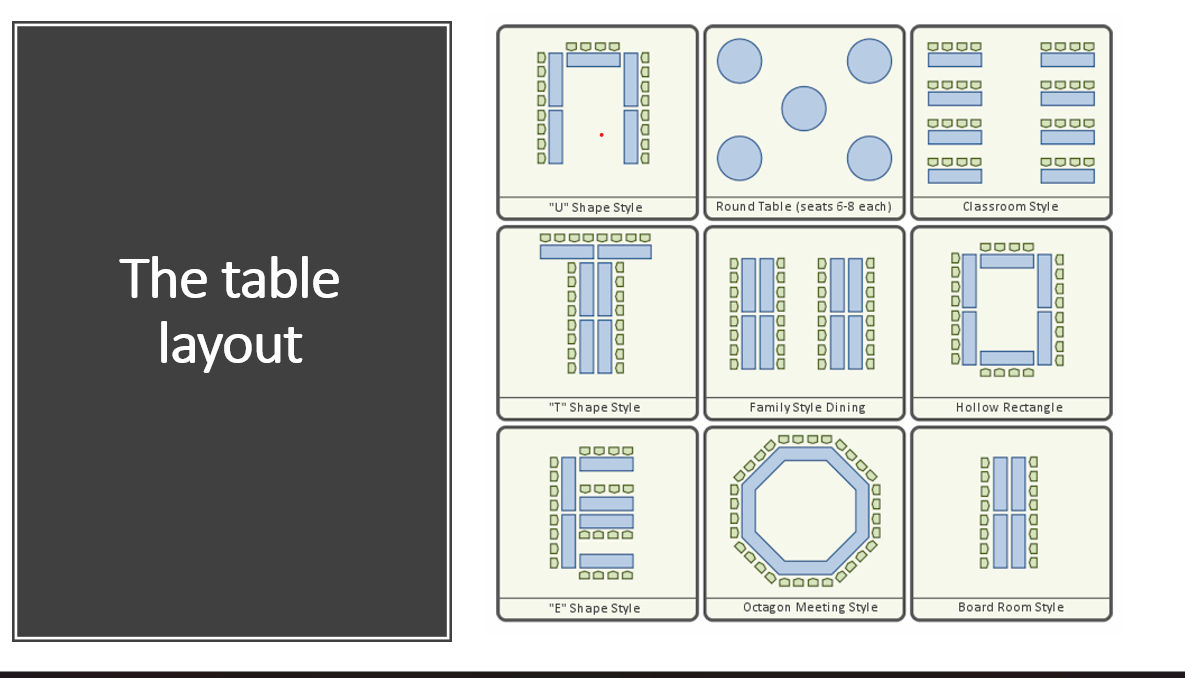
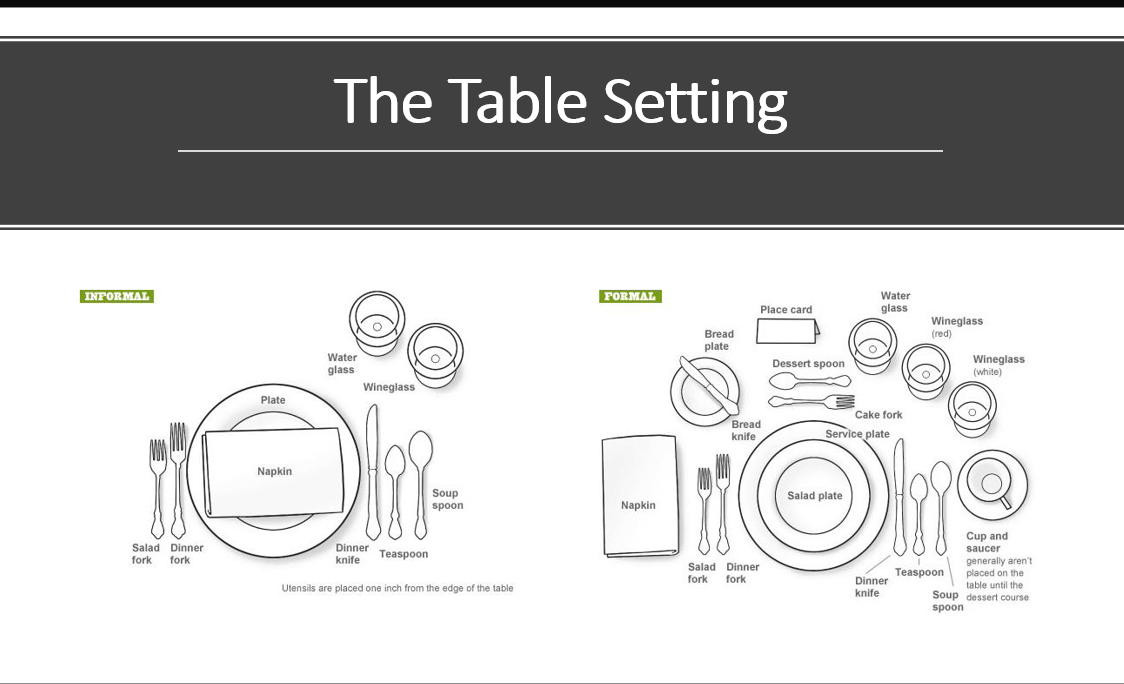
Table setting:
The tablescape:
‘Tablescaping is the act of creatively and intentionally arranging a tabletop so that it conveys a specific theme, mood, or experience’ e.g. Greek style , you can bring in objects like flowers it becomes like an artpiece
Creating and costing menus:
costing a food menu- you need to know:
the cost of ingredients
the cost of labour
the cost of rent and utilities
the costs of equipment/ depreciation
any other direct costs
indirect costs
you need to know what the average selling cost is for the menu items and how ur food establishment compares to your competitor set
Beverage menu control:
easiest products open to abuse/ theft:
wastage of a different sort
less menu rotation or no change at all on spirit, beers and liquours
wine lists can be seasonal and updated depending on availability
stocktaking weekly
strict portion control that is regulated by law e.g. small or large 175ml or 250ml of wine/ measuring cylinders
recycling of containers
Costing a menu item using the 30/30/40 model:
30% of the selling price spent on ingredients
30% of the selling price spent on overheads/ operational costs e.g water and electricity costs of the venue
40% profit margin- then make ur profit, some items u will make more money than others
should add to 100%
Food menu control:
are you making profit or a loss
some menus are simpler to cost than others e.g. if it is simple it might be popular a lot of customers will buy so u will want to keep it on the menu
consider food wastage (more choice = more likelihood of waste)
menu forecasting e.g. 25 ppl will have steak that evening, as a caterer you will want to rotate your menu, if you are a restaurant you will probs have the same all year round and occasionally have ‘specials’
stocktaking
menu rotations