Chapter 2 - Chemistry and Measurements
2.1 - Units of Measurement
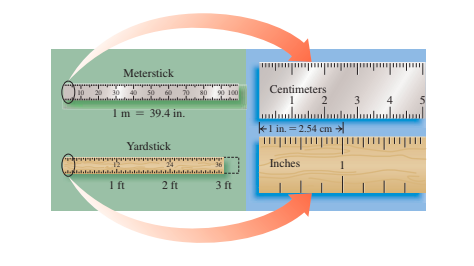
- Physical amounts in science are described in units of the metric or international units system (SI).
- Some of the key units include volume liter (L), length meter (m), gram (g), weight kilogram (kg), temperature degree Celsius (°C) and Kelvin (K), and time second units.
2.2 - Measured Numbers and Significant Figures
- Any number obtained by using a measuring instrument is a measured number.
- An accurate number is obtained by counting items or from a definition.
- The numbers reported in measurement including the estimated number are significant figures.
- Zeros are not significant before the decimal number or at the end of the non-decimal number.
2.3 - Significant Figures in Calculations
- The final answer is written in multiplication and division to have the same number of significant numbers as the most insignificant measurements.
- The final answer has been written so that there is the same number of decimal places as the least decimal places measurement.
2.4 - Prefixes and Equalities
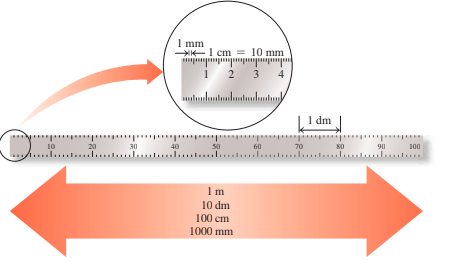
- A prefix located before a metric or SI device changes the unit's size by 10.
- Prefixes like centi, milli, and micro are smaller, prefixes like kilograms, megagrams, and there are large.
- The relationship between two units, measuring identical volume, length, weight, or time, shows equal equality.
2.5 - Writing Conversion Factors
- To express a relation in a fraction, conversion factors are used for any relationship in the metric or in the US system, two conversion factors may be written.
- By speaking matching components in 100 parts, a percentage is written as a conversion factor.
2.6 - Problem Solving Using Unit Conversion
- Conversion factors are helpful if a quantity in one unit is changed to a quantity in another one.
- A given unit is multiplied by one or more transformation factors in the problem-solving process which cancels the units until the answer has been obtained.
2.7 - Density
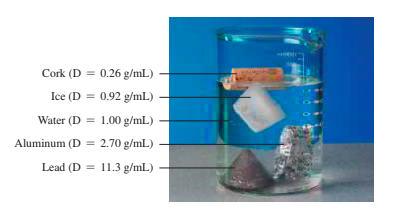
- The volume is usually g/mL or g/cm3, a ratio of its mass to the volume of the substance.
- Conversion factors between mass and volume of a material can be written using the units of density
- The density of a substance is comparable to the water density, 1.00 g/mL.