Differentiation and Stem Cells
Cell specialisation and Differentiation |
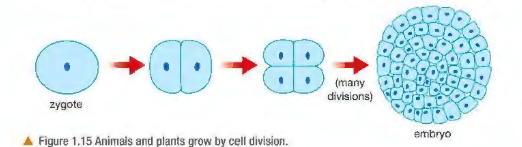
Cell specialisation and differentiation are fundamental processes in biology that allow multicellular organisms to develop diverse cell types with specific functions. We all begin as a ball of dividing cells. As the embryo starts to grow the cells within need to take on specific roles, becoming specialised cells which will eventually become tissues and organs which make up the human body.
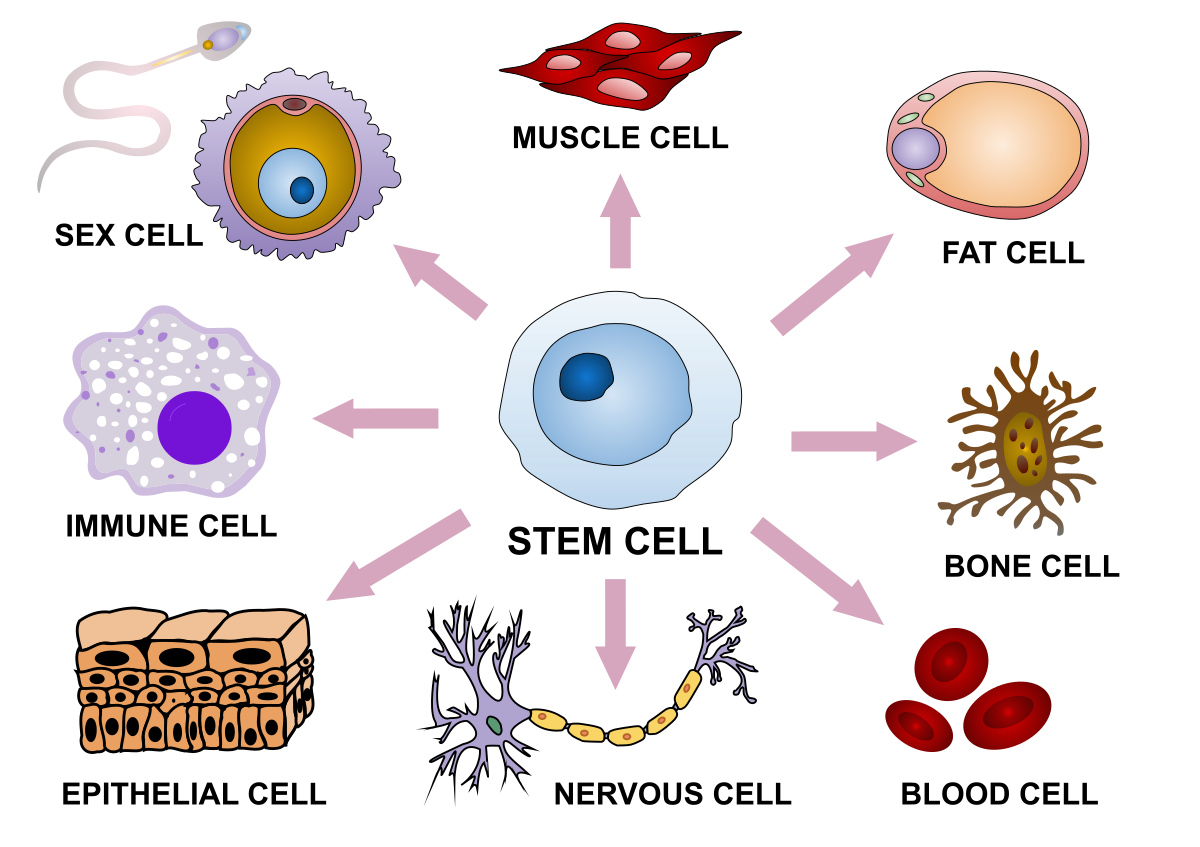
Cell specialisation refers to the adaptation of a cell to perform a particular function, such as muscle cells contracting to enable movement or nerve cells transmitting electrical signals. Differentiation is the process through which unspecialised cells, like stem cells, undergo changes to become specialised cells. This is under the control of genes; different combinations of genes are switched on in different cell types. Some genes, called housekeeper genes, are switched on in all cells. Others are specific to certain cell types. Different cells types develop depending on where then are in the body and differentiation occurs in a very specific order.
During differentiation, cells develop unique structures and functions, allowing the organism to perform complex tasks. For example, red blood cells become biconcave and lose their nucleus to efficiently carry oxygen, while root hair cells in plants develop elongated shapes to absorb water and nutrients more effectively. Together, these processes ensure that the organism can grow, develop, and maintain its vital functions.
Stem cells |
Cells which are unspecialised are known as stem cells. A stem cell has the ability to divide many time without becoming specialised. However, once differentiated it cannot go back to being a stem cell - differentiation is a one way process.
There are two main types of stem cells:
Embryonic stem cells are stem cells in the early stages of development - before the ball of cells mentioned above starts to specialise into different cell types. These can become any cell type.
Adult stem cells these are found in certain tissues types such as bone marrow. They have lost the ability to form any cell type but can still form a range of specialised cells. For example the adult stem cells in the bone marrow can become any type of blood cell. Other examples are the liming of the intestines and the skin.
Stem cells and medicine |
Stem cells hold significant promise in medicine due to their unique ability to develop into different types of cells and their potential for regeneration. Unlike specialised cells, stem cells can divide and produce either more stem cells or differentiate into various cell types needed in the body, such as muscle, nerve, or blood cells. This capability makes them invaluable in treating diseases and injuries that involve cell damage or loss. For instance, in regenerative medicine, stem cells can be used to repair damaged tissues, such as in spinal cord injuries, heart disease, or burns. Additionally, in conditions like leukaemia, stem cell transplants can replace damaged bone marrow, restoring the patient’s ability to produce healthy blood cells. This is currently the most common form of stem cell therapy.
Researchers are also exploring the use of stem cells to create organs for transplants, potentially solving the shortage of donor organs. Despite the promise, there are ethical considerations, particularly around the use of embryos, and technical challenges that need to be addressed, but the potential benefits make stem cell research a crucial area of medical science.