Anaerobic Respiration
Anaerobic Cellular Respiration
Overview
Anaerobic respiration occurs without oxygen or mitochondria.
It consists mainly of glycolysis followed by fermentation.
Importance of Aerobic Respiration
Aerobic respiration involves key processes:
Glycolysis: Breaks glucose into pyruvate, yielding 2 ATP.
Kreb Cycle: Converts pyruvate to acetyl CoA, releasing CO2 and producing 2 ATP.
Electron Transport Chain: Uses NADH and FADH2 to produce approximately 32-34 ATP.
Causes for Anaerobic Respiration
Anaerobic respiration kicks in when:
Mitochondria are destroyed or insufficient.
Oxygen is unavailable, leading to electron transport chain failure.
Effects of Anaerobic Conditions
Holding breath demonstrates consequences of anaerobic conditions:
Body runs out of ATP, leading to pain and muscle fatigue due to lactic acid buildup.
Glycolysis and NADH
In glycolysis, glucose is broken down into pyruvate:
Produces 2 ATP and converts energy into NADH.
Accumulation of NADH leads to a bottleneck without oxygen or mitochondria.
Solutions through Fermentation
Lactic Acid Fermentation
Occurs in animals and some bacteria:
Pyruvate is converted to lactate (lactic acid).
NADH donates electrons to lactate, regenerating NAD+ for glycolysis.
Allows continuous energy production through glycolysis despite the absence of oxygen.
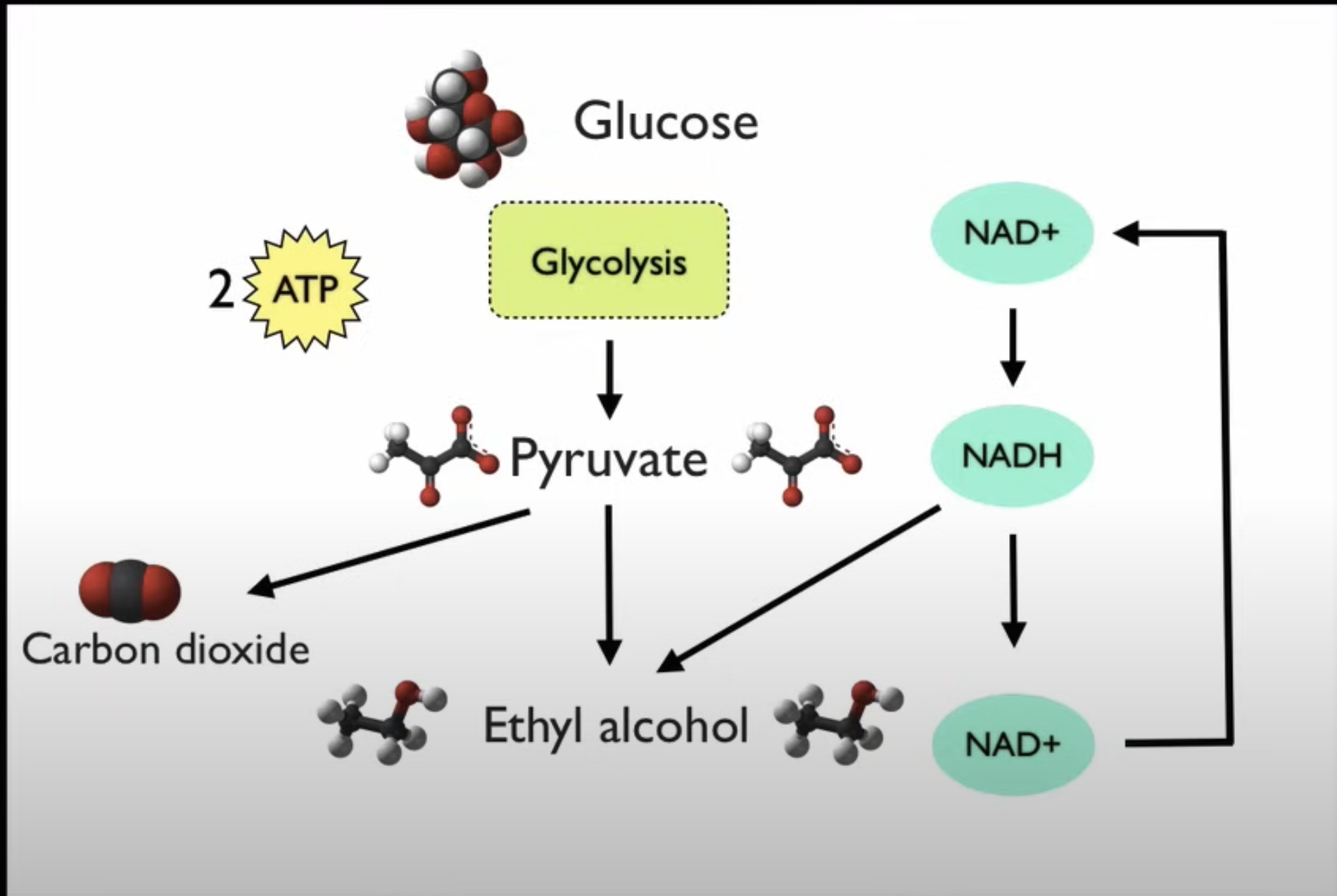
Alcoholic Fermentation
Primarily occurs in yeast:
Pyruvate is converted into ethyl alcohol and carbon dioxide.
Releases NAD+ and allows glycolysis to continue; carbon dioxide contributes to beer and wine bubbles.
Practical Examples
Lactic Acid Fermentation: Experienced during intense exercise, causing muscle pain from lactate buildup.
Alcoholic Fermentation: Used in brewing; converting sugars into ethanol and CO2 in anaerobic conditions.
Conclusion
Anaerobic respiration is vital in situations lacking oxygen or mitochondria, providing temporary energy through fermentation processes.
Its efficiency is limited compared to aerobic respiration, as it yields significantly less ATP.