Group Thinking
Definition (#f7aeae)
Important (#edcae9)
Extra (#fffe9d)
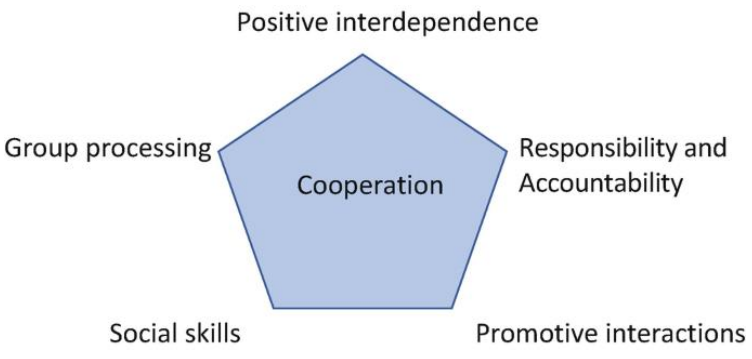
Cooperation: Group members work together to reach a shared goal. To reach a goal that an individual may not be able to reach alone.
Cooperation among group members is not guarantee:
Conflict: People believe that others will take actions that are contradictory to their own interests.
Cooperation is not guaranteed because some goals cannot be shared by others.
In these cases, conflict may arise swiftly, as each person tries to maximize their own outcomes.
Key aspects of cooperation:
Social dilemmas & trust: Cooperation is frequently tested in social dilemmas, such as the Prisoner's Dilemma, where individual temptation to selfishly "defect" conflicts with the group's need for collaboration.
Building cooperation: Strategies include fostering open communication, establishing shared goals and implementing social norms or rules that reward prosocial behavior.
Group dynamics: In-group members are more likely to cooperate with each other than with out-group members, particularly when they share strong, cohesive ties or face external threats.
Factors influencing cooperation:
While trust and empathy promote cooperation.
Competition, inequality, and perceived unfairness can break down cooperative behaviour.
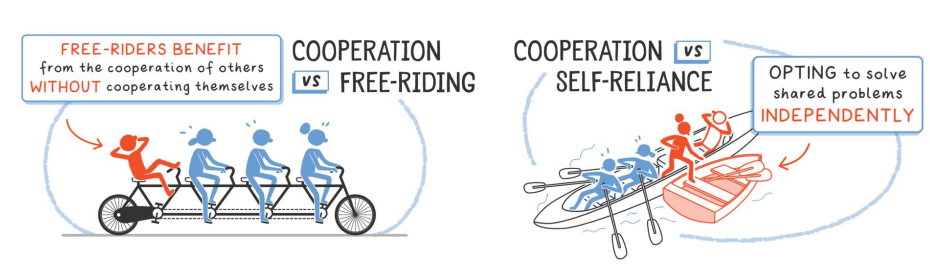
Cooperation vs Free-riding:
Free riders benefit from the cooperation of other wihtou cooperating themselves.
Cooperation vs self-reliance:
Opting to solve shared problems independently.
Levels of conflict:
Intrapersonal conflict.
Interpersonal conflict.
Intergroup conflict.
Interorganizational conflict.
Group conflict in social psychology refers to the perceived incompatibility of goals, values, or resources between groups, resulting in in-group favoritism, out-group bias, and often hostility.
Driven by competition, prejudice, or identity, it splits into intergroup (between groups) and intragroup (within a group) forms.
Intergroup hostility, prejudice, and discrimination arise from competition between groups for limited, valuable resources.
Theories:
Social Identity Theory: Individuals gain self-esteem through group membership, leading to in-group favoritism and the devaluation of out-groups.
Minimal Group Paradigm: Shows that dividing people into groups, even randomly, is enough to trigger intergroup bias.
The Discontinuity Effect: Conflict between groups is generally more intense and hostile than conflict between individuals.
Responding and resolving conflicts:
Bargaining (Negotion):
The most common strategy for resolving conflicts is bargaining.
Negotiation: Process whereby opposing groups exchange a number of offers and counteroffers until the conflict is resolved.
Superodinate goals:
Goals that both parties involved in a conflict seek and that bind their interests together, as opposed to tearing them apart.
If both sides see that they could share one common, overriding goal, conflict decreases as cooperation increases.
Referendum in Timor-Leste: Following failed negotiations, UN intervention facilitated a referendum, allowing East Timorese to decide their independence from Indonesia.
Decision making by groups:
Decision making: Considering and integrating available information to decide on one of many possible courses of action.
Group polarization: Tendency to move toward a more extreme position than their original position simply as a result of the group’s discussion.
Brainstorming: Process whereby people meet as a group to generate new ideas.
Disadvantage of group decision making:
Groupthink: Tendency among a very cohesive group to believe that their decision must be right, that all members of the group must strongly support the decision, and that information that contradicts the decision should be ignored.
Once groupthink is in place, groups are unwilling and unable to change their decision, even in the face of evidence that the decision was a bad one.
Failure to share unique information.
Group decisions:
Groups can perform better than individuals when group members freely contribute independent opinions from a variety of viewpoints.
Attributed to the existence of transactive memory, which is more effective compared to individual information/memory.
Transactive memory: Assimilation of different information/memory in a group.
Process loss, any aspect of group interaction that inhibits good problem solving -- affects group decisions:
Failure to share unique information.
Groupthink: Decision making process in which maintaining group cohesiveness and solidarity is more important than considering the facts in a realistic manner.
Groupthink:
Psychological phenomenon where the desire for group cohesion and harmony overrides critical analysis.
Leads to irrational or dysfunctional decisionmaking.
Members conform to a perceived consensus, suppressing dissenting opinions and ignoring risks to avoid conflict.
Results in poor, non-optimal, or disastrous outcomes.
Key causes & factors:
High Cohesion: The group values harmony over critical evaluation.
Isolation: The group is insulated from outside opinions.
Directive Leadership: A leader promotes a preferred outcome.
High Stress/Pressure: Urgency to make decisions reduces critical thinking.
Ways to minimize groupthink:
Remain impartial.
Seek outside opinions.
Create subgroups.
Seek anonymous opinions.
Group polarization:
Tendency for groups to make decisions that are more extreme than the initial inclinations of their members.
Group discussion amplifies the initial average, or "center of gravity," of members' views. If a group is inclined toward risk, they become riskier (risky shift); if inclined toward caution, they become more cautious.
According to the persuasive argument interpretation, all individuals bring to the group a set of arguments supporting their initial recommendation.
According to the social comparison interpretation, in a group discussion people will first see what others are thinking.
Causes of group polarization:
Persuasive Argument theory: Members hear new, persuasive arguments supporting their initial, slightly biased views, making their positions more extreme.
Social Comparison theory: Individuals compare their opinions to others, adjusting their views to align with the perceived group norm to feel accepted or to conform.
Social Identity theory: Members adopt extreme positions to align with the group's identity.
Group leadership:
Leader involves exerting influence, changing the behavior and thoughts of other members of the group.
Difficult to identify the personality traits that separate leaders from followers.
Women and minorities are more likely to gain leadership positions in a time of crisis, when the group is doing poorly (glass cliff effect).
Glass cliff: Women and minorities are seen as better leaders because of their ability to manage crises.
Having a leader that is seen as prototypical of the group (rather than different from group members) predicts both member satisfaction and perceived leader effectiveness.
Leadership in groups:
One of the perspectives of group leadership is the great person theory – certain key personality traits make a person a good leader, regardless of the nature of the situation the leader faces.
Leadership styles:
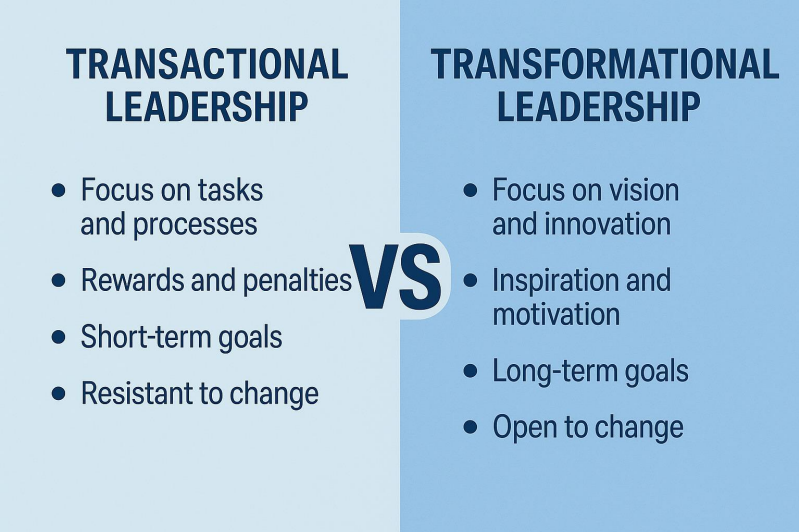
Transactional leaders: Set clear, short term goals, and reward people who meet the goals.
Transformational leaders: Inspire followers to focus on common, long-term goals.
Gender and leadership:
How many women leaders in the global world?
Why is it difficult for women to achieve leadership position?
Contingency theory of leadership:
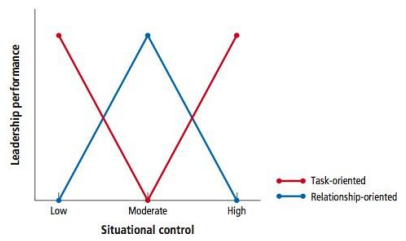
Contingency theory of leadership: Effectiveness of leadership relies on the leader’s orientation (between task-oriented/ relationship-oriented).
The contingency theory of leadership posits that no single leadership style is universally effective; Optimal performance depends on matching a leader's style to the specific situational context, including team relations, task structure, and position power.
Developed by Fred Fiedler, it emphasizes that leader effectiveness hinges on adapting to, or being placed in, the right environment.
Task-Oriented: Effective in highly favorable or highly unfavorable situations.
Relationship-Oriented: Effective in moderate-control situations.