3. Targeting HER2+ breast cancer with antibody based therapeutics
Monochonal antibodies-
- Monoclonal antibodies specific for oncogenic molecules overexpressed in a cancer type can be used to specifically target cancer cells.
- Therapeutic antibodies targeting different epitopes of the target molecule can have different functions, and can be used in combination.
- Combining pertuzumab and trastuzumab provides a more comprehensive HER2 blockage
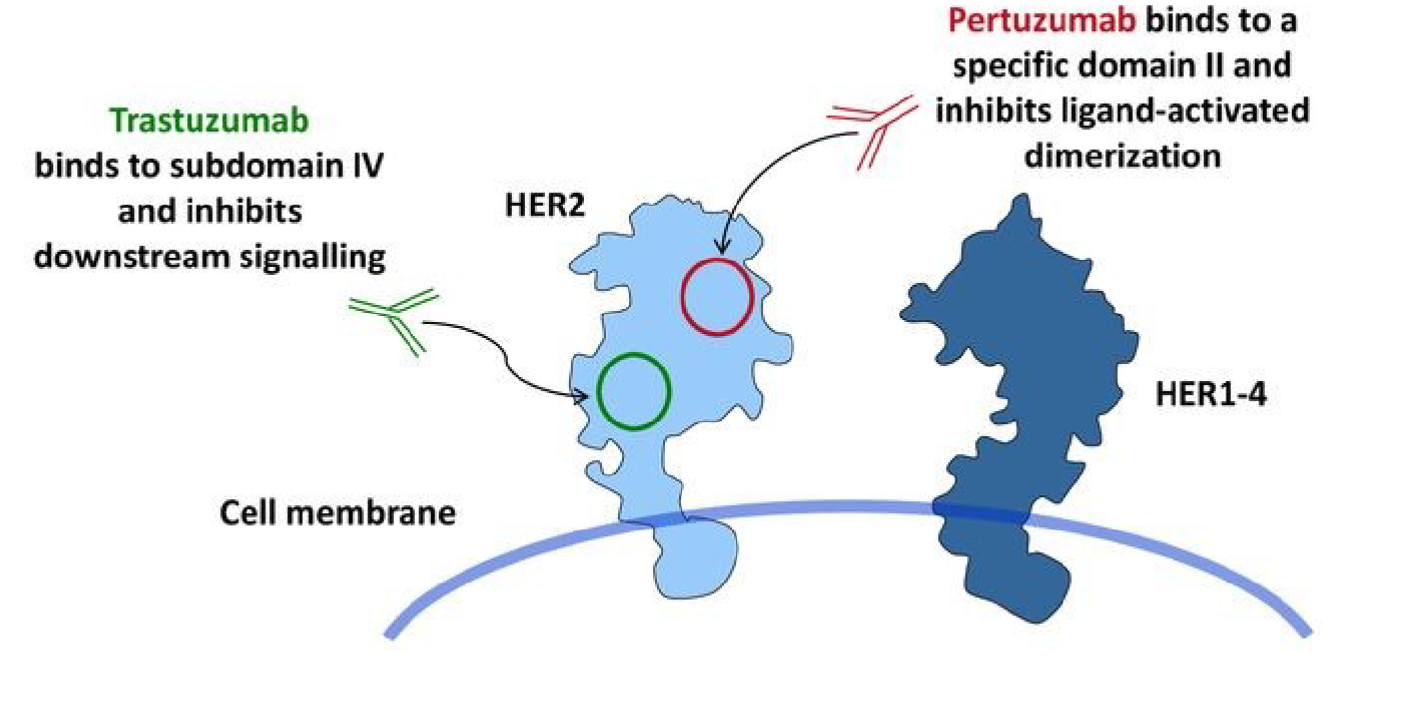
- Monoclonal antibodies can be modified to carry chemotherapy agents to bring cytotoxic agents directly to cancer cells and limit the side effects of chemotherapy agents (other cells in the body).
HER2 over-expression in breast cancer
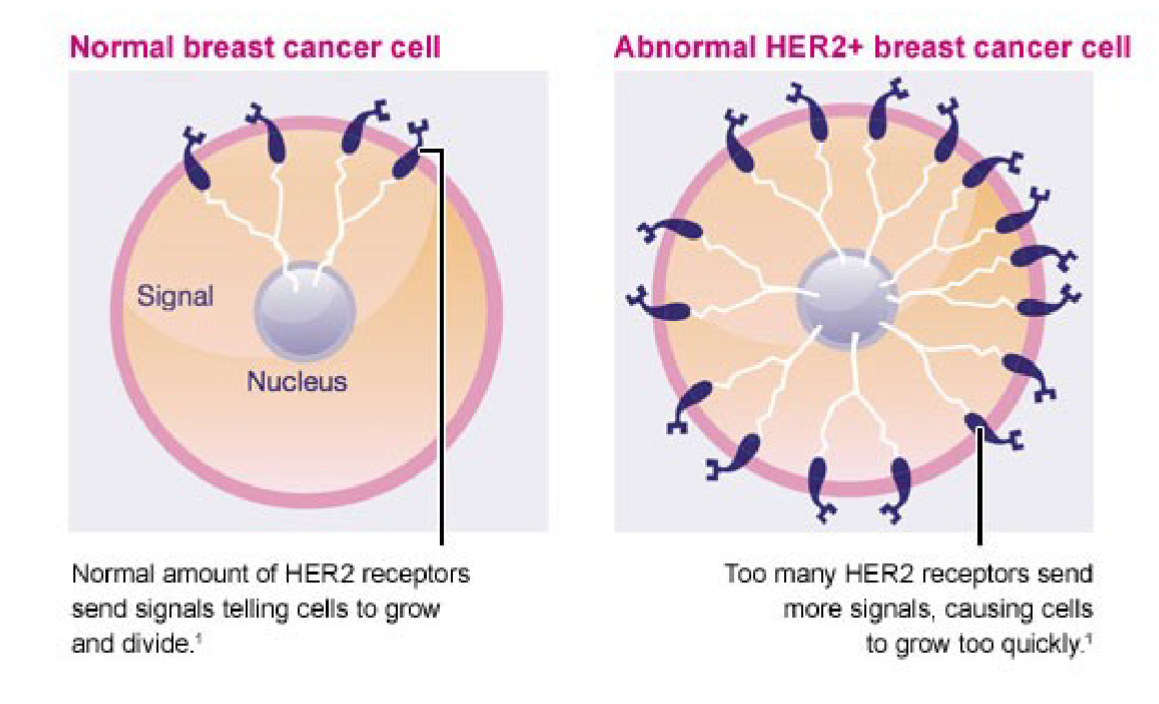
- Normal amounts of HER2 receptors send signals telling cells to grow
- Too many HER2 receptors send more signals, causing cells to grow too quickly
- The normal cell has only a few HER2 receptors but when a cell becomes a cancer cell it has overexpression HER2
- HER2 is overexpressed in cancer cells in comparison to healthy epithelial cells, thus this makes HER2 a good candidate for a therapeutic antibody for breast cancer.
Efficient delivery of cell killing drugs with antibody-drug conjugates (ADCs)
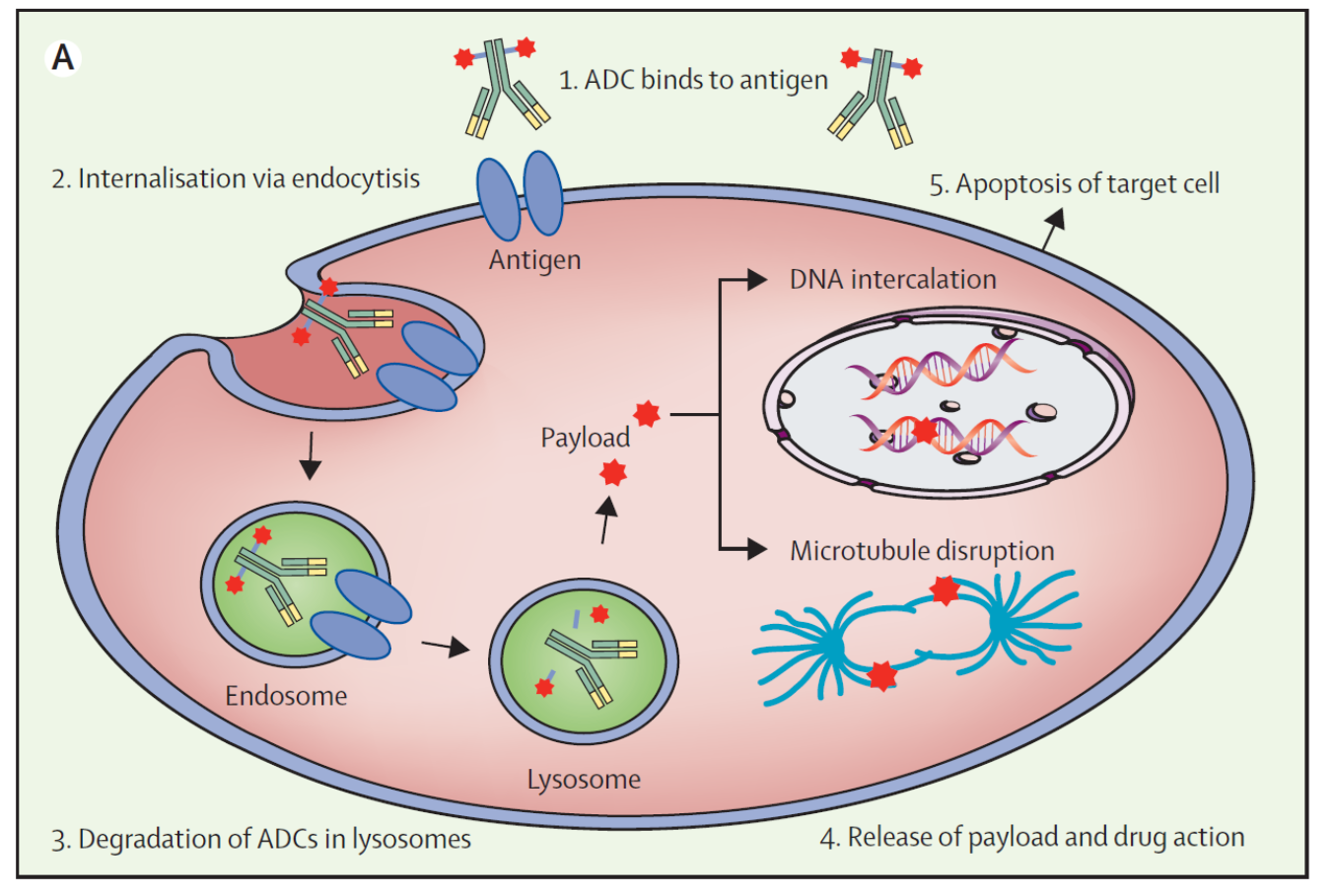
- They covalent bind to antibodies, when the antibody binds to the receptor and release the chemotherapy agent.
- ADCs have an increased half-life and require fewer infusions than regular chemotherapy drugs.
- ADCs are specific to a cell type that overexpresses an antigen target, whereas chemotherapy drugs kill all cells that proliferate fast.
- ADCs are also capable of activating the immune system by binding to Fc receptors on immune cells.
Mechanism of action for ADCs
- ADC binds to antigen
- Internalisation via endocytosis
- Degradation of ADCs in lysosomes
- Release of payload and drug action
- Apoptosis of target cell
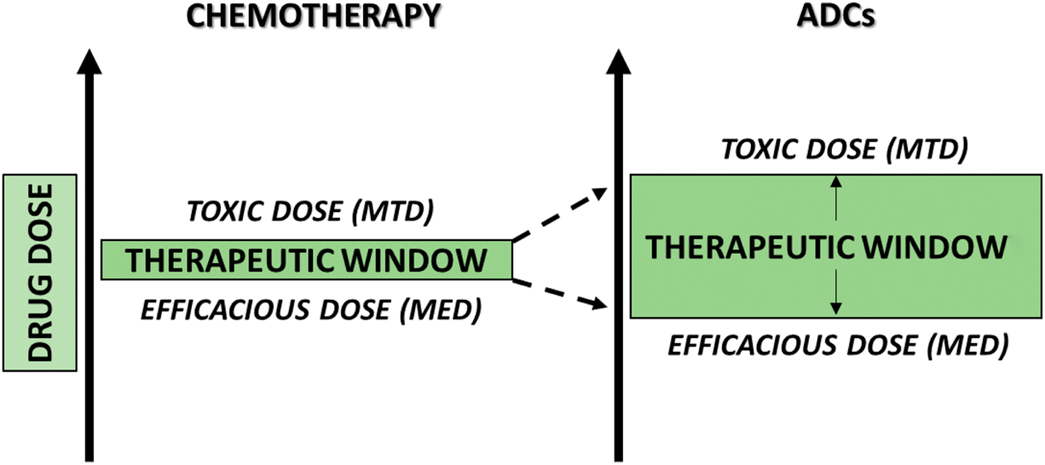
ADCs are designed to address limitations of traditional chemotherapy
Limitations of traditional chemotherapy
- Lack of tumor specificity
- Dose-limiting toxicity via systemic exposure of normal cells to cytotoxic agents
- Narrow therapeutic index
- More difficult to adjust dose to the patient’s weight
Advantages of ADC
- Efficient and specific drug delivery to antigen-expressing tumor cells
- Lower the dose
- More specificity
- Larger therapeutic window
Desired Attributes of Newer ADC components
Antigen:
- The higher homogenous expression on tumor
- Low or no expression on healthy tissues
- High affinity and avidity for antibody recognition
Antibody:
- High affinity and avidity for tumor antigen
- Chimeric or humanised to decrease immunogenicity
- Longer half life → it will be effective when it reach it target
- High molecular weight