Biology Test 1 Study Guide
1. Which of the following is a characteristic shared by all living organisms?
A. They can move from place to place
B. They are made of one or more cells
C. They reproduce sexually
D. They obtain energy from sunlight
2. Homeostasis is best described as:
A. Producing offspring
B. Maintaining relatively stable internal conditions
C. Breaking down DNA
D. Changing species over time
3. Which statement is part of cell theory?
A. All cells contain chloroplasts
B. All cells have a nucleus
C. All cells come from preexisting cells
D. All organisms are multicellular
4. Which is an example of a catabolic process?
A. Building a protein from amino acids
B. Breaking down a molecule into smaller molecules
C. Copying DNA
D. Producing offspring
5. Metabolism refers to:
A. Only the digestion of food
B. All chemical processes that help maintain life
C. Only energy production
D. The movement of organisms
6. Which organism would be considered a photoautotroph?
A. Human
B. Mushroom
C. Green plant
D. Dog
7. What is the order for the hierarchy of life?
8. What is an example of a negative feedback loop?
A. Blood clotting after scrapping your knee
B. Blood sugar regulation
C. Contractions happening during child birth
D. Throwing up
9. If a person is sitting too close to you in class and you lean away from them, what response is this?
A. Positive Thigmotaxis
B. Positive Geotropism
C. Negative Phototaxis
D. Negative Thigmotaxis
10. Which level of biological variation provides the raw material for natural selection?
A. Gene
B. Allele
C. Gene Pool
D. Genome
11. How do adaptations affect the fitness of an organism?
12. Define emergent properties and provide an example.
13. Why are viruses generally not considered cellular organisms?
A. They contain DNA
B. They cannot reproduce
C. They lack cellular organization and depend on host cells
D. They are too small
14. The protein coat surrounding a virus's genetic material is called the:
A. Envelope
B. Capsid
C. Ribosome
D. Cell wall
15. Viral genetic material can consist of:
A. Only DNA
B. Only RNA
C. DNA or RNA
D. DNA and RNA in every virus
16. A complete virus particle outside a host cell is called a:
A. Capsid
B. Virion
C. Provirus
D. Ribosome
17. Which sequence correctly describes the basic lytic cycle?
A. Assembly → attachment → release → penetration → synthesis
B. Attachment → penetration → synthesis → assembly → release
C. Penetration → attachment → assembly → synthesis → release
D. Synthesis → attachment → penetration → release → assembly
18. Viral glycoprotein spikes primarily help viruses:
A. Produce ATP
B. Make proteins
C. Bind to receptors on host cells
D. Digest the host cell
19. Which characteristic of DNA viruses can make them easier for the immune system to recognize over time compared with many RNA viruses?
A. DNA viruses always cause mild infections
B. DNA viruses generally have lower mutation rates, making their viral antigens more stable
C. DNA viruses cannot infect human cells
D. DNA viruses cannot reproduce inside host cells
20. What is the process of a cell taking in materials into the cell called?
A. Endocytosis
B. Phagocytosis
C. Exocytosis
D. Pinocytosis
21. What antibodies prevent the synthesis of the cell wall?
A. Tetracycline
B. Amoxicillin
C. Penicillin
D. Glycopeptides
22. What answer best matches the definition of a disease?
A. The feeling of not feeling well.
B. Abnormality of function of the body.
C. The act of coughing.
D. The process of getting sick.
23. Why are some antibiotics ineffective against viruses?
A. Viruses do not have DNA
B. Viruses are too small
C. Antibiotics affect bacterial processes
D. Antibiotics only work on animal cells
24. A bacteriophage infects a bacterial cell by attaching to the cell surface and injecting its genetic material. Instead of immediately producing new viruses and destroying the host cell, the viral DNA becomes integrated into the bacterial chromosome. As the bacterium grows and divides, the viral DNA is copied along with the bacterial DNA and passed to daughter cells. Under certain environmental conditions, the viral DNA can later become active and enter the lytic cycle. Which process is most directly responsible for allowing the virus to remain in the host cell without immediately destroying it?
A.The viral DNA is immediately translated into viral proteins that cause the cell to burst. B. The viral DNA integrates into the host chromosome and is replicated with the host DNA. C. The virus prevents the host cell from replicating its chromosome. D. The viral capsid remains permanently attached to the outside of the host cell. E. The host cell destroys the viral DNA before it can replicate.
25. A phylogenetic tree is best described as:
A. A map showing where organisms live
B. A graphical hypothesis of evolutionary relationships
C. A chart showing population size
D. A diagram of cell structure
26. A paraphyletic group is: A. An extinct species only
B. A common ancestor/branching point
C. An individual organism D. An ancestor and some descendants
27. Sister groups are groups that:
A. Have identical DNA
B. Share the most recent common ancestor
C. Live in the same environment
D. Are always the same species
28. A monophyletic group contains:
A. Only an ancestor
B. An ancestor and all of its descendants
C. Only unrelated species
D. Two species with similar traits
30. Two unrelated organisms independently evolve similar body shapes because they live in similar environments. This is an example of:
A. Divergent evolution
B. Convergent evolution
C. Genetic drift
D. Gene flow
31. Structures that are similar because of shared ancestry are called:
A. Analogous structures
B. Homologous structures
C. Vestigial structures
D. Artificial structures
32. What does the law of parsimony state?
A. Has the most branches
B. Has the most number of species
C. Requires the fewest assumptions
D. The most evolutionary changes
33. Match the term to the group by color

1. Monophyletic
2. Paraphyletic
3. Polyphyletic
34. Which organisms in the tree branched most recently?

35. Looking at the tree above, which of the following is false?
A. Marsupialia evolved after the eutheria group.
B. The Koala is more closely related to Kangaroo than the Bat.
C. The Lion is more closely related to the Bat than to the Koala.
D. The Mammalia is the ancestor group.
36. Use the dichotomous key to identify the organisms below.
1. Organism contains chlorophyll; is green in color ………………………………… 2
Organism lacks green pigment or is colorless ………………………….…………. 4
2. Organism is unicellular …………………………………………………………….. Euglena
Organism is multicellular ………………………………………………………….. 3
3. Lives in a spherical colony ………………………………………………………… Volvox
Forms long filamentous chains …………………………………………………….. Spirogyra
4. Organism moves using two flagella ………………………………….….……….. Dinoflagellate
Organism moves using cilia …………………………… ... ... ... ...…….………..………….. Paramecium

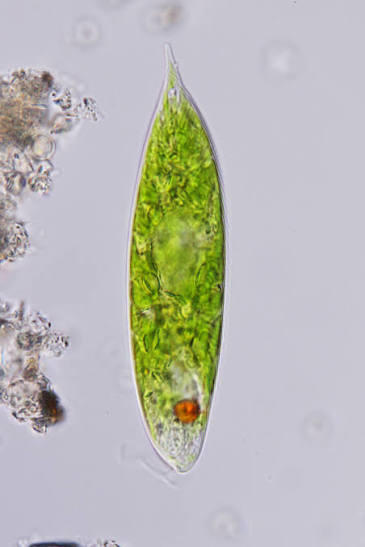

37. How is modern phylogeny different from earlier historical classifications of life?
38. Evolution is best defined as:
A. Change in an individual's traits during its lifetime
B. Change in allele frequencies in a population over time
C. Organisms becoming more complex
D. Organisms intentionally adapting
39. Which observation helped Darwin and Wallace develop the idea of natural selection?
A. All individuals are genetically identical
B. Individuals in populations show inherited variation
C. Organisms never compete
D. All offspring survive
40. Natural selection occurs when:
A. Organisms consciously choose useful traits
B. Individuals with certain inherited traits leave more offspring
C. Every organism produces the same number of offspring
D. Mutations always benefit organisms
41. Which idea was associated with Lamarck?
A. Natural selection
B. Use and disuse of structures and inheritance of acquired characteristics
C. Genetic drift
D. Gene flow
42. Which idea did Lamarck and Darwin both support?
A. Evolution occurs
B. Acquired traits are always inherited
C. Natural selection is the only mechanism of evolution
D. Organisms do not change
43. Microevolution refers to:
A. Changes in allele frequencies within populations
B. Formation of the first cell
C. Changes above the species level only
D. Extinction of all
44. What is the difference between a phenomenon and a mechanism?
A. A phenomenon is an observed pattern or event, while a mechanism explains how or why that pattern occurs.
B. A phenomenon explains how something happens, while a mechanism is an observation that needs to be explained.
C. A phenomenon and a mechanism are two different names for the same scientific observation.
D. A phenomenon describes a hypothesis, while a mechanism describes the experimental results.
45. The idea that Earth’s major features were shaped by sudden, short-lived violent events is closely related to what scientists?
A. Lyell/Hutton
B. Watson
C. Cuvier
D. Darwin
46. A population of fish begins living in deeper water over many generations. Individuals with traits that allow them to tolerate greater pressure and lower temperatures survive and reproduce more successfully, leading to the deep-water population observed today.
What biologists is this related to?
47. Which of the following examples is macroevolution?
A. Bacteria develop antibiotic resistance
B. Evolution of whales from land-dwelling mammals
C. A plant population becomes more tolerant to drought over generations
D. Insects become resistant to a pesticide over several generations
48. Genetic drift is:
A. A random change in allele frequencies
B. Movement of alleles between populations
C. Selection for the strongest individuals
D. Production of new species through mating
49. Gene flow occurs when:
A. Alleles move between populations
B. Mutations disappear
C. Individuals stop reproducing
D. Natural selection stops
50. A population of bacteria becomes increasingly resistant to an antibiotic because resistant bacteria survive and reproduce more successfully. This is an example of:
A. Genetic drift only
B. Natural selection
C. Convergent evolution
D. Acclimation