Data and Databases
Software Systems and Environments
Web-Based Software Systems:
Definition: Applications accessible directly through a web browser without requiring local software installation or specialised computational hardware.
Key Platforms & Tools:
GenBank: Web portal for querying publicly available DNA sequence records.
EMBL: European molecular database Web interface for data access.
BLAST (Basic Local Alignment Search Tool): Web-based sequence alignment tool for finding similarity between biological sequences.
WebLogo: Graphical Web application for generating sequence logos from biological alignments.
Stand-Alone Software:
Definition: Programs installed directly on local machines that leverage local processing resources to perform biological analysis.
Key Programs:
MEGA (Molecular Evolutionary Genetics Analysis): Software suite for conducting statistical analysis of molecular evolution and constructing phylogenetic trees.
PyMOL: Molecular visualization system used to render protein and nucleic acid structures.
Bioconductor: An open-source software project based on the R programming language providing tools for the analysis of genomic data.
Command-Line Tools and Operating Systems:
Definition: High-performance environments where commands are executed via shell scripts or terminal interfaces without graphical user interface overhead.
Key Components:
Linux & Unix: Primary operating system architectures for running scalable bioinformatics pipelines and server utilities.
Perl & Python: Scripting languages used to parse, manipulate, and process genomic file formats.
Command-Line BLAST: Local executable version of BLAST used to query massive databases efficiently.
Integrated Software Environments:
Definition: Comprehensive platforms combining multiple sequence analysis tools, graphics, and database connections into a single framework.
Key Platforms:
RStudio: Integrated development environment (IDE) for the R programming language used for statistical modeling and computational biology.
Geneious: Commercial integrated software suite for sequence alignment, assembly, and molecular cloning analysis.
BioJava: An open-source Java framework for processing biological data, alignments, and structures.
Biological Data Formats
Overview and Rationale for Data Formats:
Determinants of Format: The specific storage format depends on the biological data type (e.g., nucleotide sequences, amino acids, quality scores, structural coordinates), downstream experimental goals, and software compatibility.
Format Proliferation: The existence of numerous biological formats is driven by software compatibility requirements, processing and reading speed, and storage efficiency.
File Interconversion: Some formats can be freely converted between each other via software utilities, whereas others cannot due to non-overlapping metadata models.
Accessibility: Plain-text formats (such as FASTA, FASTQ, and GFF) can be opened and edited using standard text editors like Notepad, whereas specialized formats require domain-specific software (such as PyMOL for PDB files).
FASTA Format:
File Extensions:
.fa,.fasta,.faData Type: Stores raw nucleotide (DNA/RNA) or amino acid (protein) sequences.
Structure: Composed of two distinct line types per entry:
Header Line: > gives basic information about the sequence
Sequence Line: Placed on the line directly following the header, containing the sequence as a continuous, uninterrupted string of single-letter standard codes.
Nucleotide Sequence Example:
>fasta sequence AAACTAGATCGATAGCTAGAGCGCGAGATCGCGAGATCTA>fasta sequence BGTGACTGATCGACTATGGGGCATATATCTCTTTAGCGCG>fasta sequence CCCCTATAGCGTAGCATGCTAGTGACTATATACTATATATC
Protein Sequence Example:
>fasta protein sequence aLGKCFEPSGSFFYWDAIVDEWTVPPALVMCTFVRMGWFNCWDEAMKSVWNFLAWDETERY>fasta protein sequence 2NLWYNSVSLKKFQYNEYAMKGMQDDCKQTTMWIGQHHNNQPTCTCTMSIMQTAYSADYSV>fasta protein sequence 3DLVNMGHYSPDCHPGELPSQMHEKHEKRTAHSMQYPYYVFRRSPTYCKAKMFMMMFATYP
FASTQ Format:
File Extensions:
.fastq,.sanfasta,.fqOrigin: Developed by the Sanger Institute to combine raw biological sequence strings with their corresponding per-base quality scores.
Structure: Exactly four lines per sequencing read:
Line 1: Begins with an
@character, followed by a unique sequence identifier and optional descriptor metadata (e.g.,@K00188:208:HFLNGBBXX:3:1101:1428:1508 2:N:0:CTTGTA).Line 2: The raw nucleotide sequence read (e.g.,
ATAATAGGATCCCTTTTCCTGGAGCTGCCTTTAGGTAATGTAGTA).Line 3: Begins with a
+character, optionally followed by a repeat of the sequence identifier.Line 4: Quality score encoded as ASCII characters, corresponding base-for-base to the nucleotides in Line 2 (e.g.,
AAAFFJJJJJJJJJJJJJJJJJFJJFJJJJJFJJJJJJJJJJJJJ).

Phred Quality Score Scale ():
The Phred quality score () represents the probability () that a corresponding base call is incorrect, calculated via the formula:

Higher the score = higher chance if the base cell being correct
FASTQ Encoding Variations:
Sanger (S): Uses Phred+33 offset; raw quality scores typically range from to (ASCII characters to ).
Solexa (X): Uses Solexa+64 offset; raw quality scores typically range from to (ASCII characters to ).
Illumina 1.3+ (I): Uses Phred+64 offset; raw quality scores typically range from to (ASCII characters to ).
Illumina 1.5+ (J): Uses Phred+64 offset; raw quality scores typically range from to (ASCII characters to ), where score , score , and score .
Illumina 1.8+ (L): Uses Phred+33 offset; raw quality scores typically range from to (ASCII characters to ).

General Feature Format (GFF):
File Extensions:
.gff2,.gff3,.gffPurpose: Tab-delimited plain-text format used to annotate specific structural and functional elements associated with genomic sequence coordinates. The current standard version is GFF3.
Example

Nine Tab-Separated Columns:

Protein Data Bank (PDB) Format:
File Extensions:
.pdbPurpose: Standard text format for encoding primary sequence data and three-dimensional () atomic spatial coordinates of biomacromolecules.
Used to store three-dimensional structural data of biological macromolecules such as:
• Proteins
• DNA
• RNA
• Protein-ligand complexes
• Macromolecular assembliesPDB files are obtained from structural biology techniques including:
• X-ray crystallography
• NMR spectroscopy
• Cryo-electron microscopy (Cryo-EM)Example

Column Key

Atom columns

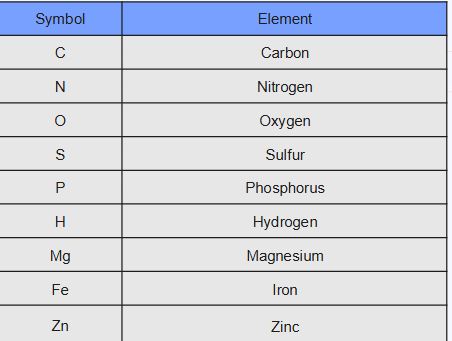
Biological Databases: Foundations and Concepts
Definition: A biological database is a organized digital archive designed to store, manage, and curate biological datasets so that information can be easily retrieved by researchers and automated systems.
Core Architectural Terminology:
Entry: Each individual record or file stored within a database.
Value: An indexed parameter or attribute that a user submits to locate a specified set of data.
Query: The process of searching a database to extract targeted records.
Primary Sequence Databases and Infrastructure
GenBank:
URL:
https://www.ncbi.nlm.nih.gov/genbank/Organization: Maintained by the National Center for Biotechnology Information (NCBI) at the National Institutes of Health (NIH).
Scope: Open-access, annotated collection of all publicly available DNA and RNA sequence records.
International Collaboration: Part of the International Nucleotide Sequence Database Collaboration (INSDC) alongside the DNA DataBank of Japan (DDBJ) and the European Nucleotide Archive (ENA). These three entities exchange data daily.
Release Schedule: A major release occurs every two months and is hosted on NCBI's FTP server.
Access Mechanisms:
Entrez Nucleotide: System for sequence identifiers and annotation queries.
BLAST: Sequence alignment search tool against GenBank databases.
NCBI E-utilities: Programmatic API for automated sequence searching, linking, and downloading.
FTP Distribution: Downloadable in ASN.1 and flatfile formats via
ftp://ftp.ncbi.nlm.nih.gov/ncbi-asn1andftp://ftp.ncbi.nlm.nih.gov/genbank.
Data Usage Policy: NCBI places no restrictions on use or distribution of GenBank data, though individual submitters may claim intellectual property rights.


EMBL-EBI (European Molecular Biology Laboratory - European Bioinformatics Institute):
URL:
https://www.ebi.ac.uk/services/data-resources-and-toolsScope: Maintains a comprehensive range of freely available, updated molecular data resources and computational biology tools.

Protein Knowledgebases and Structural Archives
UniProt (Universal Protein Resource):
URL:
https://www.uniprot.org/Scope: Premier resource for protein sequence and functional annotation.
Core Components:
RCSB Protein Data Bank (RCSB PDB):
URL:
https://www.rcsb.org/Scope: Primary archive for three-dimensional structural data of biological macromolecules.
Content:
Experimentally Determined Structures: structures determined by X-ray, NMR, or cryo-EM.
Computed Structure Models (CSMs): predicted models integrated from AlphaFold DB and ModelArchive.
Educational Resources: Includes PDB-101 training resources and educational features such as the September Molecule of the Month (e.g., Histone Deacetylases).

Protein Family and Domain Databases

Structural Databases

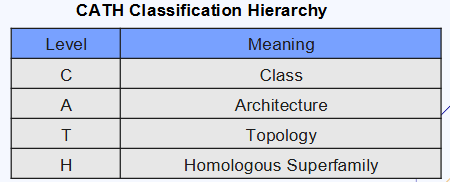
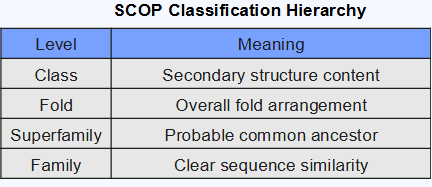
Additional specialised bioinformatic Databases
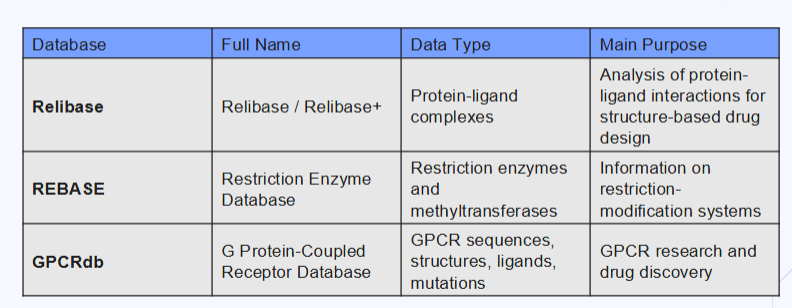
Databases at a glance

Pathway and Functional Annotation Systems
KEGG (Kyoto Encyclopedia of Genes and Genomes):
URL:
https://www.genome.jp/kegg/Organization: Developed by Kanehisa Laboratories.
Scope: Integrated database for understanding biological system functions from large-scale molecular datasets generated by high-throughput technologies.
Primary Sub-Databases:
KEGG PATHWAY: Graphical wiring diagrams of cellular metabolic and signaling pathways.
KEGG BRITE: Functional hierarchies and classification tables for biological entities.
KEGG MODULE: Defined functional collections of genes or metabolic reaction steps.
KEGG ORTHOLOGY (KO): Functional ortholog groups linked to genes and proteins.
KEGG GENES / GENOME: Organismal and viral genomic sequence data (
KEGG Virus).KEGG COMPOUND / GLYCAN / REACTION / ENZYME: Small molecules, glycans, biochemical reactions, and enzyme nomenclature.
KEGG NETWORK / DISEASE / DRUG / MEDICUS: Human disease networks, approved drugs, drug target interactions, and clinical health information.
Analysis Tools: Includes KEGG Mapper, KEGG Taxonomy, KEGG Synteny, BlastKOALA, GhostKOALA, KofamKOALA, BLAST/FASTA similarity searches, and SIMCOMP structure comparison.
Highly specifc database
Silva
Comparative online resources fir quality check and alignment ribosomal RNA sequence data


Model Organism Databases
TAIR (The Arabidopsis Information Resource):
URL:
https://www.arabidopsis.org/Scope: Dedicated genetic and molecular biology database for the model plant Arabidopsis thaliana.
Content: Complete genome sequence, gene structure, gene product function, gene expression data, DNA/seed stocks, genome maps, genetic markers, and weekly literature updates.
Technical Infrastructure: Phasing out legacy tools (SeqViewer, GBrowse) to focus on JBrowse/JBrowse2, with integrated support for PhyloGenes.
FlyBase:
URL:
https://flybase.org/Scope: Master database for Drosophila species genes and genomes (Drosophila melanogaster, Drosophila virilis, and comparison species like Apis mellifera).
Features: Includes BLAST search, JBrowse genome viewer, Gene Ontology (GO) vocabularies, ID Validator, Batch Download, and GAL4 driver expression data.
Funding Model: Implements a user website access fee of per person per year alongside tax-deductible community contributions.
Literature and Bibliographic Databases
PubMed:
URL:
https://pubmed.ncbi.nlm.nih.gov/Organization: Maintained by the NCBI / NLM.
Content: Contains over citations for biomedical literature from MEDLINE, life science journals, and online books.
Features & Tools: Provides E-utilities API access, FTP downloads, Single/Batch Citation Matcher, Clinical Queries, and Medical Subject Headings (MeSH) indexing.
Europe PMC:
URL:
https://europepmc.org/Scope: Partner repository of PubMed Central (PMC) and an ELIXIR core data resource.
Content: Indexes over life-sciences articles, preprints, and related bibliographic entries.