Astrophysics
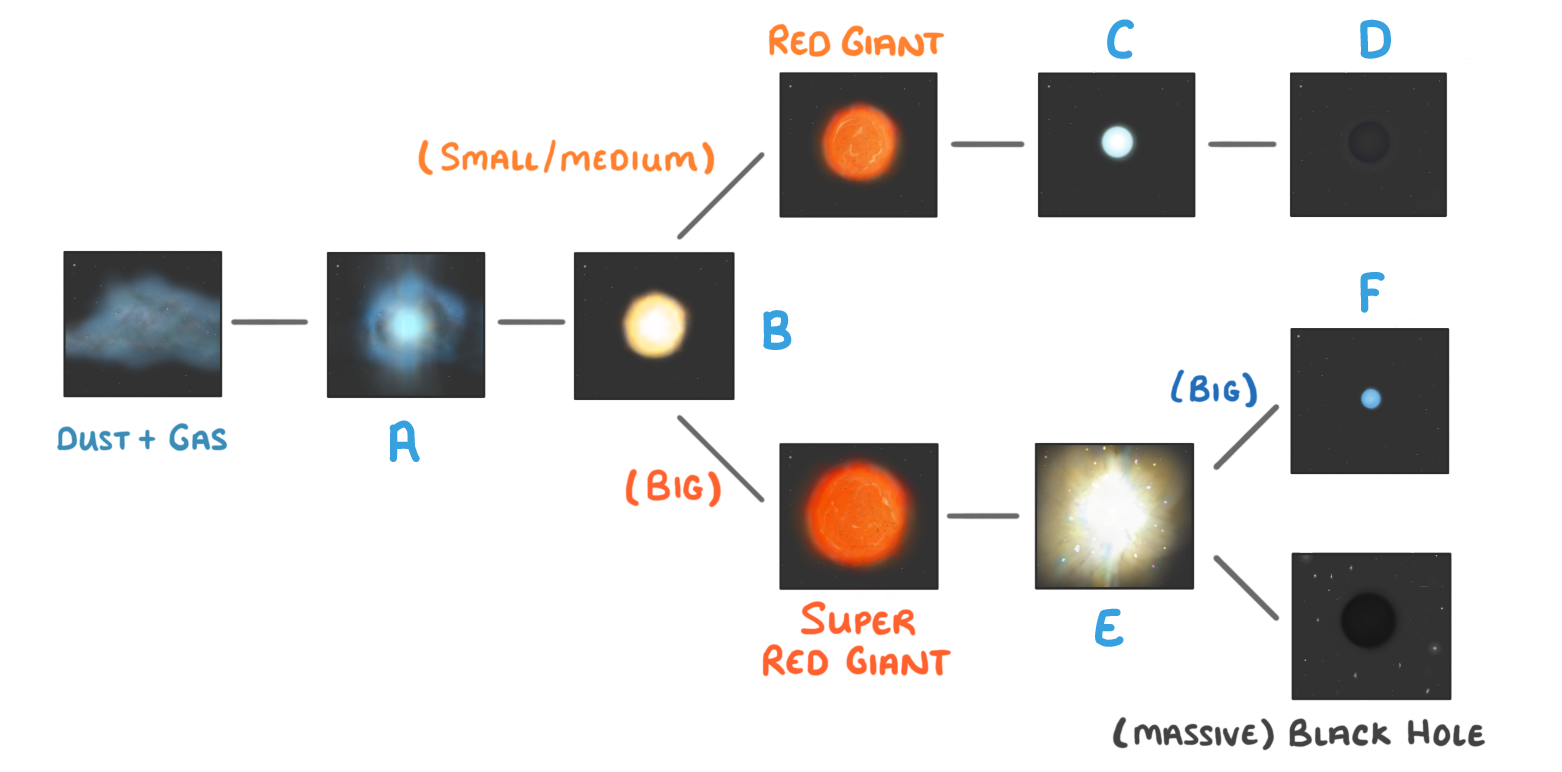 A - protostar
B - main sequence star
C - white dwarf
D - black dwarf
E - supernova
F - neutron star
When gazing at the stars, not all stars look the same. Some appear brighter and/or a different colour. Astronomers examine the light emitted by stars and categorise them by colour and temperature.
Hot stars appear blue or white in colour. Cooler stars appear red. Our sun has a temperature of 5,800 K and so appears yellow-white to us on Earth.
The amount of energy emitted by a star per second is known as its luminosity. The brighter the star, the higher the luminosity.

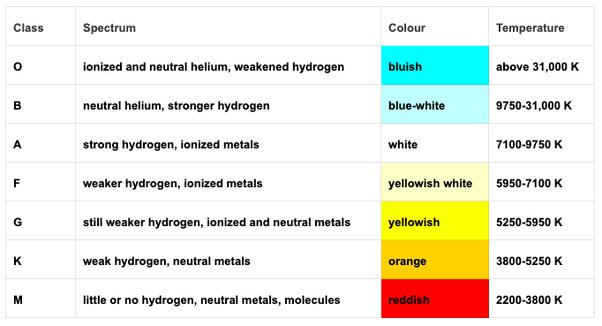 OH BOY A FURIOUS GOOFY KICKED MICKEY
/////////////////////////////////////////////////////////////////////////////////////////////////////////////////
Apparent magnitude
When observed from Earth, some stars appear brighter than others. This could either be because they emit more light, or because they are closer to us.
We measure this brightness using the apparent magnitude scale which is a measure of how bright a star appears from Earth.
Oddly, the lower the number, the brighter the star appears from Earth.
An apparent magnitude of -1 would appear significantly brighter than a star with an apparent magnitude of +2.
/////////////////////////////////////////////////////////////////////////////////////////////////////////////////
ABSOLUTE MAGNITUDE
Measure of the intrinsic brightness of a star (its luminosity), at a specific distance from Earth. Specifically, it is the apparent magnitude a star would have if it were observed from a standard distance of 10 parsecs (about 32.6 light-years).
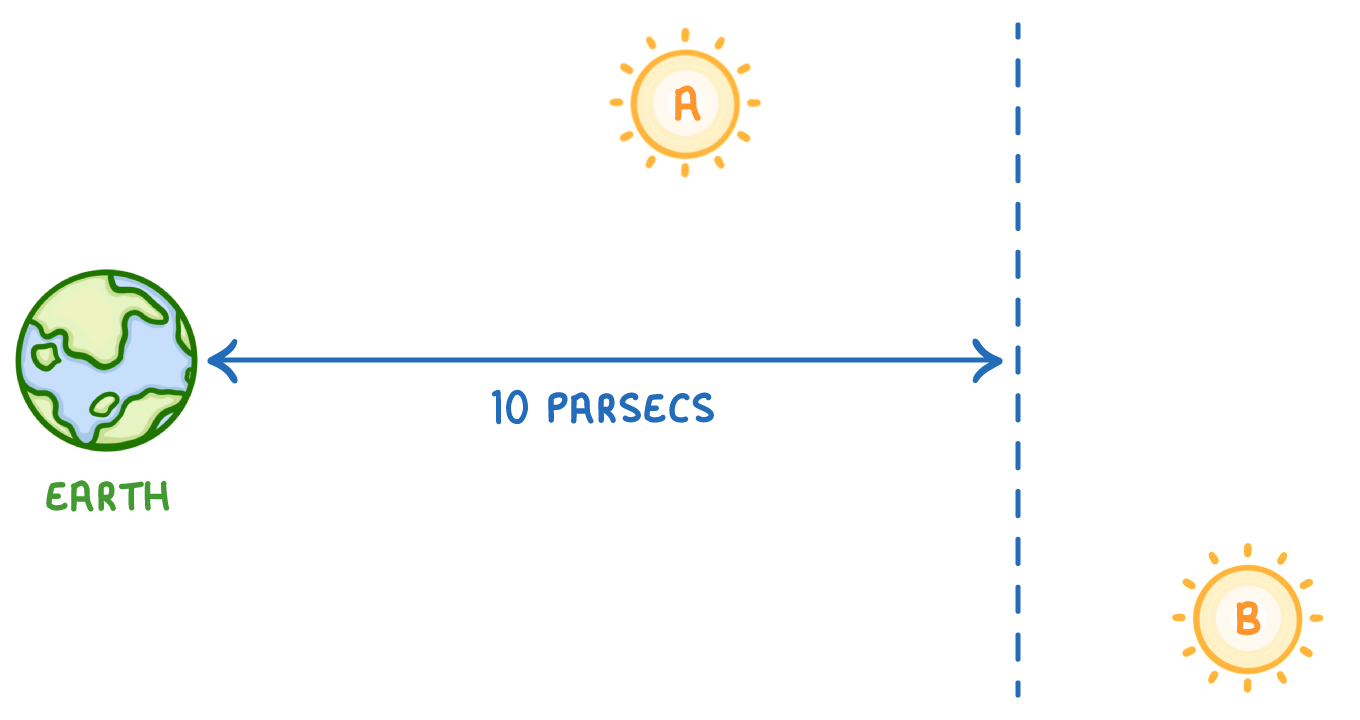 In the example above, star A and star B are identical, but Star A will appear brighter to an observer on Earth because it is closer. In other words, star A will have a lower apparent magnitude (remember that apparent magnitude has the weird scale where lower values mean brighter).
However, because both stars are identical, if they were the same distance from earth (e.g. 10 parsecs), then they would be equally bright. Both stars therefore have the same absolute magnitude.
/////////////////////////////////////////////////////////////////////////////////////////////////////////////////
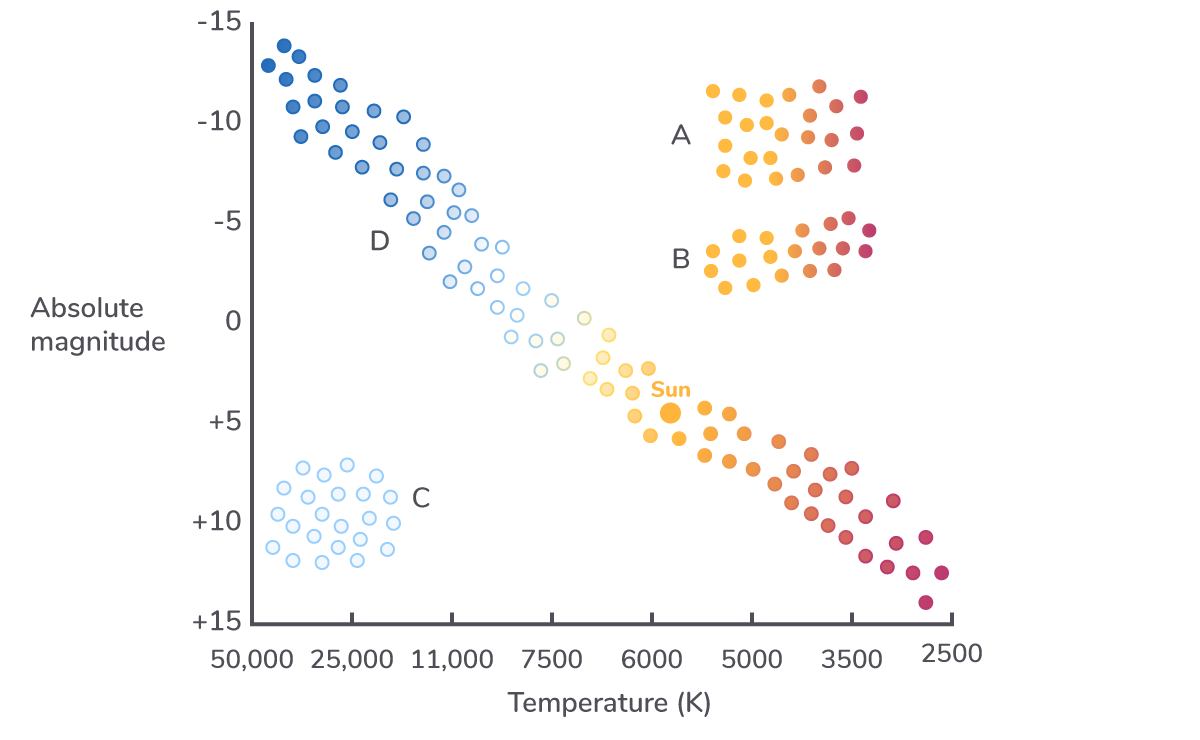

The x-axis of the Hertzsprung-Russell diagram is the temperature in Kelvin. (Note that the values decrease as you go along the x-axis).
Hot stars will therefore be on the left and cool stars will be on the right.
y-axis: Absolute magnitude is on the y-axis of the HR diagram. (Note that the values decrease as you go up the y-axis). The lower the number, the brighter the star.
Bright stars therefore appear at the top
dim stars are towards the bottom.
/////////////////////////////////////////////////////////////////////////////////////////////////////////////////
RED_SHIFT
Cosmic microwave background radiation (CMBR)
Cosmic microwave background radiation (CMBR) is electromagnetic radiation that is observed in all directions.
Initially, radiation from the Big Bang was incredibly hot.
As the universe has expanded and cooled, the background radiation has dropped in frequency.
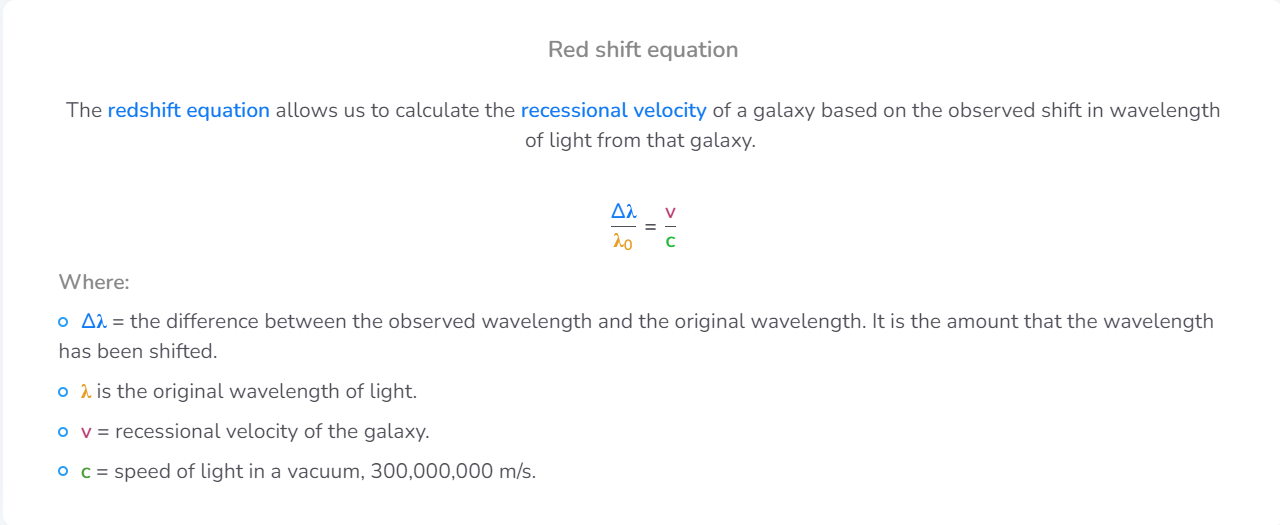
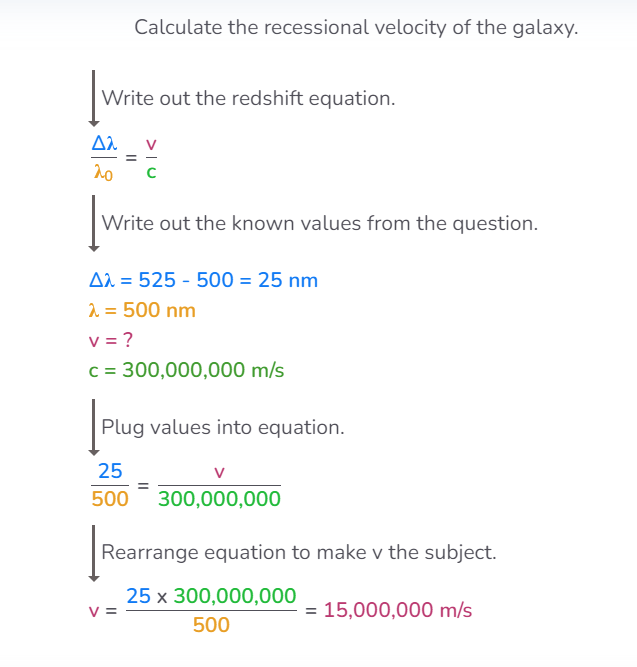
c = 3 × 10^8
ORBITS:
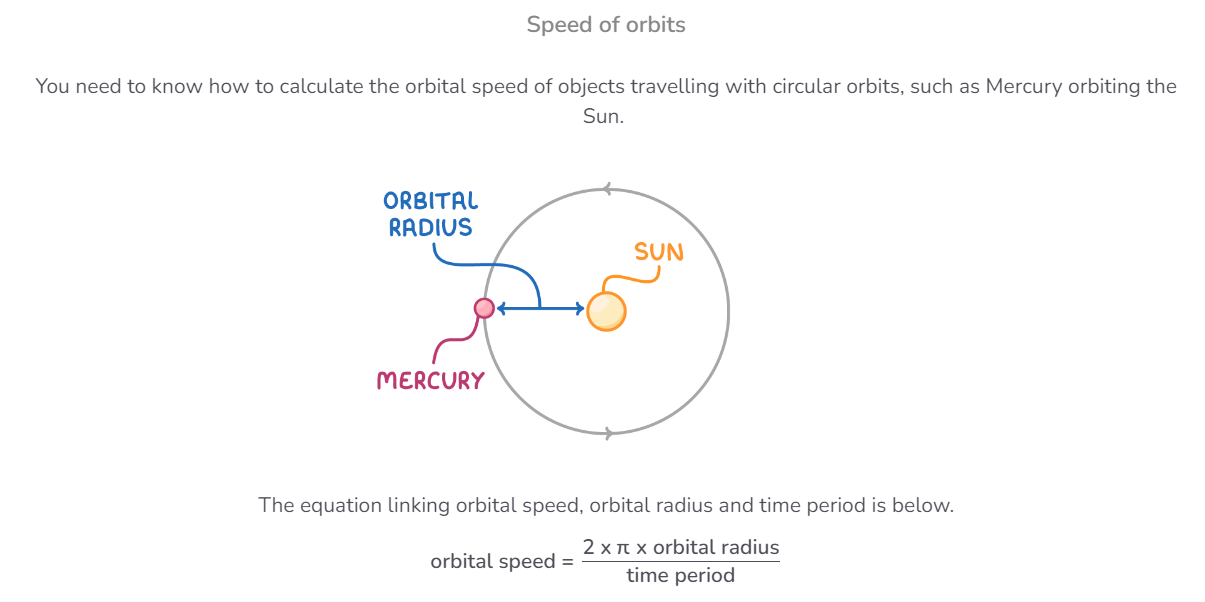
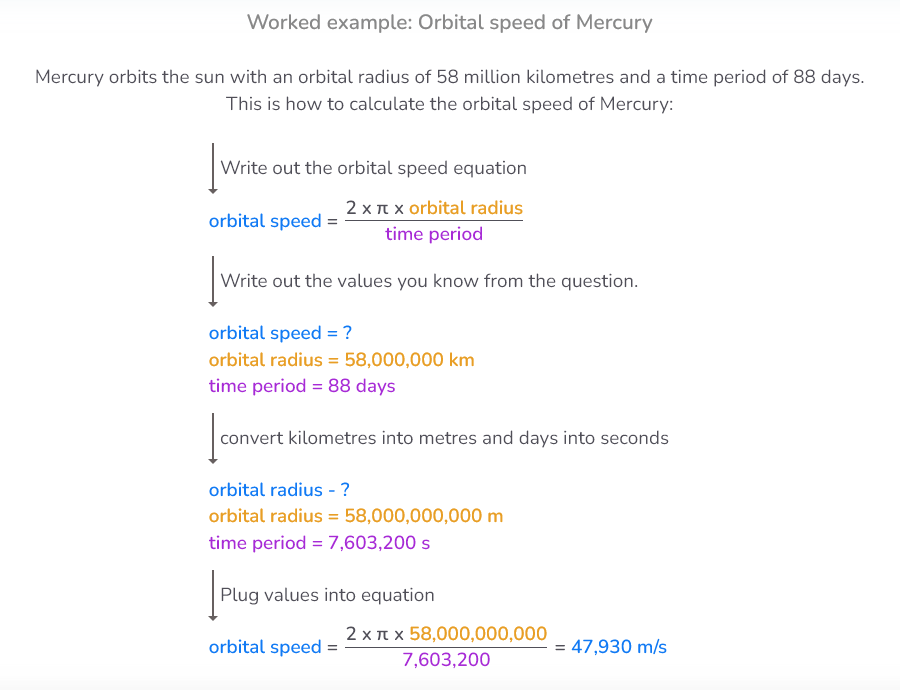
 A: instantaneous velocity
B: Gravitational Force
The direction of velocity changes but magnitude does not.
Thus, velocity changes but speed is constant