Cell Communication 🔗
Communication between organisms is crucial, involving transduction of stimulatory or inhibitory signals between cells, organs or even the environment.
Types of Cell Communication
One kind of taxis is chemotaxis; reactions relying on chemicals as their stimulus.
— Example: when bacteria controls its flagella to move away from harmful repellents (negative chemotaxis) and head to favorable spots of high attractant concentrations (positive chemotaxis) or how neutrophils navigate for inflammation or infections (positive chemotaxis).
Multi-cellular organisms communicate with one another in coordination of the body’s functions via cell-to-cell contact (junctions) or cellular signaling (ligands and receptors) on either a short-range (nearby cells) or on a long-range throughout their body.
Cell Signaling Systems
Autocrine Signaling
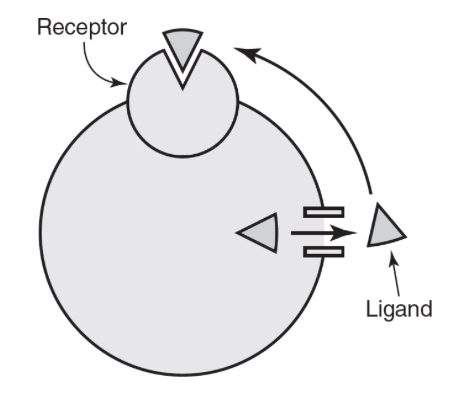
The cell secretes a ligand. This ligand then binds to a receptor located on the same cell which had formed this ligand, triggering a response inside that cell.
— Example: cancer cells produce their own growth hormones (the ligands) that stimulate the cancer cells grow and divide.
Juxtacrine Signaling
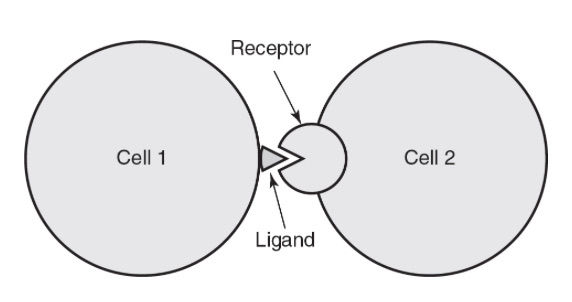
Depends on direct contact between the cell that’s sending the ligand and the cell that’s receiving it by its own surface receptors.
— Example: include plasmodesmata in plants (which involve the ligand traveling between channels that connect adjacent cells) and antigen-presenting cells in the human immune system (which signal helper T cells through direct cell-to-cell contact).
Paracrine Signaling
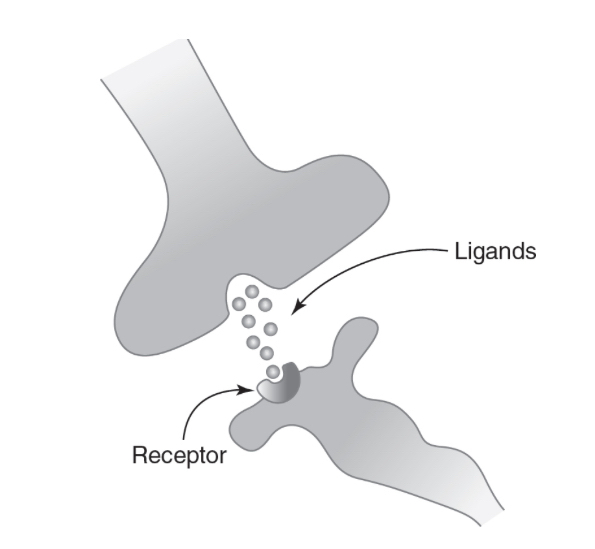
In paracrine signaling the cell secretes a ligand that migrates at a short distance to nearby cells. These ligands are referred to as local regulators as they only affect local cells.
— Example: neurotransmitters are regulators that travel at a short-range to local cells.
Endocrine Signaling
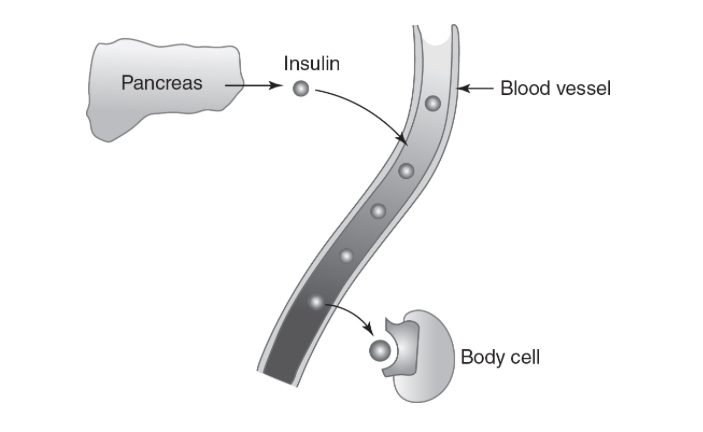
Ligands that travel at longer distances via the endocrine system are hormones.
— Example: insulin is a hormone produced by the pancreas. Insulin travels through the circulatory system to trigger responses in cells all over the body.
Signal Transduction
A process by which an external signal is transmitted or received by the cell, emitting a response.
A ligand joins a receptor.
Activation of a signal transduction pathway.
Cellular response.
Classes of Membrane Receptors
Ligand-gated ion channels: determines whether if the plasma membrane could open or shut ion channels once it binds to a ligand.
— Example: the ligand-gated sodium-potassium pump on the surface of a skeletal cell opens once acetylcholine(neurotransmitter) joins the receptor, which enables sodium to transport outside and potassium to flow inside, leading to depolarization of the cell causes it to contract.
Catalytic (enzyme-linked) receptors: initiated upon a ligand binds at the extracellular region.
— Example: an insulin receptor connects to ligand then establishes a complex signaling pathway that boosts metabolic activity and synthesizes lipids more efficiently.
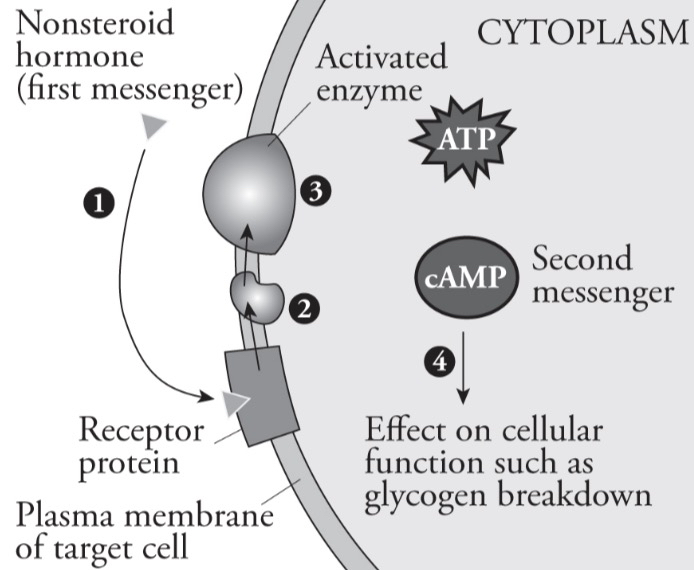
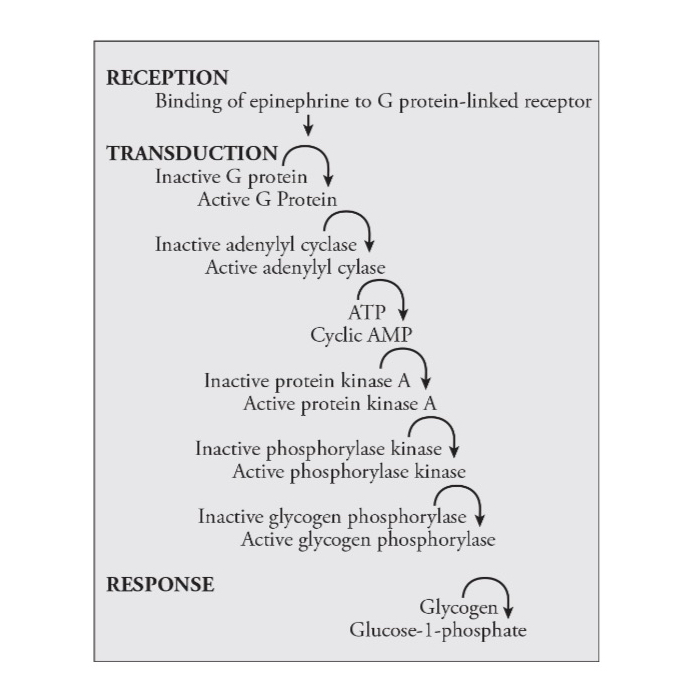
G-protein linked receptor: binds to various kinds of a G-protein (GTP or GDP) as a ligand bounds extracellularly, which activates an enzyme (adenylyl cyclase) to stimulate the secondary messenger (Cyclic AMP/cAMP) via ATP to proceed with catabolism of glycogen to glucose during hunger.