Metabolism and Excretion of Cholesterol
Metabolism and Excretion of Cholesterol
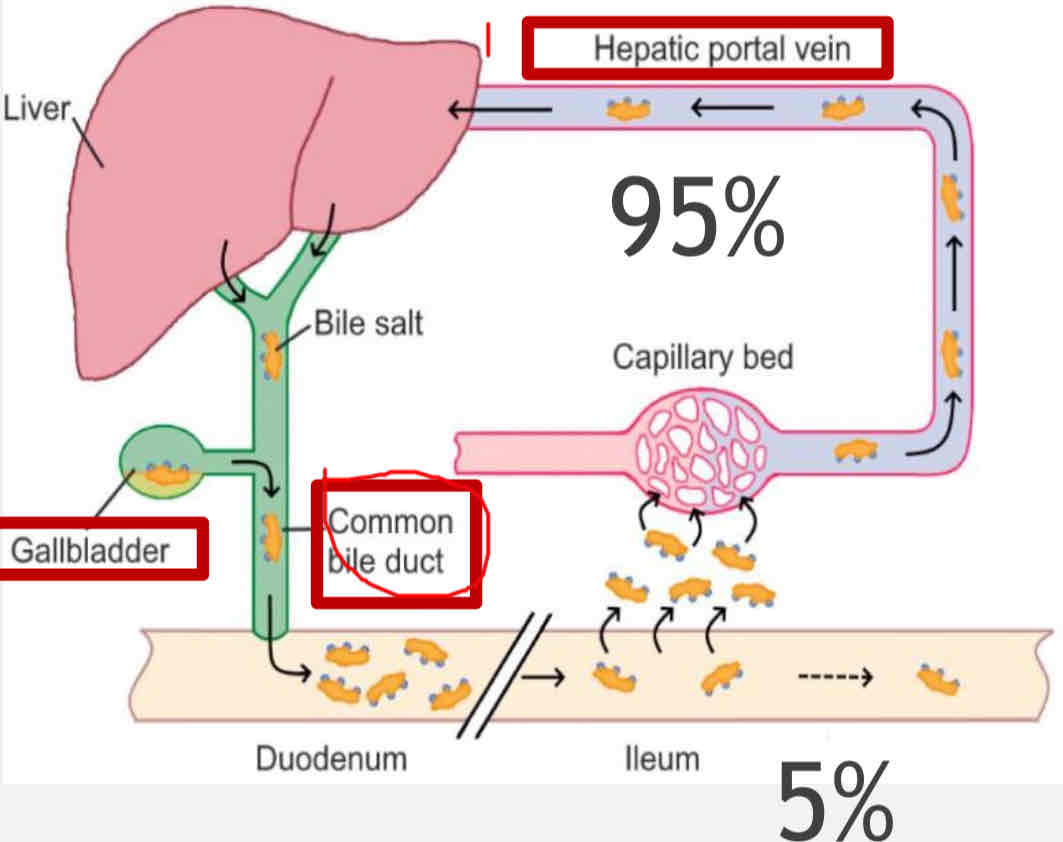
Liver
The liver is a crucial organ in cholesterol metabolism. In this organ, cholesterol is converted into bile acids, which play an essential role in lipid digestion and absorption.
Bile acids facilitate the breakdown of fats, making it easier for the body to absorb necessary fatty acids and fat-soluble vitamins (A, D, E, K).
The conversion of cholesterol to bile acids is a significant pathway for cholesterol elimination from the body.
Gallbladder
The gallbladder is a small pouch beneath the liver that temporarily stores bile acids produced by the liver.
When food enters the small intestine, the gallbladder releases stored bile to aid in the digestion of fats.
The bile acids released are crucial for emulsifying fats, allowing enzymes to further break down dietary lipids for absorption.
Common Bile Duct
When bile acids are ready for excretion or for aiding in digestion, they travel through the common bile duct.
This duct serves as a channel that carries bile from both the liver and the gallbladder through the pancreas and into the duodenum, the first section of the small intestine.
After the duodenum, any bile acids that are not reabsorbed will move to the large intestine, where they will be excreted as fecal material.
Hepatic Portal Vein
The hepatic portal vein is a major vessel that collects blood from various segments of the gastrointestinal tract (GIT) and transports it to the liver.
This vein plays a critical role in nutrient absorption; it carries nutrients absorbed from food directly to the liver for processing and metabolism.
Moreover, it facilitates enterohepatic recirculation or biliary recycling, ensuring that bile acids are reused effectively in the digestive process.
Enterohepatic Recycling or Biliary Recycling
Enterohepatic recycling is a vital process involving the reabsorption of bile acids.
Instead of being excreted, approximately 95% of bile acids return to the bloodstream through the intestines.
These bile acids are then transported back to the liver via the hepatic portal vein, where they can be repurposed and reused in the digestion of new meals.
This mechanism is efficient and prevents the loss of significant amounts of bile acids, ensuring that the body maintains adequate supplies necessary for fat digestion.
Fecal Excretion
Despite the body's efficiency, approximately 5% of bile acids are ultimately excreted in fecal material.
This excretion serves as an important pathway for regulating cholesterol levels in the body.
The balance between the recycling of bile acids and their excretion is crucial for maintaining overall cholesterol homeostasis, helping to prevent conditions related to cholesterol imbalance, such as gallstones and atherosclerosis.