Lecture 6 - flexibility
Focus on Flexibility - Stretching for Better Health
Importance of flexibility
What: ability to move a joint or a group of joints through their complete range of motion (ROM)
ROM (how far you can move or stretch a part of your body such as a joint or a muscle)
How easy it is to do the following:
Flexion / hyperextension extension
Abduction / adduction
Outward / Inward rotation
How: through stretching
Importance:
Everyday task and pain free movement (ex. Bending, twisting, reaching, etc)
Stress Relief, posture improvement, injury prevention and better balance
Stress: chronic stress from sitting?
Significance to aging process: Flexibility reduces over time
reduces hunching and prevents falls
Also: Speeds up recovery time post-cardiorespiratory exercises
Factors influencing flexibility
Joint structure
Types:
Hinge joint: only one plane; one direction
Allows for flexion and extension
Ex. elbow, knee cap
Ball and socket joint: allows all range of movement, except gliding (can bend, flex)
Ex. hip, shoulder joint
The shoulder joint is the most flexible joint in the body
Able to rotate shoulder joint in all planes
Hip: flexibility and prevent lower back pain
Gliding joints : aka plane joints
Ex. foot
Allows foot to slide against each other??
Others: saddle joint (thumb), pivotal joint (neck: bone rotation), condyloid joint
Important to know type bc various joints can perform various activities
NSA (nervous system activity)
Proprioceptor / sense receptors
Communicates with other parts of body
Proprioceptor receptors In muscle: stretch receptors
Golgi tendon organs - sense receptors in the tendon
Stretch receptor role:
Detect, coordinate, and pass information about the state of the muscles to the CNS
Sensitive to forceful stretching
Muscle spindle senses stretching and send info to spinal cord
Golgi tendon: when senses forceful stretching, it helps the body to relax?
Stretch reflex - reflexive contraction of the muscles
Responses to any forceful stretching
Age and sex
Regular exercise delays the natural aging process activity that limits flexibility (ACSM, 2014)
On average, women are more flexible than men (especially in hip joint flexibility)
Females have more elastin fibers in hip joints vs more collagen in men for strength
Activity status
More active = more flexible
Muscle elasticity (ME) and compliance (C) properties
Elasticity: degree to which a material resists deformation and quickly returns to its normal shape
How easy it is to stretch / react in the body
Increase elasticity = increases flexibility
Compliance: the ease with which a material is elongated or stretched
= Increased flexibility
Soft tissues:
Muscles, tendons, ligaments, joint cartilage, fat, skin
Most important to flexibility: muscle
Why? The elasticity, compliance to flexibility?
Tendons
Muscles are held together by connective tissue: tendons
Regular stretching of connective tissues= muscle elasticity and compliance
Chronic disuse leads to less elasticity and compliance
Prone to injury and lower back pain
Holds muscle to bone
Tendons recoil back
Muscle temperature
Warmer: prevents injury and improves flexibility
Assessing flexibility - key
Sit and reach test:
Establishes which joints will benefit from stretching
Process:
Warm up 5-15 minutes before
Lay on ground, with sit and reach box/ test at feet, stretch as far as possible to push scale
At least 2-3 trials; take the best or average
Asesses:
Hamstring and lower back flexibility
Allows hips to stretch forward
Upper back flexibility
Designing your stretching program
Types of stretching exercises:
Active: requires you to apply the force for a stretch; done mainly by yourself
Passive: requires the assistance of a device or trained partner to apply the force of the stretch
Methods of stretching:
Static stretching
Slowly elongating a muscle to the point of slight tension / mild discomfort (NOT pain) and holding it at that position
Hold for 15 - 60 sec
Best practices after a sufficient warm up, aerobic or resistance training workout
Ex. see photo
Passive or active stretching
Ballistic stretching
Dynamic stretching that utilizes a bouncing motion to move a muscle beyond its normal range or motion
Only after warm-up
Fast movement / pulsing
Takes muscle from controlled state to
Controls stretch receptors
Only recommended under proper supervision or advanced training experience
Proprioceptive Neuromuscular Facilitation (PNF) stretching
Utilizes the nervous and muscular systems to enhance flexibility
Use characteristic of golgi tendon to cause the forced muscles to relax
Further stretches muscles to improve flexibility flexibility
6 sec contraction followed by 30-60 sec assisted stretch
Supervision from professionals
Process: Hold Relax (HR) technique to Hamstrings
Passively stretch the muscle until they feel it
Contract the muscle and go against the stretch
Isometric contraction for 10 sec then stretch further
Gradually increase stretch
Frequency, Intensity, Time, Type of Flexibility
Type: static, ballistic, PNF
Frequency
Exercises that stretch the major muscle group should be performed 2 - 3 days a week
Stretching 3-5 days a week for even greater progress and benefits
Each stretch should be completed 4 times, allowing 30-60 seconds between each stretch
Intensity
Slowly apply stretch to muscle to the point of slight tension/ mild discomfort
Select stretching exercises that stretch the major muscle groups of the body
Don't hold your breath at any time during stretch
Time:
The best time to stretch the muscle is after the body is warmed up
5-10 minutes of aerobic exercise/ joint rotation before stretching
Common Stretching Exercises
Choose exercises that stretch the major muscle groups of the body
Includes: Neck, arm, shoulder, hips, legs
Multiple-joint stretches or exercises is recommended over single joint stretches
ex. hamstring muscles, quadricep muscles, calf muscles
See pics on slide
Principle PF benefit = enhanced flexibility, muscular fitness, and neuromotor fitness
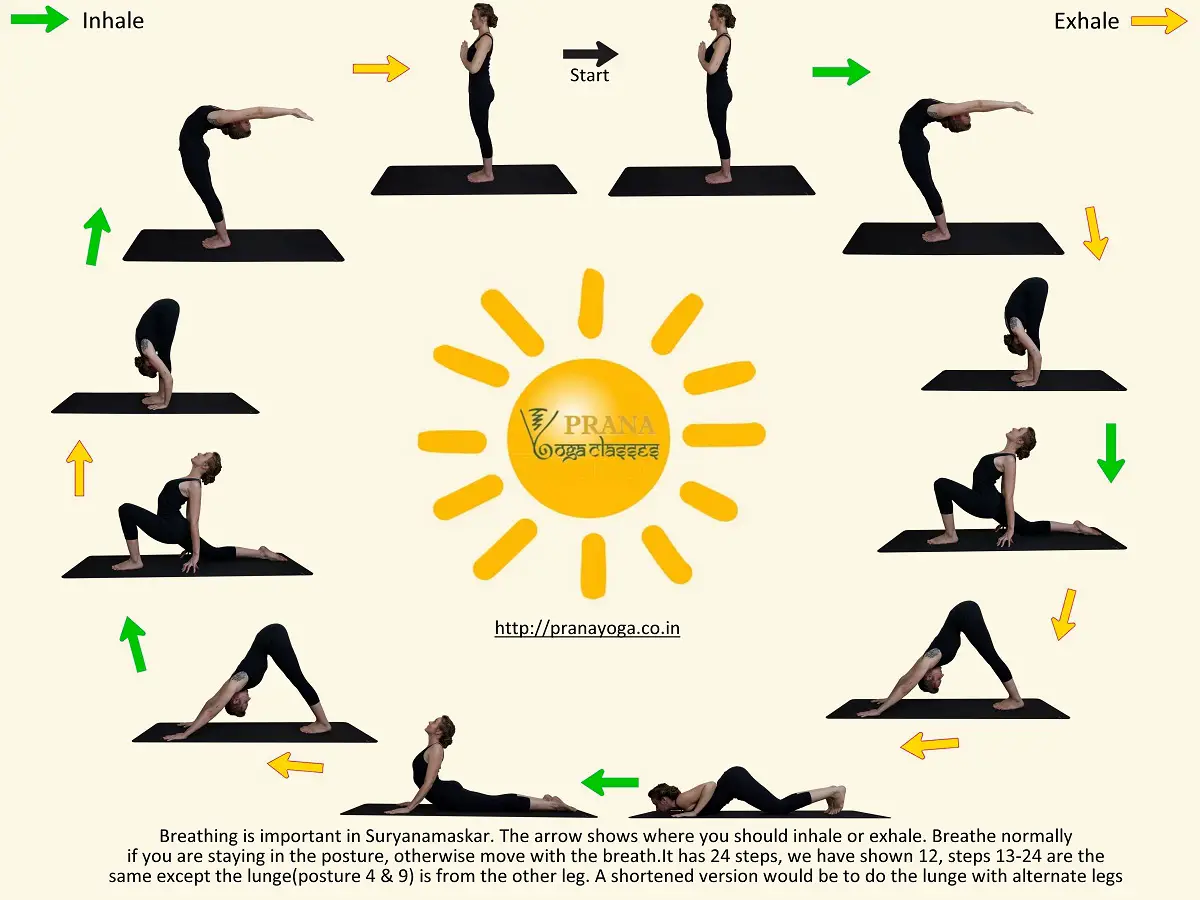
Yoga: aka “union” (in sanskrit)
Union between the body, mind, and spirit
Creating balance in the body through developing strength and flexibility
Most common type is hatha yoga
Each posture should be held for a full breath; some up to 5 breaths
Combination of posture is called sun salute
Series of 12 postures intended to be done in flowing routine
Concentration of mind and body’s rhythm
Tai Chi
Derived from martial arts
Combination of yoga and meditation
Performed slowly, softly, and gracefully with smooth and even transition between them
Maintains flexibility and mind-body harmony
Relieves stress: neuromuscular tension
Addressing Low-back Pain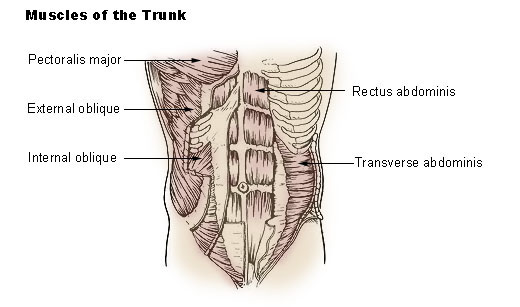
Estimated that 80% of americans will experience some degree of low-back pain over the course of their lifetime
Cause: weak core muscles and limited hip flexibility
Muscles of the trunk
Pectoralis major
External oblique
Internal oblique
Reduc abdominis
Transverse abdominis
Preventative measures
Curl up exercise to strengthen abdominal muscle
Ex. crunches
Hip flexibility exercises to stretch the hamstring muscles, hip flexors, and back extensors
Helps us do basic body movements
Ex. standing lunge, cat and camel stretch, knee to chest stretch (hamstring)
Concept connections: flexibility and physical activity relationship
Good flexibility contributes to overall physical fitness and preventive health care
Joint structure, muscle elasticity and compliance, nervous system activity, activity status, age and sex can influence range of motion around joint
Always apply the FITT principles to design a stretching program based on your individual needs/capacity
Multiple join stretching exercise are recommended
Flexibility vs mobility (STUDY maybe)
Flexibility
Ability to stretch muscles/ joints/ muscle groups through complete range of motion
Has to do with range of motion
Mobility
Ability to actively move joints, controlled bodily movement (ex. Bending)
“How easy is it to do the stretches”
Has to do with movements
Intertwined concepts
MIDTERM 2:
80% mc
20% short answer
Cumulative: FITT principle
Recurrent topics
Overarching themes: not details
Longevity