Stirrups and Ties
Seismic Ties and Stirrups are both crucial elements in structural engineering for earthquake resilience.
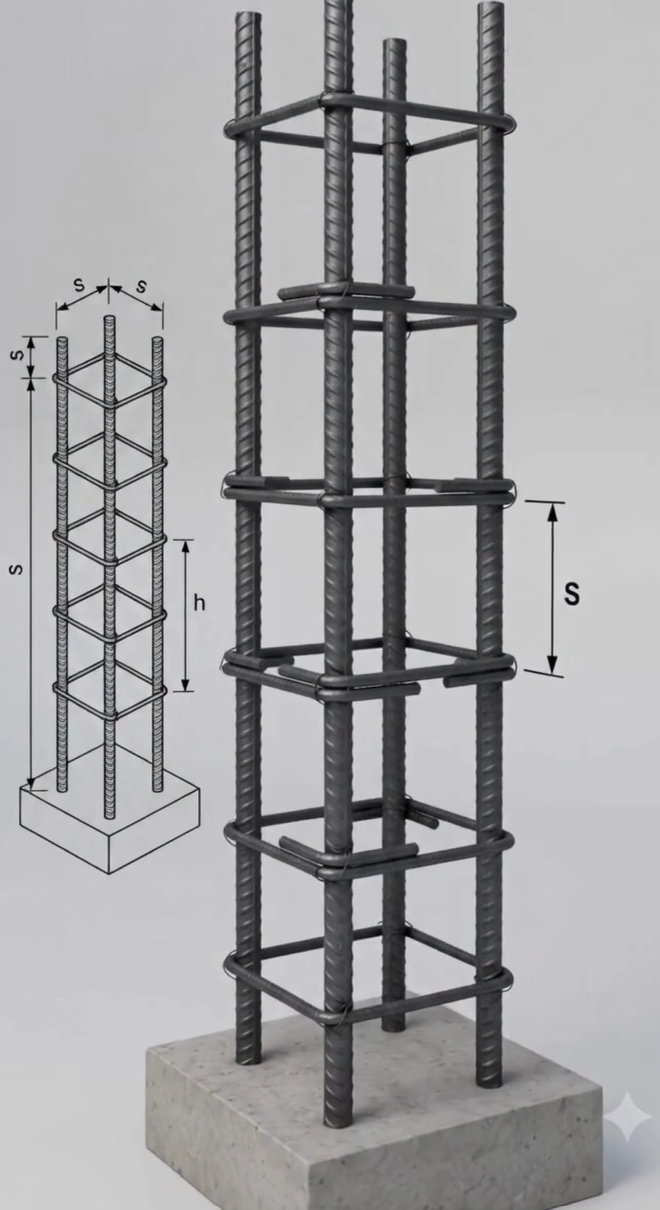
SEISMIC TIES
Purpose: Keep columns stable during earthquakes.
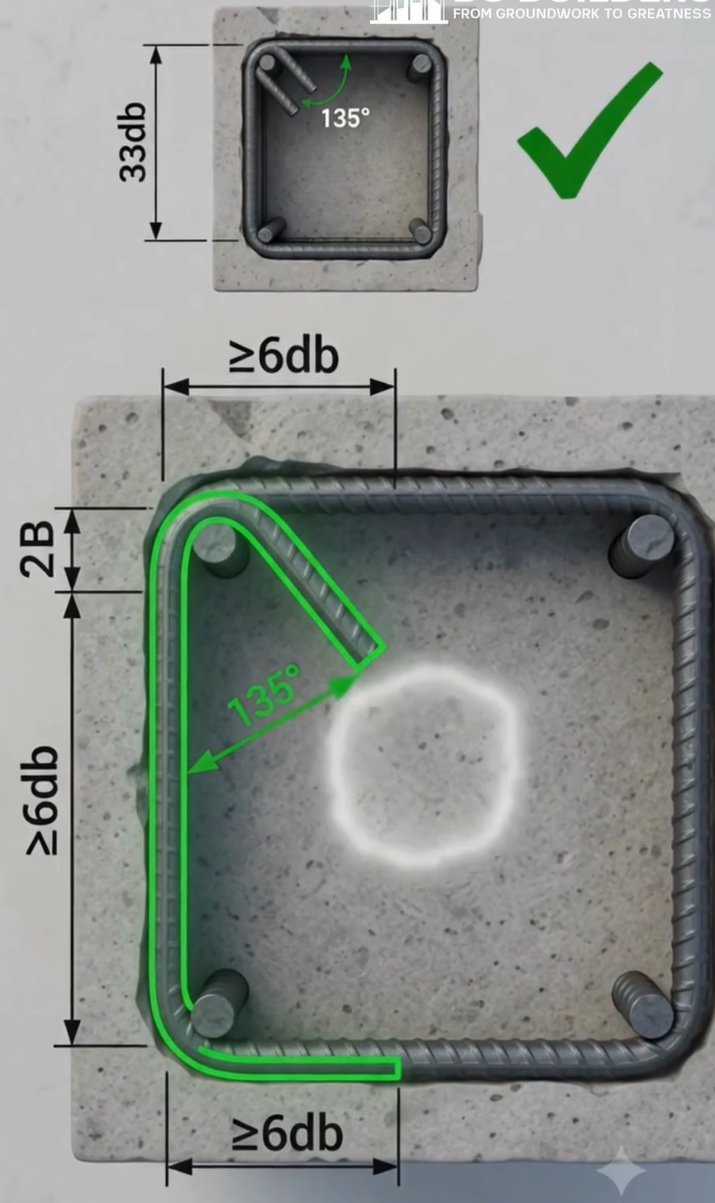
Design: A135-degree hook locks the reinforcement inside the concrete core, preventing failure under extreme stress.
Issues: If concrete cover cracks and breaks away during an earthquake, a tie using a 90-degree hook can open and lose its grip, causing the reinforcement to buckle.
SEISMIC STIRRUPS
Purpose: Provide lateral support to the vertical reinforcement in beams and columns, enhancing overall structural integrity during seismic events.
Function: Help resist shear forces and keep the reinforcement in position, especially during loads that cause deflection and lateral movement.
Design Importance: Similarly to ties, the design and positioning of stirrups are critical to ensure that structures can withstand seismic loads effectively, helping to prevent shear failure.
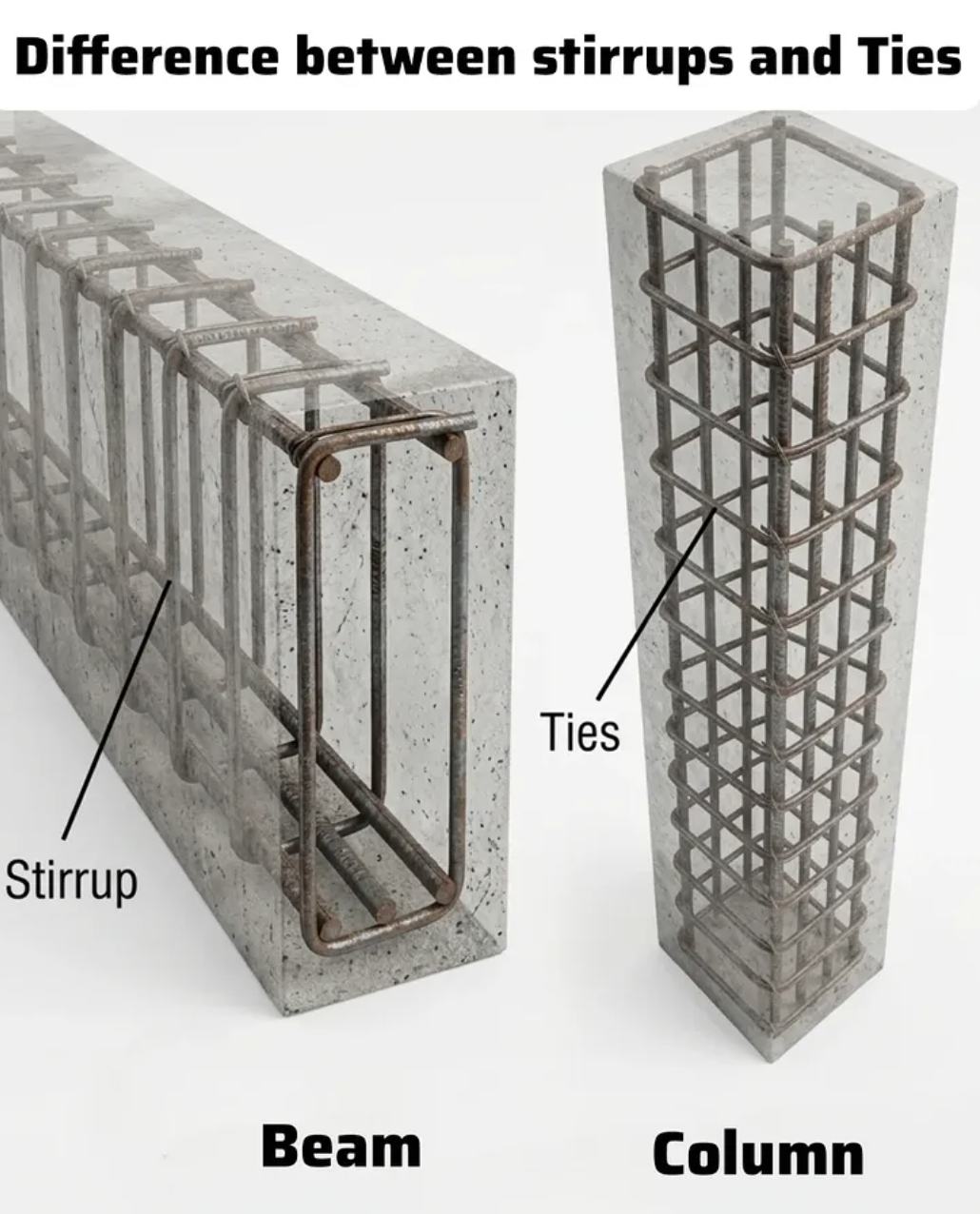
Seismic Ties
Seismic ties keep columns stable during earthquakes
A135 degree hook locks the reinforcement inside the concrete core to prevent failure under extreme stress(earthquake resilience)
During an earthquake concrete cover can crack and break away
If a tie uses a 90 degree hook it can open and lose its grip this causes the reinforcement to buckle
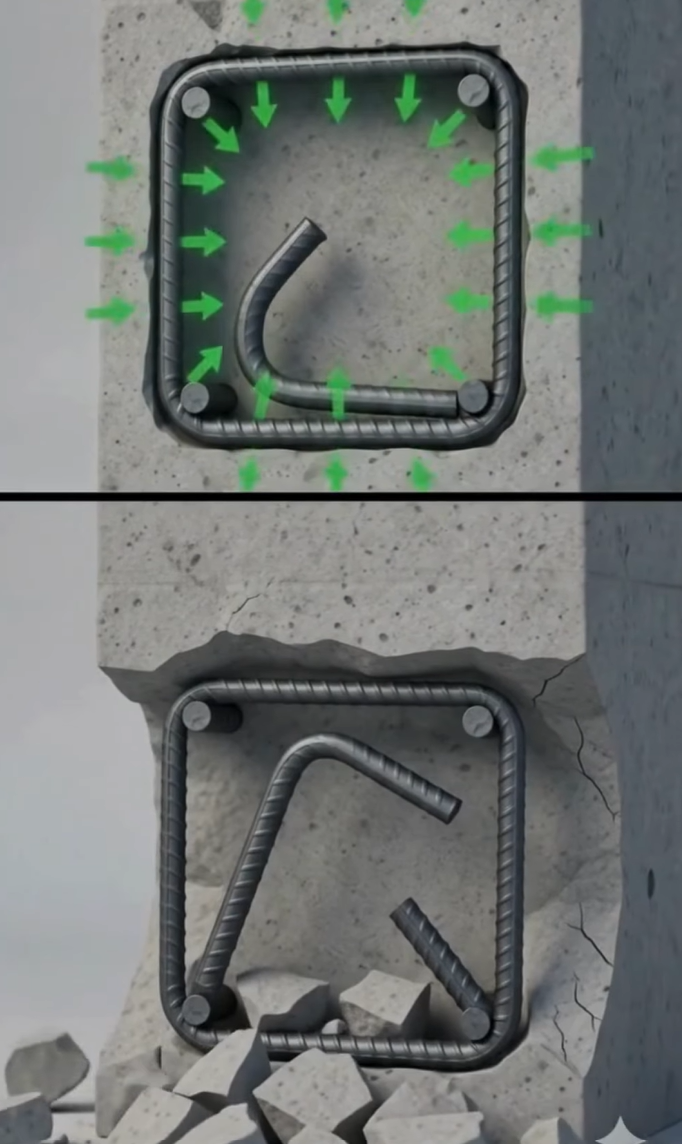
❌ 90° Hook → Can open under seismic loading
✅ 135° Hook → Stays anchored and confines the concrete core
Seismic Stirrups