Chapter 12
 Defining Psychological Disorders
Psychological Disorder
Mental (cognitive) processes and/or behavior patterns that cause emotional distress and/or substantial impairment in functioning.
Oftentimes, a person suffering from a psychological disorder displays or exhibits abnormal behavior.
What is Considered Abnormal Behavior?
Is the behavior considered strange within the person’s own culture or age group?
Does the behavior cause personal distress?
Is the behavior maladaptive? Does it interfere or impair functioning?
Is the person a danger to self or others?
Is the person legally responsible for his or her actions?
Defining Psychological Disorders: Classifying and Tracking Psychological DIsorders
Diagnostic and Statistical Manual of Mental Disorders (DSM-5)
latest (5th) edition released in 2013
contains descriptions of about 300 specific psychological disorders
lists criteria that must be met in order to make a particular diagnosis
organizes disorders into categories
Psychological Disorders: Statistics
Each year, 26 percent, or more than 44 million adults, are diagnosed with a mental disorder or condition.
About 50 percent of Americans will be diagnosed with a mental disorder sometime in their lives
Mental disorders represent personal misery for individuals and lost productivity for society
Understanding the basis of Psychological Disorders
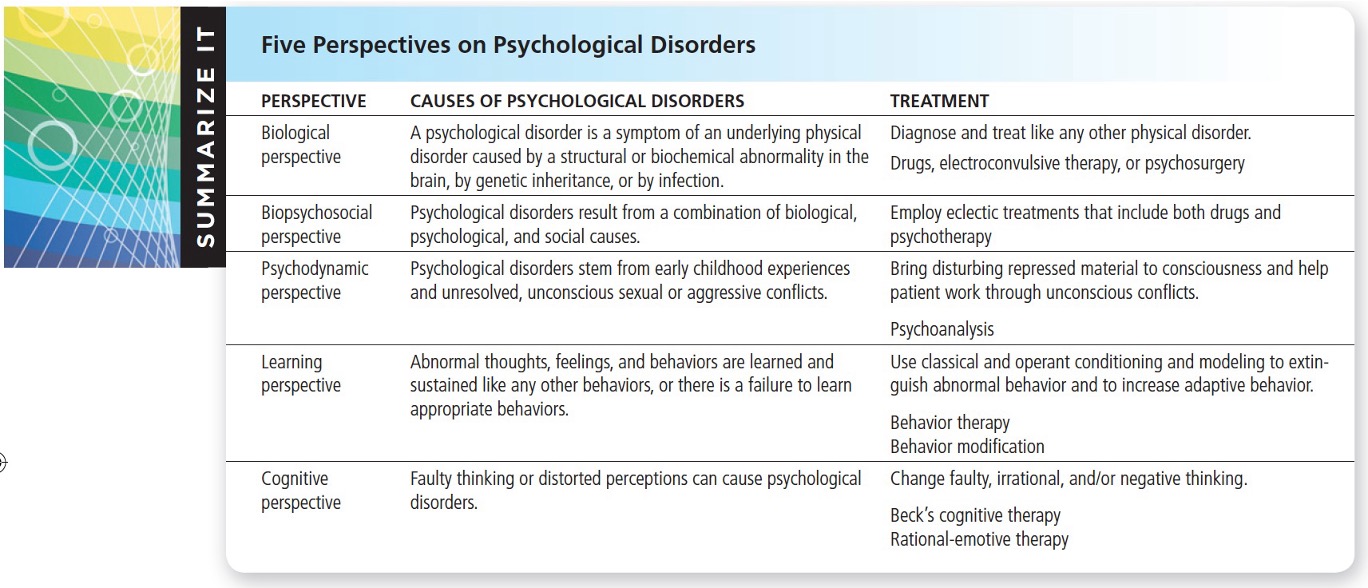
Biological Perspective (nature/ genetics/ heredity)
Abnormal behavior arises form a physical/ physiological cause
Biological treatments, such as drug therapy, are favored.
Psychiatric approach including pharmacological.
Development of Psychological Disorders
Biopsychosocial perspective
Disorders result from a combination of biological, psychological, and social factors
Drug and psychotherapy are employed as treatment.
Psychological Disorders: Psychodynamic
Psychodynamic Perspective (Freudian)
Disorders stem from traumatic childhood experiences, unresolved unconscious conflicts.
Treatment involves extensive psychoanalysis (not frequently practiced due to time constraints and other factors.)
Psychological Disorders: Learning Perspective
Learning Perspective
Abnormal thoughts and behaviors are learned and sustained like any other behaviors (most often unknowingly).
Treatment may include classical and operant conditioning and modeling to decrease/eliminate maladaptive behavior and increase more productive and beneficial behavior.
Psychological Disorders: Cognitive Perspective
Cognitive Perspective
Faulty/ illogical thinking and distorted perceptions can cause psychological disorders.
Treatment tries to change faulty, dysfunctional, irrational, and/or negative thinking.
Note: counseling is also referred to as psychotherapy ro “talk therapy”
 Anxiety Disorders
Disorders characterized by frequent, fearful thoughts about what might happen in the future, excessive worrying (cognitive).
The most common category of psychological disorders
Anxiety disorders account for more than 4 million visits to doctors’ offices in the US each year.
Anxiety Disorders Types
Two types of anxious feelings for which people often seek professional help:
Panic attacks
Agoraphobia
Anxiety disorders usually have both a biological/physiological and psychological basis
Note: Chronic worrying is a cognitive activity often arising from increased physiological/physical anxiety (biological basis). Re: sympathetic nervous system activation
Anxiety Disorders, Phobias, OCD, and other disorders
People oftentimes unknowingly contribute to the development of certain disorders through reinforcement of irrational/illogical, dysfunctional and maladaptive thoughts and behaviors.
Overthinking, excessive thinking (obsessions)
Anxiety Disorders: Panic Attacks
Panic Attack
An episode of overwhelming anxiety, fear, or terror
The brain responds to normal changes in the body as if they were life-threatening
Attacks may occur cued or uncles: brought about by a dysfunction in the sympathetic nervous system’s fight-or-flight system.
Anxiety Disorders; Panic Disorders: Panic Disorder
Panic Disorder
Recurring, unpredictable episodes of overwhelming anxiety, fear, or terror.
Sometimes, the person associates the occurrence of a panic attack with an object or place (Re: conditioned behavior).
Avoidance behavior may develop because it enables the individual to escape from the unpleasant sensations that are associated with anxiety
can lead to the development of agoraphobia
Anxiety Disorders: Agoraphobia
Agoraphobia
Intense fear of being in situation from which escape is not possible
often begins with repeated panic attacks
People with agoraphobia sometimes plan their entire lives around avoiding feared situations.
Panic disorder with agoraphobia is among the most debilitating of all psychological disorders
Related to claustrophobia which is an irrational fear of being confined
Generalized Anxiety Disorder
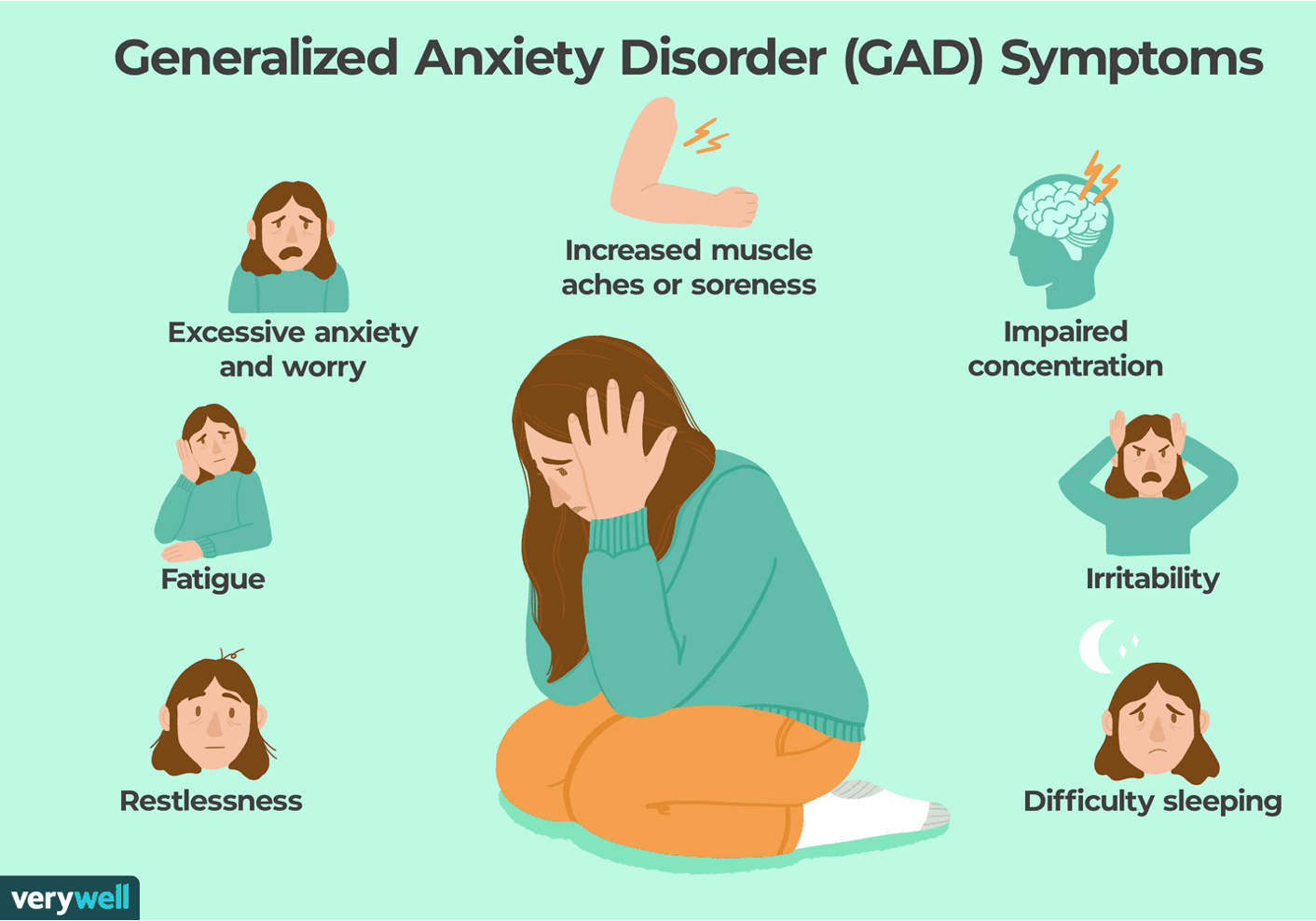
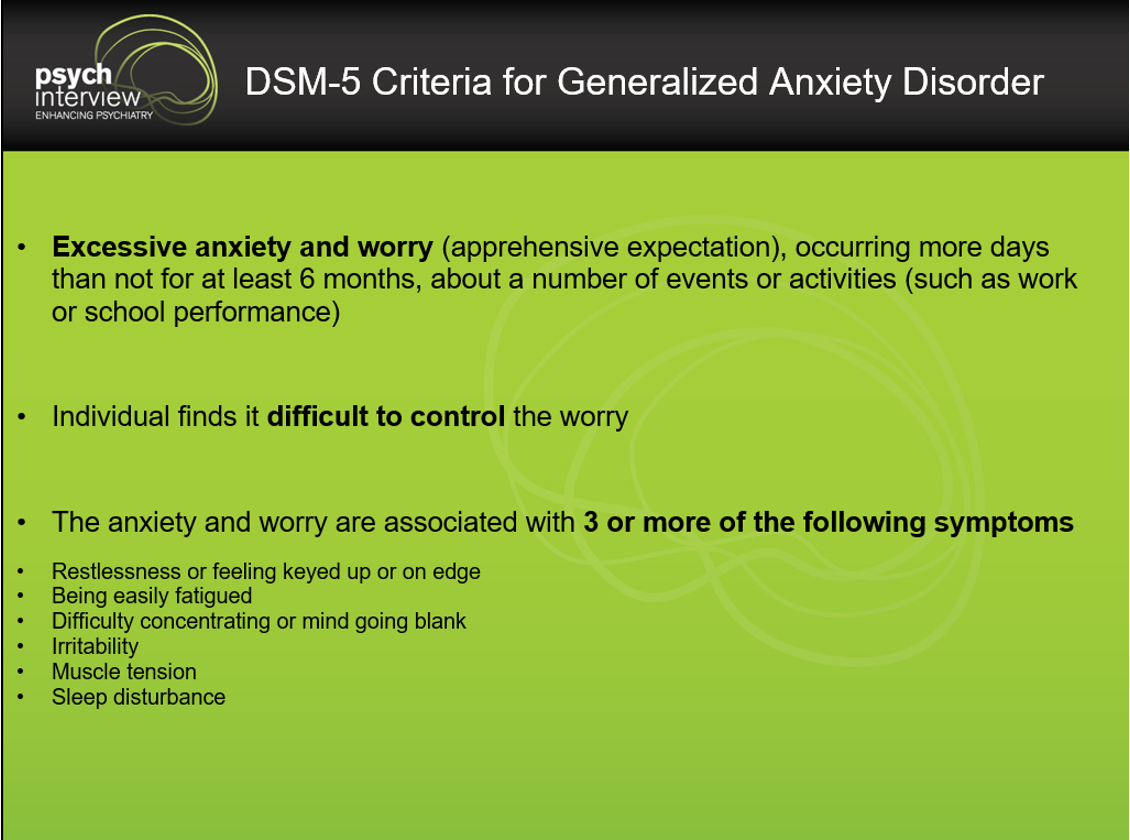
Generalized Anxiety Disorder (GAD)
disorder involving chronic, excessive worry for 6 months or more
The worry is either unfounded or greatly exaggerated: difficult to control.
Affects twice as many women as men
What should we worry about?
 Anxiety Disorders: Phobias
Explaining Generalized Anxiety Disorder and Phobias
Brown (2007) argues that GAD and social phobia are manifestations of the Big Five personality trait of neuroticism
Neuroticism is also a risk factor for the development of specific phobias (Beinvenu et al., 2007)
Phobias
What’s a phobia? Fears inadvertently grown out of proportion through self-reinforcement
Social Phobia
irrational fear and avoidance of any social or performance situation
fear of embarrassing or humiliating oneself in front of others by appearing clumsy, weak, stupid, foolish, or incompetent
may take the specific form of performance anxiety
Specific Phobias
Specific Phobia
fear of a specific object or situation
general label for any phobia other than agoraphobia or social phobia
categories of specific phobias:
situational phobias
Fear of the natural environment
Animal phobias
Blood, injection, injury phobias
Anxiety Disorders: Obsessive-Compulsive Disorder
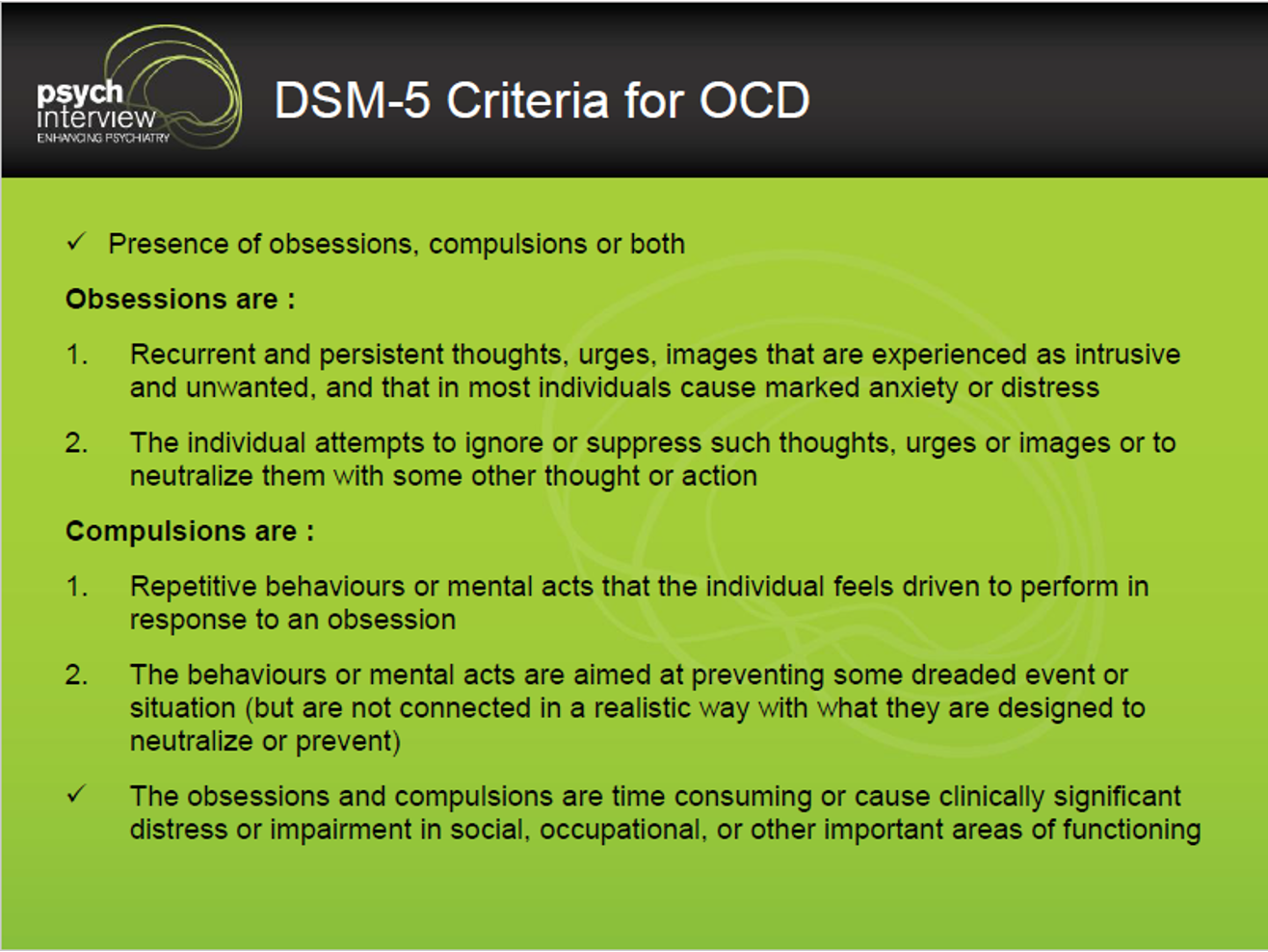
Recurrent obsessions and/or compulsions
Obsession
Persistent, involuntary thought, image, or impulse that causes great distress
Excessive and overwhelming cognitions
Compulsion: engaging in excessive and overwhelming behaviors
persistent, irresistible, and irrational urge to perform an act or ritual repeatedly.
Compulsions often involve cleaning and washing, counting, checking, touching object, hoarding, or excessive organizing.
Obsessive Compulsive Disorder: Etiology
Explaining Obsessive-Compulsive Disorder
Autoimmune system diseases, strep infection, and brain changes causes by other infections (biological factors).
Genetic anomalies affecting serotonin functioning are suspected of contributing to the development of OCD
Traumatic experiences, high degree of anxiety, learned behavior patterns, faulty thinking.
OCD
The behavior becomes a psychological problem only if the person cannot resist performing it; if it is very time consuming, and if it causes dysfunction in the person’s normal activities and relationships with others.
Mood Disorders: Major Depressive Disorder
Mood Disorders
Disorders characterized by extreme and unwarranted disturbances in emotion
Major Depressive Disorder
Sufferers feel an overwhelming sadness, despair, and hopelessness
usually lose their ability to experience pleasure
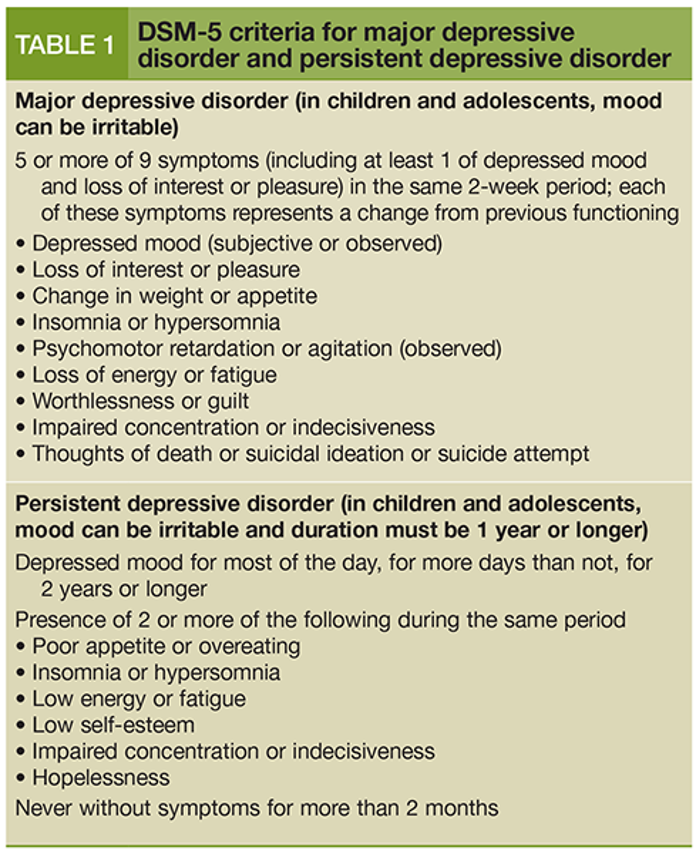 Mood Disorders: Major Depressive Disorder Prognosis
Major Depressive Disorder
one year after initial diagnosis
Forty percent are without symptoms
Forty percent still suffering from a disorder
Twenty percent are depressed
The risk of recurrence is greatest for females (Winokur et al., 1993) and for individuals with an onset of depression before age 15
Mood Disorders: Bipolar Disorder
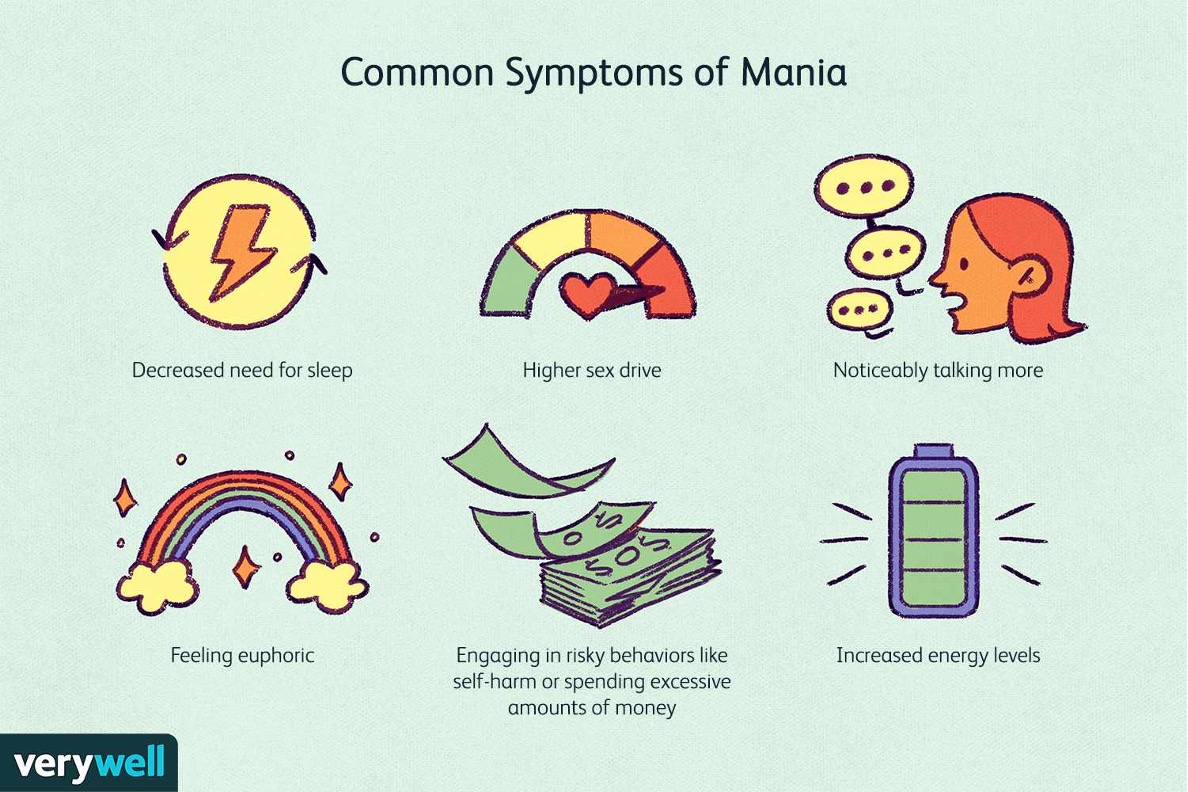
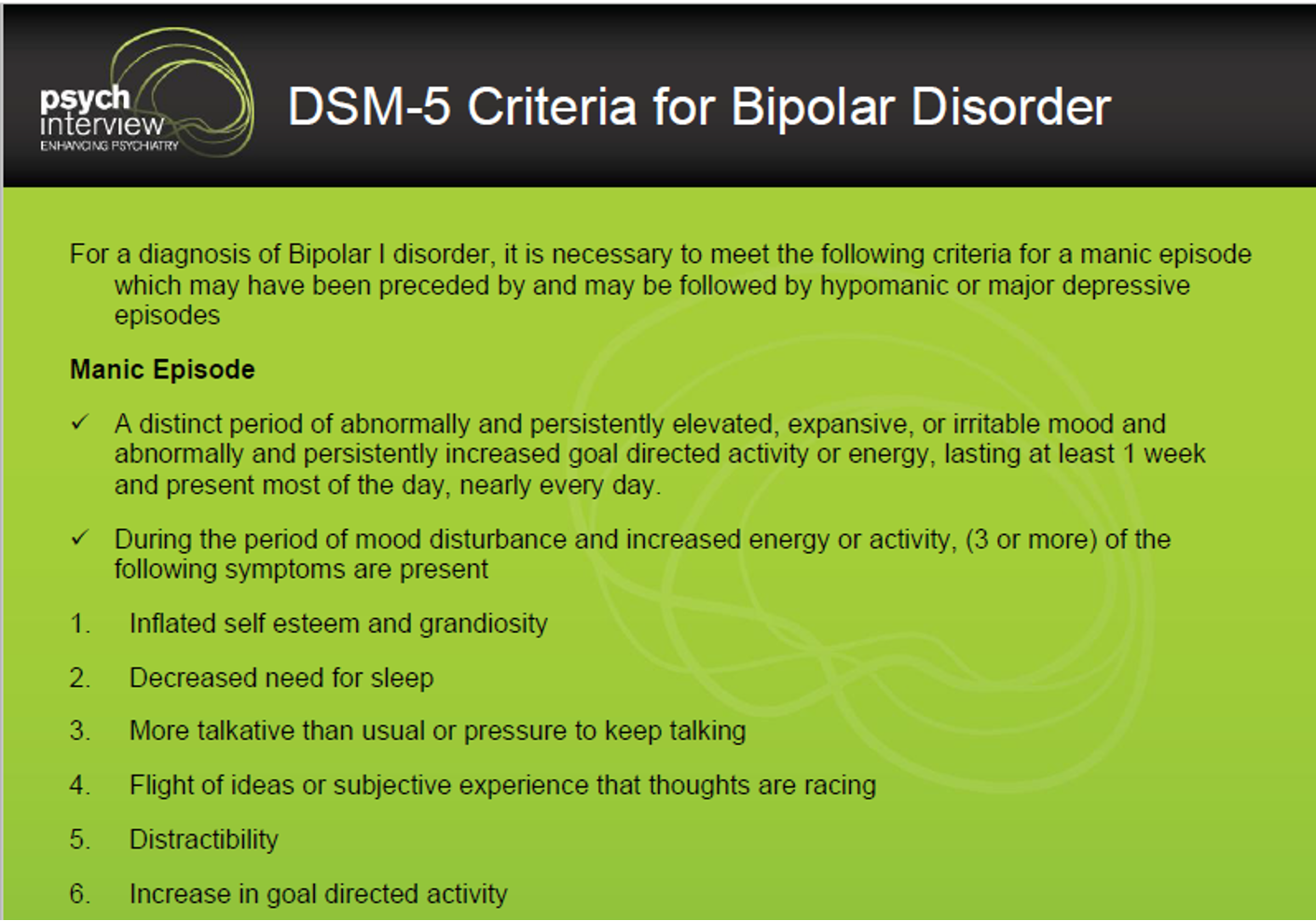
Manic episodes alternating (cycling0 with periods of depression, usually with relatively “normal” periods in between.
Manic Episodes:
Periods of excessive euphoria, inflated self-esteem, wild optimism, and hyperactivity, little to no sleep!
often accompanied by delusions of grandeur and by hostility if activity is blocked
noticeable increase in risky/ dangerous behavior 9sexual, financial, recklessness, etc…)
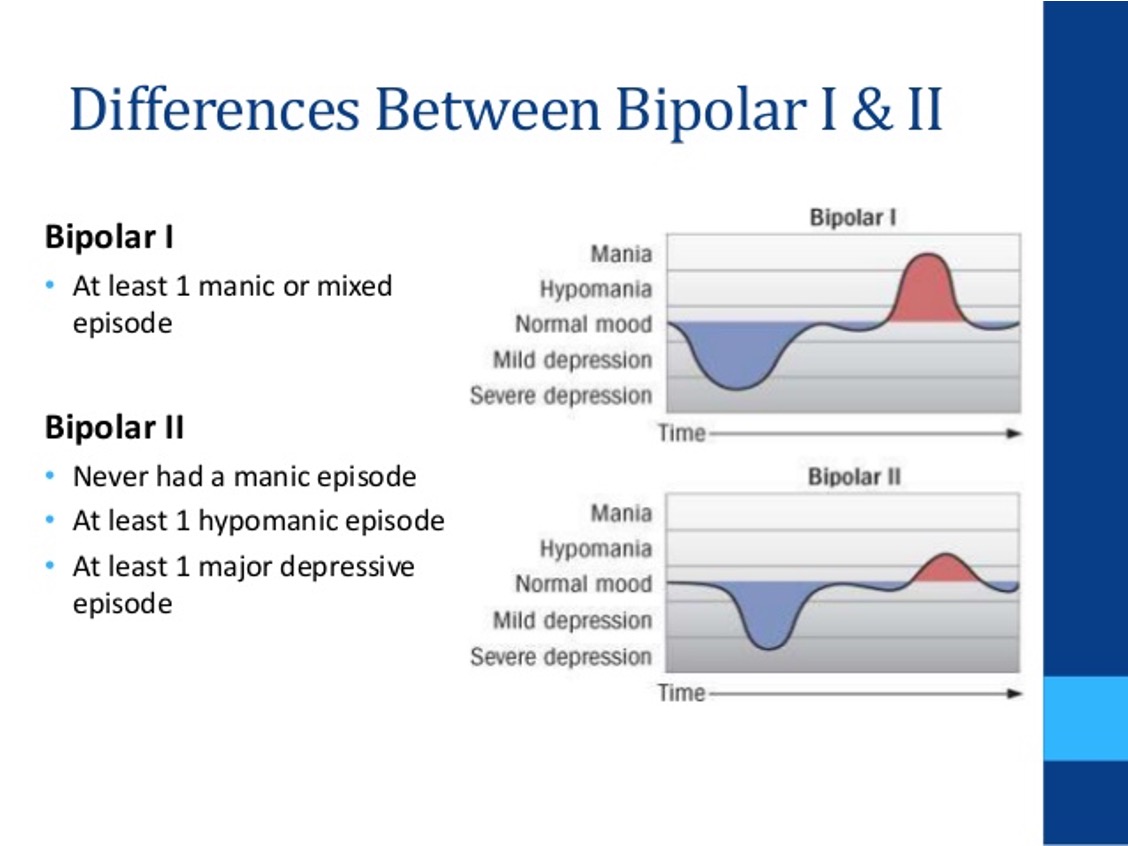
Mood Disorders: Bipolar Disorder 1 and 2
Symptoms can be managed with lithium and divalproex
Bipolar 1: manic episodes with self-destructive behavior and being out of touch with reality (delusions)
Bipolar 2: milder manic (hypomanic) episodes that do not necessarily lead to dysfunctional behavior. Bipolar 2 however, may become chronic.
 Explaining Mood Disorders: Biological Perspective
Neurological Correlatesof Modd DIsorders
PET scans have revealed abnormal patterns of brain activity in people with mood disorders.
Area of brain tissue in lower prefrontal cortex is 40 to 50 percent smaller in people with major depression.
Abnormal production, transport, and reuptake patterns for dopamine, GABA, and norepinephrine
Explaining Mood Disorders
A high degree of Neuroticism (Re: OCEAN) is associated with depression and abnormal serotonin levels.
Heredity
Fifty percent of the identical twins of bipolar sufferers have also been diagnosed with a mood disorder (compared to only seven percent of fraternal twins).
Explaining Mood Disorders: Sociocultural Perspective
Stressors
The majority of first episodes of depression strike after major life stress
Culture
Lifetime risk for developing depression varies greatly around the world.
in most countries, the rate of depression in females is about twice that for males.
Suicide Risk Factors
Risk factors for suicide:
Mood disorders
Schizophrenia
Substance abuse
Ineffective/dysfunctional coping strategies
Unhealthy self-esteem
Major life stressors
Untreated psychological/ psychiatric conditions
Chronic debilitating medical conditions
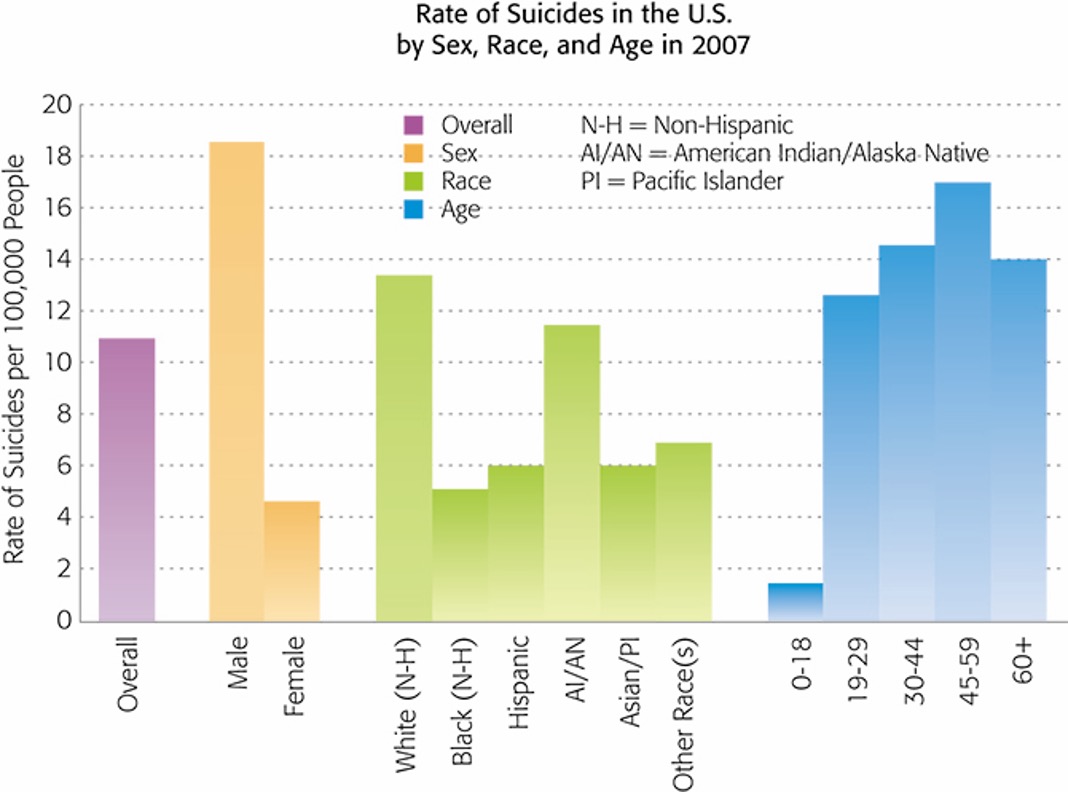
Suicide and Race. Gender. and Age
In the United States, older white males commit suicide at rates higher than members of other races or age groups.
Women are more likely to attempt suicide; men are more likely to succeed.
Schizophrenia
Characterized by extremes in behavior, thinking, mood and cognitive/perceptual distortions
Positive Symptoms (over and above)
Additional: abnormal, bizarre, disorganized, exaggerated behaviors
Hallucinations: audible, visual (psychosis)
Delusions: irrational, illogical, false beliefs
Derailment: totally disorganized speech and grossly disorganized behavior
Inappropriate affect (emotional expression)
Symptoms of Schizophrenia
Negative Symptoms: noticeably diminished or absent behavior
social withdrawl
Apathy/loss of motivation
Flat affect
showing little or no emotional repsonse
Limited speech and slow movements
Poor hygiene and grooming
People experiencing negative symptoms seem to have the poorest outcome