BIOL 310 - Ch 14 Lecture Notes
eukaryotic gene
TATA box w/promoter
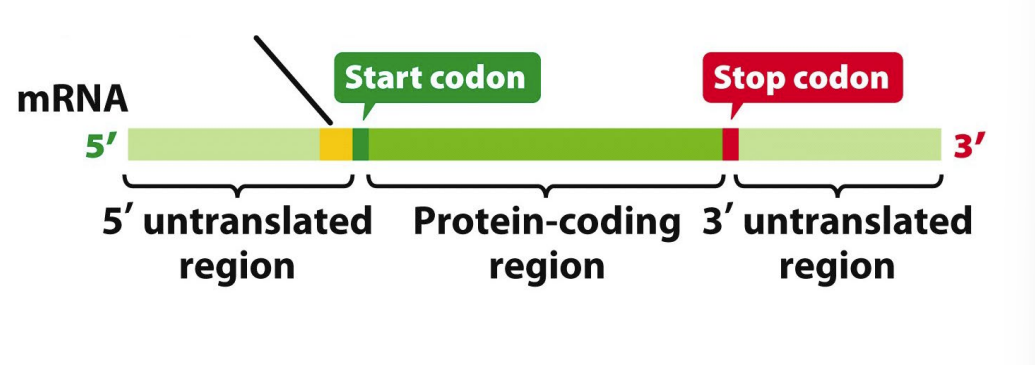
start codon
introns & exons
poly A consensus sequence & poly A tail
stop codon
mature messenger RNA
contains 5’ untranslated region (UTR), protein coding 3’ region, untranslated region
prokaryotes have the Shine-Dalgarno sequence AGGAGG
contains the start codon
eukaryotes have the Kozak sequence (gcc)gccRccAUGG
also contains the start codon
Post-transcriptional modifications
modifications made on the mRNA transcript for it to become mature
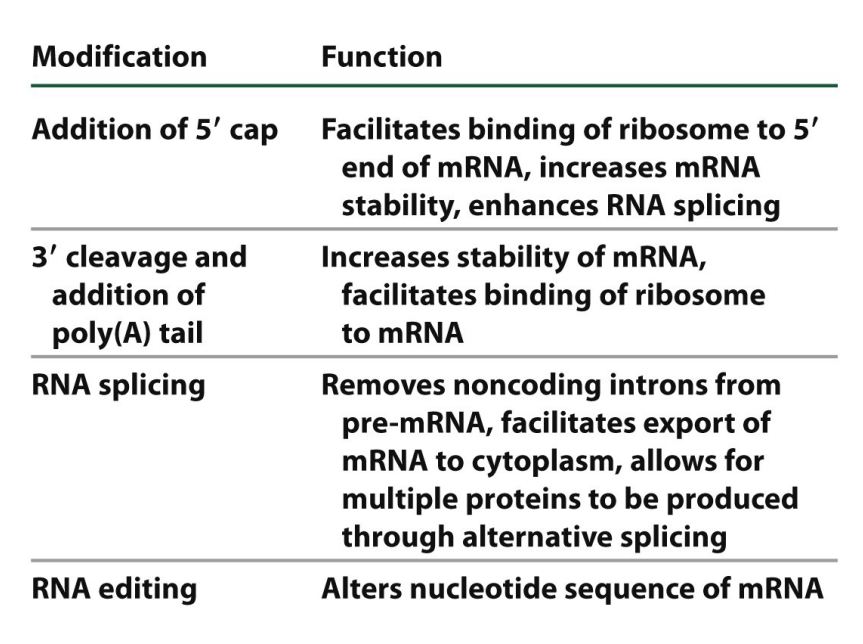
addition of a 5’ cap, cleave the 3’ end, RNA splice, RNA editing (alter sequence of RNA)
5’ cap
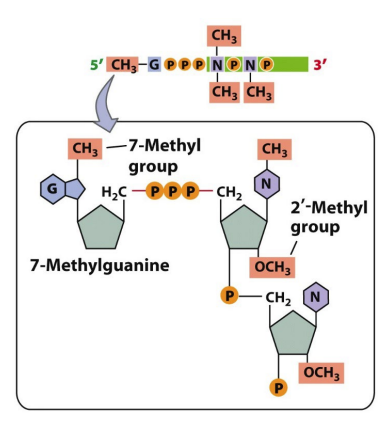
protects the 5’ end since it is exposed to cellular surroundings and it is at risk for denaturing
exonucleases can break it down
7-methylguanine added since there is no enzyme that readily complexes to it and can take it apart
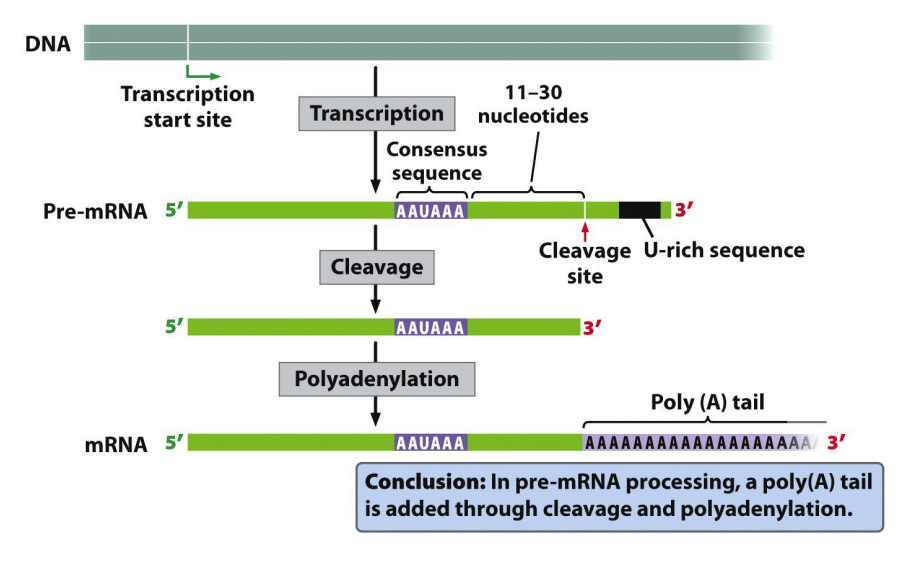
3’ Poly-A tail
to prevent degradation by exonucleases
length of tail & longevity of molecule
necessary for mRNA transport out of nucleus (for prokaryotes)
consensus sequence transcribed; recruits enzyme to cleave RNA & add a string of A’s
polydenylatecyclase is the enzyme responsible for adding the poly a tail
does this without a template — adenine is the only base that can be added without a template
RNA splicing
eukaryotes only
introns = interfere | exons = expressed
start with exon and end with an exon
alternation of intron and exon
there is always one fewer introns than exons
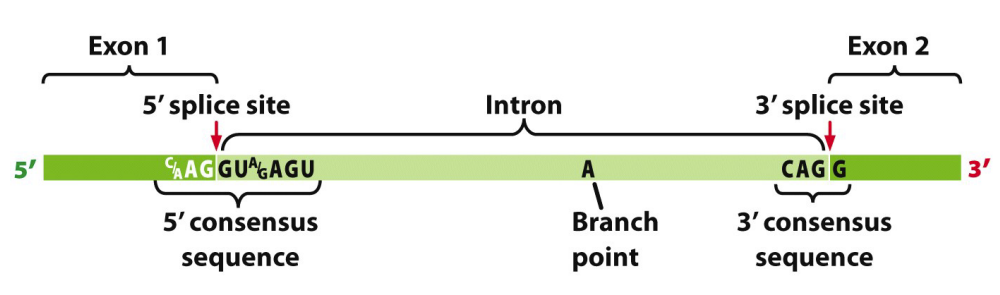
consensus sequences at the border of exons & introns
complex of proteins to recognize the cite
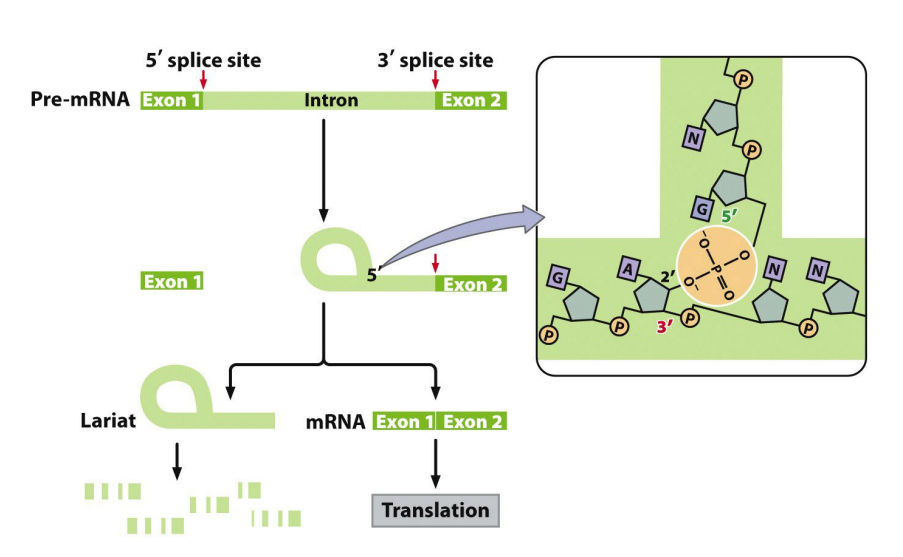
5’ splice site splits exon 1 from the intron and exon 2 to yield the Lariat
the 5’ end of the intron then loops back onto itself to form a phosphate bond with an adenine
cut 3’ end of exon 2
join 3’ end of exon 1 with 5’ end of exon 2
the lariat is mature and ready for translation
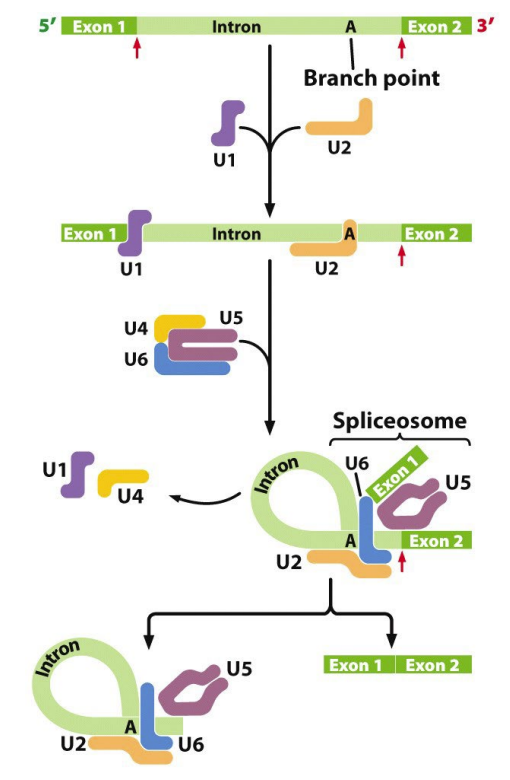
spliceosome - composed of proteins & DNA
very organized process since could end up with a frame shift (insertions or deletions)
U1 +U2
U1 binds to exon intron border in a sequence specific manner
U2 binds to the branch point (the adenine phosphate bond)
U4 + U5 + U6
U4 U5 U6 complex together and interact with U1 that cause the formation on the branch point and the breaking of the exon intron phosphodiester bond
the intron exon 2 border cite gets cleaved & the 3’ end of exon 1 joins with the 5’ end of exon 2
this is an energy neutral process — powered by proton shuttle
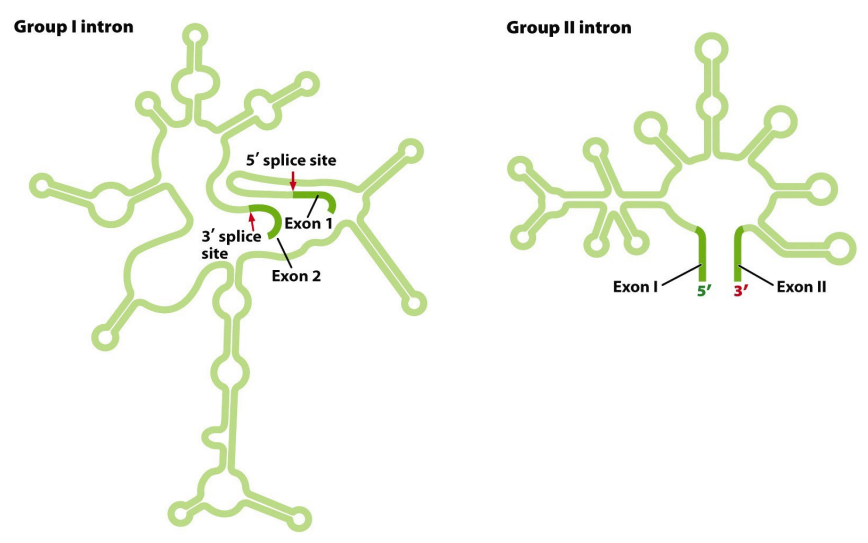
self-splicing introns (no energy required)
introns forming complex structure where 3’ and 5’ are close → nucleophilic attack which leads to two phosphodiester bonds being broken and one created
exon 1 and exon 2 are brought together regardless of whether it is group I (internal) or group II (external)
both are considered self-splicing because of this ability to place the two sites next to each & break bonds
alternative splicing - in eukaryotes ONLY!!
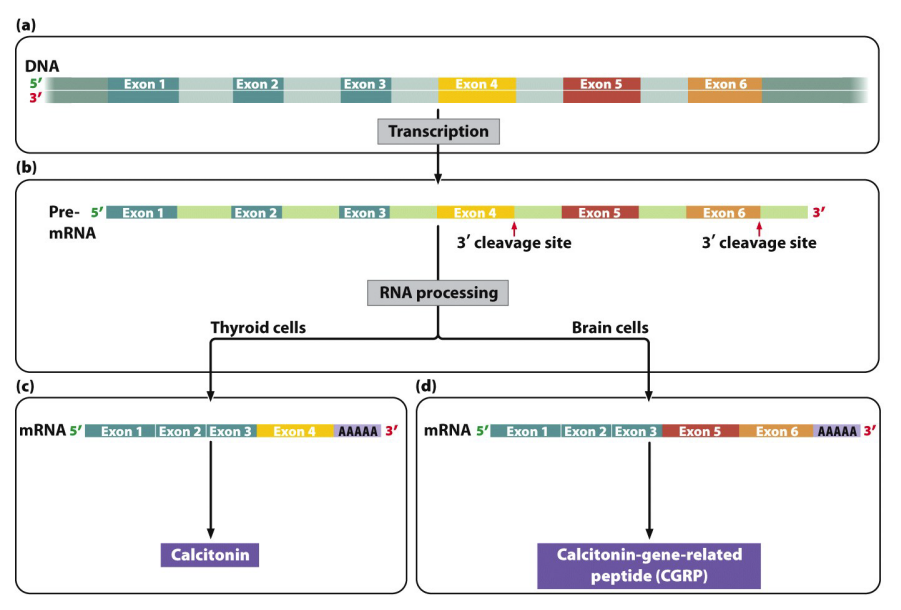
a gene with multiple exons does not dictate whether all the exons must end up in the mature mRNA
first exon has start codon & last codon has stop codon
it is possible to have different outcomes (end product - after splicing)
all exons can be present
just exon 1 & exon 3 are present
just one exon
alternate splice sites that lead to just one exon present
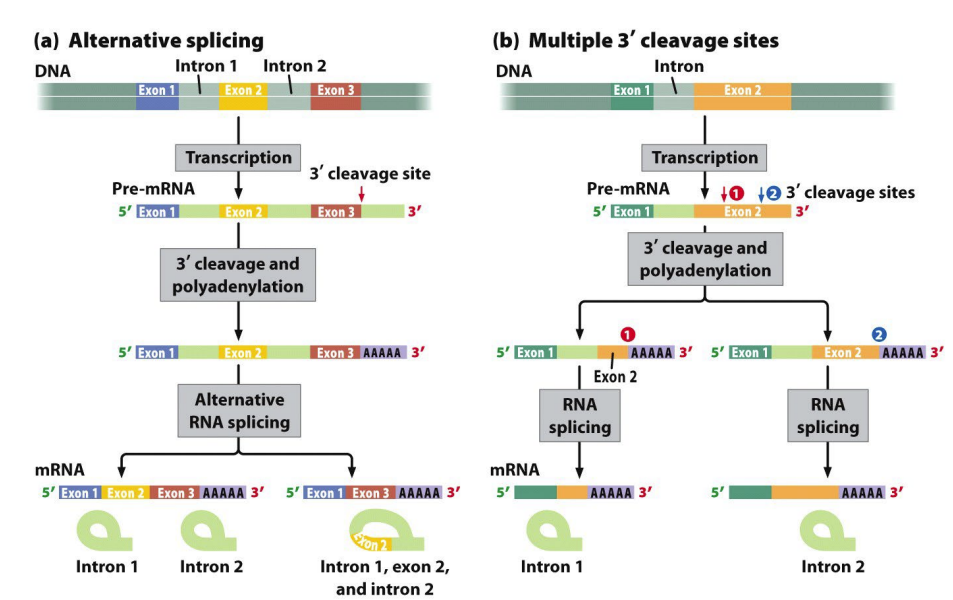
gives the genome a high degree of expression capacity
75,000 genes are alternative splicing products
exons will be in increasing order (no shuffling of exons)
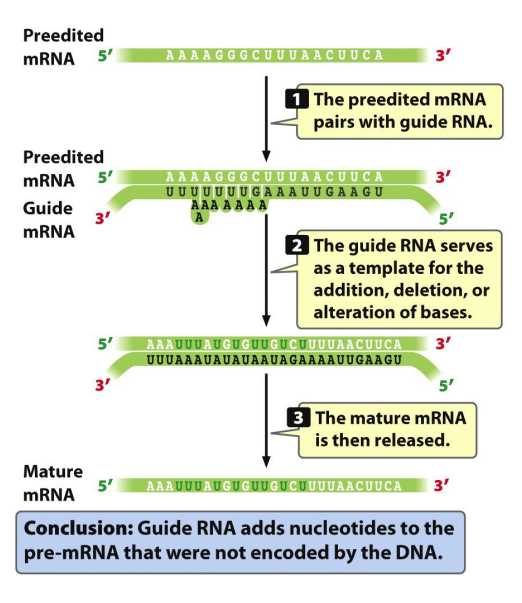
editing with guide RNA
take pre-edited mRNA & hybridize it guide RNA to yield a complementary strand
the guide RNA has folds in it and stretches — there will be breaks wherever there are folds which are filled in by RNA dependent RNA polymerase
this results in mature RNA that has a different coding sequence compared to the original pre-edited mRNA
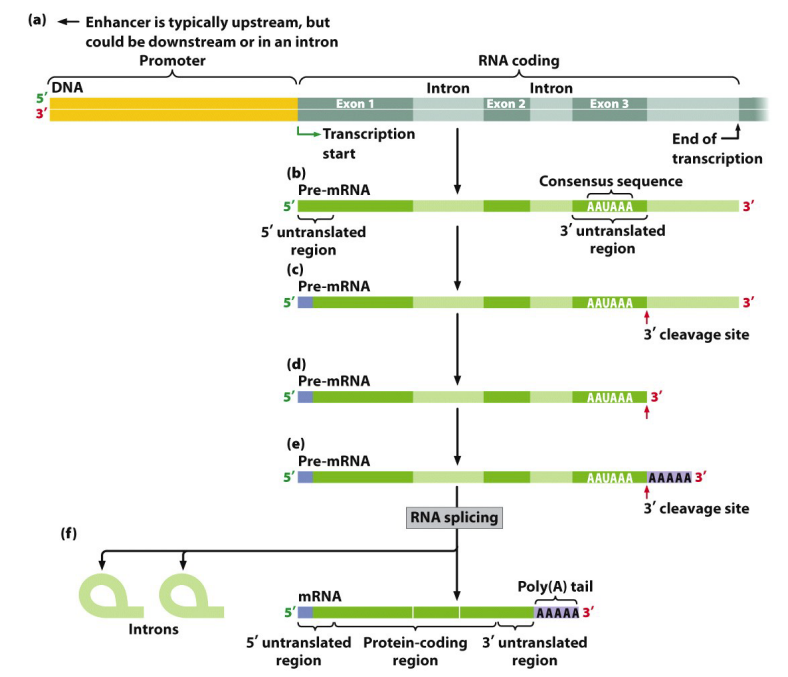
mRNA process overview
lots of collinearity
gene ends up in RNA & protein
other RNAs
tRNA — transfer RNA
RNA molecule that functions as an RNA molecule that folds on itself to make an acceptor arm for the amino acid
has an anticodon arm that will interact with the ribosome
rRNA — ribosomal RNA
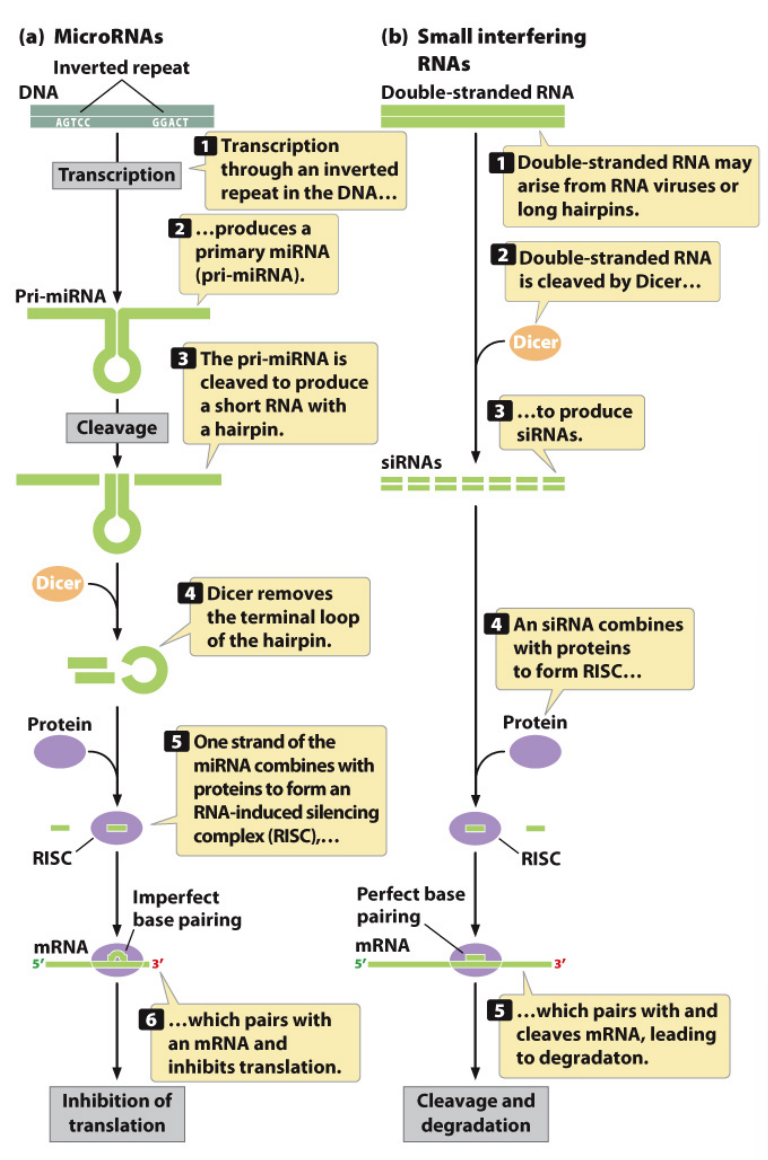
micro RNA (miRNA) & small interfering RNA (siRNA)
involved in RNA interference and gene silencing
long non-coding RNA (IncRNA)
>200 bp
>10,000 in human genome
function is unknown
some control gene expression for cell cycle regulation, chromosome stability, chromatin structure
Xist — X chromosome to barr body & regulates dosage compensation